Lash Egg vs Internal Laying: Two Different Oviduct Problems

A hen with a swollen belly, reduced appetite, and no obvious egg to explain it sends most keepers searching for answers, and the lash egg vs internal laying comparison often comes up in that search. Both conditions involve the oviduct. Both can leave a hen seriously ill. But what’s physically happening inside her is quite different.
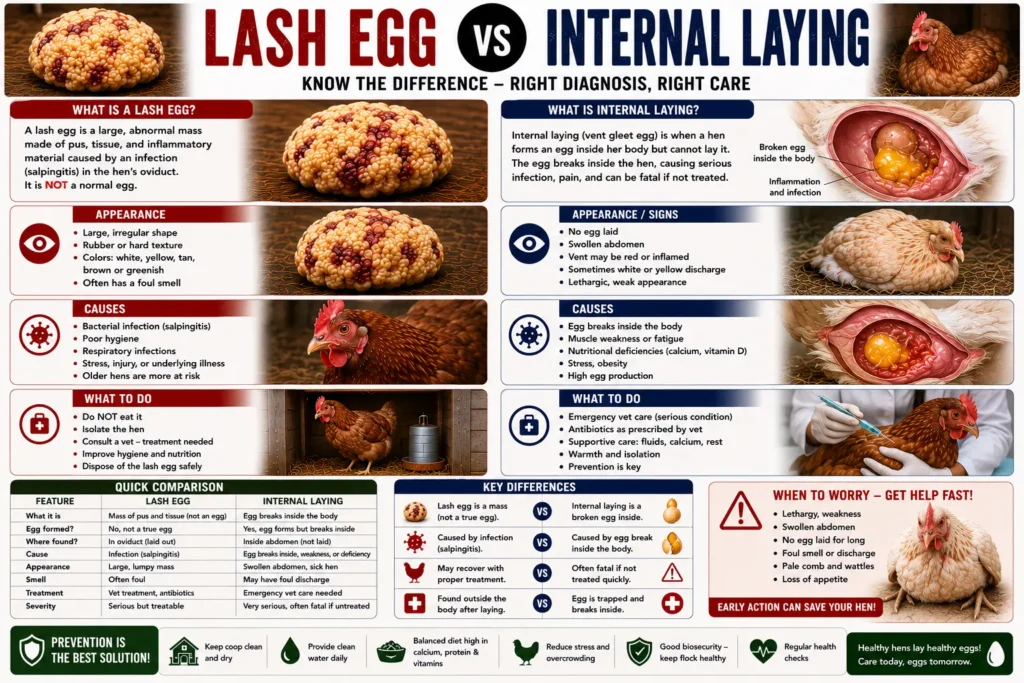
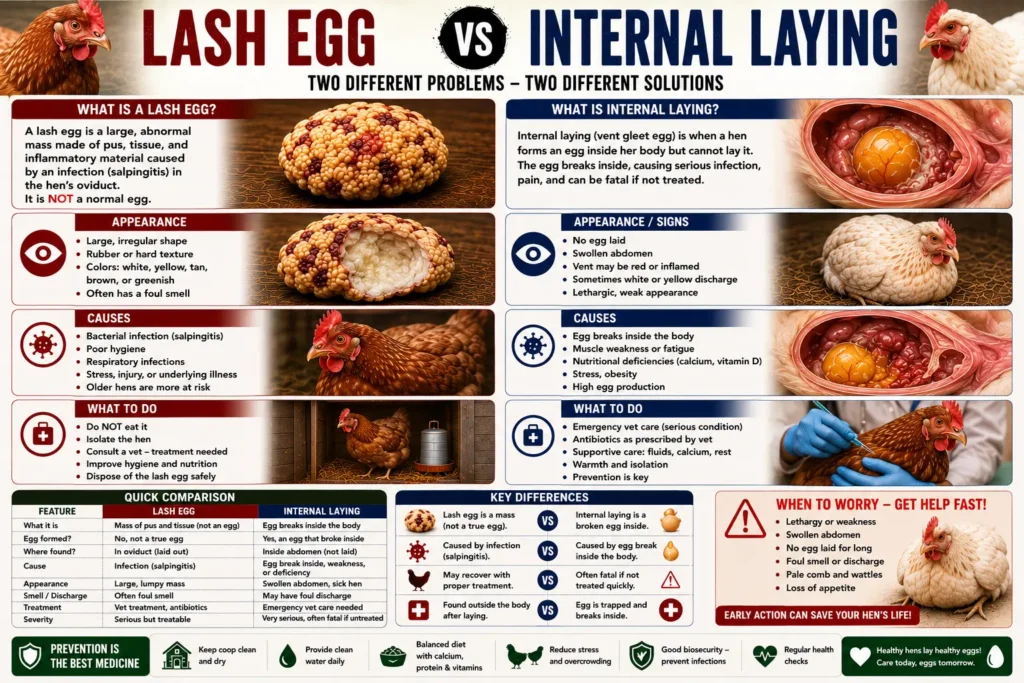
A lash egg is a mass of infected material a hen expels from the vent. Internal laying, also called egg yolk peritonitis, happens when yolk material ends up inside the abdominal cavity instead of traveling down the oviduct as normal. One comes out. The other stays in, and that difference changes everything about how serious it is.
Table of Contents
What Is a Lash Egg?
A lash egg is a mass of pus, tissue debris, and inflammatory material that a hen passes through the vent. Vets describe this material as caseous exudate, a cheese-like discharge the body produces to wall off infection.
This is a classic sign of salpingitis, an infection or inflammation of the oviduct. According to the Merck Veterinary Manual, salpingitis is one of the most significant causes of reproductive illness in laying hens, and a lash egg is one of the clearest visible signs that it’s present.
Read More: https://lashegg.com/lash-egg-vs-egg-peritonitis/
What Is Internal Laying?
Internal laying happens when an egg yolk, instead of entering the oviduct as it should, drops into the hen’s abdominal cavity. Once there, the yolk material can trigger a serious condition called egg yolk peritonitis, where the abdomen becomes inflamed and filled with fluid or yolk debris.
Unlike a lash egg, nothing is expelled during internal laying. The material stays inside the hen, which is part of why this condition can be harder to detect early and more dangerous over time.
Why Does Internal Laying Happen?
- Oviduct blockage or damage, often from chronic salpingitis or scarring
- Reverse peristalsis, where the oviduct’s normal movement briefly reverses
- Stress or trauma around the time of ovulation
- Age-related reproductive decline, especially in older hens with irregular laying cycles
- Underlying infection, including the same bacteria linked to salpingitis, such as E. coli
Lash Egg vs Internal Laying: How They Actually Compare
| Feature | Lash Egg | Internal Laying |
| What’s happening | Infected material is expelled from the vent | Yolk material enters the abdominal cavity instead |
| Is anything visible from outside? | Yes, a mass is passed and can be examined | Not directly; symptoms are internal |
| Underlying condition | Salpingitis (oviduct infection or inflammation) | Often linked to salpingitis or oviduct dysfunction, but yolk goes the wrong direction |
| Typical symptoms | Reduced appetite, lethargy, swollen abdomen | Swollen or fluid-filled abdomen, lethargy, labored breathing |
| Detectability | Easier to notice, since the mass is visible | Harder to detect early; often diagnosed via vet exam or imaging |
| Urgency | Serious, vet visit recommended | Can be serious to critical, especially if peritonitis develops |
| Diagnosis method | Physical exam, history, examining the mass | Often requires imaging, fluid analysis, or exploratory exam |
Are Lash Eggs and Internal Laying Related?
Yes, in an important way. Both conditions frequently trace back to problems with the oviduct, and salpingitis can contribute to either outcome. A hen with chronic oviduct inflammation might pass a lash egg one month and experience an internally laid yolk another month, since the same underlying damage can produce different results depending on where the disruption occurs.
That connection is why a hen with a history of lash eggs deserves closer monitoring going forward, since it signals her reproductive tract may already be compromised.
Quick Answer: A lash egg is infected material a hen expels from her body. Internal laying is when yolk material stays inside the abdominal cavity instead of leaving normally. They’re different outcomes, but both often stem from oviduct problems like salpingitis.
Symptoms to Watch For
Signs Associated With a Lash Egg
- A rubbery or waxy mass passed through the vent
- Reduced appetite
- A pale or droopy comb
- Lethargy
- A drop in overall egg production
Signs of Internal Laying
- A swollen, firm, or fluid-filled abdomen
- Labored or rapid breathing, especially if fluid presses on the lungs
- Lethargy or reluctance to move
- Reduced or stopped egg-laying
- A hunched, “penguin-like” posture
- Loss of appetite
When to Call a Vet
Call a poultry-experienced veterinarian if a hen passes a lash egg, especially alongside other symptoms. For suspected internal laying, veterinary evaluation is important as soon as you notice a swollen abdomen, labored breathing, or a sudden drop in activity, since egg yolk peritonitis can progress quickly and become life-threatening without treatment.
How Vets Diagnose Each Condition
- Physical exam, checking abdominal size, comb color, and body condition
- History review, including recent laying patterns, any lash eggs found, and overall behavior changes
- Imaging, such as radiographs or ultrasound, especially useful for confirming fluid or yolk material in the abdomen
- Fluid analysis, if abdominal fluid is present, to check for infection or yolk material
- Bloodwork, which can help assess how the body is responding to infection or inflammation
Expert Tip: If you notice a hen’s abdomen seems unusually round or firm, gently feel it (without pressing hard) and compare it to a healthy hen of similar size. A noticeable difference is worth mentioning to your vet right away, even before other symptoms appear.
Treatment Options
| Condition | Common Treatment Approaches |
| Lash egg (salpingitis) | Antibiotics, supportive care, dietary and stress management, sometimes surgery in chronic cases |
| Internal laying (egg yolk peritonitis) | Antibiotics if infection is present, fluid drainage in some cases, supportive care, surgery in select severe cases |
Neither condition has a dependable home remedy. Treatment decisions depend heavily on how advanced the condition is, so a vet’s assessment is the only reliable way to choose the right path forward.
Common Mistakes Chicken Keepers Make
- Assuming a swollen abdomen is just a hen “getting fat.” A sudden or unusual increase in abdominal size deserves a closer look, especially in a laying hen.
- Waiting for visible symptoms before acting on suspected internal laying. Because nothing is expelled, this condition can progress quietly for a while.
- Treating a lash egg as a one-off event. It usually reflects an active infection that deserves follow-up, not something to shrug off.
- Delaying vet care for a hen with labored breathing. This can indicate fluid buildup pressing on internal organs, which needs prompt attention.
Did You Know?
A hen with internal laying can sometimes go weeks without dramatic symptoms if the amount of yolk material is small, since her body may slowly reabsorb some of it. Larger amounts, or repeated episodes, are what typically lead to serious complications like peritonitis.
Recovery and Outlook
| Scenario | Typical Outlook |
| Single lash egg, hen otherwise active | Good chance of improvement with early vet care |
| Repeated lash eggs | Suggests chronic salpingitis; needs ongoing management |
| Mild internal laying, caught early | Can improve with treatment and monitoring |
| Advanced internal laying with peritonitis | Serious; requires prompt, intensive veterinary care, outlook varies by severity |
Because internal laying can be harder to catch early, regular observation of your flock’s behavior and body condition matters just as much as reacting to visible signs like a lash egg.
Preventing Both Conditions
- Vaccinate against infectious bronchitis where it’s a known regional risk, since it’s linked to oviduct damage
- Feed a complete, age-appropriate layer diet to support reproductive and immune health
- Reduce flock stress through consistent routines, adequate space, and stable social groups
- Monitor older hens more closely, since age raises the risk of both salpingitis and internal laying
- Check body condition regularly, feeling gently for any unusual abdominal swelling
- Separate any hen showing symptoms promptly, both for her care and for closer observation
Frequently Asked Questions
What is the difference between lash egg vs internal laying? A lash egg is infected material a hen expels from her body, usually tied to salpingitis. Internal laying happens when yolk material stays inside the abdominal cavity instead of being expelled, which can lead to a more serious condition called egg yolk peritonitis.
Can internal laying happen without any warning signs? Yes, especially early on. Because nothing is visibly passed, internal laying can progress for a while before a hen shows obvious symptoms like abdominal swelling or labored breathing.
Is internal laying more dangerous than a lash egg? It can be, particularly if it develops into egg yolk peritonitis, since that involves internal infection and inflammation that’s harder to detect and treat early compared to a visible lash egg.
Can a hen recover from internal laying? Some hens do recover, especially with early veterinary treatment. Outcomes vary depending on how much yolk material is involved and whether infection or fluid buildup has developed.
Does having a lash egg increase the risk of internal laying later? It can, since both conditions are often connected to underlying oviduct damage or dysfunction. A hen with a history of lash eggs is worth monitoring closely for other reproductive symptoms going forward.
How can I tell if my hen’s swollen abdomen is internal laying or something else? A vet exam, often including imaging, is the most reliable way to confirm internal laying versus other causes of abdominal swelling, such as obesity, fluid retention from other illnesses, or a large upcoming egg.
Is there a way to prevent internal laying entirely? There’s no guaranteed way to prevent it, but supporting overall reproductive health through good nutrition, reduced stress, and appropriate vaccination can lower the risk.
Final Thoughts
Comparing lash egg vs internal laying comes down to one core difference: whether reproductive material leaves the hen’s body or stays inside it. A lash egg gives you a visible, if unpleasant, warning sign. Internal laying often hides until it’s more advanced, which makes regular observation of your flock even more important. Either way, don’t wait out unusual symptoms in a laying hen. Prompt veterinary care gives her the best chance at a full recovery, whichever condition turns out to be the cause.