What Do You Do If You Find a Lash Egg?

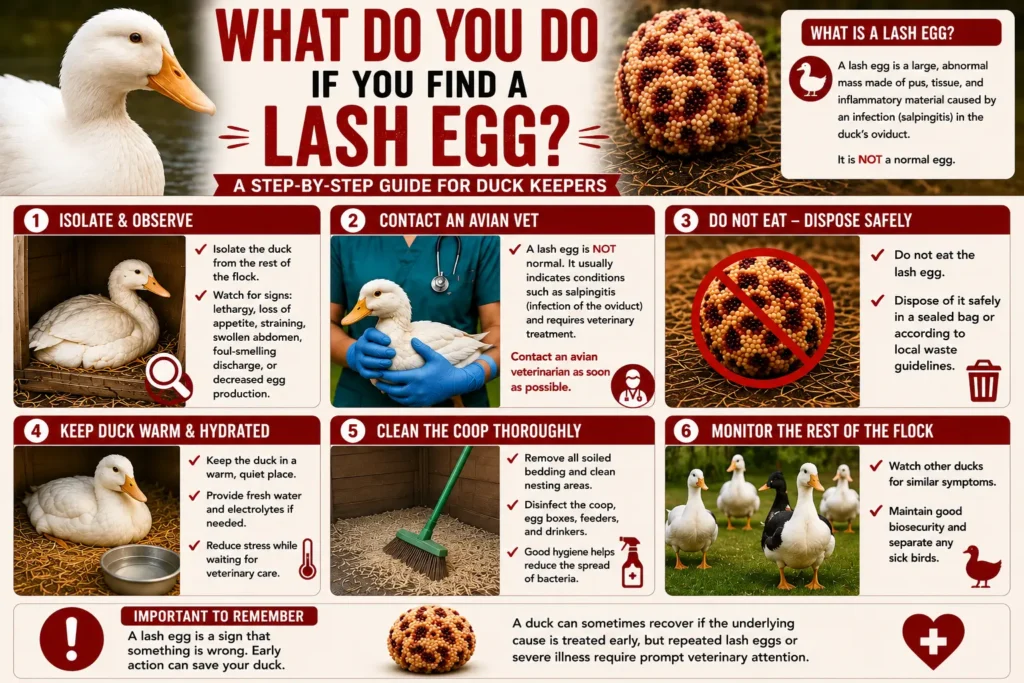
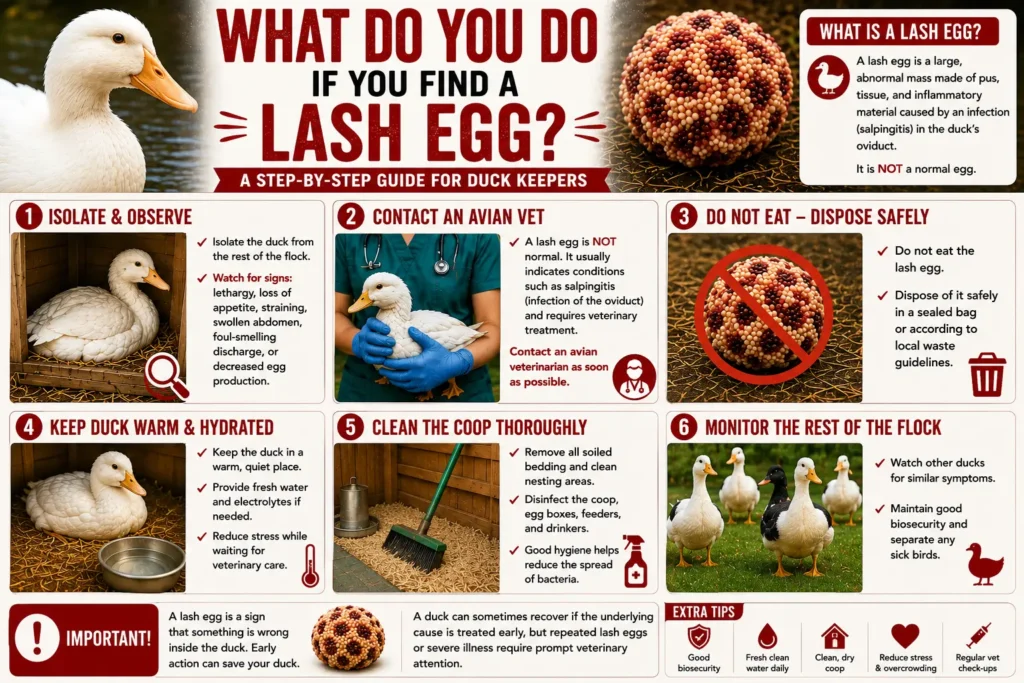
Finding a strange, rubbery, tissue-like mass in your nesting box can be shocking. If you’re wondering what do you do if you find a lash egg, the short answer is: stay calm, identify which hen laid it if possible, monitor her closely, and investigate the underlying cause. A lash egg is usually a sign of reproductive tract inflammation or infection rather than a simple egg abnormality.
The most important thing to understand is that a lash egg is often a symptom of a larger health issue. Knowing the right response during the first few hours can help you protect the affected hen and make informed decisions about treatment and flock management.
Table of Contents
Quick Answer: What Do You Do If You Find a Lash Egg?
Quick Answer
If you find a lash egg:
- Remove and dispose of it safely.
- Identify the hen that laid it.
- Check her for signs of illness.
- Monitor egg production and behavior.
- Improve coop hygiene.
- Contact a poultry veterinarian if symptoms persist or worsen.
A lash egg often indicates salpingitis, reproductive tract disease, internal laying, or another underlying health condition.
What Do You Do If You Find a Lash Egg: Immediate Action Plan
The first few hours after discovering a lash egg are often the most important.
Step 1: Do Not Panic
A lash egg can look alarming.
Many first-time chicken keepers think they are seeing:
- A blood clot
- An organ
- A dead embryo
- A tumor
- A malformed egg
While lash eggs can indicate serious disease, one finding does not automatically mean your hen is dying.
Read More: https://lashegg.com/red-lash-egg/
Step 2: Remove the Lash Egg
Wear disposable gloves when handling the material.
Place it in a sealed bag before disposal.
Avoid leaving it inside the coop where other chickens may peck at it.
Step 3: Wash Your Hands
Even though lash eggs are not usually considered highly contagious, they may contain bacteria and inflammatory material.
Good hygiene reduces potential health risks.
What Exactly Is a Lash Egg?
A lash egg is not a true egg.
Instead, it is a mass of:
- Pus
- Inflammatory material
- Tissue debris
- Blood
- Fibrin
- Oviduct secretions
Most lash eggs develop because of inflammation inside the oviduct.
Veterinarians commonly associate them with:
- Salpingitis
- Internal laying
- Egg yolk peritonitis
- Chronic reproductive disease
According to information commonly referenced by the Merck Veterinary Manual and poultry veterinary specialists, salpingitis remains one of the most common causes.
First Steps After Finding One: How to Identify the Hen
One of the biggest challenges is determining which chicken produced the lash egg.
Observe Nest Box Activity
Watch hens during the next several days.
Look for birds spending extra time in nesting boxes.
Check Vent Condition
An affected hen may have:
- Dirty vent feathers
- Discharge
- Dried blood
- Swelling
Review Recent Egg Production
Ask yourself:
- Has a hen stopped laying?
- Has egg production decreased?
- Are eggs becoming misshapen?
These clues often help identify the source.
Signs Your Hen May Be Sick
A lash egg is often just one symptom.
Common Symptoms
| Symptom | What It May Indicate |
| Reduced egg production | Reproductive disease |
| Lethargy | Infection or inflammation |
| Weight loss | Chronic illness |
| Swollen abdomen | Internal laying or peritonitis |
| Soft-shelled eggs | Oviduct dysfunction |
| Decreased appetite | Systemic illness |
| Penguin stance | Abdominal pressure |
| Pale comb | Poor health |
Warning Signs
Warning
A swollen abdomen, breathing difficulty, inability to walk, or complete loss of appetite may indicate a serious reproductive emergency requiring veterinary care.
Why Do Chickens Produce Lash Eggs?
Understanding the cause helps determine what to do next.
Salpingitis
Salpingitis is inflammation and infection of the oviduct.
It is the most frequently diagnosed cause of lash eggs.
Common bacteria include:
- E. coli
- Salmonella species
- Mycoplasma species
- Pasteurella species
Internal Laying
Internal laying occurs when yolks are released into the abdomen instead of entering the reproductive tract normally.
Egg Yolk Peritonitis
This condition develops when egg contents enter the abdominal cavity and trigger inflammation.
Reproductive Tract Damage
Previous infections, injuries, or age-related changes can contribute.
Should You Isolate the Hen?
This depends on her condition.
When Isolation May Help
Isolation can be useful if:
- The hen is weak
- She is being bullied
- Monitoring food intake is difficult
- Veterinary treatment is underway
When Isolation May Not Be Necessary
If she appears healthy, active, and continues normal behavior, complete isolation may not be required.
Should You Save the Lash Egg?
Yes, in some cases.
Expert Tip
Expert Tip
Take clear photographs before disposal. If veterinary consultation becomes necessary, photos can provide valuable information about color, texture, size, and composition.
You may also place the mass in a sealed container temporarily if your veterinarian requests examination.
How Serious Is Finding a Lash Egg?
Severity varies.
Some hens produce a single lash egg and remain relatively stable for months.
Others experience progressive reproductive disease.
Factors Affecting Prognosis
| Factor | Better Outcome | Worse Outcome |
| Appetite | Normal | Reduced |
| Activity | Active | Lethargic |
| Abdomen | Normal | Swollen |
| Frequency | One event | Repeated lash eggs |
| Weight | Stable | Weight loss |
What Not to Do After Finding a Lash Egg
Many well-meaning owners make mistakes that can delay proper care.
Common Mistakes
Common Mistakes
- Ignoring the event completely.
- Assuming it was just a strange egg.
- Starting random medications.
- Delaying veterinary evaluation.
- Failing to monitor the hen afterward.
- Missing signs of worsening illness.
Can a Chicken Recover After Producing a Lash Egg?
Yes.
Recovery depends largely on the underlying condition.
Better Recovery Chances
Recovery is often more likely when:
- The hen is eating normally.
- The issue is identified early.
- Infection is mild.
- Veterinary care is obtained promptly.
More Challenging Cases
Recovery becomes less likely when:
- Repeated lash eggs occur.
- Chronic infection is present.
- Internal laying is advanced.
- Egg yolk peritonitis develops.
Monitoring Your Hen During the Next 30 Days
The period following discovery is critical.
Daily Observations
Check:
- Appetite
- Water intake
- Activity level
- Droppings
- Egg production
- Body weight
- Breathing
Weekly Assessment
Record:
- Number of eggs laid
- Physical condition
- Any abdominal enlargement
- Changes in behavior
Tracking symptoms often helps identify gradual decline.
When Should You Call a Vet?
Some situations require professional evaluation.
When to Call a Vet
When to Call a Vet
Seek veterinary advice if:
- More than one lash egg appears.
- The hen stops eating.
- Abdominal swelling develops.
- Egg production ceases suddenly.
- Weight loss becomes noticeable.
- Breathing becomes difficult.
- Blood or discharge is present.
- The bird appears depressed or weak.
Veterinarians can perform diagnostic testing that backyard keepers cannot perform at home.
How Veterinarians Diagnose the Underlying Cause
Finding a lash egg does not reveal the entire diagnosis.
Diagnostic Tools
| Diagnostic Method | Purpose |
| Physical examination | Evaluate overall health |
| Abdominal palpation | Detect masses or swelling |
| Ultrasound | Visualize reproductive structures |
| X-rays | Identify internal abnormalities |
| Laboratory testing | Detect infection |
| Necropsy | Confirm diagnosis after death |
These tools help distinguish between salpingitis, internal laying, tumors, and other disorders.
Treatment Options After Finding a Lash Egg
Treatment depends on diagnosis.
Veterinary Treatments
Potential options include:
- Antibiotics
- Anti-inflammatory medications
- Hormonal therapy
- Supportive care
- Fluid therapy
- Nutritional support
Home Care Support
Home care focuses on comfort and observation.
Provide:
- Clean water
- Balanced nutrition
- Clean bedding
- Reduced stress
- Proper ventilation
Home remedies should never replace veterinary treatment when a hen is visibly ill.
Is a Lash Egg Contagious?
Many owners worry about flock-wide spread.
The lash egg itself is not contagious.
However, some bacterial infections associated with reproductive disease can spread through contaminated environments.
Biosecurity Measures
- Clean feeders regularly.
- Replace wet bedding.
- Disinfect equipment.
- Quarantine new birds.
- Control rodents and pests.
Good sanitation benefits the entire flock.
Should You Eat Eggs From That Hen?
This question appears frequently in poultry forums and veterinary discussions.
The answer depends on the hen’s health status and any medications being used.
If a veterinarian diagnoses an active infection or prescribes medication, follow withdrawal guidelines and professional recommendations.
When in doubt, consult a poultry veterinarian.
Can Lash Eggs Happen More Than Once?
Yes.
Many hens that produce one lash egg may produce additional lash eggs later.
Repeated occurrences often suggest chronic reproductive disease.
Did You Know?
Did You Know?
Some hens continue acting relatively normal even while significant reproductive disease develops internally. This is why careful monitoring after finding a lash egg is so important.
Preventing Future Lash Eggs
Prevention is not always possible, but risk can be reduced.
Improve Coop Hygiene
- Keep bedding dry.
- Clean nest boxes regularly.
- Maintain good ventilation.
Support Reproductive Health
Provide:
- Quality layer feed
- Adequate calcium
- Fresh water
- Proper flock management
Reduce Stress
Stress weakens immune function and can contribute to disease susceptibility.
Monitor Older Hens
Older layers have a higher risk of reproductive disorders.
What Poultry Research and Veterinary Sources Say
Educational resources from:
- USDA poultry programs
- AVMA
- Merck Veterinary Manual
- MSD Veterinary Manual
- University Extension poultry programs
- Peer-reviewed veterinary journals
consistently identify reproductive tract inflammation and infection as major causes of lash egg formation.
These sources emphasize diagnosis of the underlying disease rather than focusing solely on the lash egg itself.
Internal Links for LashEgg.com
Use natural internal linking opportunities such as:
- What Is a Lash Egg?
- Lash Egg vs Normal Egg
- Symptoms of Salpingitis in Chickens
- Internal Laying Explained
- Egg Yolk Peritonitis Guide
- Lash Egg Treatment Options
- Caring for a Chicken After a Lash Egg
- How to Prevent Lash Eggs
- Chicken Reproductive Disorders
- Signs of a Sick Hen
- When to Isolate a Chicken
- Understanding Abdominal Swelling in Hens
Final Thoughts
If you’re asking what do you do if you find a lash egg, the best response is to treat it as a warning sign rather than an isolated event. Remove the lash egg safely, identify the affected hen, monitor her closely, and watch for symptoms that suggest reproductive disease.
Many hens recover with proper management, while others require veterinary diagnosis and treatment. Paying attention during the first steps after finding one can make a significant difference in recognizing problems early and supporting your bird’s long-term health.
FAQ
What do you do if you find a lash egg?
Remove it safely, monitor the hen that produced it, evaluate her health, improve coop hygiene, and seek veterinary advice if symptoms develop or persist.
What are the first steps after finding one?
The first steps after finding one include removing the mass, wearing gloves, identifying the affected hen, observing her behavior, and documenting any symptoms.
Is a lash egg an emergency?
Not always. However, if the hen is weak, swollen, struggling to breathe, or stops eating, immediate veterinary evaluation is recommended.
Can a chicken survive after laying a lash egg?
Yes. Some hens recover and continue living comfortably, while others develop progressive reproductive disease.
Should I isolate a chicken after finding a lash egg?
Isolation may help if the hen is sick, stressed, or needs close monitoring, but it is not always necessary.
How long should I monitor a hen after a lash egg?
Monitor her closely for at least several weeks, paying attention to appetite, activity, egg production, and signs of illness.
Are lash eggs contagious?
The lash egg itself is not contagious, although infections associated with reproductive disease may spread under poor sanitary conditions.
Can a hen lay multiple lash eggs?
Yes. Repeated lash eggs often indicate ongoing reproductive tract disease and warrant veterinary evaluation.