Lash Egg Frequently Asked Questions: Complete Guide for Chicken Keepers

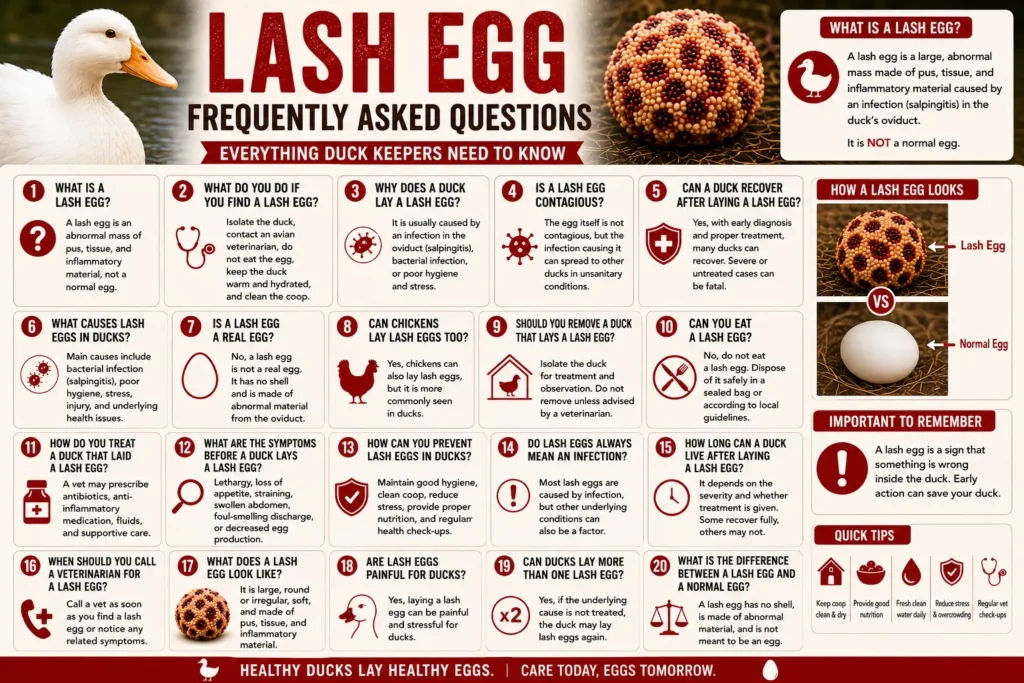
Finding a lash egg can leave even experienced chicken keepers confused and worried. That’s why this guide to lash egg frequently asked questions brings together the most important answers in one place. Whether you found a strange mass in the nesting box, suspect salpingitis, or want to understand treatment and recovery, this article covers the most common concerns poultry owners have.
Many online resources answer only part of the story. Here you’ll find practical explanations, veterinary-backed information, and clear guidance on what to watch for when a hen produces a lash egg.
Table of Contents
Quick Answer: What Are Lash Eggs?
Quick Answer
A lash egg is not a true egg. It is a mass of inflammatory tissue, pus, blood, fibrin, and cellular debris that forms inside a hen’s reproductive tract. Lash eggs are most commonly associated with salpingitis, internal laying, and other reproductive disorders.
Read More: https://lashegg.com/what-do-you-do-if-you-find-a-lash-egg/
Lash Egg Frequently Asked Questions: Understanding the Basics
Before diving into the most common questions, it helps to understand what a lash egg actually is.
A lash egg forms when inflammation develops inside the oviduct. Instead of producing a normal egg, the reproductive tract creates layers of inflammatory material that eventually pass from the hen.
These masses may be:
- Yellow
- Brown
- White
- Tan
- Red
- Mixed colors
Their appearance often varies depending on the underlying condition.
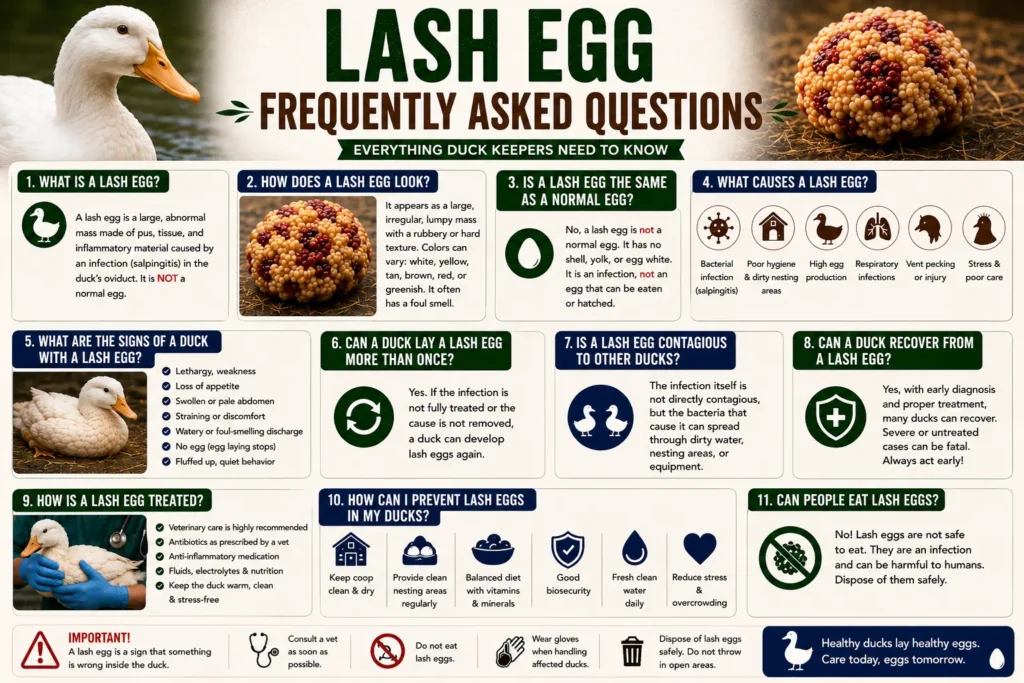
What Is a Lash Egg?
This is the most common question among poultry owners.
A lash egg is an abnormal mass produced by the reproductive tract. It usually contains:
- Pus
- Blood
- Oviduct tissue
- Fibrin
- Cellular debris
- Inflammatory material
Unlike normal eggs, lash eggs typically lack:
- A shell
- A yolk
- Egg white
- Normal egg membranes
Why Is It Called a Lash Egg?
The term developed among poultry keepers because these masses often appear layered or fleshy.
Veterinarians typically refer to the underlying condition rather than the term “lash egg.”
The medical focus is usually on:
- Salpingitis
- Oviduct infection
- Internal laying
- Egg yolk peritonitis
What Causes a Lash Egg?
Common Causes
| Cause | Description |
| Salpingitis | Infection and inflammation of the oviduct |
| Internal laying | Yolks deposited inside the abdomen |
| Egg yolk peritonitis | Inflammation caused by leaked egg contents |
| Reproductive tract damage | Injury or chronic irritation |
| Tumors | Less common but possible |
| Chronic disease | Long-term reproductive dysfunction |
Most Frequent Cause
Among all causes, salpingitis remains the condition most commonly associated with lash egg formation.
Is a Lash Egg an Actual Egg?
No.
This is one of the most misunderstood topics in poultry health.
A lash egg forms from inflammatory material rather than normal egg production.
Lash Egg vs Normal Egg
| Feature | Lash Egg | Normal Egg |
| Shell | Usually absent | Present |
| Yolk | Usually absent | Present |
| Purpose | Disease process | Reproduction |
| Texture | Rubbery or tissue-like | Hard shell |
| Formation | Inflammation | Normal ovulation |
What Does a Lash Egg Look Like?
Appearance varies significantly.
Some look like:
- Soft tissue
- Rubbery masses
- Clumps of cheese-like material
- Blood-filled structures
- Misshapen eggs
Common Characteristics
- Irregular shape
- Strong odor in some cases
- Firm or rubbery texture
- Layered appearance
- Abnormal coloration
Why Is My Lash Egg Red?
Blood Is Usually the Cause
A red lash egg often contains:
- Blood
- Damaged tissue
- Inflamed oviduct lining
The deeper the inflammation, the more likely blood becomes incorporated into the mass.
Can a Chicken Lay More Than One Lash Egg?
Yes.
Many hens produce multiple lash eggs over time.
Repeated occurrences often indicate:
- Ongoing infection
- Chronic salpingitis
- Internal laying
- Progressive reproductive disease
Is a Lash Egg Dangerous?
The lash egg itself is not the primary danger.
The underlying disease is the concern.
Warning
Warning
A lash egg may signal serious reproductive tract disease. Never assume it is simply a strange egg abnormality.
Common Questions About Symptoms
What Symptoms Occur Alongside Lash Eggs?
Common Symptoms Table
| Symptom | Frequency |
| Reduced laying | Very common |
| Lethargy | Common |
| Poor appetite | Common |
| Swollen abdomen | Common |
| Weight loss | Common |
| Penguin posture | Moderate |
| Respiratory difficulty | Less common |
| Pale comb | Moderate |
Other Signs
You may notice:
- Dirty vent feathers
- Soft-shelled eggs
- Abnormal eggs
- Reduced activity
- Increased sleeping
Can a Hen Appear Normal After Producing a Lash Egg?
Yes.
This is one reason lash eggs can be challenging.
Some hens continue:
- Eating normally
- Walking normally
- Interacting with flock mates
Even when significant reproductive disease exists internally.
Does a Lash Egg Always Mean Infection?
Not always.
Although infection is common, other causes exist.
Possible causes include:
- Internal laying
- Chronic inflammation
- Reproductive tract injury
- Tumors
- Age-related reproductive changes
How Can I Tell Which Hen Produced the Lash Egg?
This is one of the most common questions among flock owners.
Identification Tips
Observe:
- Nest box behavior
- Egg production changes
- Vent condition
- Physical appearance
Watch the flock closely over several days.
Common Questions About Treatment
Can a Lash Egg Be Treated at Home?
Home care may support recovery, but it cannot diagnose the underlying condition.
Helpful Supportive Care
- Clean housing
- Fresh water
- Quality feed
- Reduced stress
- Careful observation
Expert Tip
Expert Tip
Home care should complement veterinary advice rather than replace it. The real challenge is identifying the disease causing the lash egg.
Are Antibiotics Needed?
Sometimes.
Antibiotics may be prescribed when bacterial infection is confirmed or strongly suspected.
Only a veterinarian can determine whether antibiotic treatment is appropriate.
Can a Chicken Recover From a Lash Egg?
Yes.
Many hens recover, especially when:
- Disease is detected early
- Appetite remains good
- Treatment begins promptly
Recovery depends more on the underlying condition than the lash egg itself.
What Is the Prognosis?
Recovery Factors
| Factor | Better Outcome | Worse Outcome |
| Appetite | Normal | Poor |
| Activity | Active | Lethargic |
| Abdomen | Normal | Swollen |
| Frequency | Single event | Repeated lash eggs |
| Weight | Stable | Declining |
Common Questions About Veterinary Care
When Should I Call a Vet?
When to Call a Vet
When to Call a Vet
Contact a veterinarian if:
- Multiple lash eggs occur.
- Appetite declines.
- Weight loss develops.
- Abdominal swelling appears.
- The hen stops laying suddenly.
- Breathing becomes difficult.
- The bird becomes weak.
How Do Veterinarians Diagnose the Problem?
Diagnosis often includes:
Diagnostic Methods
| Test | Purpose |
| Physical examination | Evaluate overall condition |
| Palpation | Detect swelling |
| Ultrasound | View reproductive organs |
| X-rays | Identify internal abnormalities |
| Laboratory testing | Detect infection |
| Necropsy | Confirm disease after death |
Can a Vet Examine the Lash Egg?
Yes.
Photos or samples may provide helpful information.
However, diagnosis usually focuses on the hen rather than the mass itself.
People Also Ask (PAA)
Can chickens survive after laying a lash egg?
Yes. Some hens recover completely, while others experience chronic reproductive disease.
Is a lash egg contagious?
The lash egg itself is not contagious. Certain bacterial infections associated with reproductive disease may spread under poor sanitary conditions.
Should I isolate a hen with a lash egg?
Isolation may help if the hen is weak, requires monitoring, or is being bullied.
Can stress cause lash eggs?
Stress alone is not considered a direct cause, but it may weaken immunity and increase susceptibility to disease.
Can young hens produce lash eggs?
Yes, although lash eggs are more commonly seen in older laying hens.
Can I prevent lash eggs?
Not always, but good nutrition, hygiene, and flock management may reduce risk.
Common Questions About Prevention
How Can I Reduce the Risk of Lash Eggs?
Prevention Checklist
- Maintain clean nesting boxes.
- Provide balanced layer feed.
- Ensure adequate calcium.
- Improve ventilation.
- Reduce stress.
- Control parasites.
- Monitor older hens closely.
Does Diet Affect Reproductive Health?
Yes.
Nutrition plays an important role in:
- Immune function
- Egg production
- Tissue repair
- Overall reproductive health
A balanced diet supports long-term flock wellness.
Do Older Hens Have Higher Risk?
Yes.
Age is one of the most recognized risk factors for reproductive disease.
Older hens are more likely to experience:
- Internal laying
- Salpingitis
- Egg yolk peritonitis
- Oviduct dysfunction
Did You Know?
Did You Know?
Some lash eggs contain multiple layers of inflammatory material formed over days or even weeks before they are eventually expelled.
Common Mistakes Chicken Owners Make
Common Mistakes
- Ignoring the lash egg completely.
- Assuming it is a normal egg.
- Treating without diagnosis.
- Delaying veterinary consultation.
- Failing to monitor flock health afterward.
- Overlooking subtle symptoms.
Veterinary and Scientific Sources
Trusted information about lash eggs and reproductive disorders can be found through:
- USDA poultry health resources
- Merck Veterinary Manual
- MSD Veterinary Manual
- AVMA educational materials
- University Extension poultry programs
- Peer-reviewed veterinary research journals
These sources consistently identify reproductive tract inflammation as the primary driver of lash egg formation.
Internal Links for LashEgg.com
Suggested internal links include:
- What Is a Lash Egg?
- Lash Egg Symptoms in Chickens
- Lash Egg Treatment Guide
- Salpingitis in Backyard Hens
- Internal Laying Explained
- Egg Yolk Peritonitis in Chickens
- Can Chickens Recover From Lash Eggs?
- What to Do If You Find a Lash Egg
- Lash Egg vs Normal Egg
- Preventing Reproductive Diseases in Hens
- Signs of a Sick Chicken
- When to Call a Poultry Veterinarian
Final Thoughts
These lash egg frequently asked questions cover the concerns most poultry keepers have after finding a lash egg. While the appearance of a lash egg can be disturbing, understanding the underlying causes helps you make better decisions for your flock.
The most important takeaway is that a lash egg is usually a symptom, not the disease itself. Monitor affected hens closely, watch for changes in behavior or egg production, and seek veterinary care whenever symptoms suggest a more serious reproductive problem.
FAQ
What is a lash egg?
A lash egg is a mass of inflammatory material, tissue, pus, and cellular debris produced by a hen’s reproductive tract rather than a true egg.
What causes a lash egg?
The most common causes include salpingitis, internal laying, egg yolk peritonitis, and chronic reproductive tract disease.
Are lash eggs contagious?
The lash egg itself is not contagious, although some underlying infections may spread in unsanitary conditions.
Can chickens recover after laying a lash egg?
Yes. Many hens recover, particularly when the underlying condition is identified early and managed appropriately.
Do lash egg frequently asked questions usually involve salpingitis?
Yes. Most lash egg frequently asked questions relate to salpingitis because it is one of the leading causes of lash egg formation.
Should I isolate a chicken that laid a lash egg?
Isolation may help if the hen is weak, sick, or requires close monitoring.
Can a chicken lay multiple lash eggs?
Yes. Repeated lash eggs often indicate ongoing reproductive disease.
What are the most common questions about lash eggs?
The most common questions involve causes, symptoms, treatment, recovery, prevention, contagiousness, and veterinary care.