Long Term Effects of Salpingitis: What Happens After the Infection Clears

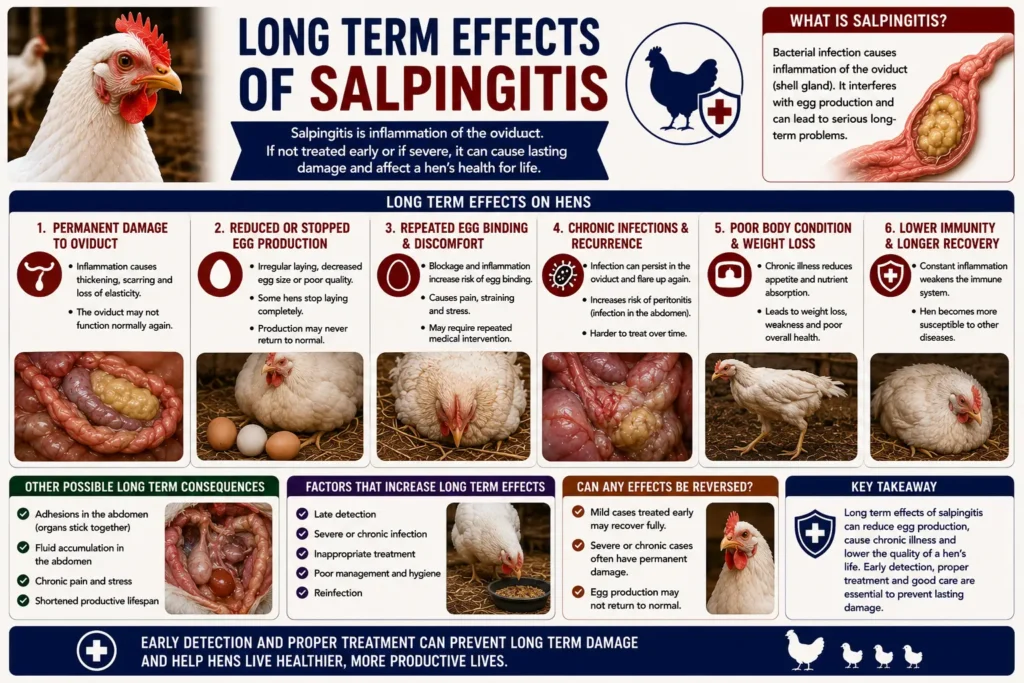
The long term effects of salpingitis often matter more to backyard keepers than the initial diagnosis, because even a hen that survives treatment may face lasting changes. Salpingitis is inflammation or infection of the oviduct, and once it becomes a chronic infection, it can leave behind scar tissue, reduced fertility, or a higher risk of relapse, even after antibiotics or surgery seem to work.
This guide looks past the initial treatment phase to answer the question keepers ask once the emergency has passed: what does life look like for a hen afterward?
Table of Contents
Quick Answer
Hens that recover from mild salpingitis often return to near-normal life, though egg production may drop. Chronic infection or repeated episodes can cause permanent scarring, reduced or stopped laying, and a higher lifetime risk of reproductive disease recurrence.
Read More: https://lashegg.com/how-long-does-recovery-take-chicken-illness/
How Salpingitis Becomes a Chronic Infection
Salpingitis starts as inflammation in the oviduct, usually triggered by bacteria like E. coli that travel up from the vent or spread from a nearby infection. When treatment starts early, the infection often resolves without lasting damage. When it doesn’t, the body responds by walling off the infection with a thick, cheesy mass sometimes called a “lash egg,” and this is where a chronic infection pattern tends to take hold.
Once scar tissue forms inside the oviduct, the tissue doesn’t return to its original condition. This is the biological root of most long term effects of salpingitis that keepers notice months or years after the initial illness.
Did You Know?
The material found in a lash egg isn’t an actual egg at all — it’s a buildup of pus, yolk residue, and tissue debris shaped roughly like an egg as it passes through the damaged oviduct.
Long Term Effects of Salpingitis on Egg Production
One of the most noticeable long term effects of salpingitis is a change in laying behavior. Scar tissue and structural damage inside the oviduct can interfere with how eggs form and travel, even after the infection itself is gone.
| Outcome | Likelihood After Mild Case | Likelihood After Chronic/Severe Case |
| Return to normal laying | Common | Uncommon |
| Reduced egg frequency | Occasional | Common |
| Soft-shelled or misshapen eggs | Occasional, temporary | More frequent, may persist |
| Complete stop in laying | Rare | Common, especially after oviduct removal |
| Internal laying recurrence | Low risk | Higher risk |
Hens that undergo surgical removal of the affected oviduct (salpingohysterectomy) will not lay eggs from that side again, though many go on to live comfortably as non-laying flock members or pets.
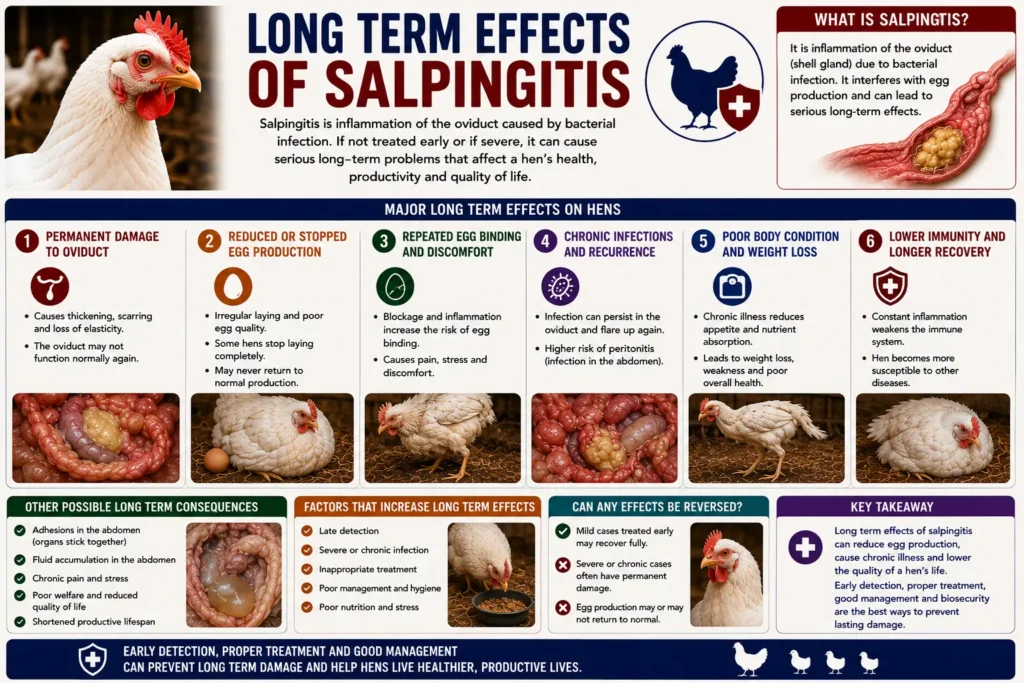
Long Term Effects of Salpingitis on Overall Health
Beyond egg production, a chronic infection in the reproductive tract can affect a hen’s broader health picture:
- Recurrent infections — scarred tissue is more prone to reinfection than healthy tissue
- Chronic low-grade inflammation — can contribute to reduced energy and slower recovery from unrelated illnesses
- Abdominal adhesions — internal scar tissue can occasionally affect nearby organs
- Weight and body condition changes — some hens carry lasting weight loss from the illness, while others develop fluid retention if inflammation persists
- Reduced lifespan in severe cases — advanced or repeatedly recurring salpingitis is associated with higher mortality risk in older laying hens, according to veterinary pathology data on reproductive disease in layers
Chronic Infection vs. Fully Resolved Case
| Feature | Fully Resolved Case | Chronic Infection |
| Symptoms | Gone after treatment | May wax and wane over time |
| Egg-laying | Often returns to normal | Frequently reduced or stopped |
| Vet visits needed | Usually just follow-up | Ongoing monitoring likely |
| Risk of recurrence | Low | Moderate to high |
| Long-term prognosis | Good | Guarded |
Signs of Recurring or Chronic Salpingitis
Keepers who’ve already treated one episode of salpingitis should watch closely for signs of relapse, since a chronic infection can return weeks, months, or even years later.
- Abdominal swelling or a “penguin stance” returning
- A drop in appetite or energy after a period of normal behavior
- Another lash-shaped mass appearing in the nest box
- Return of soft-shelled or oddly shaped eggs
- Labored breathing, which can indicate fluid buildup pressing on the lungs
When to Call a Vet
Any hen with a history of salpingitis who shows abdominal swelling, appetite loss, or breathing changes should see a poultry-experienced vet promptly. Because chronic infection can recur without obvious early symptoms, don’t wait to see if it resolves on its own.
Managing a Hen With a History of Chronic Salpingitis
Ongoing care looks different for a hen with a salpingitis history compared to a hen that’s never had reproductive illness. This is where distinguishing home management from professional veterinary treatment really matters.
Home Management (Supportive)
- Monitor body condition and appetite regularly
- Keep a simple health log noting laying patterns and behavior changes
- Reduce stress with adequate space and consistent routines
- Provide a balanced diet appropriate for a non-laying or reduced-laying hen if egg production has stopped
Veterinary Oversight
- Periodic check-ups to monitor for recurrence, especially in the first year after initial treatment
- Bloodwork or imaging if symptoms return, to catch chronic infection early
- Discussion of long-term outlook, including whether the hen is likely to remain a laying bird or transition to a non-laying flock member
- Guidance on humane treatment decisions if the condition progresses despite management
Expert Tip
Consider shifting a hen with chronic salpingitis history to a lower-protein, maintenance-level feed if she’s no longer laying regularly. Excess protein formulated for active layers isn’t necessary for a non-laying bird and won’t reverse reproductive damage.
Common Mistakes Keepers Make
- Assuming that once antibiotics finish, the hen is permanently in the clear
- Pushing a recovering hen back into full laying condition too quickly with high-calcium, high-protein layer feed
- Ignoring subtle recurring symptoms because “she already had this treated once”
- Skipping recommended follow-up vet visits after the first successful treatment
- Not adjusting expectations around future egg production after a severe case
Warning
A hen with a history of chronic salpingitis is at meaningfully higher risk for internal laying and egg yolk peritonitis, a serious abdominal infection. Any sudden decline in a bird with this history should be treated as urgent, not routine.
Life Expectancy and Quality of Life After Salpingitis
Many hens live full, comfortable lives after a single mild episode of salpingitis, especially when it’s caught early and treated properly. The picture changes with chronic infection or recurrent cases — repeated episodes place ongoing strain on the bird and typically point toward a more guarded long-term outlook.
Quality of life, not just lifespan, matters here. A hen that’s stopped laying but eats well, moves normally, and interacts with the flock can still have a good quality of life as a retired layer. A hen with recurring pain, labored breathing, or repeated infections may reach a point where humane treatment decisions, including euthanasia, become the kindest option.
Preventing Recurrence
While you can’t guarantee a hen with a history of salpingitis will never have another episode, these steps lower the risk:
- Maintain a clean, dry nest box environment to reduce bacterial exposure.
- Manage body weight, since overweight hens face higher reproductive disease risk.
- Reduce flock stress through adequate space and predator-proofing.
- Watch older hens more closely, since reproductive disease risk increases with age.
- Keep up with scheduled veterinary check-ins if your vet recommends ongoing monitoring.
People Also Ask
Can a chicken live a normal life after salpingitis? Many hens do, especially after a single mild episode treated early. Chronic infection or severe cases are more likely to leave lasting effects on egg production and increase the risk of future reproductive illness.
Does salpingitis shorten a chicken’s lifespan? It can, particularly in chronic or recurring cases, since ongoing inflammation and infection risk place added strain on the bird. A single well-treated mild case is less likely to significantly affect lifespan.
Will a hen stop laying eggs permanently after salpingitis? It depends on the severity and treatment. Some hens resume laying, though often at a reduced rate, while hens who have the affected oviduct surgically removed will not lay from that side again.
Is chronic salpingitis contagious to other hens? The bacteria involved can spread under poor sanitation, but salpingitis itself develops within an individual hen’s reproductive tract and isn’t directly contagious the way a respiratory virus would be.
How often does salpingitis come back after treatment? Recurrence rates aren’t precisely documented across backyard flocks, but veterinary sources note that chronic infection in the reproductive tract carries a real risk of relapse, which is why ongoing monitoring matters after initial treatment.
Final Thoughts
The long term effects of salpingitis vary widely from hen to hen, but understanding the pattern — reduced laying, higher recurrence risk, and the possibility of chronic infection — helps you set realistic expectations and catch problems early. Keep monitoring any hen with a salpingitis history, adjust her diet and routine as needed, and stay in touch with a poultry-experienced vet who can help you navigate ongoing care or, if necessary, a humane treatment decision down the road.