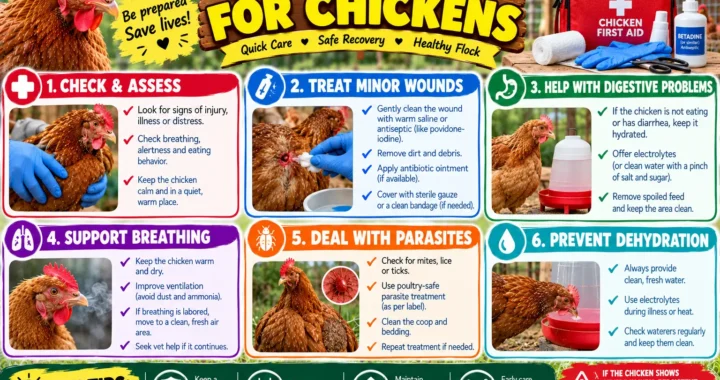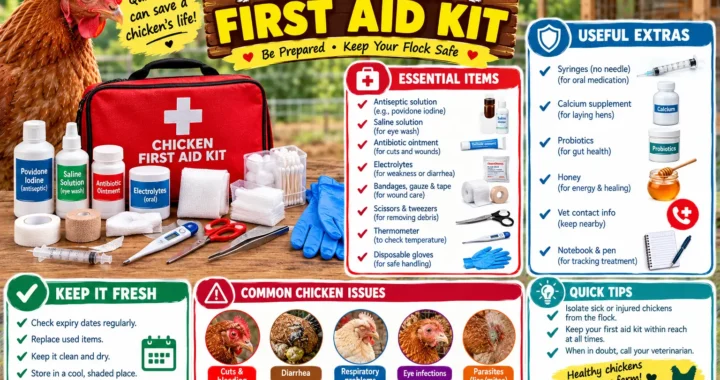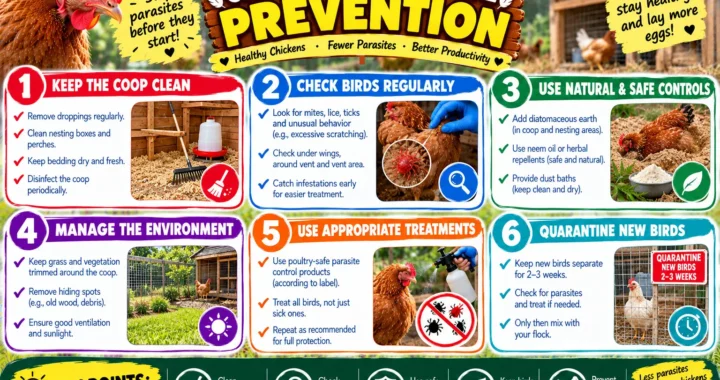
How Long Does Recovery Take for a Chicken? A Realistic Timeline

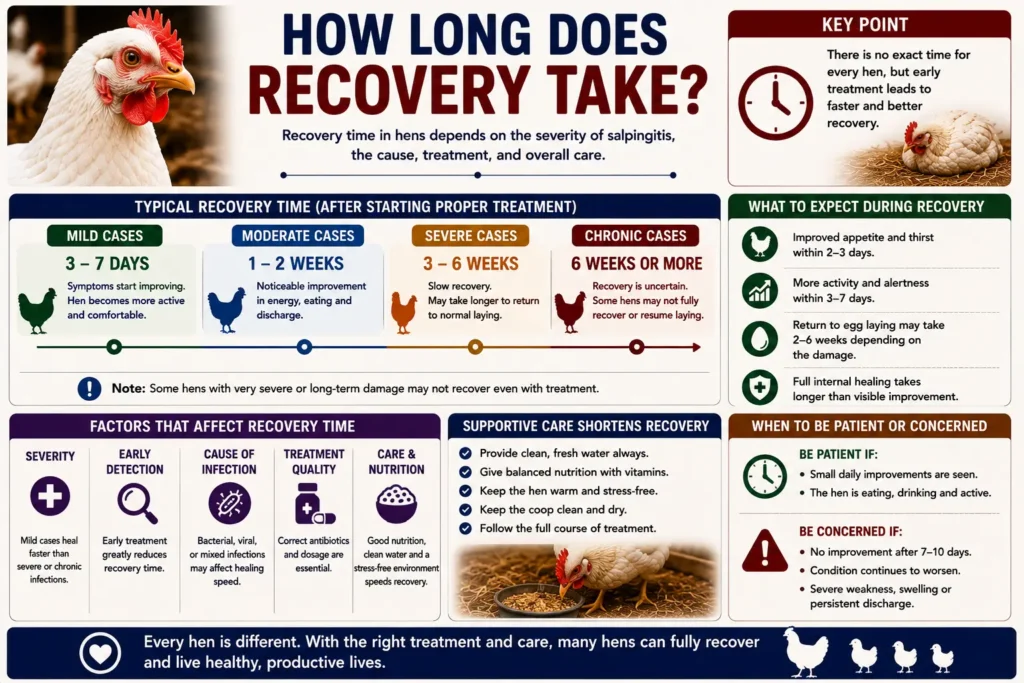
How long does recovery take when a chicken gets sick, injured, or has surgery? It’s one of the first questions keepers ask once the initial worry settles, and the honest answer is: it depends on the condition, the bird’s age, and how quickly treatment started. This guide breaks down realistic healing time ranges for the most common backyard flock issues, so you know what to expect instead of guessing.
Every hen heals a little differently, but there are patterns vets and experienced keepers rely on to set expectations. Knowing these ranges helps you tell the difference between normal healing and a setback that needs another vet visit.
Table of Contents
Quick Answer
Minor wounds and mild illness in chickens often improve within 3–7 days. Fractures typically take 4–6 weeks to heal. Post-surgical recovery, such as after a spay or mass removal, generally takes 2–4 weeks. Chronic or reproductive conditions can take much longer, and some never fully resolve.
Read More: https://lashegg.com/can-chickens-recover-from-salpingitis/
Why Recovery Time Varies So Much
Chickens egg are prey animals, and they instinctively hide weakness. This means visible symptoms often show up later than the actual onset of a problem, which affects how long does recovery take from the moment you notice something is wrong versus when the issue truly began.
Age, breed, nutrition, and overall flock stress all influence healing time too. A young, well-fed hen in a low-stress environment typically heals faster than an older bird already dealing with reduced immunity or poor body condition.
Did You Know?
A chicken’s normal body temperature runs around 105–107°F, which is part of why their immune response and healing process can look different from what keepers expect based on mammal recovery timelines.
Recovery Time by Condition
This table gives general healing time ranges based on veterinary guidance and common backyard flock experience. Individual cases can run shorter or longer depending on severity and how quickly care began.
| Condition | Typical Healing Time | Notes |
| Minor cuts or scrapes | 3–7 days | Clean and monitor for infection |
| Bumblefoot (early stage) | 1–3 weeks | Longer if infection has reached bone |
| Respiratory infection | 1–3 weeks | Some viral cases can linger longer |
| Simple leg fracture | 4–6 weeks | Requires confinement and rest |
| Wing fracture | 3–5 weeks | Usually heals well with limited flight activity |
| Bumblefoot surgery | 2–4 weeks | Bandage changes needed during healing |
| Spay or mass-removal surgery | 2–4 weeks | Vet-supervised recovery recommended |
| Egg binding (resolved) | 24–48 hours | Should improve quickly with treatment |
| Parasite treatment (mites/lice) | 1–2 weeks | Full clearance may need repeat treatment |
| Frostbite (mild) | 2–4 weeks | Severe cases with tissue loss take longer |
| Marek’s disease | Not typically reversible | Supportive care only; prognosis varies |
How Long Does Recovery Take After Chicken Surgery?
Post-surgical healing time depends on the procedure. Minor procedures like bumblefoot surgery often show real improvement within two weeks, while more invasive procedures, such as removing an infected oviduct, can take three to four weeks for full recovery. Your vet will usually schedule a follow-up visit around the one- to two-week mark to check how healing is progressing.
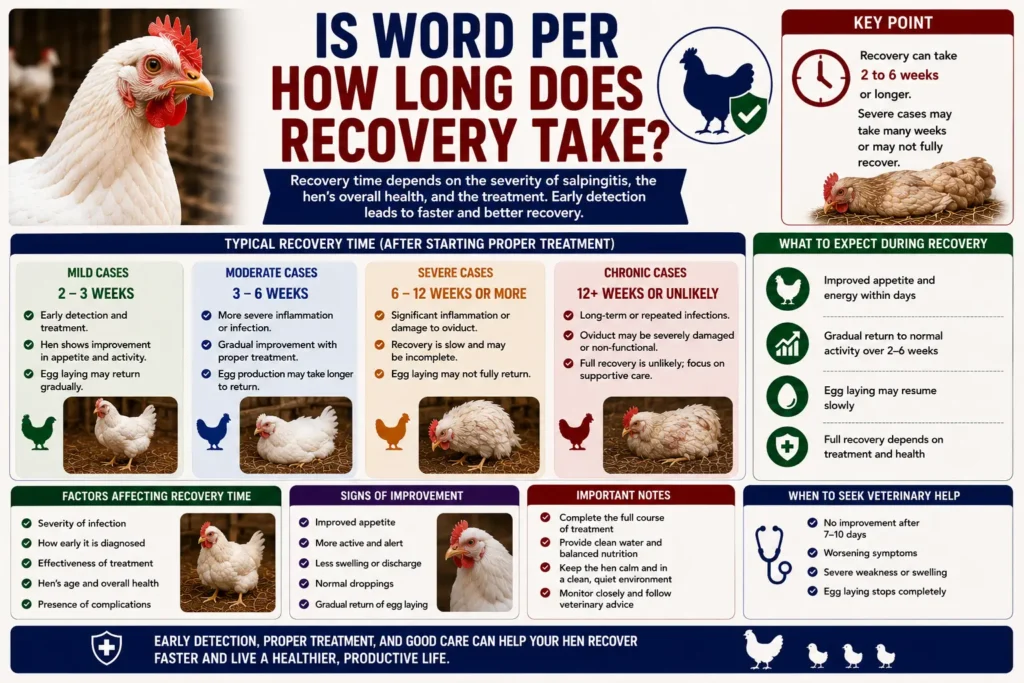
Signs Your Chicken Is Healing Normally
- Returning appetite and normal drinking behavior
- Improved energy and interest in flock activity
- Wound or surgical site looking clean, without swelling or discharge
- Normal droppings returning within a few days
- Steady or improving body weight
- Resuming normal perching and movement, even if slow at first
Signs of Delayed Healing or Complications
| Warning Sign | Possible Concern |
| Wound reopening or oozing | Infection or premature activity |
| Continued appetite loss past 3–4 days | Underlying illness not resolving |
| Swelling that increases instead of decreases | Infection spreading |
| Lethargy that doesn’t improve | Pain or systemic illness |
| Limping that worsens over time | Fracture not healing correctly |
| Foul odor from a wound or surgical site | Infection requiring vet attention |
When to Call a Vet
If healing time stalls — meaning symptoms plateau or worsen past the expected window for that condition — contact a poultry-experienced vet. This is especially true for surgical sites, fractures that don’t show improvement by week two, or any wound with worsening swelling or odor.
Home Care vs. Veterinary Follow-Up During Recovery
| Situation | Home Care Role | Veterinary Follow-Up Needed |
| Minor wound healing normally | Keep clean, monitor daily | Only if signs of infection appear |
| Fracture in a splint | Keep confined, limit movement | Recheck at 2 and 4 weeks |
| Post-surgical incision | Watch for swelling, keep area clean | Scheduled follow-up per vet instructions |
| Chronic condition (reproductive, respiratory) | Supportive care, monitoring | Regular vet checks; healing time may be extended or incomplete |
Expert Tip
Keep a simple daily log during recovery — appetite, activity level, and wound appearance. A written record makes it much easier to spot a slow decline that might be missed day to day, and it gives your vet useful information at follow-up visits.
Common Mistakes Keepers Make
- Returning a healing bird to the flock too early, before mobility or immunity has recovered
- Removing a splint or bandage ahead of schedule because the bird “seems fine”
- Assuming no improvement after a few days means treatment failed, when some conditions need longer healing time
- Skipping the follow-up vet visit once the hen looks better
- Not adjusting nutrition to support healing, such as added protein during recovery from surgery or injury
Warning
Never assume a chicken is fully healed just because she’s back to eating and walking. Internal healing, especially after fractures or surgery, often takes longer than outward appearance suggests. Follow your vet’s full recovery timeline, not just visible signs.
Nutrition and Environment: Speeding Up Healthy Healing Time
While you can’t force healing to happen faster than biology allows, you can support the process:
- Offer a higher-protein feed or supplement during recovery to support tissue repair.
- Keep the recovery space warm, quiet, and separate from flock competition for food.
- Provide easy access to food and water, especially for birds with limited mobility.
- Reduce stress by limiting handling to what’s necessary for treatment and monitoring.
- Maintain clean bedding to lower infection risk around wounds or surgical sites.
University extension poultry programs commonly recommend isolating a recovering bird in a “hospital pen” — a small, separate enclosure with easy access to resources — to reduce stress and competition during healing.
Reintroducing a Recovered Hen to the Flock
Chickens re-establish pecking order whenever a bird has been separated for an extended period. Reintroduce gradually:
- Allow visual contact through a fence or wire divider for a few days first
- Reintroduce during free-range time when there’s more space to avoid confrontation
- Watch closely for excessive pecking during the first 24–48 hours
- Provide multiple food and water stations to reduce competition
People Also Ask
How long does it take a chicken to recover from being sick? Mild illness often improves within a week with supportive care, while more serious infections can take two to three weeks. Recovery time depends on the specific illness and how early treatment started.
How long does a chicken’s broken leg take to heal? A simple fracture generally takes four to six weeks to heal with proper confinement and rest. Vet-set splints and follow-up X-rays help confirm healing is on track.
Do chickens recover faster than other animals? Chickens have a high body temperature and fast metabolism, which can support quicker tissue healing in some cases, but their instinct to hide illness often means treatment starts later, which can offset that advantage.
How can I tell if my chicken is in pain during recovery? Watch for reduced appetite, hunched posture, reluctance to move, and vocal changes. If pain signs persist beyond the expected healing time for the condition, contact a vet about pain management options.
Should a recovering chicken be kept separate from the flock? Yes, in most cases. Separation reduces stress, prevents pecking at a wound or surgical site, and gives you an easier way to monitor appetite and droppings during healing time.
Final Thoughts
How long does recovery take for a chicken really comes down to the specific condition, its severity, and how quickly you stepped in. Minor issues often resolve within a week, while fractures, surgery, and chronic conditions need weeks of monitoring and, in some cases, ongoing veterinary care. Keep watching for the signs of normal healing, don’t rush a bird back to the flock too soon, and loop in a poultry-experienced vet any time healing time stalls or symptoms return.