The Best Feed for Reproductive Health in Laying Hens

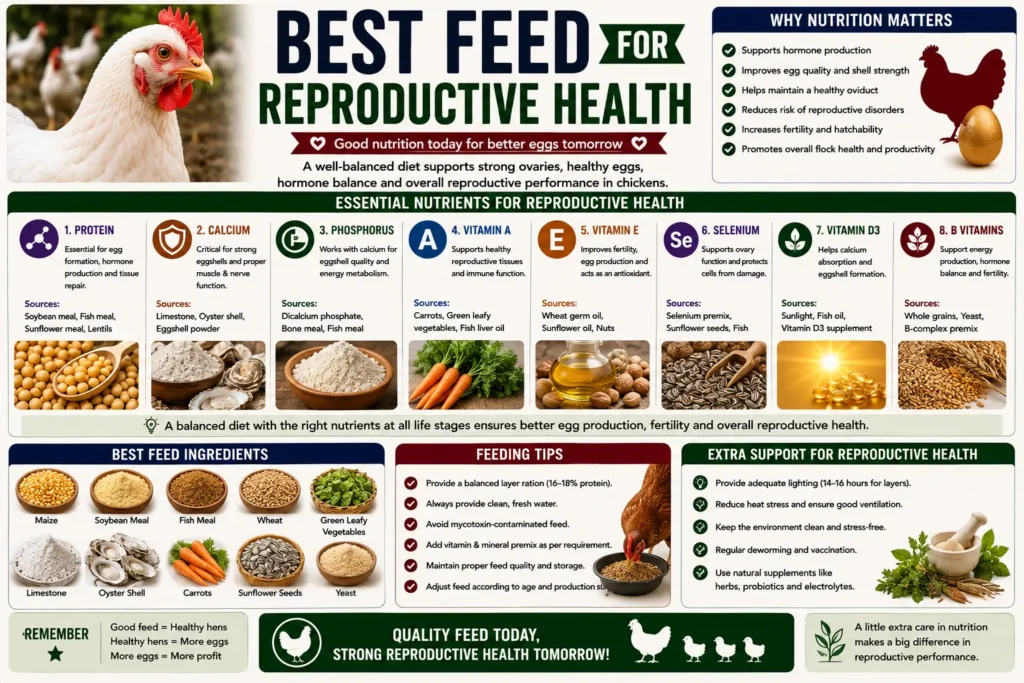
Choosing the best feed for reproductive health can make a real difference in how well your hens lay, how strong their eggshells are, and how resistant they stay to conditions like salpingitis and egg binding. Layer nutrition isn’t just about getting eggs — it’s about supporting the entire reproductive system so it keeps working well for years, not just months.
This guide breaks down what actually goes into a nutritionally complete layer diet, which nutrients matter most for reproductive health, and how to adjust feed as your flock ages or faces specific health challenges.
Table of Contents
Quick Answer
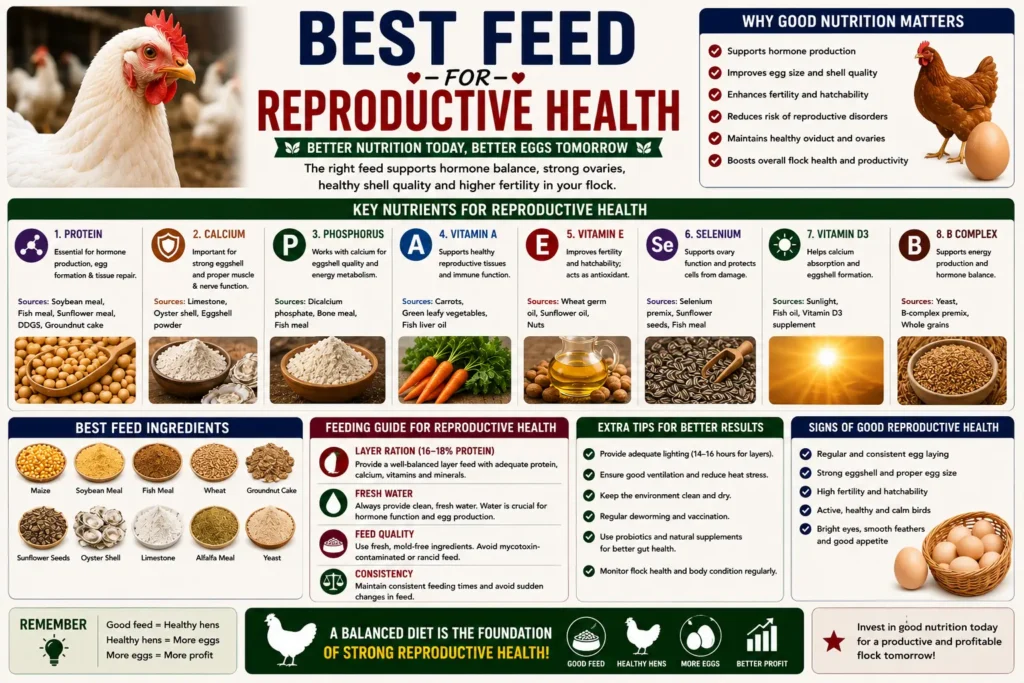
The best feed for reproductive health is a complete, age-appropriate layer feed with 16–18% protein, adequate calcium (around 3.5–4.5%), balanced phosphorus, and key vitamins like A, D3, and E. Supplementing with free-choice oyster shell supports eggshell strength without overloading younger or non-laying birds.
Why Layer Nutrition Directly Affects Reproductive Health
A hen’s reproductive tract works constantly during her laying years, forming a new egg roughly every 24 to 26 hours. That process demands a steady supply of protein, calcium, and specific vitamins. When layer nutrition falls short, the reproductive system is often the first place problems show up — thin shells, irregular laying, or a higher susceptibility to infections like salpingitis.
According to nutrition guidance summarized by university extension poultry programs, deficiencies in calcium or protein are among the most common preventable contributors to reproductive stress in backyard flocks. This is exactly why choosing the best feed for reproductive health matters as much as any other flock management decision.
Read More: https://lashegg.com/biosecurity-for-backyard-chickens/
Did You Know?
A single egg contains roughly 2 grams of calcium, almost all of it pulled from the hen’s diet or, if intake is insufficient, from her own bones — which is why consistent calcium intake matters so much for long-term skeletal and reproductive health.
Key Nutrients in the Best Feed for Reproductive Health
Protein
Protein builds and repairs tissue throughout the reproductive tract and supports albumen (egg white) formation. Most standard layer feeds provide 16–18% protein, which suits the needs of actively laying hens.
Calcium
Calcium is essential for eggshell formation and overall skeletal health. Layer feed typically includes 3.5–4.5% calcium, roughly four times what a non-laying bird needs, since laying hens have such high daily calcium demand.
Phosphorus
Phosphorus works alongside calcium for shell quality and bone strength. The ratio between calcium and phosphorus matters — too much phosphorus relative to calcium can interfere with proper calcium absorption.
Vitamin D3
Vitamin D3 is necessary for calcium absorption. Without adequate D3, even a calcium-rich diet won’t translate into strong eggshells or healthy bone density.
Vitamin A
Vitamin A supports the health of mucous membranes lining the reproductive tract, which plays a role in resisting the bacterial infections linked to conditions like salpingitis.
Vitamin E and Selenium
These work together to support immune function and reproductive tissue health, and are commonly included in complete layer formulations.
Layer Nutrition by Life Stage
| Life Stage | Protein Needs | Calcium Needs | Feed Type |
| Chicks (0–8 weeks) | 18–20% | Low (~1%) | Starter feed |
| Pullets (8–18 weeks) | 15–16% | Low-moderate (~1%) | Grower feed |
| Point of lay (approaching 18–20 weeks) | 16–18% | Increasing (~2%) | Transition to layer feed |
| Active layers | 16–18% | High (3.5–4.5%) | Complete layer feed |
| Non-laying or retired hens | 14–16% | Low (~1%) | Maintenance/all-flock feed |
Expert Tip
Switch pullets to layer feed gradually around the time they lay their first egg, not before. Introducing high calcium levels too early can strain developing kidneys in young birds that aren’t laying yet.
Best Feed for Reproductive Health: Whole Feed vs. Supplementation
| Approach | Pros | Cons |
| Complete layer feed alone | Balanced, simple, less room for error | May need calcium supplementation for older or heavy layers |
| Layer feed + free-choice oyster shell | Allows hens to self-regulate calcium intake | Requires a separate feeding station |
| Homemade or mixed grain diets | Can be tailored, often cheaper | Easy to create nutrient imbalances without careful formulation |
| Treats/scratch-heavy diets | Hens enjoy variety | Dilutes overall nutrition if treats exceed 10% of diet |
Warning
Scratch grains and most table scraps are low in the protein and calcium a laying hen needs. Keeping treats under about 10% of total daily intake helps protect the nutritional balance the best feed for reproductive health depends on.
Feed and Its Role in Preventing Reproductive Disease
While no feed can guarantee a hen never develops a reproductive condition, layer nutrition plays a documented supporting role in overall resilience:
- Adequate protein supports tissue repair and immune response in the oviduct
- Balanced calcium and phosphorus reduce the risk of thin-shelled or broken eggs, which can otherwise lead to internal egg breakage and infection
- Vitamin A supports the mucous membrane barrier that helps resist bacterial entry
- Maintaining appropriate body weight through correct feed portions lowers the risk factors associated with conditions like salpingitis and egg binding
When to Call a Vet
If you notice thin-shelled eggs, reduced laying, or signs of illness despite feeding a complete layer diet, it’s worth ruling out an underlying health issue with a poultry-experienced vet rather than assuming diet alone is the cause.
Common Feed-Related Mistakes That Hurt Reproductive Health
Common Mistakes Keepers Make
- Feeding chick starter or all-flock feed to actively laying hens without added calcium
- Over-supplementing calcium for young or non-laying birds
- Relying heavily on scratch grains, which dilute the balanced nutrition of a complete feed
- Not adjusting feed as hens transition from pullet to point-of-lay to full production
- Ignoring feed freshness — old or improperly stored feed can lose vitamin potency over time
How to Choose the Best Feed for Reproductive Health
- Check the protein percentage on the feed label — look for 16–18% for active layers.
- Confirm calcium content is in the 3.5–4.5% range for layer-specific formulas.
- Look for added vitamin D3, vitamin A, and vitamin E in the ingredient list.
- Choose a feed appropriate for your flock’s life stage, not a one-size-fits-all option if you have mixed-age birds.
- Store feed in a cool, dry, pest-proof container to preserve nutrient quality.
- Offer free-choice oyster shell separately so hens can regulate intake based on individual need.
Adjusting Layer Nutrition for Special Situations
| Situation | Feed Adjustment |
| Hen recovering from illness or surgery | Temporarily higher protein to support tissue repair |
| Hen with history of reproductive disease | Vet-guided diet; may shift toward maintenance feed if no longer laying |
| Hot weather | Increase calcium slightly, since heat can reduce feed intake and calcium absorption |
| Molting season | Higher protein feed (18–20%) to support feather regrowth |
| Overweight hens | Portion control and reduced treats rather than dramatic feed changes |
People Also Ask
What is the best feed for reproductive health in older hens? A complete layer feed with adjusted calcium supplementation, alongside free-choice oyster shell, generally works well for older hens. Some keepers also reduce protein slightly for hens that are laying less frequently.
Does diet really prevent salpingitis in chickens? Diet alone can’t guarantee prevention, but proper layer nutrition supports immune function and reduces risk factors like poor eggshell quality that can contribute to reproductive infections.
How much calcium does a laying hen need per day? Laying hens typically need around 4 grams of calcium daily, which a complete layer feed combined with free-choice oyster shell usually provides.
Can too much protein harm a hen’s reproductive health? Excess protein isn’t typically harmful for actively laying hens, but it’s unnecessary and potentially wasteful for non-laying birds, and won’t reverse existing reproductive damage.
Is organic feed better for reproductive health? Organic certification addresses how ingredients are grown, not necessarily the nutritional balance of protein, calcium, and vitamins. What matters most for reproductive health is the feed’s nutrient profile matching your flock’s life stage.
Final Thoughts
The best feed for reproductive health comes down to matching protein, calcium, phosphorus, and key vitamins to your flock’s life stage and needs. Good layer nutrition won’t prevent every reproductive issue, but it builds a strong foundation that supports egg quality and general resilience. Keep watching your hens’ eggs and body condition for changes, and bring in a poultry-experienced vet if something doesn’t improve with proper feeding alone.
FAQ
Q: What makes a feed the best feed for reproductive health? A: The best feed for reproductive health balances 16–18% protein, 3.5–4.5% calcium, adequate phosphorus, and vitamins A, D3, and E, tailored to a hen’s specific life stage and laying status.
Q: How does layer nutrition affect eggshell quality? A: Calcium and vitamin D3 are the two biggest nutritional factors in eggshell strength. Insufficient levels of either can lead to thin, soft, or misshapen shells over time.
Q: Should I switch feed if my hen stops laying? A: Yes, generally. Hens that stop laying regularly, whether from age or a health condition, typically do better on a lower-calcium maintenance or all-flock feed rather than continuing on high-calcium layer feed.
Q: Can poor layer nutrition cause reproductive illness? A: Poor nutrition doesn’t directly cause infections like salpingitis, but it can weaken the reproductive tract’s resilience and contribute to related issues like thin shells, which raise overall risk.
Q: How long does it take for a feed change to affect reproductive health? A: Some effects, like eggshell quality, can show improvement within a couple of weeks. Broader reproductive health benefits from consistent, balanced nutrition build up over months, not days.