Salpingitis vs Vent Gleet: Two Very Different Reasons for Vent-Area Symptoms

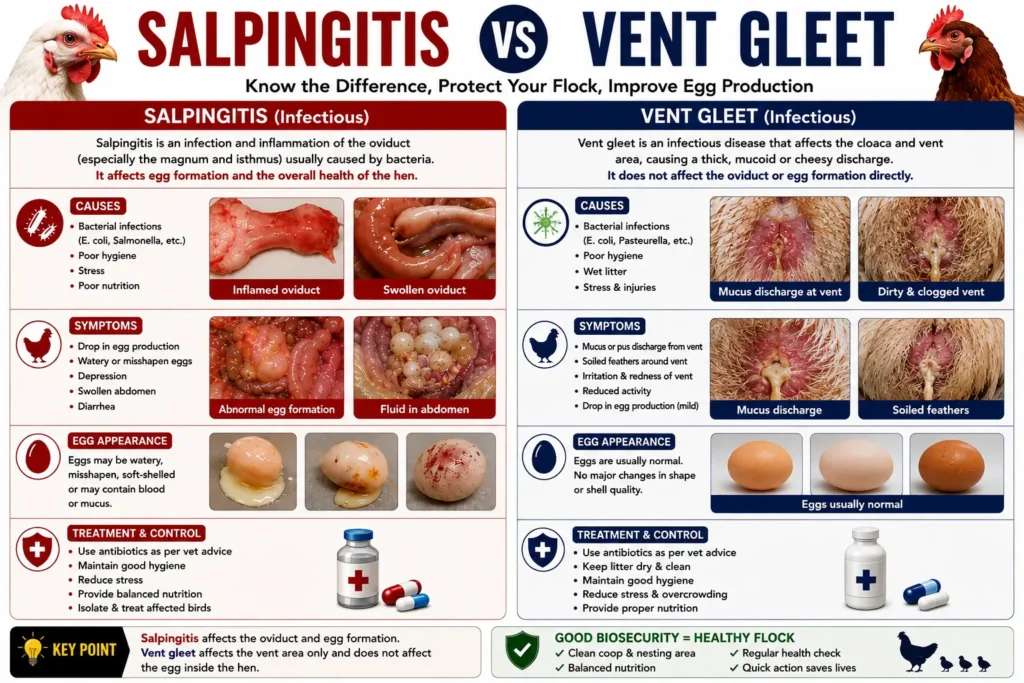
A hen with a messy, irritated vent area or unusual discharge often has owners searching for answers, and salpingitis vs vent gleet is one of the most common comparisons that comes up. Both conditions can cause discharge and discomfort near the vent, but they start from completely different places in the body. One is a reproductive tract infection. The other is a yeast overgrowth affecting the cloaca and surrounding tissue.
This guide breaks down both conditions clearly, compares their symptoms side by side, and explains what treatment looks like for each so you can respond with the right approach.
Quick Answer: Salpingitis is an infection or inflammation of the oviduct, the internal reproductive tube. Vent gleet, also called cloacitis, is typically a yeast (Candida) overgrowth affecting the cloaca and vent area. They can share some visible symptoms near the vent, but they involve different organ systems and need different treatments.
Table of Contents
What Is Salpingitis?
Salpingitis is inflammation or infection of the oviduct, the internal tube responsible for forming and moving eggs from the ovary to the vent. Bacteria, most commonly E. coli, invade this tissue and disrupt normal egg production. The infection can range from mild to life-threatening depending on how early it’s caught.
Veterinary pathology reviews from poultry extension programs consistently list salpingitis among the top causes of death in mature laying hens, particularly those several years into consistent production.
Read More: https://lashegg.com/salpingitis-vs-internal-laying/
Common Causes of Salpingitis
- Bacterial infection, most often E. coli, sometimes Salmonella
- Ascending infection traveling upward from the cloaca into the reproductive tract
- Respiratory illness that spreads into the reproductive system
- Chronic stress, from overcrowding or poor ventilation
- Age, since older hens face higher risk
- Genetics, with some high-production breeds more prone to it
Symptoms of Salpingitis
- Declining or stopped egg production
- Swollen, fluid-filled abdomen
- Lethargy and reduced appetite
- Foul-smelling discharge from the vent
- Passing a lash egg, a firm mass of pus and tissue
- Penguin-like stance in advanced cases
What Is Vent Gleet?
Vent gleet, medically referred to as cloacitis, is typically caused by an overgrowth of Candida albicans, a yeast that normally lives in small amounts in a hen’s digestive tract. When something disrupts the normal balance, often antibiotic use, poor diet, or a weakened immune system, this yeast multiplies and irritates the cloaca and surrounding vent tissue.
Unlike salpingitis, vent gleet does not originate in the reproductive tract. It’s a digestive and skin-level issue centered around the vent opening itself.
Common Causes of Vent Gleet
- Yeast overgrowth, usually Candida albicans
- Recent antibiotic use, which can disrupt normal gut flora
- Poor diet, including excess sugar from treats like fruit
- Damp, dirty coop conditions that irritate vent tissue
- Weakened immune function, from stress, age, or other illness
- Bacterial involvement, sometimes occurring alongside the yeast overgrowth
Symptoms of Vent Gleet
- Crusty, white, or pasty discharge around the vent
- Foul or yeasty odor
- Matted, soiled feathers around the vent area
- Redness, irritation, or swelling of the vent tissue
- Straining or apparent discomfort near the vent
- Reduced appetite in more severe cases
- Occasional drop in egg production
Salpingitis vs Vent Gleet: Side-by-Side Comparison Table
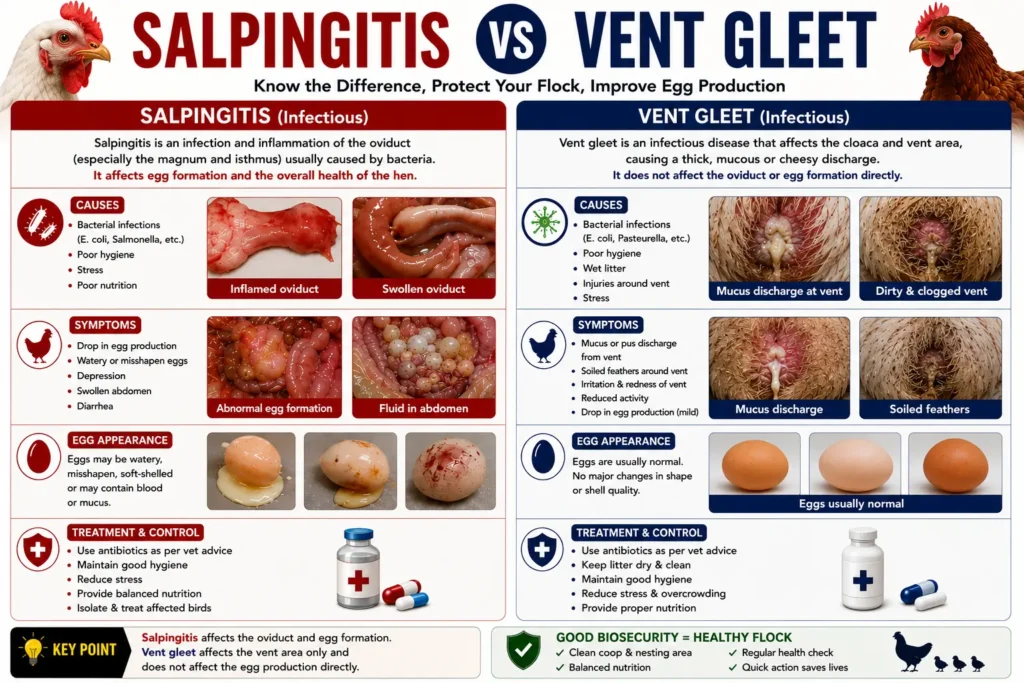
Placing salpingitis vs vent gleet side by side makes the distinction much easier to see, especially since both can involve some form of vent-area discharge.
| Feature | Salpingitis | Vent Gleet |
| Root cause | Bacterial infection of the internal oviduct | Yeast (Candida) overgrowth in the cloaca and vent area |
| Location | Internal reproductive tract | Cloaca and external vent tissue |
| Discharge type | Foul-smelling, often thin or fluid-like | Crusty, white or pasty, yeasty smell |
| Abdominal swelling | Common in advanced cases | Rare |
| Feather condition | Usually unaffected | Often matted or soiled near the vent |
| Egg production impact | Significant, often stops laying | Mild to moderate, sometimes unaffected |
| Lash egg present | Sometimes | No |
| Typical treatment | Antibiotics, anti-inflammatories | Antifungal treatment, dietary changes |
Vent Gleet Comparison: Why the Two Conditions Get Confused
A vent gleet comparison with salpingitis usually comes up because both conditions can leave a hen’s vent area looking messy or irritated. The key difference is what’s producing that mess. Vent gleet creates a crusty, yeasty discharge from an external and lower digestive tract issue. Salpingitis, when discharge is present, tends to come from deeper inside the reproductive tract and often pairs with more serious systemic symptoms like abdominal swelling and lethargy.
How to Tell Them Apart at Home
While a vet visit is the only way to confirm a diagnosis, a few observations can help you form a reasonable first impression.
- Check the discharge texture. Crusty or pasty white material points toward vent gleet. Thin, foul, fluid-like discharge leans toward salpingitis.
- Feel the abdomen gently. Swelling or a fluid-filled feel suggests salpingitis rather than vent gleet.
- Look at feather condition. Matted, soiled feathers around the vent are a classic vent gleet sign.
- Watch egg production. A sudden, significant drop is more typical of salpingitis. Vent gleet may cause a milder dip or none at all.
- Note overall energy level. Salpingitis more often causes noticeable lethargy and appetite loss than vent gleet does.
Did You Know?
Vent gleet got its nickname partly from the pasty, “gleet-like” discharge it produces, and it has a long history as one of the more visually recognizable poultry ailments. Despite looking alarming, it’s generally less life-threatening than salpingitis when caught and treated early.
Diagnosing Salpingitis and Vent Gleet
For Suspected Vent Gleet
- Visual examination of the vent area and surrounding feathers
- Swab or discharge sample examined under a microscope to confirm yeast presence
- Diet and medication history review, since antibiotics and sugary treats are common triggers
For Suspected Salpingitis
- Abdominal palpation to check for swelling or a fluid-filled feel
- Bloodwork to assess infection markers
- Radiographs or ultrasound to evaluate the reproductive tract
- Culture and sensitivity testing of any discharge
- Necropsy, in hens that have already died, to confirm diagnosis
Expert Tip
If you’re uncertain which condition you’re looking at, a same-day exam is worth the trip. Vent gleet responds well to prompt antifungal treatment, and salpingitis has a much better prognosis when antibiotics start early rather than after the infection has progressed.
Treatment Options
Vent Gleet Treatment
- Antifungal medication, prescribed or recommended by a vet
- Diluted apple cider vinegar in water, sometimes used to help rebalance gut flora, under vet guidance
- Dietary adjustments, reducing sugary treats and reviewing overall diet balance
- Cleaning the vent area gently with warm water to remove crusted discharge
- Probiotic support, especially after any recent antibiotic use
Salpingitis Treatment
- Antibiotics chosen based on culture results
- Anti-inflammatory medication to reduce swelling and discomfort
- Fluid drainage, for hens with abdominal fluid buildup
- Supportive care, including isolation, clean bedding, and easy access to food and water
Warning
Do not treat suspected vent gleet with random over-the-counter dewormers or antibiotics without guidance. Since vent gleet is typically a yeast issue, antibiotics can sometimes make the underlying imbalance worse rather than better.
Recovery and Long-Term Outlook
| Factor | Salpingitis | Vent Gleet |
| Typical recovery time | Days to weeks with treatment | One to a few weeks with consistent care |
| Recurrence risk | Higher with chronic infection | Higher if diet or coop conditions aren’t corrected |
| Long-term laying | Often reduced in severe cases | Usually returns to normal |
| Overall prognosis | Guarded to good, depending on stage | Generally good with prompt treatment |
Vent gleet, while uncomfortable and unsightly for the hen, typically carries a better overall prognosis than salpingitis when addressed early. Salpingitis outcomes vary more widely, since much depends on how much damage the infection has already caused by the time treatment starts.
Prevention Strategies
For Vent Gleet:
- Limit sugary treats like fruit to occasional amounts
- Keep the coop clean and dry to reduce yeast-friendly conditions
- Use probiotics after any course of antibiotics
- Monitor vent feathers regularly for early signs of matting or discharge
For Salpingitis:
- Maintain clean, dry bedding to lower bacterial exposure
- Reduce stress through adequate space and consistent routines
- Support good ventilation to lower respiratory illness risk
- Treat respiratory infections quickly before they spread
- Monitor older hens more closely, since age raises risk
Common Mistakes Owners Make
- Assuming any vent-area discharge is automatically vent gleet
- Using antibiotics for suspected vent gleet without a proper diagnosis
- Ignoring abdominal swelling because vent discharge looks like the main issue
- Overfeeding sugary treats without realizing the yeast connection
- Waiting too long to seek care for suspected salpingitis, since it can progress quickly
- Not adjusting coop cleanliness after a vent gleet diagnosis, leading to repeat cases
When to Call a Vet
Reach out to a poultry-experienced veterinarian if you notice:
- Crusty, pasty, or foul-smelling discharge around the vent
- Matted feathers combined with visible discomfort
- Abdominal swelling, especially if it feels fluid-filled
- A significant, sudden drop in egg production
- Lethargy or appetite loss lasting more than a day
- A lash egg found in the nesting box
When to Call a Vet: Salpingitis vs Vent Gleet Urgency
Vent gleet, while it should still be addressed promptly, is rarely an immediate emergency on its own. Salpingitis, especially with abdominal swelling or lethargy, deserves faster attention, since it can progress to a life-threatening stage more quickly than an uncomplicated yeast overgrowth.
Can Vent Gleet Lead to Salpingitis?
Vent gleet itself does not directly cause salpingitis, since the two conditions involve different organ systems. However, a hen with a weakened immune system or ongoing digestive imbalance may be more vulnerable to other infections in general, including reproductive tract issues. Keeping a hen’s overall health strong through good diet and clean housing helps reduce risk across the board.
Is Vent Gleet Contagious to Other Hens?
Vent gleet is not considered highly contagious in the way a respiratory virus is, but shared environmental factors, like a damp coop or a diet high in sugary treats, can put multiple hens in the same flock at similar risk around the same time. Addressing flock-wide diet and cleanliness after one case is diagnosed is a reasonable precaution.
Frequently Asked Questions
What’s the main difference between salpingitis and vent gleet? Salpingitis is a bacterial infection of the internal oviduct. Vent gleet is typically a yeast overgrowth affecting the cloaca and external vent area. Comparing salpingitis vs vent gleet, one involves the reproductive tract and the other involves the digestive tract and vent tissue.
Can salpingitis and vent gleet happen at the same time? It’s possible, though they’re separate conditions with different causes. A hen with a weakened immune system from one issue could be more susceptible to developing the other, though one doesn’t directly cause the other.
Is vent gleet as serious as salpingitis? Generally, no. Vent gleet tends to respond well to antifungal treatment and dietary changes, with a good overall prognosis. Salpingitis carries a more variable outlook and can become life-threatening if untreated.
What does vent gleet discharge look like compared to salpingitis discharge? Vent gleet discharge is typically crusty, white or pasty, and has a distinct yeasty smell. Salpingitis discharge, when present, tends to be thinner, foul-smelling, and often paired with abdominal swelling.
Can diet cause vent gleet? Yes. Diets high in sugary treats, like excessive fruit, can encourage yeast overgrowth. Reviewing and adjusting treat intake is often part of both treating and preventing vent gleet.
Does vent gleet affect egg production? It can cause a mild dip in some cases, but many hens continue laying relatively normally through a vent gleet episode. Salpingitis, by contrast, more often causes a significant or complete stop in egg production.
How long does vent gleet take to clear up? With consistent antifungal treatment and dietary adjustments, most cases improve within one to a few weeks. Recurrent cases may point to an underlying diet or coop condition that still needs addressing.