Salpingitis vs Prolapsed Vent: Why These Two Look Similar But Aren’t

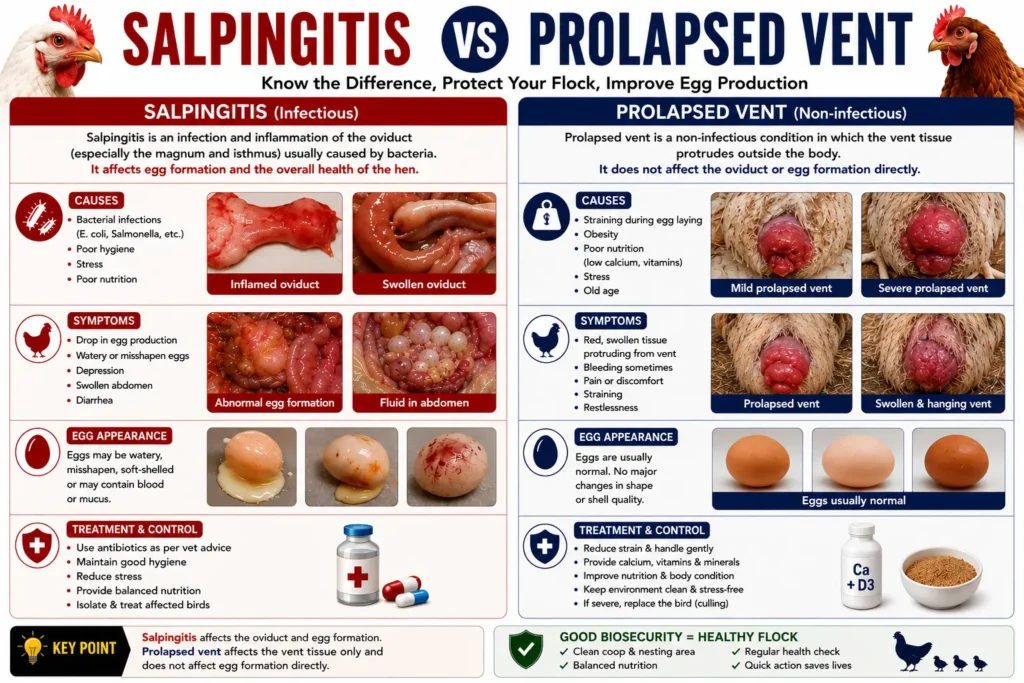
Red, swollen tissue around a hen’s vent can mean two very different things, which is exactly why salpingitis vs prolapsed vent is such a common point of confusion for chicken owners. One condition is an internal infection of the reproductive tract. The other is a visible, physical protrusion of tissue through the vent opening. Both can cause distress, straining, and a hen that looks unwell, but they require different responses.
This guide separates the two clearly, compares symptoms side by side, and explains exactly what to do, and what to avoid doing, if you find visible tissue or swelling near your hen’s vent.
Quick Answer: Salpingitis is an infection or inflammation deep inside the oviduct, often not visible from the outside except through swelling or discharge. A prolapsed vent is a physical condition where internal tissue, usually part of the oviduct or cloaca, pushes outward and becomes visible outside the vent opening. A prolapse is often an emergency requiring same-day veterinary attention.
Table of Contents
What Is Salpingitis?
Salpingitis is inflammation or infection of the oviduct, the internal tube that forms and moves an egg from the ovary toward the vent. Bacteria, most often E. coli, invade this tissue and interfere with normal egg production. The condition can range from mild to life-threatening, depending on how early it’s caught and treated.
Poultry pathology data reviewed by veterinary extension programs consistently rank salpingitis among the top causes of death in mature laying hens, particularly those several years into consistent production.
Read More: https://lashegg.com/salpingitis-vs-vent-gleet/
Common Causes of Salpingitis
- Bacterial infection, typically E. coli, sometimes Salmonella
- Ascending infection traveling upward from the cloaca
- Respiratory illness spreading into the reproductive tract
- Chronic stress, from overcrowding or poor ventilation
- Age, since older hens face higher risk
- Genetics, with some high-production breeds more prone to it
Symptoms of Salpingitis
- Declining or stopped egg production
- Swollen, fluid-filled abdomen
- Lethargy and reduced appetite
- Foul-smelling discharge from the vent
- Passing a lash egg, a firm mass of pus and tissue
- Penguin-like stance in advanced cases
What Is a Prolapsed Vent?
A prolapsed vent happens when internal tissue, typically part of the oviduct, pushes outward through the vent opening and becomes visible from the outside. It usually occurs during or right after laying an egg, when the vent everts naturally for a moment and then fails to retract properly.
This is a mechanical, physical condition rather than an infection, though an untreated prolapse can quickly become infected or attract pecking injuries from flockmates, which turns a manageable situation into a true emergency.
Common Causes of Prolapsed Vent
- Straining during difficult or oversized egg passage
- Obesity, which puts extra pressure on pelvic tissue
- Weak vent muscles, often linked to age or repeated prior prolapses
- Excess calcium or overly rich diet accelerating early or overly frequent laying
- Genetics, since some high-production breeds show higher prolapse rates
- Rapid onset of lay in pullets that started laying too young or too heavily
Symptoms of Prolapsed Vent
- Visible pink or red tissue protruding from the vent
- Straining or repeated attempts to lay
- Blood or visible irritation around the protruding tissue
- Other hens pecking at the exposed tissue
- Lethargy if the prolapse has been present for a while
- Reduced or stopped egg-laying while the prolapse persists
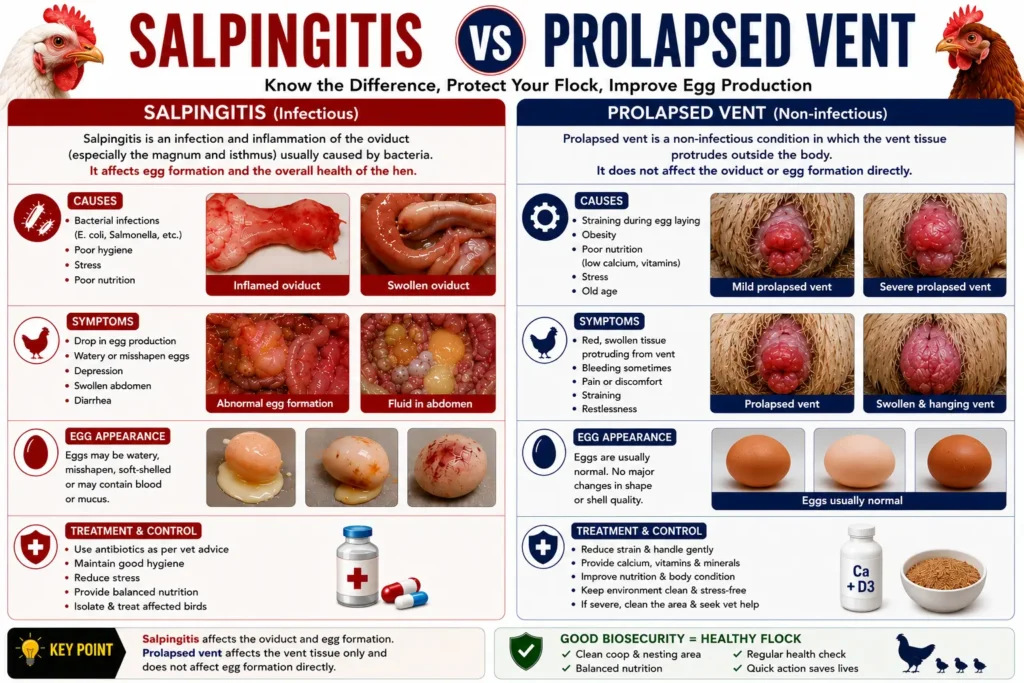
Salpingitis vs Prolapsed Vent: Side-by-Side Comparison Table
Comparing salpingitis vs prolapsed vent directly shows why one is often invisible at first while the other is impossible to miss.
| Feature | Salpingitis | Prolapsed Vent |
| Root cause | Bacterial infection of the internal oviduct | Physical eversion of internal tissue through the vent |
| Visibility | Internal; often only shows as swelling or discharge | Immediately visible, protruding tissue |
| Onset | Gradual, over days or weeks | Sudden, usually during or after laying |
| Pain/distress | Present but less dramatic outwardly | Often severe and visually distressing |
| Risk from flock | Low direct risk from other hens | High risk of pecking injury from flockmates |
| Emergency level | Ranges from mild to severe | Almost always urgent |
| Typical treatment | Antibiotics, anti-inflammatories | Manual repositioning, isolation, possible surgery |
Prolapse vs Infection: Understanding the Core Distinction
The heart of any prolapse vs infection comparison comes down to mechanism. A prolapse is a structural, physical failure, tissue that should stay inside the body ends up outside it. An infection like salpingitis is a biological process, bacteria multiplying and damaging tissue from within. A hen can experience one without the other, though a poorly managed prolapse can eventually lead to a secondary infection if exposed tissue becomes contaminated or damaged.
Can a Prolapse Lead to Salpingitis?
Yes, indirectly. Exposed prolapsed tissue is vulnerable to injury, drying out, and bacterial contamination from the environment or from pecking injuries. If bacteria travel from the damaged, exposed tissue back into the reproductive tract, a secondary infection resembling or contributing to salpingitis can develop. This is one of several reasons a prolapse needs prompt attention rather than a wait-and-see approach.
Did You Know?
Vent prolapses are especially common in young hens that begin laying earlier or more heavily than their bodies are ready for, which is why many poultry keepers recommend controlling early light exposure to delay overly rapid onset of lay in pullets.
How to Respond If You Find a Prolapse
Finding a prolapse can be alarming, but a calm, quick response gives your hen the best chance at a good outcome.
- Separate the hen immediately from the rest of the flock to prevent pecking injuries.
- Keep the area clean, gently rinsing with warm water if the tissue looks dirty.
- Apply a small amount of sugar to the exposed tissue if recommended by your vet, since it can help reduce swelling before repositioning.
- Contact a veterinarian promptly, ideally the same day, for guidance or an in-person exam.
- Avoid forcing the tissue back in yourself unless a vet has specifically walked you through the process, since improper technique can cause further injury.
Warning
Never leave a prolapsed hen with the rest of the flock. Other hens are often drawn to the exposed red tissue and may peck at it, causing severe injury or even fatal blood loss within a short time. Isolation is not optional in this situation.
Diagnosing Salpingitis and Prolapsed Vent
For Suspected Prolapse
- Visual examination, since the condition is outwardly visible
- Assessment of tissue health, checking for injury, dryness, or infection
- Evaluation for underlying causes, including body condition and laying history
For Suspected Salpingitis
- Abdominal palpation to check for swelling or a fluid-filled feel
- Bloodwork to assess infection markers
- Radiographs or ultrasound to evaluate the reproductive tract
- Culture and sensitivity testing of any discharge
- Necropsy, in hens that have already died, to confirm diagnosis
Expert Tip
If a hen has a history of repeated prolapses, mention this to your vet even if the current visit is for something else, like suspected salpingitis. Repeated prolapse history can factor into long-term management decisions, including whether ongoing egg-laying is advisable for that hen’s health.
Treatment Options
Prolapsed Vent Treatment
- Manual repositioning, performed by a vet or an experienced keeper under vet guidance
- Topical treatment, to reduce swelling and support healing
- Temporary isolation until the tissue has fully healed
- Dietary and light management, to reduce laying frequency during recovery
- Surgery, in cases of severe or repeated prolapse
Salpingitis Treatment
- Antibiotics chosen based on culture results
- Anti-inflammatory medication to reduce swelling and discomfort
- Fluid drainage, for hens with abdominal fluid buildup
- Supportive care, including isolation, clean bedding, and easy access to food and water
Recovery and Long-Term Outlook
| Factor | Salpingitis | Prolapsed Vent |
| Typical recovery time | Days to weeks with treatment | Days if caught early; longer with tissue damage |
| Recurrence risk | Higher with chronic infection | High, especially in hens with a prior prolapse history |
| Long-term laying | Often reduced in severe cases | May need to be reduced or paused to prevent repeat prolapse |
| Overall prognosis | Guarded to good, depending on stage | Good if treated immediately; poor if injury or infection sets in |
A single, promptly treated prolapse often resolves well, though hens with a history of prolapse face a meaningfully higher risk of it happening again. Salpingitis outcomes depend heavily on how advanced the infection is by the time treatment begins.
Prevention Strategies
For Prolapsed Vent:
- Avoid excessive light exposure that pushes pullets into laying too early
- Maintain a healthy body weight through balanced feeding
- Provide adequate calcium without overdoing rich, high-production feed
- Monitor hens with a prior prolapse history more closely
For Salpingitis:
- Keep coop bedding clean and dry
- Reduce stress through adequate space and consistent routines
- Support good ventilation to lower respiratory illness risk
- Treat respiratory infections quickly before they spread
- Monitor older hens more closely, since age raises risk
Common Mistakes Owners Make
- Assuming a prolapse will “go back in on its own” without treatment
- Leaving a prolapsed hen with the rest of the flock
- Attempting to push tissue back in without proper guidance
- Mistaking early salpingitis swelling for a prolapse, or vice versa
- Ignoring repeated prolapse episodes instead of adjusting management
- Delaying vet care for salpingitis symptoms because they seem less dramatic than a visible prolapse
When to Call a Vet
Contact a poultry-experienced veterinarian immediately if you notice:
- Any visible tissue protruding from the vent
- Straining without producing an egg
- Pecking injuries around the vent area
- Abdominal swelling combined with lethargy
- Foul-smelling vent discharge
- A significant, sudden drop in egg production
When to Call a Vet: Salpingitis vs Prolapsed Vent Timing
A prolapse should be treated as an emergency requiring same-day care whenever possible, given the risk of pecking injury and tissue damage. Salpingitis symptoms often build more gradually, but abdominal swelling combined with lethargy still warrants prompt attention rather than a wait-and-see approach.
Is a Prolapsed Vent Always an Emergency?
Effectively, yes. Even a mild prolapse carries real risk of rapid complication from pecking injuries or tissue damage if left unaddressed, which is why same-day veterinary contact is the safest approach. What looks like a small amount of protruding tissue in the morning can become a severe injury by afternoon if flockmates target it.
Does Every Hen With Salpingitis Also Have a Prolapse?
No. Many hens with salpingitis never develop a visible prolapse, since salpingitis is primarily an internal infection rather than a structural issue with the vent tissue itself. The two conditions can occur together, particularly if prolapse-related tissue damage leads to a secondary infection, but one does not automatically cause the other.
Frequently Asked Questions
What’s the main difference between salpingitis and a prolapsed vent? Salpingitis is an internal bacterial infection of the oviduct. A prolapsed vent is a physical condition where tissue protrudes visibly through the vent opening. Looking at salpingitis vs prolapsed vent, one is largely invisible from the outside and the other is immediately obvious.
Can a prolapse cause salpingitis? Indirectly, yes. Exposed, damaged tissue from an untreated prolapse can become infected, and that infection can potentially spread back into the reproductive tract, contributing to or resembling salpingitis.
Is a prolapsed vent painful for the hen? Yes, prolapses are generally considered painful and distressing, particularly if pecking injuries occur or if the tissue dries out from prolonged exposure.
How quickly does a prolapsed vent need treatment? As soon as possible, ideally the same day it’s discovered. The combination of tissue vulnerability and risk of flockmate pecking makes prolapse one of the more time-sensitive conditions in backyard flocks.
Can hens recover fully from a prolapse? Many hens recover well from a single, promptly treated prolapse, though repeated episodes become more likely once a hen has experienced one. Some hens with recurring prolapse need reduced or paused egg production going forward.
Is prolapse vs infection the same as comparing symptoms or causes? When people search prolapse vs infection, they’re usually trying to understand whether visible vent tissue means a physical prolapse or points toward an underlying infection like salpingitis. The two require different exams and different treatments, so distinguishing between them matters for getting the right care.
Should I isolate a hen with salpingitis the same way I would for a prolapse? Isolation benefits both conditions, though for different reasons. With a prolapse, isolation prevents pecking injury. With salpingitis, isolation reduces stress and makes it easier to monitor food, water, and symptoms during treatment.