Soft Shell Egg: What It Means When Your Hen Lays One

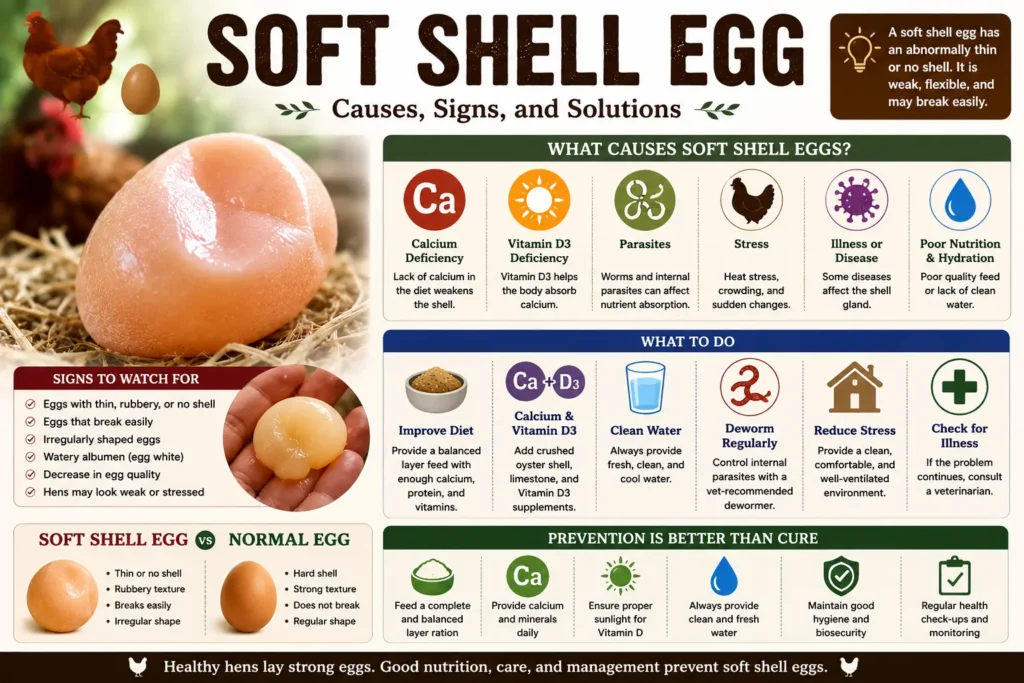
You reach into the nest box and the egg gives under your fingers instead of feeling solid. That’s a soft shell egg — one with a thin, rubbery, or missing shell — and it’s one of the most common egg irregularities backyard owners run into. Most of the time, it points to something fixable, not a serious illness.
A soft shell egg happens when the shell gland doesn’t lay down enough calcium carbonate during the roughly 20 hours it takes to form a normal shell. This guide covers every documented cause, from calcium and age to stress and disease, along with practical fixes and the signs that mean it’s time to call a vet instead of adjusting the feed.
Quick Answer: A soft shell egg is most often caused by a calcium shortfall, a new pullet’s still-calibrating shell gland, heat stress, or normal aging. Feeding a balanced layer diet with free-choice calcium usually resolves occasional cases within a few days. Frequent soft shelled eggs, especially with other symptoms, need veterinary evaluation.
Table of Contents
What Exactly Is a Soft Shell Egg?
A soft shell egg still has all the normal internal parts of an egg — yolk, albumen, membranes — but the outer shell is thin, rubbery, wrinkled, or in some cases entirely absent, leaving just the membrane holding the egg together. This differs from a cracked egg, where a normally hard shell has broken after forming.
The shell itself is built almost entirely from calcium carbonate, deposited by the shell gland (uterus) during the final stage of egg formation. When that deposit process is interrupted or insufficient, the result is a thin shell egg that can range from slightly softer than normal to essentially shell-less.
Read More: https://lashegg.com/fairy-egg-vs-double-yolk-egg/
H3: Soft Shell Egg vs. Thin Shell Egg vs. Shell-less Egg
These terms often get used interchangeably, but there’s a useful spectrum worth knowing:
| Term | What It Means | Severity |
| Thin shell egg | Shell is present but noticeably thinner than normal | Mild |
| Soft shell egg | Shell is present but flexible, rubbery, or wrinkled | Moderate |
| Shell-less egg | No hard shell at all, just the membrane | More significant |
All three sit on the same spectrum of reduced calcium deposition, just at different severities. A single thin shell egg is far less concerning than a pattern of true shell-less eggs.
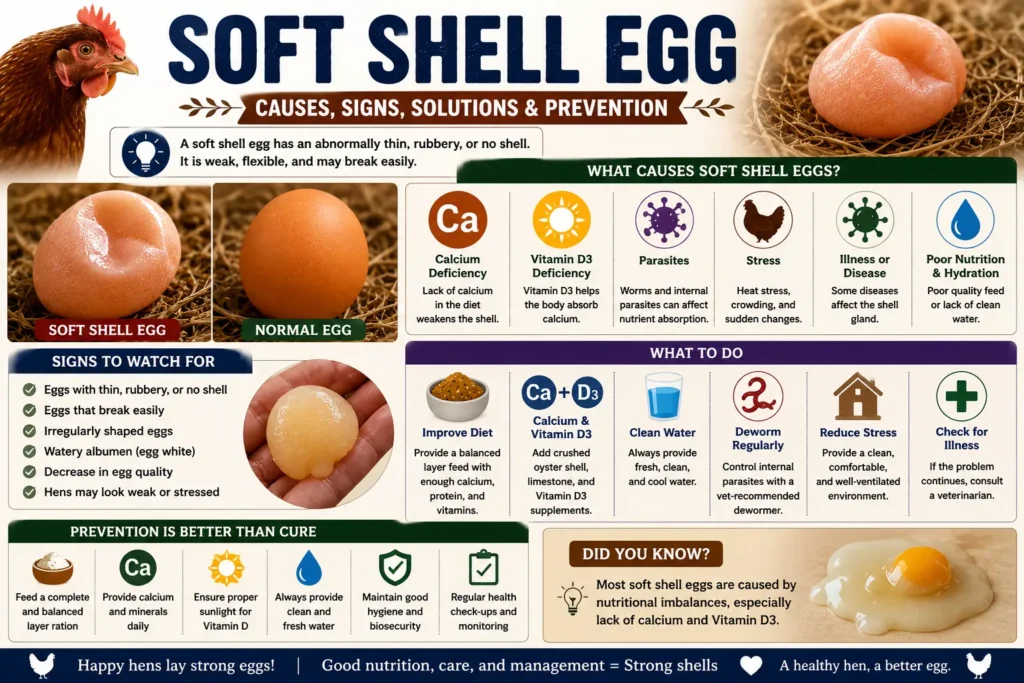
What Causes a Soft Shell Egg?
Veterinary and agricultural sources point to several well-documented causes, and most backyard cases trace back to one or a combination of these.
H3: Calcium Deficiency — The Most Common Cause of a Soft Shell Egg
Calcium is the building block of eggshell, and a hen needs a steady, reliable source of it to keep producing hard shells day after day. A diet lacking sufficient calcium, or a hen that isn’t eating enough of her calcium supplement, is the single most common documented cause.
- Layer feed is formulated with calcium levels appropriate for laying hens; non-layer feed often falls short
- Oyster shell or crushed eggshell offered free-choice lets hens regulate their own calcium intake
- A hen that isn’t eating well for any reason may not be getting enough calcium even on a good diet
H3: Age-Related Causes
Both very young and very old hens are more prone to soft shell eggs, for different reasons.
- New pullets often lay a soft or thin-shelled egg or two as their reproductive system, including the shell gland, calibrates during the first weeks of laying
- Older hens can show a gradual decline in shell gland efficiency as part of normal reproductive aging
H3: Heat Stress
High temperatures cause hens to pant, which lowers blood carbon dioxide levels in a way that reduces the calcium carbonate available for shell formation. Soft shell eggs commonly increase during heat waves, even in hens on an otherwise adequate diet.
H3: General Stress
Sudden changes in routine, overcrowding, predator scares, or a new bird introduced to the flock can all disrupt the shell-forming process temporarily, independent of diet.
H3: Disease and Underlying Illness
Certain respiratory illnesses, including infectious bronchitis, are documented to affect the shell gland directly and can cause a run of soft or misshapen eggs. Reproductive tract disorders can also disrupt normal shell formation.
| Cause | How Common | Fixable at Home? |
| Calcium deficiency | Very common | Yes, usually within days |
| New pullet calibrating | Common | Yes, resolves on its own |
| Heat stress | Common in summer | Yes, with cooling measures |
| General stress | Common | Yes, by reducing stressors |
| Older hen decline | Common with age | Partially, supportive only |
| Disease (e.g. infectious bronchitis) | Less common | No, needs veterinary diagnosis |
Did You Know? According to sources referencing the Merck Veterinary Manual, infectious bronchitis and other respiratory viruses are documented causes of persistent shell quality problems in laying flocks, which is why a soft shell egg pattern that doesn’t respond to diet changes is worth a veterinary look.
How to Fix a Soft Shell Egg Problem
Most cases respond well to a few straightforward adjustments, especially when the cause is dietary or environmental rather than disease-related.
- Switch to a complete layer feed if your hens aren’t already on one, since it’s formulated with laying-appropriate calcium levels
- Offer crushed oyster shell or eggshell free-choice, separate from the regular feed, so hens can supplement calcium as needed
- Ensure fresh water is always available, especially during hot weather when dehydration compounds shell quality issues
- Reduce heat stress with shade, ventilation, and cool water during summer months
- Minimize flock disruptions where possible — introduce new birds gradually, keep routines consistent
- Give it time. A single soft shell egg, especially from a young pullet, often resolves within a few days without any changes at all
Expert Tip: Avoid over-supplementing calcium beyond a free-choice source. Hens self-regulate calcium intake well when it’s offered separately from their regular feed; forcing extra calcium into the main diet can cause other imbalances over time.
When a Soft Shell Egg Isn’t Just Diet or Heat
A single soft shell egg, or an occasional one during a heat wave, rarely signals anything serious. The pattern that deserves more attention involves a few specific signs together.
- Frequent soft or shell-less eggs that continue despite an adequate layer diet and calcium source
- Soft shell eggs paired with respiratory symptoms like coughing, sneezing, or nasal discharge
- Reduced or stopped normal laying happening alongside soft shell eggs
- Lethargy, appetite loss, or abdominal swelling appearing at the same time
Warning: A pattern of soft shell eggs that doesn’t improve after two to three weeks of proper diet and calcium supplementation may point to an underlying illness rather than a simple nutritional gap, and is worth a veterinary evaluation.
When to Call a Vet
When to Call a Vet: Contact a veterinarian if soft shell eggs continue for more than two to three weeks despite proper diet and calcium, if they appear alongside respiratory symptoms, or if your hen shows lethargy, reduced appetite, or stopped laying.
Soft Shell Egg vs. Other Egg Irregularities
Knowing how a soft shell egg compares to other unusual finds helps rule out other explanations, especially since some conditions can look similar at first glance.
| Egg Type | Shell Condition | Likely Cause | Concern Level |
| Soft shell egg | Thin, rubbery, or absent shell | Calcium deficiency, age, stress, heat | Low, unless persistent |
| Fairy egg | Normal hard shell, tiny size | Tissue fragment triggering shell formation | Low, unless frequent |
| Double yolk egg | Normal hard shell, larger size | Two yolks released together | Low |
| Wrinkled or misshapen egg | Normal hardness, irregular texture | Stress, heat, minor tract irregularities | Low, unless frequent |
| Lash egg | No true shell structure | Bacterial infection (salpingitis) | High — always evaluate |
The key distinction: a soft shell egg still has a genuine, if underdeveloped, shell layer. A lash egg has no true shell at all and represents a completely different, infection-driven process.
Is a Soft Shelled Egg Safe to Eat?
Yes, a soft shelled egg is safe to eat as long as the membrane is intact and the egg hasn’t been sitting in a dirty area for an extended period. Because the shell is thin or missing, handle it more gently than a normal egg to avoid rupturing the membrane, and use it promptly rather than storing it long-term.
People Also Ask
Why is my chicken laying soft shell eggs all of a sudden? A sudden onset usually points to a recent change — a heat wave, a new stressor in the flock, a diet switch, or the start or end of her laying cycle. Reviewing recent changes often reveals the trigger.
How long does it take to fix a soft shell egg problem? With adequate layer feed and free-choice calcium, most dietary cases improve within a few days to two weeks. Cases tied to illness won’t resolve with diet changes alone and need veterinary attention.
Can stress alone cause a thin shell egg? Yes. Even with adequate calcium intake, acute stress can disrupt the shell-forming process during the roughly 20 hours it takes to build a shell, resulting in a thinner or softer result.
Is a soft shell egg a sign of a serious problem? Usually not on its own. It becomes a bigger concern when it’s frequent, persistent despite proper diet, or paired with other symptoms like respiratory signs or reduced laying.
Do all hens eventually lay a soft shell egg? Many do at some point, especially early in their laying life or during a stressful period like a heat wave. An occasional one is considered normal variation rather than a lasting problem.
Common Mistakes Owners Make
Common Mistakes
- Feeding non-layer feed to laying hens, which lacks adequate calcium for shell formation
- Mixing calcium supplement directly into feed instead of offering it free-choice
- Assuming every soft shell egg means illness instead of checking diet and heat stress first
- Ignoring a pattern that continues for weeks despite calcium and diet adjustments
- Confusing a soft shell egg with a lash egg and either overreacting or underreacting as a result
Final Thoughts
A soft shell egg is one of the more common and usually most fixable egg irregularities in a backyard flock. Most cases trace back to calcium, age, heat, or general stress, and respond well to a proper layer diet with free-choice calcium and a few weeks of patience.
Watch for the pattern rather than reacting to a single occurrence. If soft shell eggs continue despite the right diet, or show up alongside other symptoms, that combination is worth a veterinary opinion rather than more waiting at home.
FAQ
What causes a soft shell egg most often? Calcium deficiency is the most common cause, though age, heat stress, general stress, and occasionally underlying illness can also produce a soft shell egg.
How do I stop my hen from laying a soft shelled egg? Switch to a complete layer feed, offer free-choice crushed oyster shell, ensure fresh water is always available, and reduce heat and general stress in the coop.
Is a thin shell egg the same as a soft shell egg? They sit on the same spectrum. A thin shell egg has a reduced but present hard shell, while a soft shell egg is more flexible or rubbery, and a shell-less egg has essentially no hard shell at all.
Can a soft shell egg mean my hen is sick? Occasionally. A pattern that persists despite proper diet, especially alongside respiratory symptoms or reduced laying, can point to an underlying illness that needs veterinary evaluation.
Is it safe to eat a soft shelled egg? Yes, as long as the membrane is intact and the egg hasn’t been contaminated. Handle it gently and use it promptly since it lacks the normal shell’s protection.
How common is it for a young hen to lay a soft shell egg? Very common. Many pullets lay one or more soft or thin-shelled eggs during their first weeks of laying as their shell gland calibrates, and this typically resolves on its own.