Can You Eat Double Yolk Eggs?

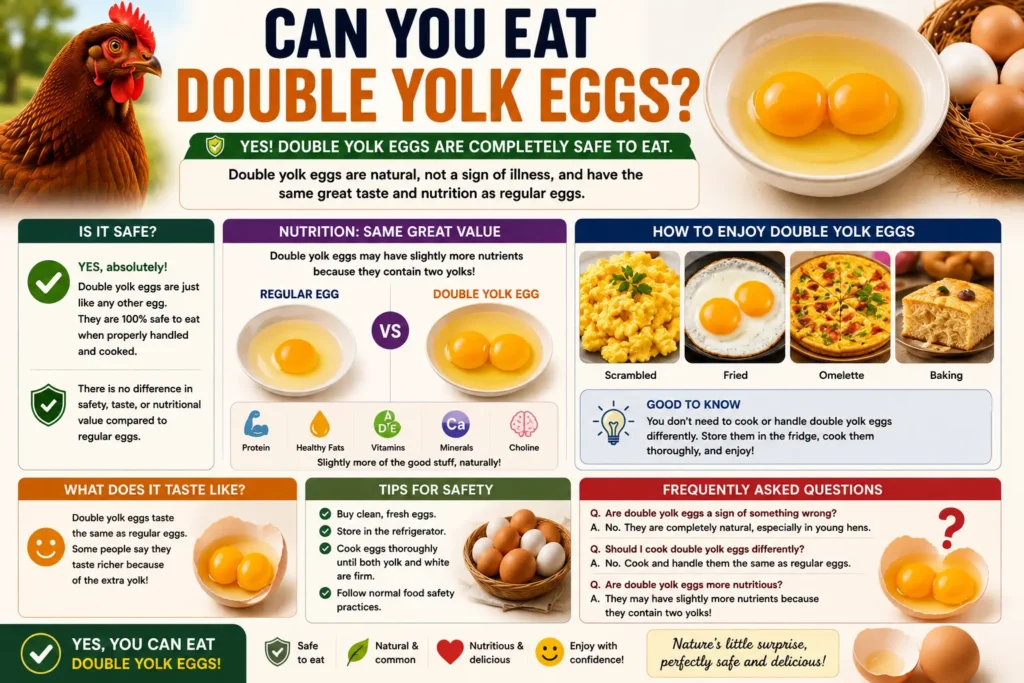
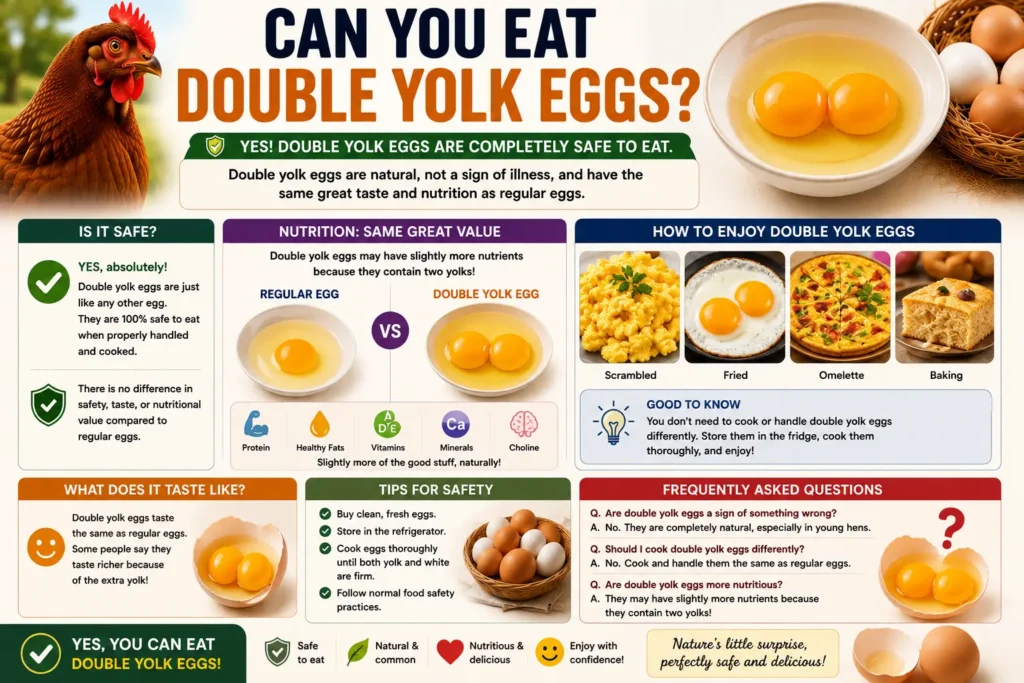
Can you eat double yolk eggs the same way you’d eat any other egg? Yes. A double yolk egg is just as safe to eat as a standard single-yolk egg, as long as it’s fresh and handled the same way you’d handle any egg in your kitchen.
There’s no special risk tied to having two yolks in one shell. It’s simply a larger, more nutrient-dense egg from a food safety standpoint. This guide covers exactly what changes nutritionally, how to store and cook double yolk eggs, and the few situations where a little extra caution makes sense.
Table of Contents
Quick Answer
Yes, you can eat double yolk eggs safely. They carry the same food safety guidelines as any other fresh egg — refrigerate promptly, cook thoroughly, and check for freshness. The only real difference is a larger amount of yolk and slightly higher calories, fat, and protein per egg.
Read More: https://lashegg.com/what-causes-double-yolk-eggs/
Why Double Yolk Eggs Are Safe to Eat
A double yolk egg forms the exact same way a normal egg does, just with two yolks released close together during ovulation instead of one. Nothing about that process introduces bacteria, toxins, or spoilage risk beyond what applies to any egg. The shell, membrane, and white all form normally around both yolks.
Standard USDA egg safety guidelines apply in full: keep eggs refrigerated at or below 40°F, cook them until both the white and yolk are firm for anyone in a higher-risk group, and avoid eggs with cracked or damaged shells regardless of how many yolks are inside.
Did You Know?
Double yolk eggs are graded and sorted right alongside regular eggs at most commercial processing facilities. Some are pulled out for specialty “jumbo” or “double yolk” cartons specifically because they’re safe, popular, and simply larger, not because they need separate handling.
Nutritional Differences: Double Yolk vs. Single Yolk
| Nutrient (approximate) | Single Yolk Egg | Double Yolk Egg |
| Calories | ~70 | ~120–140 |
| Protein | ~6g | ~10–12g |
| Fat | ~5g | ~9–10g |
| Cholesterol | ~186mg | ~370mg |
| Choline | ~147mg | ~250–290mg |
A double yolk egg is essentially nutritionally equivalent to eating close to two regular eggs’ worth of yolk in one shell, with a proportionally normal amount of egg white. If you’re tracking calories, protein, or cholesterol intake closely, it’s worth accounting for that difference rather than assuming it counts as “one egg” on a nutrition label basis.
Expert Tip
If you cook by egg count rather than weight — say, a recipe calling for four large eggs — crack your eggs into a bowl first when you suspect a few might be double yolkers. This keeps your recipe’s liquid and fat ratio accurate instead of accidentally adding an extra yolk’s worth of richness.
Cholesterol and Heart Health Considerations
Because a double yolk egg roughly doubles the cholesterol content of the yolk portion, people who have been advised by a doctor to limit dietary cholesterol may want to treat one double yolk egg as closer to two standard eggs rather than one. This isn’t a safety issue in the food-handling sense, but a nutritional planning consideration worth knowing.
| Dietary Consideration | Guidance |
| General healthy adult | No special limit; enjoy as part of a balanced diet |
| Managing cholesterol closely | Count as roughly two eggs’ worth when tracking intake |
| Egg allergy | Same allergy risk as any egg; a double yolk egg does not increase or change allergen content type |
How to Store Double Yolk Eggs Safely
- Refrigerate promptly at 40°F or below, ideally in the original carton to protect against odor absorption and moisture loss
- Store in the main body of the refrigerator, not the door, where temperature fluctuates more
- Use within three to five weeks of the pack date for best quality, following the same timeline as standard eggs
- Check for cracks before storing, since a cracked shell increases contamination risk regardless of yolk count
- Perform a float test if freshness is uncertain: a fresh egg sinks and lies flat, while an older egg stands upright or floats
Cooking Double Yolk Eggs: What Changes?
Cooking method doesn’t need to change, but timing sometimes does because there’s simply more yolk and white to cook through.
| Cooking Method | Adjustment Needed |
| Fried/sunny-side up | Slightly longer cook time to fully set the extra yolk volume |
| Scrambled | No real change; whisk as usual, portion size increases |
| Hard-boiled | Add 1–2 extra minutes for the larger internal mass to cook through evenly |
| Baking (as an ingredient) | Weigh or measure if the recipe is sensitive to liquid ratios |
| Poached | Slightly longer set time due to increased yolk volume |
Common Mistakes People Make
- Assuming a double yolk egg needs special food safety precautions beyond a normal egg
- Undercooking a double yolk egg by using the same timing as a single-yolk egg
- Forgetting to adjust recipes that call for a specific number of “large eggs”
- Believing double yolk eggs are riskier for people with egg allergies, when the allergen content is the same
- Discarding a double yolk egg out of unfounded worry rather than checking it like any other egg
Is It Safe to Eat Double Yolk Eggs From a Backyard Flock?
Yes, with the same care you’d apply to any backyard egg. Collect eggs daily, refrigerate promptly, and wash only right before use rather than immediately after collection, since washing too early can remove the egg’s natural protective coating (called the bloom) and make it more porous to bacteria. A double yolk egg from a healthy hen follows these same rules exactly.
When to Call a Vet
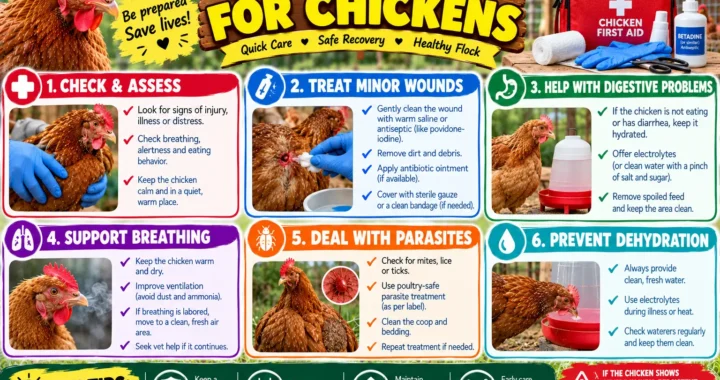
A double yolk egg itself is not a reason to contact a veterinarian. However, if the hen laying it shows signs of straining, discomfort, or difficulty passing an unusually large egg, that points toward possible egg binding rather than a food safety concern, and it does warrant a prompt vet visit. According to the Merck Veterinary Manual, oversized eggs are a recognized contributing factor in some egg-binding cases, which is a hen-health issue separate from whether the resulting egg is safe to eat.
Double Yolk Egg Safety vs. Other Unusual Eggs
| Egg Type | Safe to Eat? | Notes |
| Double yolk egg | Yes | Larger portion of yolk; same handling rules apply |
| Shell-less/rubber egg | Yes, if collected promptly and membrane is intact | Handle and refrigerate quickly since there’s less protective barrier |
| Soft shell egg | Yes, with the same care as a shell-less egg | Slightly more protection than a fully shell-less egg |
| Yolkless “wind egg” | Yes | Small, edible, simply missing a yolk |
| Blood spot egg | Yes | Common, harmless, safe to remove or cook through |
Frequently Overlooked Questions About Eating Double Yolk Eggs
Does a double yolk egg cook differently in the center? Slightly. Because there’s more mass to heat through, the very center of a fried or boiled double yolk egg can stay a touch less done than the edges unless you add a little extra time.
Can double yolk eggs be used in recipes that call for egg whites only? Yes, separate them the same way as any egg. You’ll simply get two yolks and a normal amount of white from that one egg, which is useful information if you’re separating eggs for a whites-only recipe.
Are double yolk eggs from the grocery store different from backyard ones? No meaningful safety difference. Commercial double yolk cartons go through the same USDA-regulated grading and safety process as standard eggs.
Double yolk eggs are a genuinely fun find in the carton or nest box, and there’s no reason to hesitate before cooking with one. Follow the same storage and cooking guidelines you’d use for any fresh egg, account for the extra yolk if you’re tracking nutrition closely, and only involve a vet if the hen that laid it seems to be struggling.
5. FAQ
Can you eat double yolk eggs safely every day? Yes, as part of a generally balanced diet. Since they carry roughly double the yolk’s calories, fat, and cholesterol, people managing cholesterol intake closely may want to factor that in.
Do double yolk eggs taste different? No. The taste is the same as a standard egg; you’re simply getting a larger proportion of yolk relative to white in each egg.
Is it safe to eat a double yolk egg from a backyard chicken? Yes, following the same collection, storage, and cooking guidelines used for any fresh backyard egg.
Do double yolk eggs need to be cooked longer? Slightly, especially when frying, poaching, or hard-boiling, since there’s more yolk volume that needs to cook through fully.
Can people with egg allergies eat double yolk eggs? The allergen content is the same as any egg. A double yolk egg doesn’t introduce new allergy risk, but anyone with a diagnosed egg allergy should follow their usual guidance regardless of yolk count.
How can I tell if a double yolk egg has gone bad? Use the same freshness checks as any egg: a fresh egg sinks and lies flat in water, while a spoiled or old one floats or has an off smell once cracked.