What Causes Double Yolk Eggs?

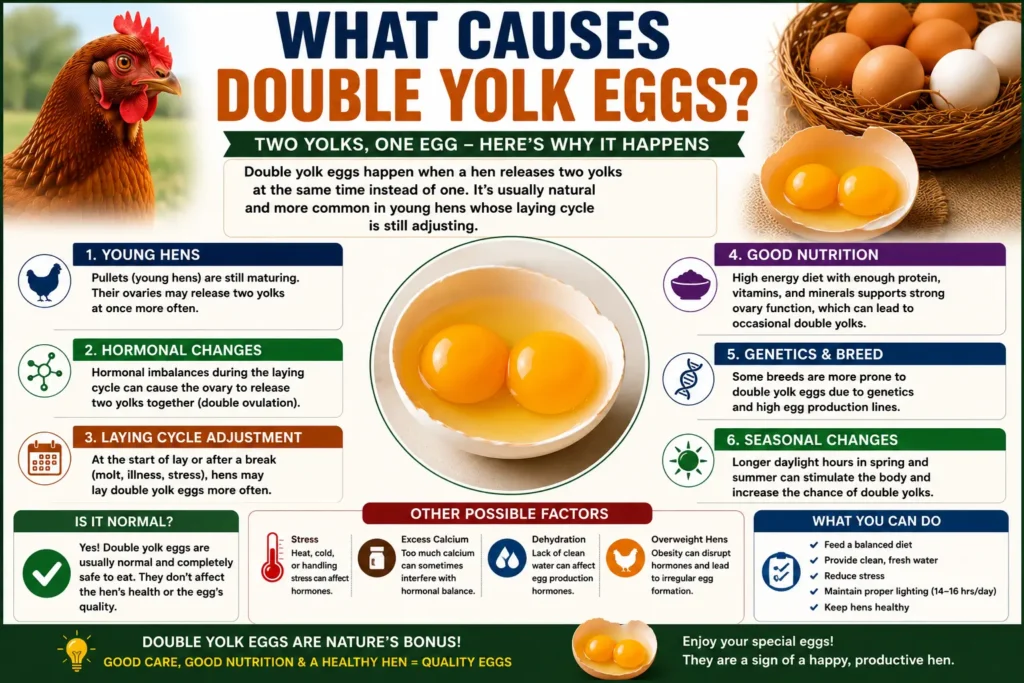
What causes double yolk eggs comes down to timing inside a hen’s reproductive system: two yolks release close together instead of one at a time, and her body wraps both inside a single shell as if it were one normal egg. It’s a quirk of the ovulation cycle, not a defect or a health problem.
Most people ask this question the moment they crack one open, half expecting a strange answer. The real explanation is more mechanical than mysterious, and once you understand how a hen’s laying cycle actually works, it makes complete sense why it happens more in some hens than others.
Table of Contents
Quick Answer
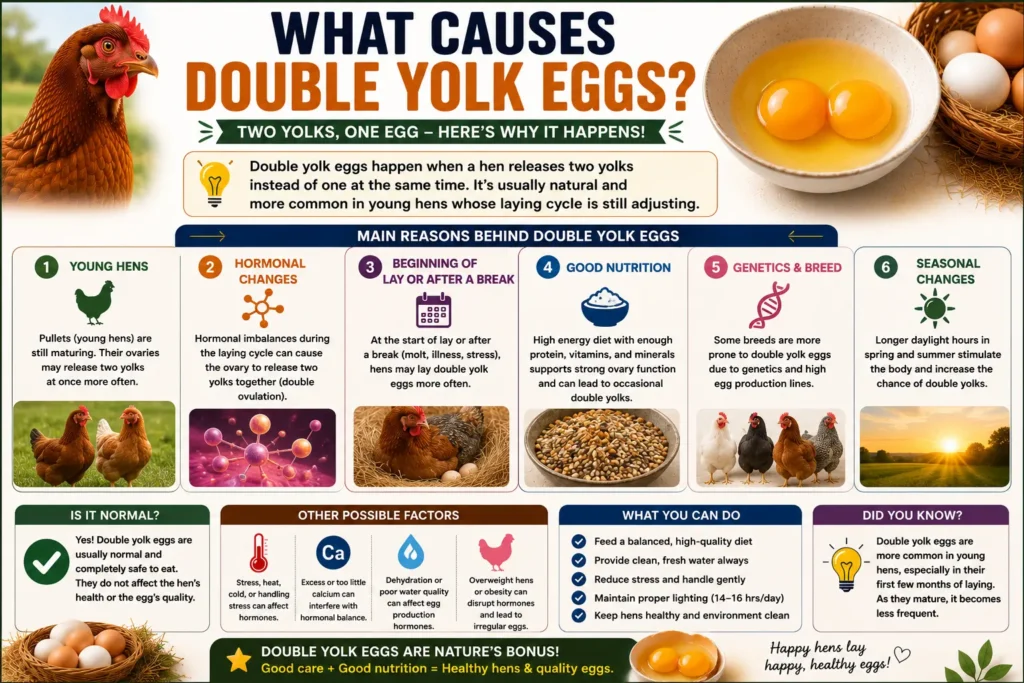
Double yolk eggs are caused by two yolks being released close together during ovulation, most often in young hens whose laying cycle hasn’t settled into a steady rhythm yet. Genetics, breed, and peak production age also influence how often it happens.
The Biology Behind Double Ovulation
A hen’s ovary normally releases one yolk at a time, roughly once every 24 to 26 hours, in a steady, predictable rhythm regulated by hormones. That single yolk then travels down the oviduct, picking up egg white, membranes, and finally a shell before being laid.
Double ovulation happens when this rhythm gets disrupted just enough that two yolks release within a short window of each other, often just an hour or two apart. Both yolks enter the oviduct close together, and rather than forming two separate eggs, the hen’s body treats them as one batch, wrapping both in a single shell.
Read More: https://lashegg.com/double-yolk-egg-explained/
The Main Causes, Ranked by How Often They Happen
1. Young Hens With an Unsettled Laying Cycle
This is by far the most common explanation for what causes double yolk eggs. When a pullet starts laying, her hormone signals haven’t fully synchronized yet. It often takes several weeks for her cycle to settle into the steady, one-yolk-per-day pattern seen in mature hens.
2. Genetics and Breed Predisposition
Some breeds and bloodlines are simply wired to double-ovulate more often. Commercial layer breeds selected for high, early production tend to show this pattern more than slower-maturing heritage breeds, since the same genetic traits that push for fast, heavy laying can also increase the odds of a double release.
3. Peak Production Age
Hens in their first full year of steady laying are at their most hormonally active. This is also the window where their reproductive system is running at its fastest pace, which slightly raises the odds of two yolks releasing close together.
4. Rapid Weight Gain or Overfeeding
A pullet that gains weight quickly, especially on a rich, high-calorie diet before her body is fully mature, can trigger hormone surges that lead to more than one yolk releasing in the same short window. This is part of why a gradual transition onto layer feed, rather than a sudden switch, is often recommended for new layers.
5. Light Exposure and Photoperiod
Daylight length directly drives a hen’s hormone cycle. A sudden increase in light — natural spring daylight or artificial lighting in a coop — can accelerate the reproductive system before it’s fully calibrated, occasionally triggering double ovulation in the process.
6. Occasional Hormonal Irregularity in Mature Hens
Even settled, older hens can experience a one-off hormone fluctuation that leads to a double yolk egg. This is far less common than the young-hen pattern but not considered abnormal when it happens only occasionally.
Causes Comparison Table
| Cause | How Common | Typical Hen Affected |
| Unsettled young laying cycle | Very common | Pullets in first months of laying |
| Genetics/breed predisposition | Common | High-production breeds and bloodlines |
| Peak production age | Common | Hens in first full laying year |
| Rapid weight gain | Less common | Fast-growing pullets on rich feed |
| Light exposure changes | Less common | Any hen with a sudden lighting change |
| Hormonal irregularity in mature hens | Uncommon | Established layers, occasional one-off |
Did You Know?
Commercial egg producers actually sort out double yolk eggs during grading, since they’re heavier and larger than standard sizing categories. That’s part of why double yolk eggs show up more often in eggs bought directly from a farm or backyard flock than in a typical grocery carton, where sorting filters most of them out.
Does Diet Cause Double Yolk Eggs?
Not directly, but it plays a supporting role. A rich, high-calorie diet that leads to rapid weight gain in a young pullet can influence hormone timing enough to increase the odds of a double release. A standard, balanced layer diet fed at a normal pace doesn’t meaningfully change how often a hen double-ovulates.
Can You Predict or Prevent Double Yolk Eggs?
Not reliably. Since the underlying cause of double yolk eggs is tied to natural ovulation timing and genetics, there’s no dependable way to force a hen to stop, and it’s not something worth trying to manage through diet or environment. The pattern generally sorts itself out within the first few months as a young hen’s cycle settles down.
Expert Tip
If you’re breeding or selecting hens specifically for consistent single-yolk production, look at the laying history of the bloodline rather than any one hen. Since the tendency toward double ovulation runs through genetics, sisters and daughters of a frequent double-yolk layer are more likely to show the same pattern.
Common Mistakes People Make About Double Yolk Causes
- Assuming a special diet or supplement can cause or prevent double yolk eggs
- Blaming a single egg on illness without any other symptoms present
- Overlooking genetics as a major factor and focusing only on age
- Assuming double yolk eggs mean a hen is overproducing or being pushed too hard
- Expecting the pattern to continue at the same rate once a young hen matures
When Double Yolk Causes Cross Into a Health Concern
Warning
The causes above describe a normal biological quirk. Pay closer attention if you also notice:
- A hen straining, standing unusually wide, or seeming uncomfortable after laying an oversized egg
- Lethargy, reduced appetite, or a swollen abdomen alongside frequent large eggs
- A sudden, unexplained shift from normal eggs to consistently oversized ones in an older hen who never showed this pattern before
When to Call a Vet
The causes of a double yolk egg on their own rarely require veterinary attention. However, an oversized double yolk egg can occasionally contribute to egg binding, particularly in smaller-bodied hens or breeds. According to the Merck Veterinary Manual, oversized eggs are a recognized contributing factor in some egg-binding cases, so any signs of straining or difficulty laying alongside a double yolk pattern warrant a prompt vet visit.
How Double Yolk Causes Compare to Other Egg Oddities
| Egg Type | Underlying Cause |
| Double yolk egg | Two yolks released close together during ovulation |
| Yolkless “wind egg” | A stray piece of tissue mistakenly triggers the egg-forming process |
| Shell-less/rubber egg | Calcium deficiency, stress, age, or illness interrupting shell formation |
| Soft shell egg | Same causes as a shell-less egg, at an earlier stage of disruption |
Will the Cause Change Over Time?
For most hens, yes. The dominant cause — an unsettled young reproductive cycle — naturally resolves as the hen matures, usually within the first two to three months of laying. Genetics and breed tendency stay constant throughout her life, which is why some hens and bloodlines continue producing occasional double yolkers well into their mature laying years while others stop almost entirely after their first few months.
Understanding what causes double yolk eggs comes down to recognizing it as a timing quirk in a completely normal biological process, driven mostly by age, genetics, and hormone rhythm rather than diet, environment, or illness. Track the pattern if you’re curious, enjoy the extra-large eggs in the meantime, and only bring in a vet if a hen shows real discomfort alongside it.
5. FAQ
What causes double yolk eggs most often? An unsettled laying cycle in young hens is the most common cause, since their hormone timing hasn’t fully calibrated to release one yolk at a time yet.
Is genetics really one of the causes of double yolk eggs? Yes. Certain breeds and bloodlines, especially those selected for fast, heavy egg production, are more genetically prone to double ovulation than others.
Can diet cause double yolk eggs? Not directly, though rapid weight gain from a rich diet in young pullets can influence hormone timing enough to increase the odds slightly.
Does light exposure affect what causes double yolk eggs? Yes, to a degree. A sudden increase in daylight or artificial lighting can accelerate a hen’s reproductive hormones before her cycle is fully settled, occasionally triggering double ovulation.
Why do older hens sometimes still lay double yolk eggs? It’s less common, but an occasional hormonal fluctuation can still trigger double ovulation in a mature hen, even after her cycle has generally settled.
Is there a way to prevent the causes of double yolk eggs? Not reliably. Since it’s tied to natural hormone timing and genetics, there’s no dependable way to prevent it through diet or environment.