What Causes Wrinkled Eggs?

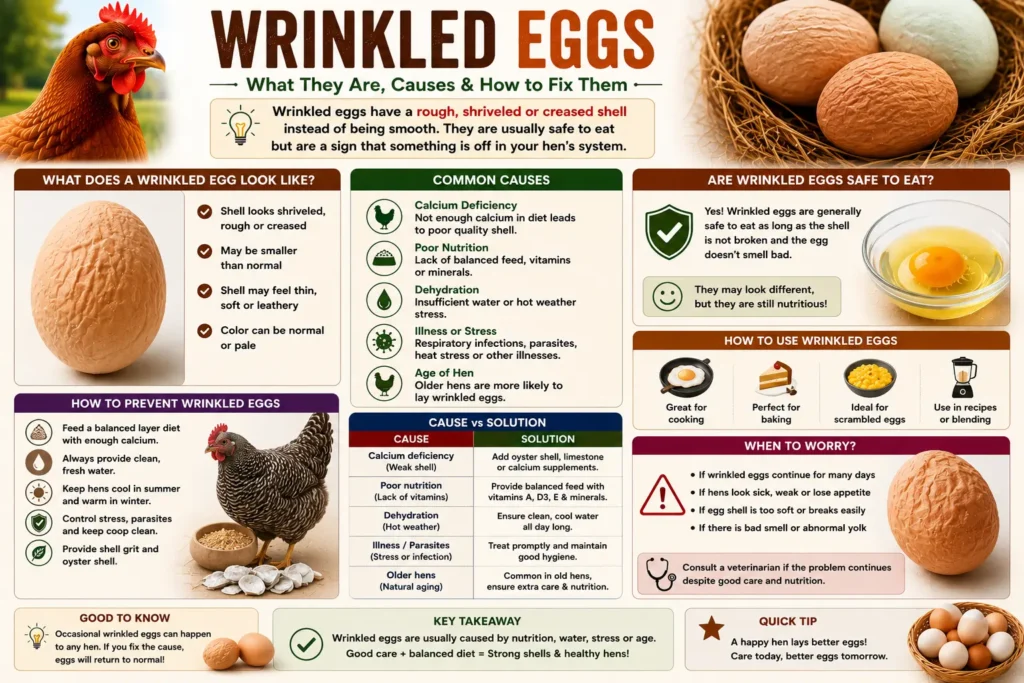
You collect eggs from the nest box and notice one has a strange, crinkled, almost crepe-paper texture across the shell. Wrinkled eggs look unusual, but they’re a fairly common occurrence in backyard flocks, and in most cases they’re not a sign of a serious problem. A wrinkled egg happens when the shell gland adds calcium unevenly during the final stage of egg formation, creating a bumpy or creased surface instead of a smooth one.
This guide covers exactly why wrinkled eggs happen, whether they’re safe to eat, when a wrinkled egg shell signals something worth watching, and how to help your hens lay smoother eggs going forward.
Quick Answer: Wrinkled eggs are usually caused by stress, illness, age, or an interruption during shell formation inside the hen. They’re generally safe to eat, though very thin or oddly shaped shells should be checked before use.
Table of Contents
How a Normal Eggshell Forms
To understand wrinkled eggs, it helps to know how a shell is built. After the yolk and white form, the egg spends roughly 18 to 20 hours in the shell gland (also called the uterus), where the hen’s body deposits layers of calcium carbonate to build a hard, smooth shell.
This process runs on a steady, continuous rhythm. Calcium gets added in an even coat, layer by layer, which is what gives a normal egg its smooth, uniform surface. Wrinkled eggs happen when something disrupts that rhythm partway through.
Read More: https://lashegg.com/meat-spot-vs-blood-spot/
What Causes a Wrinkled Egg Shell?
A wrinkled egg shell forms when calcium deposition is interrupted or becomes uneven during the roughly 20 hours the egg spends in the shell gland. Several specific triggers can cause this disruption.
1. Stress
Sudden stress is one of the most common reasons behind a wrinkled egg shell. Loud noises, predator scares, a new bird introduced to the flock, extreme heat, or overcrowding can all interrupt the smooth, continuous muscle contractions needed to lay down an even shell.
2. Respiratory Infections
Infectious bronchitis virus, a well-documented poultry respiratory illness, is one of the most frequently cited causes of persistently wrinkled eggs in veterinary poultry literature. This virus can affect the shell gland directly, leading to thin, wrinkled, or misshapen shells across multiple eggs, not just one.
3. Hen’s Age
Very young hens just starting their laying cycle often produce a few oddly shaped or wrinkled eggs while their reproductive system is still calibrating. This is considered a normal, temporary phase.
4. Heat Stress
High temperatures can reduce a hen’s calcium metabolism efficiency and speed up or slow down egg movement through the shell gland, both of which can result in a wrinkled or thin-shelled egg.
5. Two Eggs Forming Too Close Together
Occasionally, a hen releases a second yolk before the first egg has fully finished forming, pushing both through the reproductive tract closer together than normal. This compressed timeline can leave less time for even shell deposition, leading to wrinkles or ridges.
6. Nutritional Gaps
Inconsistent access to calcium, or a diet not properly balanced for a laying hen’s needs, can affect how evenly the shell gland deposits calcium.
Did You Know? Veterinary poultry references, including guidance summarized in the Merck Veterinary Manual, list wrinkled or shell-quality abnormalities as a recognized clinical sign worth tracking when multiple hens in a flock show the same pattern at once, since it can point to a shared underlying cause like disease.
Are Wrinkled Eggs Safe to Eat?
In most cases, yes. Wrinkled eggs are generally safe to eat as long as the shell is intact and the egg shows no other signs of a problem. A wrinkled texture on its own is a cosmetic shell irregularity, not proof of contamination or spoilage.
Expert Tip: Before using a wrinkled egg, check that the shell isn’t cracked or excessively thin and fragile. If the shell integrity is compromised, treat it more cautiously, since a weakened shell offers less of a barrier against bacteria.
Warning: Discard the egg if the wrinkled shell is also cracked, feels unusually soft or chalky, or if the egg has a foul smell once opened. In those cases, the wrinkling combined with these other signs suggests it’s best not to eat the egg.
Wrinkled Eggs vs. Other Shell Abnormalities
Wrinkled eggs often get grouped with other unusual shell types, but they’re not all the same thing.
| Shell Type | Description | Common Cause |
| Wrinkled egg | Crinkled, crepe-like texture across part or all of the shell | Stress, infection, age, interrupted shell formation |
| Soft-shelled egg | Shell is thin, rubbery, or missing entirely | Calcium deficiency, first-time laying, stress |
| Ridged egg | Raised, rope-like ridges on the shell | Calcium buildup irregularities during formation |
| Misshapen egg | Unusual overall shape (elongated, lopsided) | Two yolks forming close together, oviduct irritation |
| Rough or sandpaper shell | Gritty, uneven calcium deposits | Excess calcium or shell gland irregularities |
When Wrinkled Eggs Signal a Bigger Problem
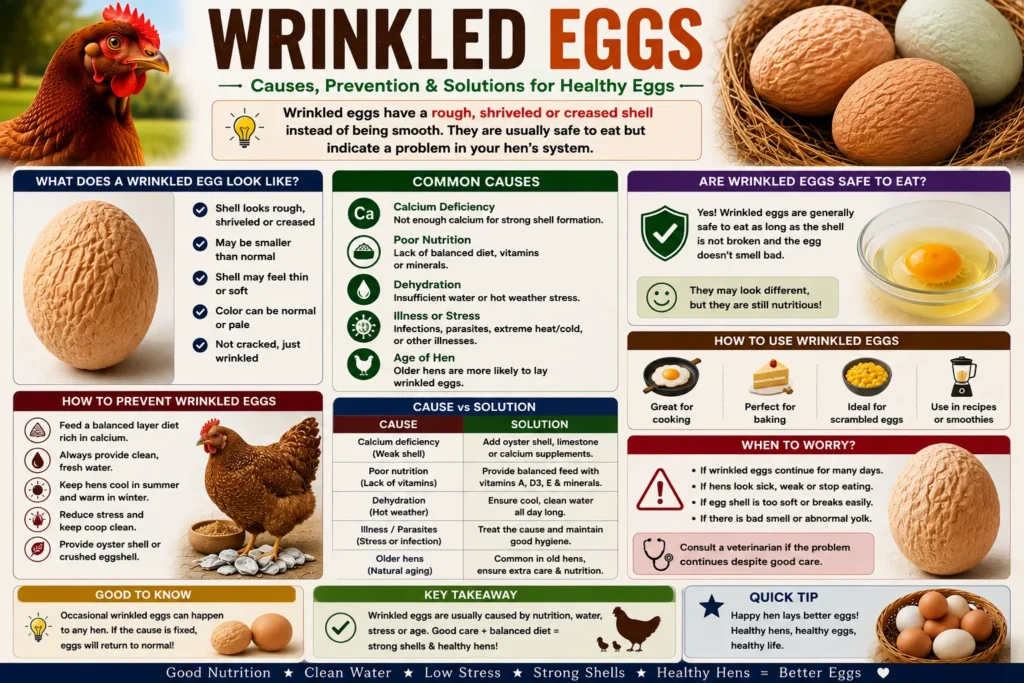
An occasional wrinkled egg from an otherwise healthy flock is rarely worth worrying about. But certain patterns are worth paying closer attention to.
Multiple Hens Affected at Once
If several hens in the same flock start laying wrinkled eggs around the same time, this pattern is more consistent with a shared cause like infectious bronchitis or another respiratory illness than with individual stress.
Wrinkled Eggs Paired With Other Symptoms
Watch for wrinkled eggs occurring alongside:
- Reduced overall egg production
- Watery or discolored egg whites
- Coughing, sneezing, or nasal discharge in the hens
- Lethargy or reduced appetite
- A drop in shell quality across the whole flock, not just one bird
This combination points toward illness rather than a one-off stress event.
How to Reduce Wrinkled Eggs in Your Flock
- Minimize sudden stress. Keep the coop predator-proof, avoid abrupt flock changes, and give hens enough space.
- Provide consistent access to calcium, typically through oyster shell offered alongside a complete layer feed.
- Manage heat exposure. Provide shade, ventilation, and fresh water during hot weather to reduce heat stress.
- Watch for illness signs. If wrinkled eggs appear alongside respiratory symptoms, isolate affected birds and consult a poultry veterinarian.
- Expect some irregularity from new layers. Young hens often smooth out shell quality within a few weeks of starting to lay.
- Keep a consistent daily routine. Predictable feeding, lighting, and handling schedules reduce chronic stress in the flock.
None of these steps guarantee a completely wrinkle-free egg every time, since some rate of shell irregularity is a normal part of poultry biology, but they reduce how often it happens.
Wrinkled Egg Shell vs. Normal Shell: A Quick Comparison
| Feature | Normal Shell | Wrinkled Egg Shell |
| Texture | Smooth, uniform | Crinkled or crepe-like |
| Formation time in shell gland | Full, uninterrupted ~18–20 hours | Interrupted or uneven deposition |
| Common single-egg cause | N/A | Temporary stress, young hen |
| Common flock-wide cause | N/A | Respiratory illness, heat stress |
| Safety | Safe | Usually safe if intact and otherwise normal |
Common Mistakes People Make About Wrinkled Eggs
- Assuming one wrinkled egg means the whole flock is sick. A single wrinkled egg from one hen is often just a one-off stress event.
- Ignoring wrinkled eggs appearing across multiple hens. This pattern deserves more attention than an isolated case.
- Throwing away a wrinkled egg automatically. Most wrinkled eggs are still safe to eat if the shell is intact and there are no other warning signs.
- Overlooking heat as a cause. Heat stress is an underrated but well-documented contributor to shell quality issues.
When to Call a Vet
When to Call a Vet: Contact a poultry veterinarian if wrinkled eggs show up across several hens at once, especially alongside respiratory symptoms like coughing or nasal discharge, a noticeable drop in overall egg production, or general signs of illness such as lethargy. A vet can test for infectious bronchitis and other underlying causes that home care alone can’t diagnose or resolve.
People Also Ask
Are wrinkled eggs safe to eat? Yes, in most cases, as long as the shell is intact and there are no other spoilage signs like a foul smell or unusual discoloration inside.
What does it mean when a hen lays a wrinkled egg? It usually means something briefly interrupted the smooth calcium deposition process during shell formation, most often stress, heat, age, or in some cases, illness.
Can stress cause wrinkled eggs in chickens? Yes. Stress from predators, loud noises, overcrowding, or sudden flock changes is one of the most common causes of an occasional wrinkled egg shell.
Do wrinkled eggs mean my chicken is sick? Not necessarily. A single wrinkled egg is often harmless, but wrinkled eggs appearing across multiple hens at the same time can point to a respiratory illness like infectious bronchitis and is worth veterinary attention.
Will a wrinkled eggshell go away on its own? Often, yes, especially if it’s tied to a temporary stressor or a young hen still settling into a laying routine. Persistent or flock-wide wrinkling deserves closer investigation.
Wrapping Up
Wrinkled eggs are one of those backyard flock surprises that look worse than they usually are. Most of the time, a wrinkled egg shell traces back to a temporary stress event, a young or aging hen, or heat, and the egg itself is still safe to eat. Keep an eye on your flock for patterns, especially wrinkled eggs showing up across several hens at once or alongside other symptoms, and reach out to a poultry veterinarian if something seems consistently off.
FAQ
Q: What causes wrinkled eggs? A: Wrinkled eggs are typically caused by stress, heat, a young or aging hen, or in some cases, illness like infectious bronchitis, all of which can interrupt the smooth calcium deposition process during shell formation.
Q: Are wrinkled eggs safe to eat? A: Yes, generally. As long as the shell is intact and there are no other spoilage signs, wrinkled eggs are safe to cook and eat.
Q: Is a wrinkled egg shell a sign of illness in my hen? A: A single wrinkled egg is usually not a concern. Wrinkled eggs appearing across multiple hens at once are more likely tied to illness and worth checking with a poultry veterinarian.
Q: How can I stop my hens from laying wrinkled eggs? A: Reduce stress, provide consistent calcium through layer feed and oyster shell, manage heat exposure, and watch for illness signs if the pattern continues across the flock.
Q: Do young hens lay more wrinkled eggs? A: Yes. Pullets just starting to lay often produce a few wrinkled or oddly shaped eggs while their reproductive system settles into a consistent rhythm.
