
Meat Spot vs Blood Spot: What’s the Real Difference?

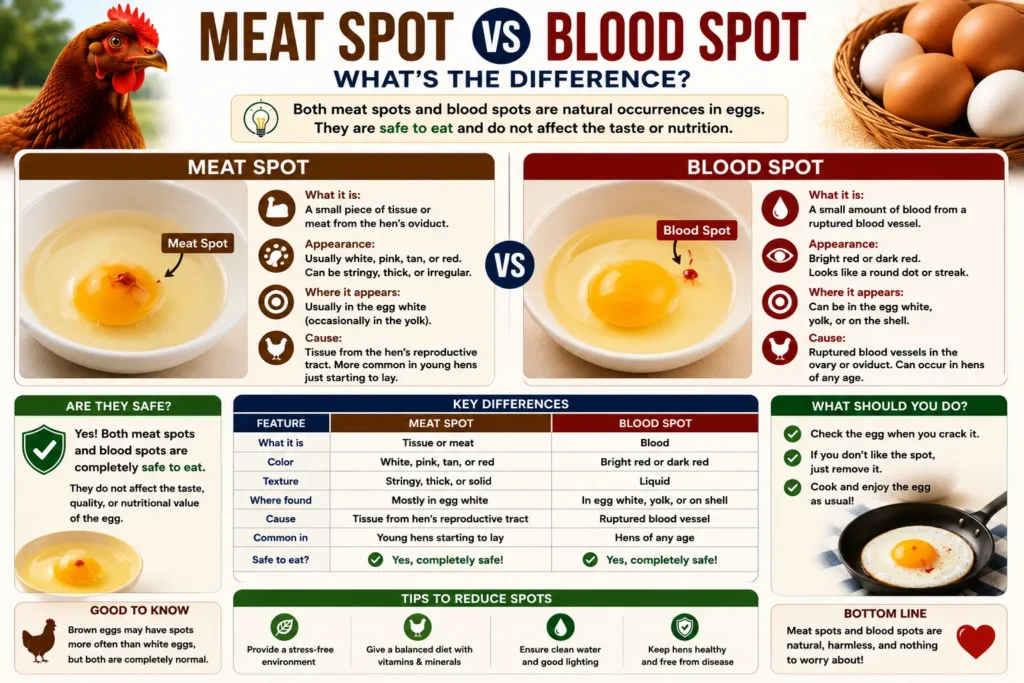
You crack an egg and notice a small dark mark inside. Is it dangerous? Does it mean the egg went bad? The meat spot vs blood spot question comes up constantly among home cooks and backyard chicken keepers, and the short answer is that both are common, mostly harmless defects that form inside the hen during egg development, but they come from different sources and look different once you know what to check.
This guide breaks the two apart clearly, covers what causes each one, and gives you a simple way to tell them apart the next time you crack an egg open.
Quick Answer: In the meat spot vs blood spot comparison, a blood spot is fresh blood from a ruptured vessel and looks red or reddish-brown, while a meat spot is tissue or older, discolored blood pigment and looks brown, tan, or gray. Both are safe to eat once removed.
Table of Contents
Quick Egg Spot Comparison Table
Before going deeper, here’s the fast version for anyone who just wants the core facts.
| Feature | Blood Spot | Meat Spot |
| Color | Red to reddish-brown | Brown, tan, or gray |
| Source | Ruptured blood vessel during ovulation or oviduct passage | Detached oviduct tissue or older, altered blood pigment |
| Typical location | On or near the yolk, sometimes in the white | Usually in the egg white |
| Frequency | More common | Less common |
| Fertility indicator | No | No |
| Safety | Safe to eat once removed | Safe to eat once removed |
| More common in | All breeds | Slightly more common in brown-egg breeds |
This egg spot comparison covers the basics, but each type deserves a closer look, since the causes and context differ in ways worth understanding.
What Is a Blood Spot?
A blood spot forms when a tiny blood vessel breaks during the egg-forming process inside the hen. This most often happens during ovulation, when the yolk releases from the ovary and the surrounding follicle ruptures. If a nearby capillary is damaged during that release, a small drop of blood gets carried along with the yolk into the oviduct.
It can also happen slightly later, as the egg physically moves through sections of the oviduct where the white, membranes, and shell get added. Either way, the blood becomes trapped as the egg finishes forming, and it appears as a reddish-brown fleck once you crack the egg.
Read More: https://lashegg.com/meat-spot-egg/
Where Blood Spots Typically Appear
- On or near the yolk — usually from the ovulation stage.
- Within the egg white — usually from later in the oviduct.
- As a streak rather than a single dot — when bleeding is slightly heavier or more than one vessel is involved.
What Is a Meat Spot?
A meat spot has a different origin story. Poultry science research points to two main explanations, and either one can apply depending on the individual case.
Detached Oviduct Tissue
As the egg travels through the reproductive tract, tiny pieces of tissue from the oviduct lining can occasionally detach and become trapped in the egg white or membrane layers. This is considered a normal, if uncommon, part of how eggs form.
Aged or Altered Blood Pigment
In some cases, a meat spot actually starts as a blood spot. Over time, the hemoglobin in the trapped blood breaks down chemically, shifting in color from red toward brown, tan, or gray. When you see an older-looking, muted-colored spot, this is often what happened.
Meat Spot vs Blood Spot: Color and Location Differences
The easiest way to tell these apart with the naked eye comes down to color and placement.
A blood spot is almost always some shade of red or reddish-brown, since it’s made of fresh or lightly aged blood. A meat spot tends toward brown, tan, or gray tones, and it’s more commonly found floating in the egg white rather than sitting directly on the yolk.
Did You Know? Commercial egg graders use standardized visual charts to classify spots by size and color during candling, the process of shining a bright light through each egg to inspect it before packaging. This is part of how they sort eggs by quality grade.
Does Either Spot Mean the Egg Is Fertilized?
No, and this applies equally to both. Neither a blood spot nor a meat spot has anything to do with whether an egg is fertilized. A fertilized egg shows a distinct small ring pattern on the yolk called the blastodisc, which looks nothing like either type of spot. You’ll find both blood spots and meat spots in fertile and infertile eggs alike.
Are Blood Spots or Meat Spots Safe to Eat?
Yes, in both cases. The USDA classifies both blood spots and meat spots as quality defects rather than food safety hazards. Neither indicates disease, contamination, or spoilage on its own.
Expert Tip: If you find either type of spot, simply lift it out with the tip of a clean knife or a piece of eggshell before cooking. The rest of the egg is unaffected and safe to use.
Warning: The exception applies to both spot types equally. Discard the egg if you notice a foul smell, unusual overall discoloration in the white, a runny or watery texture beyond normal freshness, or visible mold. In those cases, general spoilage — not the spot itself — is the reason to throw the egg out.
Why This Egg Spot Comparison Matters for Backyard Flock Owners
If you keep your own hens, understanding the meat spot vs blood spot difference helps you figure out what’s normal and what might be worth watching more closely.
Frequency Differences
Blood spots show up more often across all flocks and breeds. Meat spots are comparatively less common, though certain factors can raise the odds of either one appearing.
Shared Risk Factors
Both spot types tend to increase with:
- Hen age — very young or older hens show more spots overall.
- Genetics — some hens and family lines are simply more prone to spotting.
- Stress — predator scares, loud noises, or sudden changes can affect the reproductive tract.
- Nutrition — diets low in vitamin A or vitamin K have been linked in poultry research to weaker capillary and tissue integrity.
Breed Tendencies
University extension research and commercial grading data suggest brown-egg-laying breeds show slightly more of both blood and meat spots than white-egg breeds, possibly tied to differences in pigment deposition during shell formation.
How to Handle Either Type of Spot in the Kitchen
- Crack the egg into a bowl first instead of directly into the pan, so you can inspect it.
- Identify the color. Red or reddish-brown points to a blood spot; brown, tan, or gray points to a meat spot.
- Remove the spot with the tip of a knife or a piece of clean eggshell.
- Check the rest of the egg for smell, color, and texture before cooking.
- Cook as normal. No other special handling is required for either type.
Common Mistakes People Make
- Assuming one type is more dangerous than the other. Both are equally safe once removed.
- Throwing out the whole egg instead of simply removing the spot.
- Believing either spot means the egg is fertilized. Neither one is connected to fertility.
- Confusing a meat spot with mold, which looks fuzzy and has a distinctly different texture. Any egg with suspected mold should be discarded outright.
Meat Spot vs Blood Spot: Store-Bought vs Backyard Eggs
| Factor | Store-Bought Eggs | Backyard / Farm-Fresh Eggs |
| Candling before sale | Standard practice | Often skipped |
| Blood spot frequency | Low | Higher |
| Meat spot frequency | Very low | Higher |
| Safety once removed | Safe for both | Safe for both |
When to Call a Vet
When to Call a Vet: Occasional spots of either kind aren’t a reason to call a veterinarian. Reach out to a poultry vet if you notice frequent blood or meat spots across most eggs from the same hen over several weeks, especially alongside soft-shelled eggs, reduced laying, lethargy, or other signs of illness. These patterns can point to a reproductive tract issue that needs a professional diagnosis rather than home monitoring.
People Also Ask
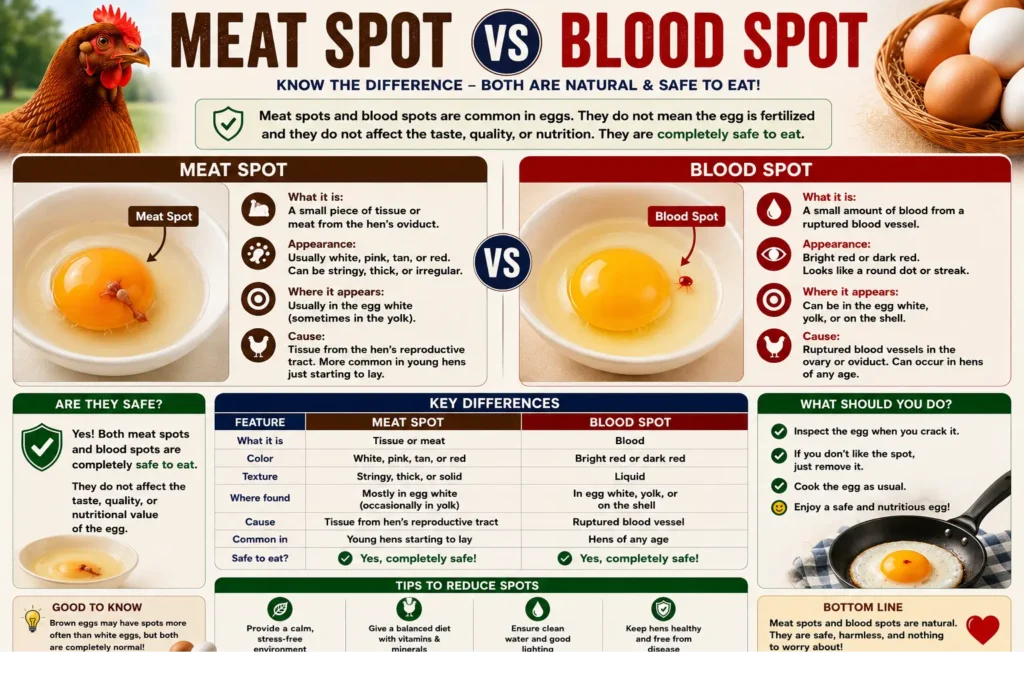
What’s the difference between a meat spot and a blood spot in an egg? A blood spot is fresh blood from a ruptured vessel and looks red or reddish-brown, while a meat spot is tissue or aged blood pigment and looks brown, tan, or gray. Both are harmless quality defects.
Which is more common, meat spots or blood spots? Blood spots are more common overall. Meat spots occur less frequently, though both can appear in eggs from any hen or breed.
Do blood spots or meat spots mean the egg is bad? No, not on their own. Only discard the egg if it also shows other spoilage signs, such as a bad smell or an unusually watery, discolored white.
Are brown eggs more likely to have blood or meat spots? Some research and grading data suggest brown-egg breeds show slightly higher rates of both spot types compared to white-egg breeds, though the exact cause isn’t fully settled.
Wrapping Up
The meat spot vs blood spot question comes down to color, source, and location, but not safety. A blood spot comes from a burst capillary and looks red, while a meat spot comes from detached tissue or aged blood pigment and looks brown or gray. Either one can simply be lifted out with a knife tip, and the rest of the egg is fine to cook and eat. If you raise hens yourself and start seeing either type of spot often, keep an eye on diet and stress levels, and check in with a poultry veterinarian if anything else about your flock’s health seems off.
FAQ
Q: What is the difference between meat spot vs blood spot in eggs? A: A blood spot is fresh blood from a ruptured vessel and appears red or reddish-brown, while a meat spot is tissue or aged blood pigment and appears brown, tan, or gray.
Q: In the meat spot vs blood spot comparison, which one is safer to eat? A: Both are equally safe to eat once the spot is removed. Neither is a food safety hazard on its own, according to USDA egg grading standards.
Q: Does an egg spot comparison help identify if an egg is fertilized? A: No. Neither a blood spot nor a meat spot indicates fertilization. A fertilized egg shows a separate ring pattern called the blastodisc on the yolk.
Q: Which spot type is more common in backyard eggs? A: Blood spots are generally more common than meat spots in both backyard and commercial eggs, though both show up more often in eggs that skip commercial candling.
Q: Can I still eat the egg if I see a meat spot or blood spot? A: Yes. Remove the spot with a knife tip and cook the egg normally, as long as there are no other signs of spoilage.