Pale Egg Shells: What a Fading Color Change Really Means

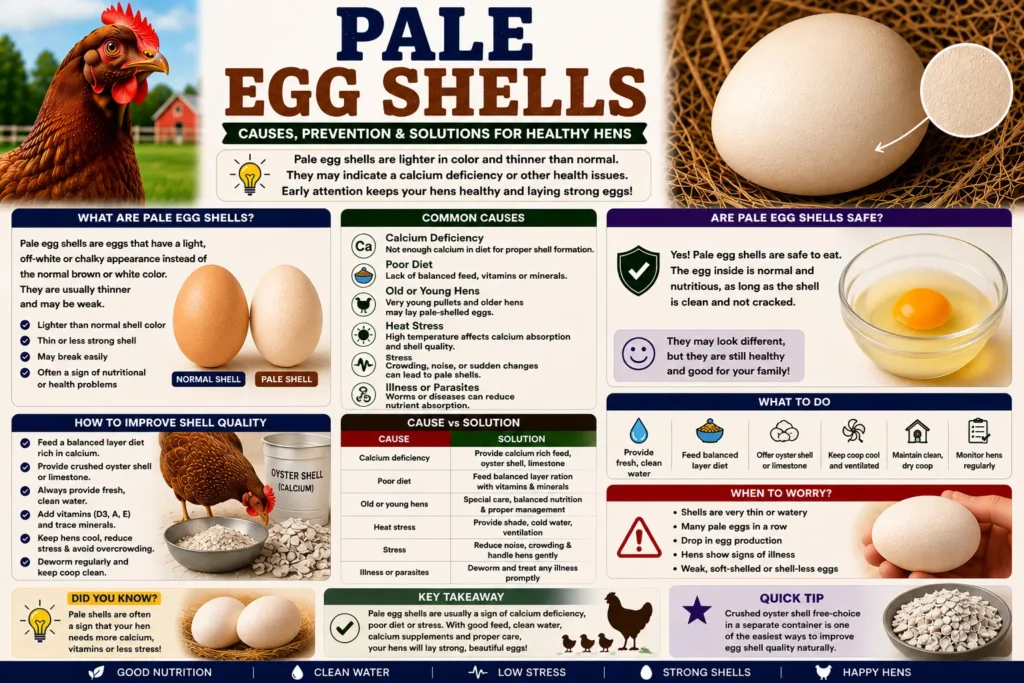
Pale egg shells show up gradually for most flock owners — a brown egg that used to be rich and dark starts looking washed out, or a whole batch seems lighter than usual. It’s a common enough shift that it usually has a simple explanation, but it can occasionally point to something worth addressing. This guide covers every known cause of pale egg shells, how to tell normal variation from a genuine warning sign, and what to do about each.
Table of Contents
Quick Answer
Pale egg shells are most often caused by a hen’s natural laying cycle, age, stress, or a pigment supply issue during shell formation. They rarely indicate a serious problem on their own. Pale egg shells combined with a drop in production or illness signs are what warrant a closer look.
What Causes Pale Egg Shells?
Shell color, especially in brown-egg breeds, comes from a pigment called protoporphyrin, applied to the shell surface near the very end of formation, right before the egg is laid. Pale egg shells happen when less pigment gets applied than usual, while the underlying white calcium shell stays completely normal.
Read More: https://lashegg.com/calcium-deposits-on-eggs-explained/
What pale egg shells typically look like:
- A lighter, washed-out version of a hen’s usual shell color
- Uneven coloring, with darker and lighter patches on the same egg
- Color that fades gradually across a laying cycle rather than changing overnight
- Normal shell strength and texture underneath the lighter color
Do Pale Egg Shells Affect White Eggs Too?
Not usually. Pale egg shells are almost entirely a brown-egg phenomenon, since white and light-colored egg breeds don’t apply that same pigment layer in the first place. If you’re seeing color changes on naturally white eggs, it’s more likely a staining or cleanliness issue than true pigment fading.
Why Do Some Eggs Have Paler Shells Than Others?
Where a Hen Is in Her Laying Cycle
Pigment supply is limited and used up gradually across a laying cycle. The first eggs a hen lays after starting or restarting production tend to be the darkest, and shell color naturally lightens with each subsequent egg until she pauses to molt or rest, then starts the cycle fresh again.
Hen Age
Older hens, especially those several years into laying, often show consistently paler egg shells compared to their first year or two, as their pigment-depositing capacity gradually declines even when overall health is fine.
Stress
A stressful event — a predator scare, sudden environmental change, or overcrowding — can interrupt pigment deposition during the brief window it happens, leading to a noticeably pale or unevenly colored egg shortly after.
Nutrition
Pigment production depends on the hen’s overall health and diet, and a poor-quality or imbalanced feed can occasionally show up as pale egg shells alongside other signs of nutritional gaps.
Genetics and Individual Variation
Some hens, and some breeds, simply lay a lighter shell color from the start, and what looks “pale” compared to a deep chocolate-brown breed might be completely normal for a different hen.
Expert Tip
Track shell color from the same hen over several weeks rather than comparing one egg to another hen’s egg. A gradual lightening across her own laying cycle is expected; a sudden, sharp change from her personal baseline is more meaningful.
Table: Common Causes of Pale Egg Shells
| Cause | Typical Pattern | Action Needed |
| Natural laying cycle progression | Gradual fading across weeks | None — normal pigment depletion |
| Hen age | Consistently paler shells over years | None — expected with age |
| Stress or disruption | Sudden pale or blotchy egg | Reduce stress triggers |
| Nutritional gaps | Pale shells with other health signs | Review feed quality and balance |
| Genetics/breed | Naturally lighter color from the start | None — normal variation |
| Infectious bronchitis (less common) | Pale shells + respiratory signs | Veterinary evaluation |
| Disease affecting overall health | Pale shells + production drop or illness | Veterinary evaluation |
Can Illness Cause Pale Egg Shells?
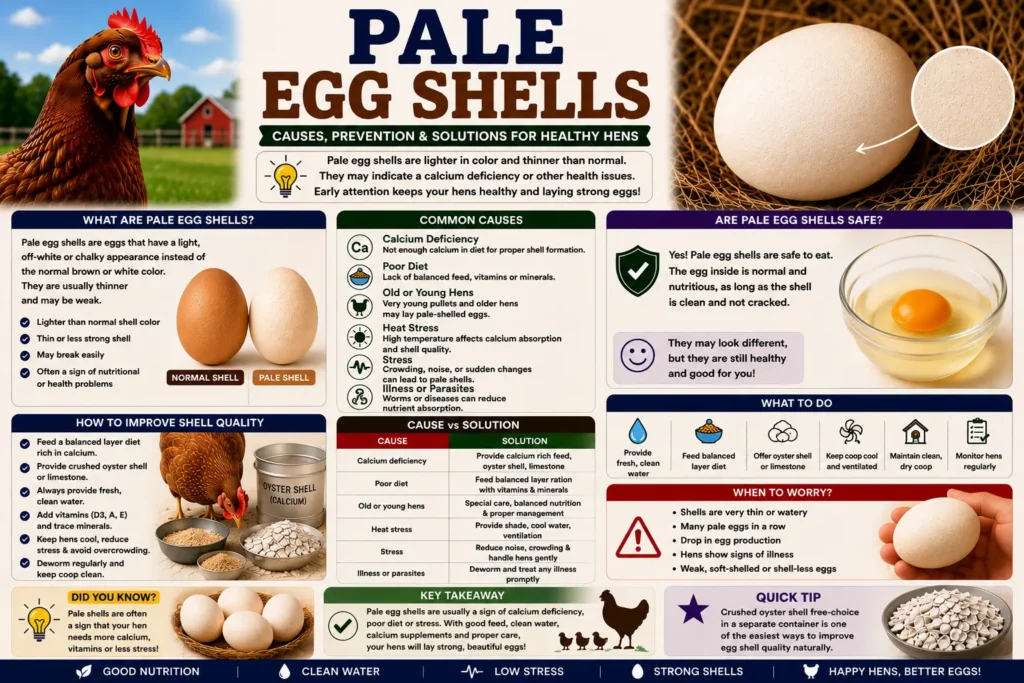
Most pale egg shells trace back to ordinary cycle timing, age, or stress rather than disease. That said, a hen’s overall health does influence pigment deposition, since it’s an energy-dependent process late in egg formation, and a genuinely unwell hen may show pale egg shells as one symptom among several.
Infectious Bronchitis and Other Respiratory Illness
According to general poultry veterinary references, including the Merck Veterinary Manual, infectious bronchitis is more commonly linked to thin, ridged, or misshapen eggs, but it can also disrupt pigment deposition in some cases, contributing to pale egg shells alongside more typical respiratory symptoms.
Parasites and Nutritional Deficiency
Internal parasites or a diet lacking adequate protein and key nutrients can affect a hen’s overall condition enough to show up as pale egg shells, usually alongside weight loss, reduced activity, or a drop in overall production.
When to Call a Vet
Contact a poultry veterinarian if pale egg shells appear alongside coughing, lethargy, weight loss, or a noticeable drop in egg production across the flock. A single pale egg, or a gradual lightening tied to a hen’s normal laying cycle, doesn’t need veterinary attention.
Pale Egg Shells vs. Other Shell Color Changes
| Color Change | Appearance | Most Likely Cause |
| Pale egg shells | Washed-out or lighter than usual color | Laying cycle progression, age, stress |
| Blotchy or uneven shells | Mixed light and dark patches on one egg | Stress or interrupted pigment deposition |
| Shell staining | Discoloration from outside the egg, not the pigment layer | Dirty nest box or wet bedding |
| Chalky white patches | Isolated white texture on a colored shell | Calcium deposits, unrelated to pigment |
| Green or blue shell tints | Distinct color from certain breeds | Breed genetics, particularly Araucana-type hens |
Warning
Don’t confuse genuinely pale egg shells with dirty or stained shells from a soiled nest box, since the fixes are completely different. True pigment fading happens during formation and can’t be cleaned off; surface staining sits on top of normal shell color and often can be.
How to Tell Fading Pigment From Nest Box Staining
Rub the shell gently with a dry cloth or fine abrasive pad. If the color lifts or smudges, it’s likely surface staining rather than true pale egg shells. If the lighter color is consistent and doesn’t change with gentle cleaning, the pigment itself was applied more thinly during formation.
Quick checklist to tell them apart:
- True pale egg shells: even, consistent lightening that doesn’t wipe off
- Staining: patchy, often brownish or greenish marks that reduce with cleaning
- True pale shells often follow a pattern across a hen’s laying cycle
- Staining usually reflects nest box cleanliness, not the hen’s health
What to Do If You Notice Pale Egg Shells
- Identify the hen, if possible, and check where she is in her laying cycle.
- Rule out staining — gently clean the shell to see if the color is surface-level or true pigment fading.
- Review her age — older hens naturally show more consistent pale egg shells.
- Watch for other symptoms — illness-related pale shells rarely appear alone.
- Check the feed — confirm a complete, balanced layer ration is being offered.
- Reduce stress sources — stable routines support more consistent pigment deposition.
- Give it time — pale egg shells tied to cycle timing often deepen again after the hen’s next molt and rest period.
Common Mistakes
- Assuming pale egg shells always mean illness without checking cycle timing or age first
- Confusing nest box staining with true pigment fading
- Overhauling the entire flock’s diet over pale shells from one older hen
- Ignoring pale egg shells that come with a real drop in production or other symptoms
Did You Know?
The brown pigment on an eggshell is applied so late in the process that it can be scratched or rubbed off in the nest box while the shell is still slightly damp right after laying, which is part of why very fresh eggs sometimes look slightly duller than they do once fully dry.
Prevention Checklist for More Consistent Egg Shell Color
- Feed a complete, balanced layer ration with adequate protein and key nutrients
- Minimize stress and sudden disruptions near laying time
- Keep nest boxes clean and dry to avoid confusing staining with true pigment change
- Expect natural color shifts across each hen’s laying cycle and with age
- Monitor for other health or production changes rather than color alone
Conclusion
Pale egg shells are usually just part of a hen’s normal laying rhythm, whether that’s her cycle winding down, her age catching up, or a stressful day interrupting pigment deposition. They rarely mean anything is seriously wrong on their own. Keep an eye on pale egg shells that show up alongside a real drop in production, weight loss, or respiratory symptoms, and bring in a veterinarian if that broader pattern develops across the flock.
5. FAQ
What causes pale egg shells? Pale egg shells are most often caused by a hen’s natural laying cycle, age, stress, or reduced pigment deposition during shell formation, rather than illness.
Are pale egg shells a sign of a health problem? Usually not. Pale egg shells are commonly tied to normal cycle timing or aging. They’re worth a closer look only alongside other symptoms like weight loss or reduced egg production.
Why do brown eggs get lighter over time? Brown eggs get lighter as a hen progresses through her laying cycle, since pigment supply is limited and naturally decreases with each egg until she rests and starts a new cycle.
Do older hens lay paler eggs? Yes. Older hens often show consistently pale egg shells compared to their first year or two of laying, as pigment deposition gradually declines with age.
Can stress cause pale egg shells? Yes. A stressful event during the brief pigment-deposition window near the end of shell formation can produce a noticeably pale or blotchy egg shortly afterward.
Is a pale egg shell the same as a stained shell? No. Pale egg shells reflect true pigment fading during formation, while staining is surface discoloration from a dirty nest box that can often be gently cleaned off.