What Are Abnormal Chicken Eggs?

Abnormal chicken eggs are eggs that look, feel, or form differently than a typical egg. This can include shells that are too thin, shapes that are wrinkled or lumpy, yolks that are missing, or eggs with strange objects inside the shell. Most backyard chicken keepers see at least one unusual egg during their hen’s laying life.
Finding an odd egg in the nesting box is often startling. The good news is that a single strange egg rarely means disaster. Chickens have a complex reproductive system, and small glitches happen more often than most new owners expect. Still, a pattern of abnormal chicken eggs over several days or weeks deserves a closer look, because it can point to nutrition gaps, stress, age, or disease.
This guide walks through every major cause and type of unusual chicken eggs, explains which ones are harmless, and tells you exactly when it’s time to involve a veterinarian.
Table of Contents
Quick Answer: Most abnormal chicken eggs are caused by a hen’s age, stress, or a temporary hiccup in the egg-forming process. Repeated abnormal eggs, especially with other symptoms like lethargy or discharge, can signal infection and need a vet check.
Read More: https://lashegg.com/pale-egg-shells-causes-explained/
How a Normal Egg Forms (And Why It Sometimes Goes Wrong)
To understand abnormal chicken eggs, it helps to know how a normal one is built. Egg formation takes roughly 24 to 26 hours and moves through several stages inside the hen’s reproductive tract:
- The ovary releases a yolk (ovulation).
- The yolk travels into the oviduct, where it picks up egg white (albumen).
- The egg moves into the shell gland (uterus), where the shell and pigment are added.
- The finished egg passes through the vagina and cloaca to be laid.
Any disruption at any stage — stress, illness, poor nutrition, or a physical blockage — can change the final result. That’s why so many different kinds of unusual chicken eggs exist; each one usually traces back to a specific point where the process was interrupted.
Common Types of Abnormal Chicken Eggs
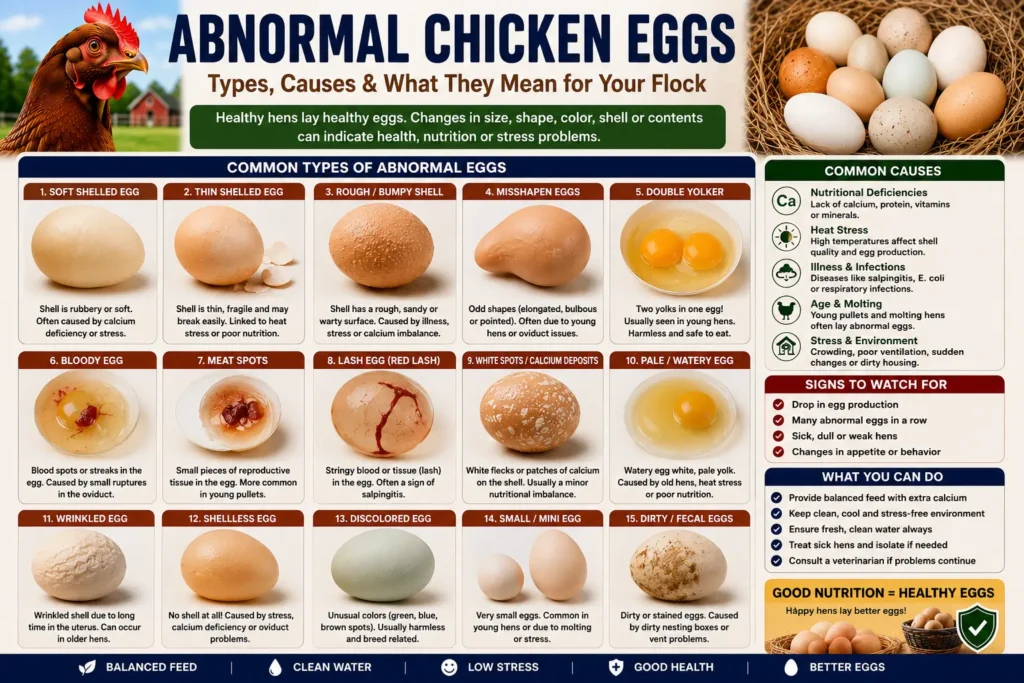
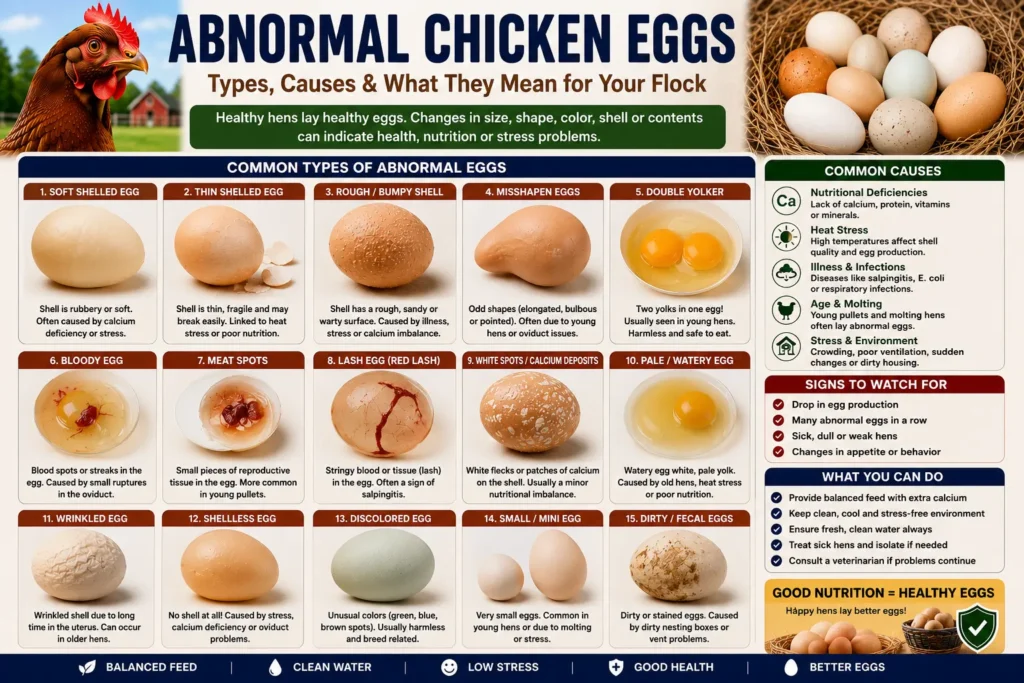
Soft-Shell or No-Shell Eggs
A soft-shell egg feels rubbery instead of hard, sometimes with no shell at all — just a membrane holding the contents together. This is one of the most frequently reported abnormal chicken eggs among backyard flocks.
Common causes:
- Calcium deficiency
- New layer still calibrating her shell gland
- Heat stress reducing calcium absorption
- Infectious bronchitis or other reproductive infections
Wind Eggs (Fairy Eggs or Dwarf Eggs)
A wind egg is tiny, often yolk-less, and shaped like a normal egg in miniature. Young pullets laying their very first egg commonly produce a wind egg, and older hens near the end of their laying cycle can also lay them occasionally.
Double-Yolk Eggs
Double-yolk eggs happen when two yolks release close together and get wrapped in the same shell. They’re common in young hens whose hormone timing hasn’t settled yet, and they’re completely safe to eat.
Wrinkled, Ridged, or Misshapen Eggs
Wrinkles and ridges form when the egg pauses partway through the shell gland, often due to stress, a respiratory infection, or a crowded nesting environment that interrupts the laying process.
Blood Spots and Meat Spots
Small red or brown specks inside the egg come from a tiny blood vessel that ruptured during ovulation, or from bits of reproductive tissue caught in the albumen. These are a cosmetic issue, not a safety concern, and the egg is still edible.
Lash Eggs
A lash egg isn’t technically an egg at all. It’s a solid, cheese-like mass made of pus, tissue, and inflammatory fluid that forms in response to a reproductive infection, most often salpingitis. Lash eggs vary in shape and can look layered, like an onion cut in half.
Seeing a lash egg is one of the clearest signs among all abnormal chicken eggs that a hen needs veterinary attention, since it points directly to an internal infection rather than a simple formation error.
Odd-Colored or Discolored Shells
Shell color shifts — pale patches, chalky spots, or streaks — can come from stress, an interrupted pigment-laying stage, or normal variation between individual hens.
Yolkless Eggs
Occasionally a hen lays an egg with no yolk at all. This usually happens when a bit of tissue from the oviduct lining triggers the shell-forming process on its own, without an actual yolk to wrap around.
Eggs Inside Eggs
Rare but real: sometimes a fully formed egg gets pushed back up the oviduct and becomes wrapped inside a second, larger egg during a second trip through the shell gland. This is unusual even among abnormal chicken eggs and typically a one-off event.
Table: Types, Likely Causes, and Recommended Action
| Type of Unusual Egg | Most Likely Cause | Action Needed |
| Soft-shell / no-shell | Calcium deficiency, heat stress, infection | Monitor; check diet; vet visit if repeated |
| Wind egg | New or aging layer | Usually no action needed |
| Double-yolk | Hormone timing in young hens | No action needed |
| Wrinkled / ridged | Stress, mild infection | Reduce stress; monitor |
| Blood or meat spot | Ruptured vessel, tissue debris | No action needed; safe to eat |
| Lash egg | Salpingitis (reproductive infection) | Vet visit recommended |
| Yolkless egg | Oviduct tissue misfire | Usually no action needed |
| Discolored shell | Stress, pigment interruption | Monitor |
Did You Know? A hen’s reproductive tract is a one-way system. When infection causes swelling or blockage, material can build up over time and form the mass known as a lash egg.
Why Do Hens Lay Abnormal Chicken Eggs? Root Causes Explained
Age of the Hen
Young pullets just starting to lay, and older hens near the end of their productive years, produce the highest share of abnormal chicken eggs. Their hormone signaling and shell gland function are either still developing or gradually slowing down.
Nutrition Gaps
Calcium, vitamin D3, and overall protein intake directly affect shell strength and yolk development. A hen fed scraps or low-quality feed instead of a balanced layer ration is far more likely to produce thin-shelled or misshapen eggs.
Key nutrients tied to shell quality:
- Calcium (oyster shell or layer feed)
- Vitamin D3 (supports calcium absorption)
- Phosphorus
- Manganese
Environmental Stress
Heat waves, sudden temperature drops, predator scares, loud noises, and overcrowded coops can all interrupt the 24-hour egg-forming cycle. Stress hormones can speed up or slow down movement through the oviduct, changing the shell’s shape or thickness.
Disease and Infection
Infectious bronchitis, Newcastle disease, and reproductive tract infections like salpingitis are well documented in poultry health literature, including guidance from the Merck Veterinary Manual, as causes of shell defects and lash eggs. These conditions affect the tissue that forms and shapes the shell.
Genetics and Breed Tendencies
Some breeds and even some individual hens are simply more prone to occasional shell irregularities, independent of diet or environment.
Expert Tip: Keep a simple laying log. Noting which hen laid which egg, and when abnormalities started, makes it much easier to spot a pattern versus a one-time fluke.
Are Abnormal Chicken Eggs Safe to Eat?
Most abnormal chicken eggs — double-yolk, wind eggs, blood spots, wrinkled shells — are safe to eat once you remove any visible blood or meat spots. The exception is a lash egg, which is not an egg and should be discarded, not eaten, since it’s made of infected tissue and pus.
If a soft-shell or no-shell egg has broken open in the nesting box, discard it and clean the area, since bacteria can spread quickly through an exposed egg.
Warning: Never eat anything resembling a lash egg. It is inflammatory tissue and pus, not food, and it signals an active infection in the hen that produced it.
How to Reduce Abnormal Chicken Eggs
- Feed a complete layer ration formulated for the hen’s age and breed.
- Offer free-choice oyster shell alongside feed so hens can self-regulate calcium intake.
- Keep the coop temperature stable with shade, ventilation, and windbreaks as seasons change.
- Reduce overcrowding by giving each hen enough nesting box and floor space.
- Limit sudden stressors like predator exposure, rough handling, or flock changes during peak laying.
- Watch body condition and adjust feed if a hen is under or overweight.
- Quarantine new birds for at least two weeks before introducing them to the flock, to limit disease spread.
Common Mistakes Backyard Keepers Make
Common Mistakes:
- Assuming every odd egg means the flock is sick
- Feeding too many treats, diluting the balanced layer ration
- Ignoring a repeating pattern of abnormal eggs from the same hen
- Eating a lash egg by mistake, thinking it’s just a strange-shaped egg
When Abnormal Chicken Eggs Are a Warning Sign
A single odd egg is usually not a concern. Watch more closely if you notice:
- Abnormal chicken eggs from the same hen repeatedly
- Eggs paired with lethargy, reduced appetite, or isolation
- Discharge, swelling, or foul odor near the vent
- A lash egg of any size
- A sudden drop in overall flock egg production
When to Call a Vet
When to Call a Vet: Contact a poultry veterinarian if a hen lays a lash egg, if soft-shell or misshapen eggs continue for more than a week despite good nutrition, or if abnormal eggs appear alongside any sign of illness. According to guidance summarized by the , reproductive tract infections in laying hens often require antibiotics and, in chronic cases, surgical evaluation — something only a licensed veterinarian can properly diagnose and treat.
This article is for general education and does not replace a hands-on veterinary exam. A vet familiar with poultry can run diagnostics, prescribe treatment, and rule out conditions that look similar on the surface but need different care.
Abnormal Chicken Eggs in Young vs. Older Hens
| Factor | Young Pullets (New Layers) | Older Hens (Late Laying Years) |
| Most common issue | Wind eggs, double yolks | Thin shells, wrinkled shells |
| Typical cause | Hormone system still calibrating | Declining shell gland efficiency |
| Usually resolves? | Yes, within a few weeks | Gradual, may need calcium support |
| Vet concern level | Low, unless paired with illness | Moderate if frequent or combined with weight loss |
FAQ Section (People Also Ask)
Is it normal for chickens to lay abnormal eggs sometimes? Yes. Occasional abnormal chicken eggs are normal, especially in young pullets just starting to lay or older hens nearing the end of their productive cycle.
What does it mean when a chicken lays a soft egg? A soft or shell-less egg usually points to a calcium shortfall, heat stress, or a temporary glitch in the shell gland. If it keeps happening, check the diet and consider a vet visit.
Can you eat a lash egg? No. A lash egg is made of pus and inflamed tissue from an infection, not egg contents, and should be discarded rather than eaten.
Why is my chicken laying tiny eggs with no yolk? Yolkless, or wind, eggs form when a bit of tissue triggers the shell-forming process without an actual yolk present. They’re most common in hens just starting or finishing their laying career.
Do abnormal chicken eggs mean my hen is sick? Not always. A single unusual egg is often harmless. Repeated abnormal chicken eggs, especially alongside lethargy or discharge, are more likely to signal an underlying health issue.
What causes wrinkled chicken eggs? Wrinkled or ridged shells usually form when stress, mild respiratory illness, or a rushed laying environment interrupts the shell gland partway through the process.
How can I stop my hens from laying abnormal eggs? Provide a balanced layer feed, offer free-choice oyster shell, keep the coop stress-free, and maintain a stable temperature. These steps address the most common causes of unusual chicken eggs.