Internal Laying Symptoms: Why Early Recognition Matters So Much

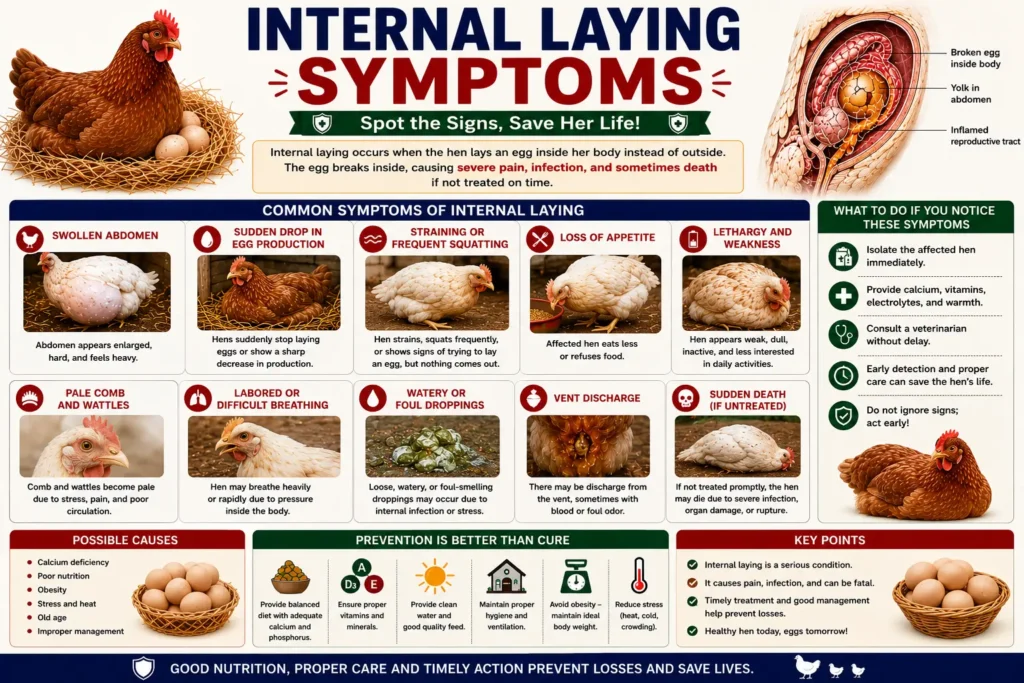
Internal laying symptoms often start so quietly that owners miss them for weeks. A hen might skip a day of laying here and there, seem a little less active, or eat slightly less — none of it alarming on its own. By the time the more obvious signs appear, the underlying problem has usually been developing for some time.
Internal laying happens when a released yolk misses the oviduct entirely and drops into the abdominal cavity instead. It’s the root cause behind most cases of egg yolk peritonitis, and catching the symptoms early gives a hen a real advantage when it comes to treatment.
This guide breaks down exactly what to watch for, in what order symptoms tend to appear, and which signs mean it’s time to stop watching and start calling a vet.
Table of Contents
Quick Answer: Early internal laying symptoms include a drop in egg production, mild lethargy, and subtle abdominal fullness. Advanced symptoms include a visibly swollen belly, labored breathing, pale comb, and complete loss of appetite — these require urgent veterinary care.
How Internal Laying Symptoms Develop Over Time
Symptoms don’t usually appear all at once. They tend to build in stages as inflammation increases and, in many cases, a bacterial infection sets in on top of the initial yolk material sitting in the abdomen.
| Stage | Typical Timeframe | What You Might Notice |
| Early | Days to a few weeks | Reduced or irregular laying, slightly quieter behavior |
| Developing | 1–3 weeks in | Mild abdominal fullness, reduced appetite, less time foraging |
| Advanced | 3+ weeks or acute onset | Visibly swollen abdomen, pale comb, labored breathing |
| Critical | Sudden decline | Severe lethargy, collapse, open-mouth breathing |
This timeline is a general pattern, not a fixed rule — some hens decline much faster, especially if a bacterial infection takes hold quickly.
Read More: https://lashegg.com/internal-laying-in-chickens/
Early Internal Laying Symptoms (Easy to Miss)
These are the signs that most owners overlook, simply because they’re subtle and can have many other explanations.
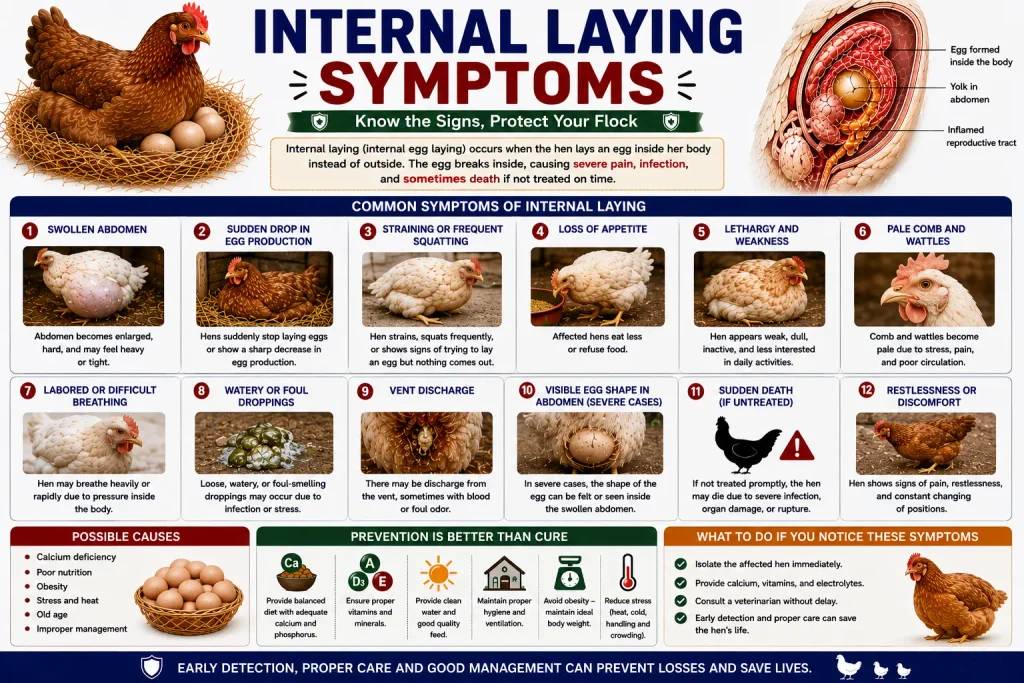
- A hen laying fewer eggs than usual, or skipping days without a clear reason
- Slightly reduced appetite that isn’t dramatic
- Spending more time resting and less time with the flock
- Mild, hard-to-notice abdominal fullness when you pick her up
- A comb that looks slightly paler than her flockmates’, without other obvious illness
Expert Tip: Keep a simple laying log for each hen if you can. A pattern of reduced laying over one to two weeks is often the earliest reliable clue, well before any visible physical change.
Signs of Internal Laying as the Condition Progresses
As inflammation builds and yolk material continues to accumulate, symptoms become easier to spot.
- Clearly swollen or firm abdomen, sometimes described as feeling “full” or fluid-like
- “Penguin stance” — standing more upright than normal to accommodate abdominal swelling
- Noticeable drop or complete stop in egg laying
- Increasing lethargy and reduced interaction with flockmates
- Pale or dusky comb and wattles
- Weight loss despite the visibly larger abdomen
- Droppings that appear watery, yellowish, or unusually foul-smelling
Internal Layer Chicken Symptoms That Signal Advanced Disease
Once an internal layer chicken develops these next-level symptoms, the situation has typically moved from inflammation into active infection or significant fluid buildup:
- Labored or open-mouth breathing
- Tail bobbing with each breath
- Reluctance or inability to stand normally
- Complete loss of appetite
- Fluid clearly palpable in the abdomen
- Sitting hunched and isolated from the rest of the flock
Warning: Labored breathing combined with a swollen abdomen is a red-flag combination. It often means fluid is pressing on the air sacs and lungs, and it should be treated as an urgent veterinary situation, not something to monitor for a few more days.
Comparing Internal Laying Symptoms by Severity
| Severity | Key Symptoms | Recommended Action |
| Mild | Reduced laying, slight lethargy | Monitor closely, note changes, consider a vet check |
| Moderate | Swollen abdomen, pale comb, reduced appetite | Schedule a vet exam within a few days |
| Severe | Labored breathing, complete appetite loss, collapse risk | Seek veterinary care immediately |
Signs of Internal Laying vs. Other Common Hen Illnesses
Because a swollen abdomen and reduced energy can point to several different conditions, it helps to know how internal laying symptoms compare to other issues.
| Condition | Overlapping Symptom | Distinguishing Sign |
| Internal laying / egg peritonitis | Swollen abdomen, lethargy | History of reduced laying, yolky fluid on vet exam |
| Egg binding | Straining, lethargy | Hen actively straining to pass a stuck egg; no internal yolk leakage |
| Ascites (heart/liver related) | Swollen abdomen | Clear, watery fluid rather than yolk material |
| Respiratory infection | Labored breathing | Usually accompanied by nasal discharge or coughing, not abdominal swelling |
| Worm burden | Weight loss, reduced appetite | Typically no abdominal swelling; may see worms in droppings |
Why This Comparison Matters for Internal Laying Symptoms
Treating the wrong condition wastes time a sick hen doesn’t have. A vet exam, sometimes combined with an ultrasound or fluid tap, is the most reliable way to confirm that internal laying — rather than one of these look-alike conditions — is actually behind the symptoms.
What Causes These Symptoms to Appear in the First Place
Internal laying symptoms trace back to yolk material escaping into the abdominal cavity instead of traveling normally through the oviduct. The body reacts to that yolk as foreign material, and bacteria — often E. coli — frequently join in, turning inflammation into infection. Risk factors that make this more likely include:
- Hybrid or high-production breeds with frequent ovulation
- Age over two to three years
- Obesity or excess body fat around the reproductive tract
- A history of soft-shelled or misshapen eggs
- Prior reproductive infections such as salpingitis
How Vets Confirm Internal Laying Once Symptoms Appear
- Physical exam and palpation to assess abdominal fullness or firmness
- Ultrasound or radiographs to visualize fluid or retained material
- Abdominocentesis (fluid tap) to sample and analyze abdominal fluid
- Bloodwork to check for signs of infection or organ stress
Did You Know? Fluid drawn from a hen with internal laying often has a distinctive thick, yolky appearance, which helps a vet distinguish it from the clear fluid typically seen in ascites caused by heart or liver disease.
What You Can Do at Home vs. What Needs a Vet
| At Home | Requires a Vet |
| Track laying patterns and behavior changes | Confirm diagnosis with imaging or a fluid tap |
| Keep the hen warm, calm, and separated if needed | Prescribe antibiotics based on culture results |
| Offer soft, high-protein, easy-to-eat food | Drain abdominal fluid if breathing is affected |
| Monitor weight and droppings daily | Discuss hormone implants for recurring cases |
Common Mistakes: Waiting to see if symptoms “get better on their own,” assuming a swollen belly is just weight gain, and treating with random over-the-counter products instead of getting an actual diagnosis are the three mistakes that most often delay effective care.
When to Call a Vet
When to Call a Vet: Any hen showing a swollen abdomen combined with reduced appetite, labored breathing, or a sudden stop in laying should be seen by a poultry or avian vet as soon as possible. Early treatment, once these signs appear, generally leads to a better outcome than waiting for symptoms to worsen.
People Also Ask
What are the first signs of internal laying in chickens? The earliest signs of internal laying are usually subtle: a drop in egg production, slightly reduced appetite, and quieter-than-usual behavior, often before any visible abdominal swelling appears.
How long does it take for internal laying symptoms to show up? This varies by hen, but many cases develop over one to three weeks before becoming clearly visible, though some hens decline faster if a bacterial infection sets in quickly.
Can internal laying symptoms come and go? Mild symptoms like reduced laying can fluctuate, which is part of why the condition is easy to miss early on. However, true internal laying doesn’t resolve on its own and tends to progress rather than disappear permanently.
Is a swollen belly always a sign of internal laying? No. A swollen abdomen can also indicate ascites, egg binding, or a tumor, which is why a vet exam is the only reliable way to confirm internal laying rather than a look-alike condition.
FAQ
What are the most common internal laying symptoms to watch for? The most common signs of internal laying are a drop in egg production, a swollen or firm abdomen, lethargy, pale comb, reduced appetite, and, in advanced cases, labored breathing.
Do internal layer chicken symptoms always include a stopped laying cycle? Not always immediately, but a significant drop or full stop in laying is one of the most consistent early indicators, since the reproductive disruption behind internal laying usually affects egg production directly.
Can you diagnose internal laying just from the symptoms? Not reliably. Symptoms overlap with several other conditions, so a vet typically needs a physical exam plus imaging or a fluid tap to confirm internal laying rather than diagnosing from visible signs alone.
How do I know if my hen’s symptoms are an emergency? Labored breathing, complete loss of appetite, inability to stand, or sudden collapse are emergency-level internal laying symptoms that need immediate veterinary attention rather than a wait-and-watch approach.
Are internal laying symptoms different in young hens versus older hens? Older hens (2+ years) show internal laying symptoms more frequently due to age-related reproductive decline, but young, high-production hybrid hens can also develop symptoms, particularly if they’re heavy layers.