Internal Laying in Chickens: What It Actually Means

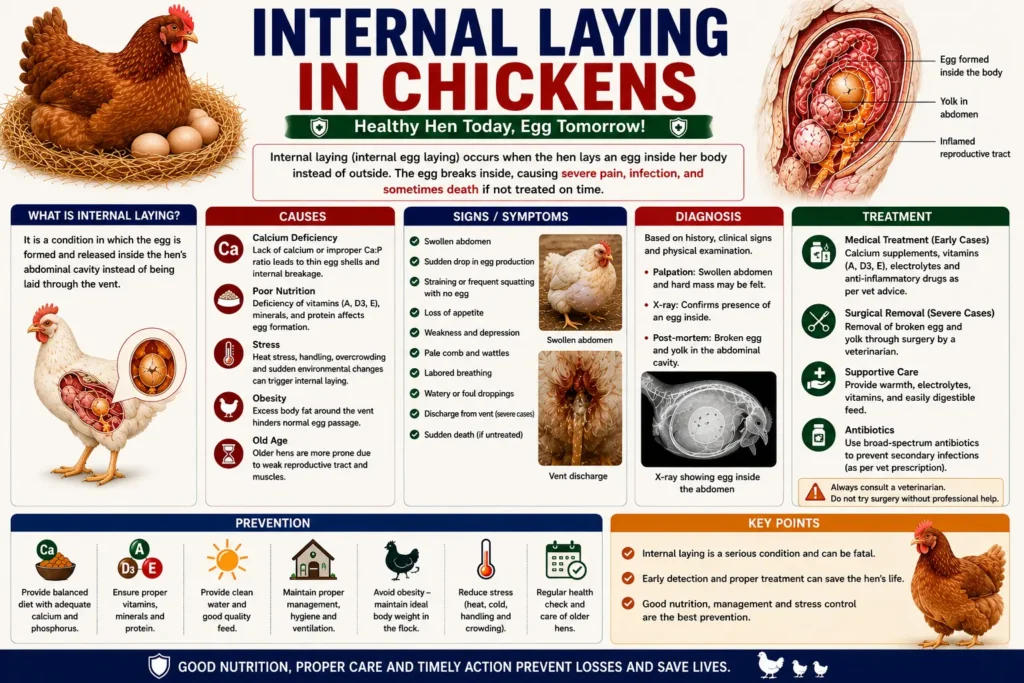
Internal laying in chickens happens when a hen’s body releases a yolk that never makes it into the oviduct — instead, it drops into her abdominal cavity. Instead of becoming an egg you collect from the nest box, that yolk stays inside her body, where it can trigger inflammation and sometimes serious infection.
It sounds alarming, and it can be, but it’s also more common than most new chicken keepers realize. Hens that lay frequently, particularly hybrid layers bred for high egg output, are especially prone to it over their lifetime.
This guide explains exactly what internal laying is, why it happens, how to recognize it, and what separates a hen you can monitor at home from one that needs urgent veterinary attention.
Table of Contents
Quick Answer: Internal laying in chickens occurs when the infundibulum — the funnel-shaped part of the oviduct — fails to catch a released yolk, so it ends up in the abdomen instead. It’s the root cause behind most cases of egg yolk peritonitis and requires veterinary evaluation once symptoms appear.
How a Hen’s Reproductive System Is Supposed to Work
To understand why a chicken internal layer develops the condition, it helps to picture the normal process first. A hen’s ovary releases one yolk at a time. Directly beneath it sits the infundibulum, a funnel-like opening designed to catch that yolk within about 15 to 30 minutes.
From there, the yolk travels through the magnum, where the egg white forms, then the isthmus, where the shell membranes are added, and finally the shell gland, where the hard shell develops. The whole journey takes roughly 24 to 26 hours and ends with a normal egg in the nest box.
Read More: https://lashegg.com/causes-of-egg-peritonitis/
Where Internal Laying Breaks This Process
Internal laying happens at the very first step. If the infundibulum misses the yolk — because of inflammation, scarring, timing issues, or anatomical abnormalities — gravity takes over, and the yolk falls into the coelomic (body) cavity instead of entering the oviduct.
Why Internal Laying Happens: The Underlying Causes
| Cause | Explanation |
| Infundibulum malfunction | The catching mechanism fails to capture a released yolk |
| Oviduct inflammation or scarring | Prior infection leaves tissue less able to function normally |
| High-frequency ovulation | Hybrid layers release yolks more often, raising the odds of an error |
| Obesity | Excess fat around the reproductive tract interferes with normal capture |
| Age | Oviduct tissue loses elasticity and efficiency over time |
| Genetic predisposition | Some bloodlines show a higher tendency toward reproductive irregularities |
| Stress or illness | Can disrupt normal ovulation timing |
Is Internal Laying the Same as Egg Peritonitis?
Not exactly. Internal laying describes the event — yolk ending up in the abdomen. Egg peritonitis (or egg yolk peritonitis) describes what often follows: inflammation and, frequently, bacterial infection once that yolk sits in the body cavity. A hen can technically have an isolated internal-laying event without developing full peritonitis, but repeated internal laying makes peritonitis far more likely over time.
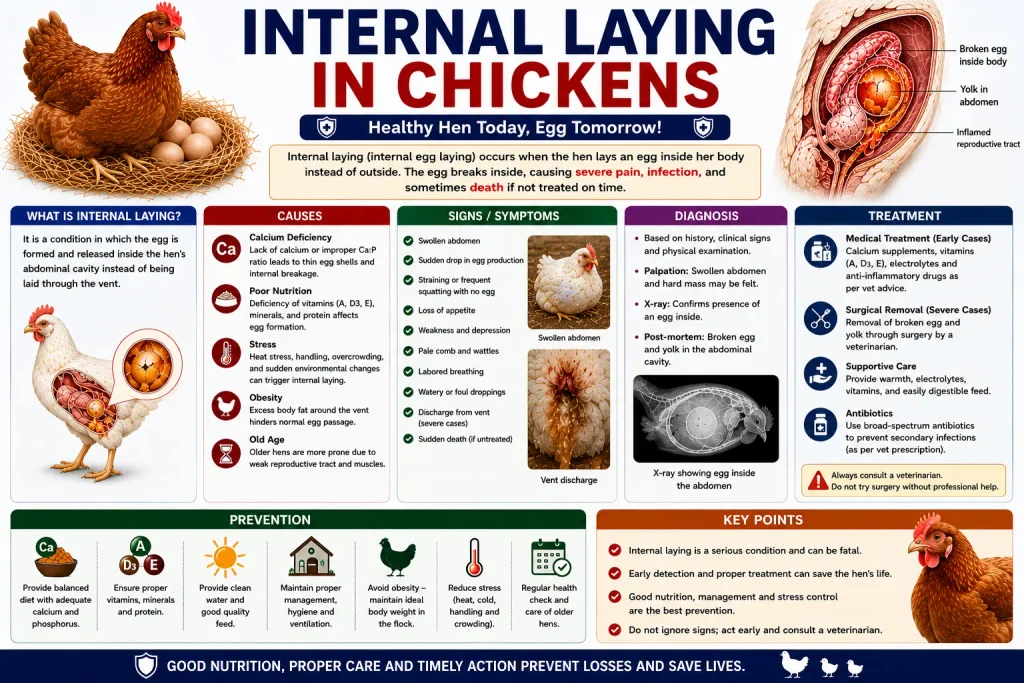
Signs and Symptoms of a Chicken Internal Layer
Because the yolk itself doesn’t cause immediate external symptoms, early internal laying can be hard to spot. Signs typically build gradually and include:
- Gradual or sudden drop in egg production
- Swollen or firm abdomen
- “Penguin stance” — standing more upright than usual
- Lethargy and reduced activity
- Pale comb and wattles
- Reduced appetite alongside continued weight change
- Labored or rapid breathing in advanced cases
- Fluid-like fullness felt on gentle abdominal palpation
Warning: A hen that has stopped laying and also shows a swollen abdomen and labored breathing needs veterinary evaluation promptly. These combined signs often indicate the internal laying has progressed to fluid buildup or infection.
Diagnosing Internal Laying in Chickens
A vet typically uses a combination of methods to confirm internal laying rather than relying on visual signs alone:
- Physical exam and abdominal palpation to check for fluid or firmness
- Ultrasound or radiographs to visualize fluid pockets or retained material
- Abdominocentesis (a fluid tap) to sample abdominal fluid for cytology and culture
- Bloodwork to assess infection markers and organ function
Why a Fluid Tap Matters So Much
Abdominal fluid from a hen with internal laying often has a distinct yolky, thick appearance under examination, which helps confirm the diagnosis and distinguish it from other causes of a swollen abdomen, such as ascites from heart or liver disease.
Internal Laying vs. Look-Alike Conditions
| Condition | What’s Actually Happening | Distinguishing Clue |
| Internal laying / egg peritonitis | Yolk released into the abdomen | History of laying disruption, yolky fluid on tap |
| Ascites | Fluid buildup from heart or liver dysfunction | Clear, watery fluid; no yolk material |
| Egg binding | An egg stuck in the oviduct or vent | Straining to lay, no internal yolk leakage |
| Abdominal tumor | Abnormal tissue growth, often reproductive | Firm mass rather than free fluid |
Managing a Hen With Internal Laying: Home Care vs. Vet Care
| What You Can Do at Home | What Requires a Vet |
| Provide warm, quiet, low-stress housing | Confirm the diagnosis with imaging or fluid tap |
| Monitor weight, appetite, and droppings daily | Prescribe antibiotics based on culture results |
| Offer easily digestible, high-protein food | Drain abdominal fluid if breathing is affected |
| Separate the hen from an active, crowded flock | Place a hormone implant to reduce future ovulation |
| Reduce stress: predator security, stable routine | Perform surgery in chronic or severe cases |
Common Mistakes: Assuming internal laying will “resolve on its own” once a hen stops showing obvious symptoms, and delaying a vet visit because she’s still eating a little, are two of the most common reasons treatment starts too late.
Treatment Options for Internal Laying and Related Peritonitis
Once internal laying leads to inflammation or infection, treatment generally involves:
- Culture-based antibiotics chosen after lab testing of abdominal fluid, not guessed at
- Fluid drainage to relieve pressure on the lungs and air sacs in advanced cases
- Supportive care, including warmth, hydration, and nutritional support
- Hormone implants (such as deslorelin) to suppress ovulation and prevent repeat episodes
- Surgical removal of the oviduct in hens with chronic or recurring internal laying
Expert Tip: For hens with more than one internal-laying episode, ask your vet directly about hormone implants. Reducing how often a hen ovulates is one of the most effective ways to lower the risk of it happening again.
Can Internal Laying in Chickens Be Prevented?
Genetics and age aren’t within an owner’s control, but several contributing factors are manageable:
- Maintain a healthy body weight through balanced, portion-appropriate feeding
- Feed a quality layer ration with proper calcium and protein levels
- Reduce sudden stress: secure coops, predator-proofing, stable routines
- Watch hens with a history of soft-shelled or misshapen eggs more closely
- Give older hens (2+ years) extra attention rather than assuming symptoms are just aging
- Discuss preventive hormone therapy with a vet for high-risk hens or breeds
Did You Know? Wild jungle fowl, the ancestor of the modern chicken, lay only a small clutch of eggs a few times a year. Selective breeding for near-daily egg production is a major reason internal laying and related reproductive issues are far more common in today’s hybrid layers than in wild bird populations.
Prognosis: What Happens After a Diagnosis
Outcomes vary depending on how early internal laying is caught. A single, mild episode identified and treated early often has a reasonable recovery outlook. Chronic or repeated internal laying, especially with heavy scarring or recurring infection, carries a more guarded prognosis even with treatment, which is why prevention and early intervention matter so much.
When to Call a Vet: Contact a poultry or avian vet if a hen shows a swollen abdomen, an unexplained stop in laying, labored breathing, or ongoing lethargy. Waiting to “see if it improves” is one of the biggest risk factors for a poor outcome.
People Also Ask
What does internal laying mean in chickens? It means a hen’s ovary has released a yolk that failed to enter the oviduct and instead ended up in her abdominal cavity, where it can cause inflammation or infection if not addressed.
Can a hen survive internal laying? Yes, many hens survive, especially when the condition is caught early and treated by a vet. Chronic or advanced cases carry a higher risk, which is why early recognition matters.
Does internal laying always turn into egg peritonitis? Not always in the earliest stage, but repeated or untreated internal laying very commonly leads to inflammation and infection, which is what defines egg peritonitis.
Is internal laying painful for chickens? It’s reasonable to assume some discomfort is involved, particularly as fluid builds up or infection develops, though chickens are naturally good at masking outward signs of pain.
FAQ
What is internal laying in chickens exactly? Internal laying in chickens is when a released egg yolk fails to enter the oviduct and instead drops into the abdominal cavity, where it can cause inflammation and, frequently, infection.
How common is internal laying in backyard flocks? It’s considered one of the more common reproductive issues in laying hens, particularly hybrid breeds and hens over two years old, though exact rates vary by flock and breed.
Can you tell if a chicken is an internal layer just by looking at her? Not reliably in the early stages. Signs like a swollen abdomen or stopped laying usually only appear once the condition has progressed, which is why unexplained changes in laying or behavior deserve attention.
Is there a cure for a chicken internal layer? There’s no guaranteed cure, but many hens respond well to veterinary treatment, especially antibiotics and supportive care given early. Hormone implants or surgery can help prevent repeat episodes in hens prone to recurrence.
Should I stop a hen from laying if she’s had internal laying before? This is a conversation to have with a vet. Reducing ovulation frequency, often through a hormone implant, is a common recommendation for hens with a history of internal laying to lower the risk of it happening again.