Internal Laying vs Egg Binding: How to Tell the Difference in Your Hen

If your hen has stopped laying, looks swollen, or is sitting hunched in the corner of the coop, you are probably searching for answers fast. The comparison of internal laying vs egg binding confuses even experienced chicken keepers, because both conditions can make a hen look sick, bloated, and unwilling to lay. But they are different problems inside the bird, and they need different responses from you.
This guide breaks down what each condition actually is, how to spot the difference, what a vet will do, and what you can safely try at home while you arrange care. You will also find comparison tables, callout boxes, and answers to the questions chicken keepers ask most.
Table of Contents
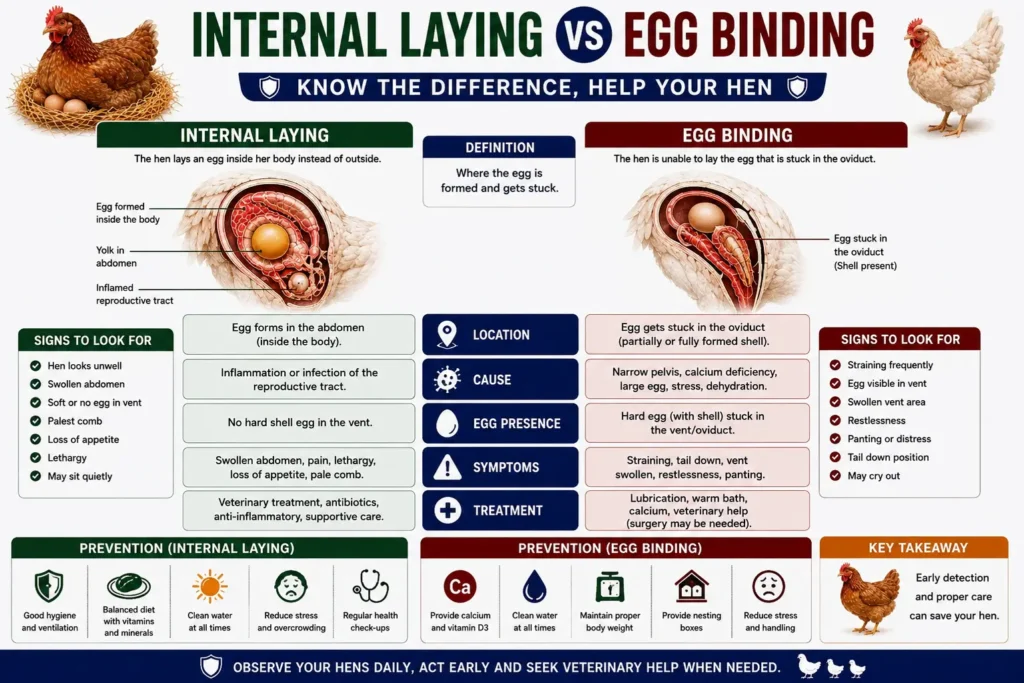
Quick Answer: Egg binding means a fully formed egg is physically stuck in the oviduct and can’t be pushed out. Internal laying (also called internal ovulation or egg yolk peritonitis when it becomes infected) means a yolk missed the oviduct entirely and dropped into the body cavity instead. Egg binding is a mechanical blockage; internal laying is a misdirected yolk that often leads to infection over time. Both can be emergencies, but they need different care.
Why the Confusion Happens
Backyard chicken owners often use “egg bound” as a catch-all term for any hen that looks unwell around laying time. Veterinary sources note that a large share of hens brought in as suspected egg-bound cases actually turn out to have internal laying or oviduct disease instead, with a true stuck egg being comparatively rare. That mismatch matters, because home remedies aimed at moving a stuck egg do nothing for a hen whose real problem is a yolk sitting loose in her abdomen.
Read More: https://lashegg.com/internal-laying-treatment/
What Is Egg Binding?
Egg binding is a mechanical problem. A fully or partially formed egg becomes lodged somewhere in the oviduct or vagina and cannot pass through the vent in the normal way. The hen keeps trying to push it out, but the egg does not move.
How an Egg Normally Forms and Passes
A healthy hen’s reproductive system works like an assembly line:
- The ovary releases a yolk (ovulation).
- The infundibulum, the funnel-shaped opening of the oviduct, catches the yolk.
- The yolk travels down the oviduct, picking up egg white, membranes, and finally a shell.
- The finished egg passes through the vagina and out through the vent.
This whole process usually takes around 24 to 26 hours in a healthy layer. Egg binding happens when step 3 or 4 breaks down and the egg gets stuck instead of moving forward.
Common Causes of Egg Binding
- Calcium deficiency: Weak muscle contractions and soft, thin shells make eggs harder to push out.
- Oversized or misshapen eggs: Double-yolkers or unusually large eggs can be too big for the oviduct to pass easily.
- Young pullets laying too early: Birds rushed into production by excess light may not be physically ready.
- Obesity: Extra body fat can crowd the abdomen and weaken muscle tone.
- Dehydration or poor nutrition: Both reduce the muscle strength needed to lay.
- Stress, cold temperatures, or a first-time layer’s inexperience.
Signs of Egg Binding
- Repeated squatting or straining in the nest box without producing an egg
- A wide-legged, “penguin-like” stance or waddle
- A hard, egg-shaped lump felt gently through the lower abdomen
- Lethargy, fluffed feathers, and reluctance to move
- Pale comb and wattles
- Little to no droppings, since the stuck egg can press on the vent and block the cloaca
What Is Internal Laying?
Internal laying (sometimes called internal ovulation, egg dumping, or ectopic ovulation) happens when a yolk released by the ovary misses the infundibulum entirely and falls into the body cavity instead of entering the oviduct. Rather than becoming a full egg, the yolk simply sits loose among the internal organs.
Why Internal Laying Happens
- Oviduct blockage or scarring: Previous infection, injury, or disease can narrow or damage the entry point of the oviduct.
- Reverse peristalsis: Sometimes contractions push material backward instead of forward, allowing yolk or fluid to travel up into the body cavity.
- Age and overproduction: Hens bred or managed for very high egg output are more prone to reproductive tract strain over time.
- Erratic ovulation: Multiple yolks released too close together can overwhelm the oviduct’s ability to catch each one.
What Happens to the Misplaced Yolk
In many cases, the body simply reabsorbs a stray yolk without lasting harm, especially if it is a rare, isolated event. The real danger appears when internal laying happens repeatedly or when bacteria reach the yolk material. Since yolk is rich in protein and fat, it is an excellent breeding ground for bacteria such as E. coli. When infection sets in, the condition progresses to egg yolk peritonitis, an inflammation of the abdominal lining that is a leading cause of death in laying hens.
Signs of Internal Laying and Egg Yolk Peritonitis
- A swollen, fluid-filled, or “fat penguin” abdomen that develops over days or weeks
- Sudden drop or stop in egg production, or thin-shelled, soft, or oddly shaped eggs
- Sitting low and still, avoiding activity, spending more time in the nest box without laying
- Labored or open-mouth breathing, caused by fluid pressing on the air sacs
- Reduced appetite and weight loss, sometimes with a bloated appearance despite eating less
- A dull, hunched posture that can look similar to many other chicken illnesses
Internal Laying vs Egg Binding: Side-by-Side Comparison
| Feature | Egg Binding | Internal Laying |
| What’s happening | A formed egg is stuck in the oviduct | A yolk missed the oviduct and entered the body cavity |
| Onset | Usually sudden, within hours | Usually gradual, over days or weeks |
| Abdomen | Firm, with a palpable egg-shaped mass | Soft, fluid-filled, generally swollen |
| Straining | Frequent, visible straining to lay | Often minimal or absent |
| Droppings | Reduced or absent due to blockage | May be normal at first, then reduced with illness |
| Breathing | Usually normal unless advanced | Often labored due to fluid buildup |
| Home first aid | Warm bath, calcium, gentle care may help | Rarely effective; needs veterinary diagnosis |
| Vet treatment | Manual assistance, lubrication, possible surgery | Antibiotics if caught early; surgery or drainage in advanced cases |
| Urgency | Emergency, hours matter | Emergency, especially with breathing trouble or long illness |
Expert Tip: If you can gently feel a firm, egg-shaped mass through the lower abdomen, egg binding is more likely. If the swelling feels soft, fluid-like, and diffuse rather than one hard shape, internal laying or peritonitis is more likely. Either way, a vet exam is the only way to confirm which condition you’re dealing with.
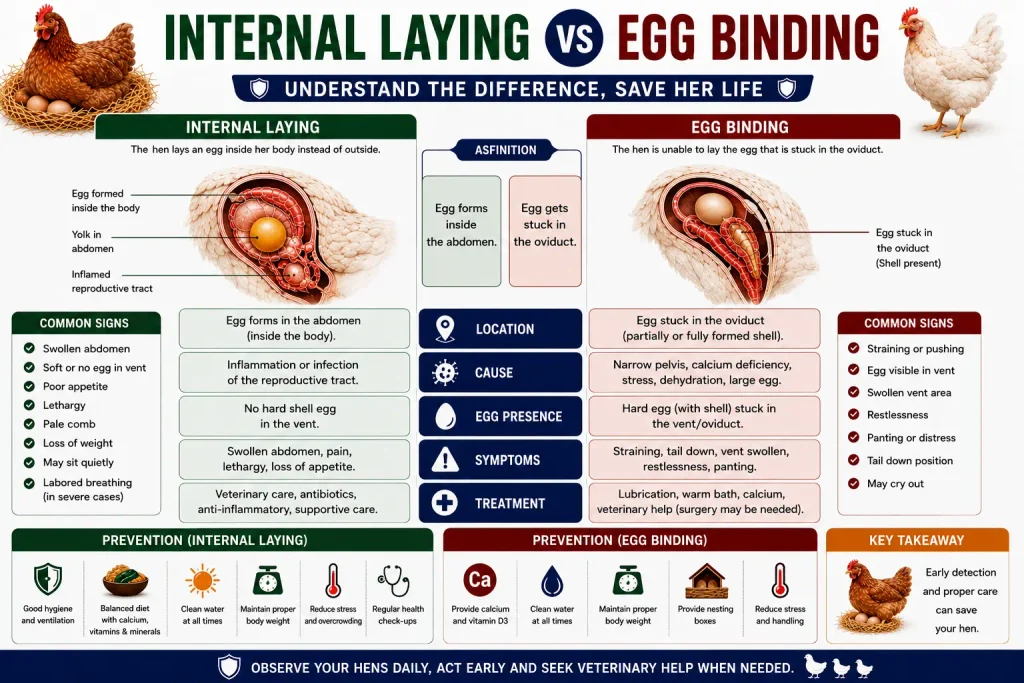
H3: Internal Laying vs Egg Binding Symptoms You Can Check at Home
You do not need special equipment to start narrowing things down. Wash your hands, then gently and calmly examine your hen:
- Check the abdomen. Feel just below the vent for firmness (possible egg binding) versus a soft, fluid-filled swelling (possible internal laying).
- Watch her behavior for 30–60 minutes. Repeated squatting and straining points toward egg binding. Quiet stillness with labored breathing points toward internal laying.
- Check her droppings. No droppings at all suggests a physical blockage. Reduced but present droppings, alongside general illness, points more toward internal laying.
- Note the timeline. A sudden change today suggests egg binding. A slow decline over one to three weeks suggests internal laying or peritonitis.
None of these checks replace a veterinary exam, but they help you describe symptoms accurately when you call for help.
Diagnosis: How Vets Tell Internal Laying and Egg Binding Apart
A poultry or avian veterinarian typically combines several tools:
- Physical palpation of the abdomen to feel for a discrete, hard mass versus generalized fluid
- X-rays, which can reveal a shelled egg lodged in the oviduct, distinguishing it from soft tissue swelling
- Ultrasound, useful for detecting free fluid in the abdomen, a hallmark of internal laying and peritonitis
- Fluid aspiration, where a small needle draws fluid from the abdomen to check for yolk material or infection
- Bloodwork, which can show signs of infection or inflammation
- History taking, including recent laying patterns, diet, flock health, and how quickly symptoms appeared
Because home symptoms overlap so much, a proper diagnosis usually requires this kind of exam rather than guesswork.
Treatment Options
Treating Egg Binding
Mild, early cases sometimes respond to supportive home care, but any hen that does not pass the egg within a few hours needs professional help.
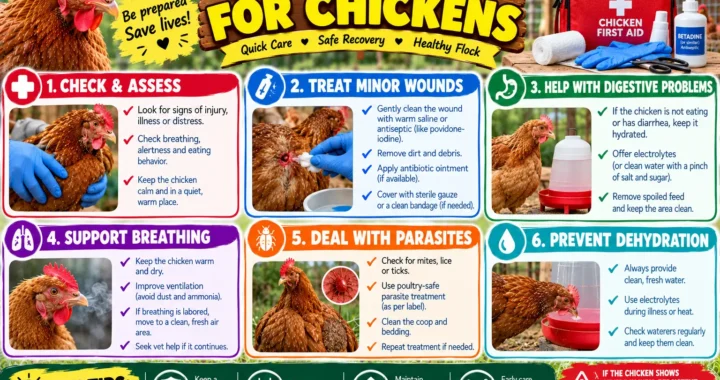
Home supportive care for a hen who is alert and breathing normally:
- Move her to a warm, quiet, dimly lit space away from the flock
- Offer a warm bath (around 15–20 minutes) so the water covers her lower abdomen, which can relax the muscles
- Add a calcium supplement, since low calcium is a common underlying cause
- Apply a small amount of lubricant, such as plain water-based lubricant, around the vent if you can safely reach it
- Keep her warm, hydrated, and stress-free while you arrange veterinary care
What a vet may do:
- Administer calcium and fluids
- Manually assist the egg out under sedation if needed
- Aspirate the contents of the egg to collapse it, making removal easier, in severe cases
- Perform surgery if the egg cannot be passed or the oviduct is damaged
Treating Internal Laying and Egg Yolk Peritonitis
Home remedies generally do not resolve internal laying, because there is no physical object to move. Veterinary involvement is the standard of care.
- Early, mild cases: A vet may prescribe antibiotics if a bacterial infection is suspected and caught before major fluid buildup.
- Fluid buildup: A vet can drain excess abdominal fluid to relieve pressure and ease breathing.
- Advanced or recurring cases: Surgery may be recommended to remove damaged reproductive tissue, though the prognosis becomes more guarded once infection is well established.
- Supportive care: Warmth, hydration, a low-stress environment, and close monitoring support recovery alongside medical treatment.
Warning: Do not give a hen with a suspected soft, fluid-filled abdomen the same treatment you would give a hen with a firm, egg-shaped mass. Warm baths and manual manipulation aimed at moving a “stuck egg” will not help internal laying and can add unnecessary stress to an already sick bird.
Common Mistakes Owners Make
- Assuming every swollen hen is egg bound. Many “egg bound” hens brought to poultry vets actually have internal laying or another reproductive issue instead.
- Waiting too long to seek help. Both conditions can turn fatal within a day or two once complications set in.
- Pressing hard on the abdomen. This can rupture a stuck egg or worsen internal damage. Always use gentle, light touch.
- Overusing calcium without addressing the real cause. Calcium helps some egg-binding cases but does nothing for internal laying.
- Ignoring changes in egg shape or shell quality. Soft-shelled or oddly shaped eggs are often an early warning sign of reproductive tract trouble before a full emergency develops.
Prevention: Reducing the Risk of Both Conditions
| Prevention Step | Helps Prevent |
| Free-choice oyster shell or calcium supplement | Egg binding (weak shells, poor muscle tone) |
| Balanced layer feed with adequate protein | Both conditions |
| Avoiding early lighting stimulation for young pullets | Egg binding in pullets laying before they’re ready |
| Maintaining a healthy body weight | Egg binding linked to obesity |
| Reducing flock stress and overcrowding | Both conditions |
| Fresh water at all times | Egg binding related to dehydration |
| Monitoring egg shape and shell quality weekly | Early detection of reproductive tract problems |
| Routine health checks for older, high-production hens | Internal laying, which becomes more common with age and heavy laying history |
Did You Know? A hen’s reproductive tract does not fully “reset” between eggs. Continuous high production, especially in hybrid layer breeds bred for maximum egg output, puts ongoing strain on the oviduct and ovary, which is part of why older, high-producing hens face a higher lifetime risk of internal laying.
When to Call a Vet
Seek veterinary care immediately if your hen shows any of the following:
- No egg produced after several hours of visible straining
- A swollen abdomen that feels soft, fluid-filled, or has developed gradually over days
- Labored or open-mouth breathing
- Complete loss of appetite or inability to stand
- A previously stuck egg that suddenly seems to disappear along with a foul smell or collapse, which can mean the egg broke internally
- Any symptoms lasting more than a few hours without improvement
A same-day exam with a vet experienced in poultry gives your hen the best chance of a good outcome, whichever condition turns out to be the cause.
Internal Laying vs Egg Binding: Can They Happen Together?
Yes. A hen can develop a partial blockage that leads to both a retained egg and yolk material escaping into the abdomen at the same time. This overlap is one more reason a hands-on veterinary exam, rather than a home guess, is the safest way to confirm what is really going on.
Final Thoughts
Comparing internal laying vs egg binding comes down to one core difference: egg binding is a physical blockage you may be able to feel as a firm mass, while internal laying is a misdirected yolk that usually causes a soft, fluid-filled swelling and develops more slowly. Both conditions can become life-threatening, and both deserve fast attention rather than guesswork.
If your hen is showing any of the warning signs above, start gentle supportive care, keep her warm and calm, and contact a poultry-experienced veterinarian as soon as possible. Keeping a close eye on your flock’s laying patterns, shell quality, and body condition each week is one of the simplest ways to catch either problem early, before it becomes a true emergency.
5. FAQ
Q: What is the main difference between internal laying vs egg binding? A: Egg binding is a fully formed egg stuck in the oviduct, causing a firm, egg-shaped lump and visible straining. Internal laying is a yolk that missed the oviduct and dropped into the body cavity, usually causing a soft, fluid-filled swelling that develops more slowly.
Q: Can a hen recover from internal laying on her own? A: An occasional, isolated yolk that ends up in the body cavity is sometimes reabsorbed without treatment. Repeated internal laying or any sign of infection needs veterinary care, since untreated cases can progress to fatal peritonitis.
Q: How long can a hen survive being egg bound? A: Without help, a hen can decline within 24 to 48 hours as the retained egg puts pressure on internal organs and blocks normal droppings. Prompt action gives the best chance of recovery.
Q: Is egg yolk peritonitis contagious to other hens? A: Egg yolk peritonitis itself is not contagious between birds, but the underlying nutritional, genetic, or management factors that caused it are often shared across the flock, so more than one hen may be affected over time.
Q: Can I tell internal laying vs egg binding just by feeling the abdomen? A: A firm, egg-shaped mass suggests egg binding, while a soft, generalized, fluid-filled swelling suggests internal laying. This is a helpful clue, but only a veterinary exam with imaging can confirm the diagnosis.
Q: What should I feed my hens to help prevent egg binding? A: A complete layer feed along with free-choice oyster shell or another calcium source supports strong shell formation and healthy muscle tone, both of which reduce the risk of a stuck egg.
Q: Do young pullets get egg bound more often than older hens? A: Yes. Pullets that start laying too early, often due to excess artificial light, may not be physically mature enough to pass eggs smoothly, which raises their risk of egg binding.
Q: Should I try to remove a stuck egg myself? A: Gentle supportive care, such as a warm bath, is reasonable while you arrange help, but do not attempt to forcefully remove an egg yourself. Rough handling can rupture the egg internally or injure the oviduct.