Prolapsed Vent in Chickens: What It Is and Why It’s an Emergency

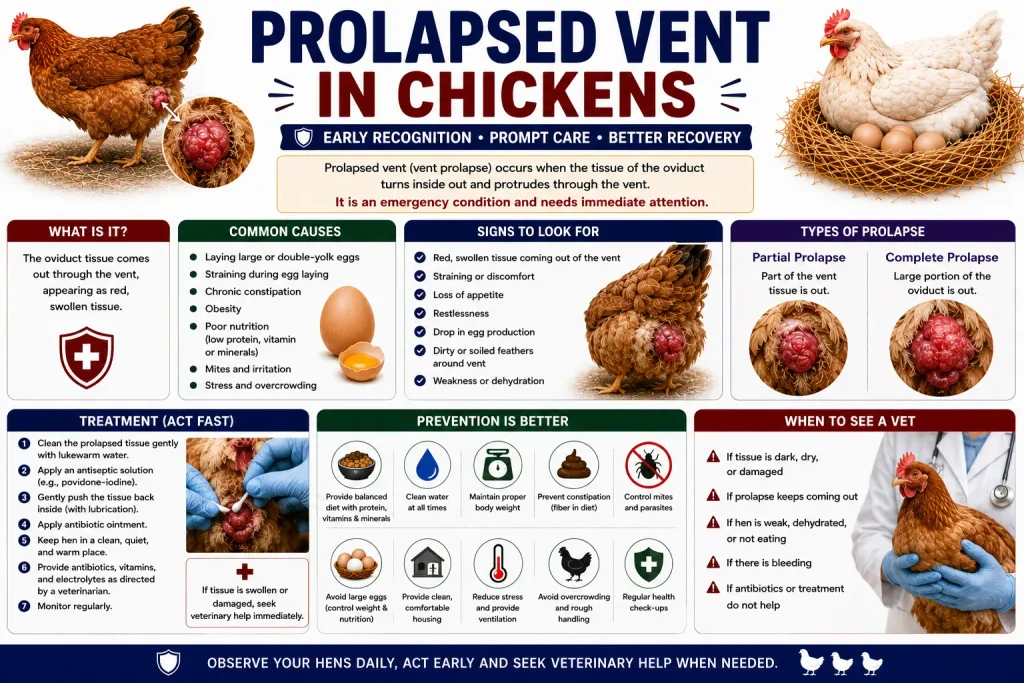
If you just spotted red, swollen tissue hanging from your hen’s rear end, you are dealing with a prolapsed vent in chickens, and every minute counts. This condition happens when internal tissue from the reproductive or digestive tract pushes outside the body through the vent opening. It looks alarming, and it is genuinely urgent, but most hens recover fully when a keeper acts fast and calmly.
This guide walks you through what causes vent prolapse, how to recognize it early, what to do in the first few minutes, and when the situation needs a vet instead of home care. You’ll also find comparison tables, step-by-step instructions, and answers to the questions chicken keepers search for most.
Table of Contents
Quick Answer: A prolapsed vent in chickens happens when part of the cloaca, oviduct, or intestine turns inside out and protrudes past the vent opening. It is most often triggered by straining during egg-laying, especially in hens that are obese, laying oversized eggs, or dealing with an underlying reproductive problem. Immediate isolation and gentle first aid can save the hen, but flockmates will peck at the exposed tissue within minutes if you don’t act quickly.
Read More: https://lashegg.com/internal-laying-vs-egg-binding-in-chickens/
What Is a Prolapsed Vent?
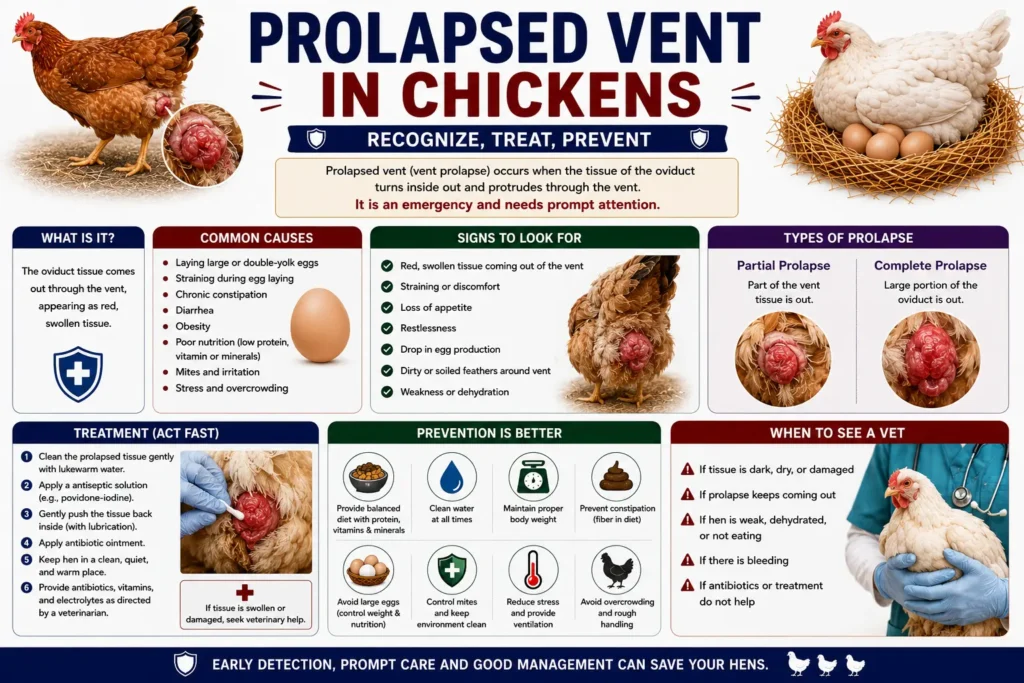
The vent is the single external opening chickens use for laying eggs, passing droppings, and mating. It connects to the cloaca, a shared chamber where the digestive, reproductive, and urinary tracts all meet. A prolapse occurs when tissue from inside this area, most often the oviduct, turns outward and stays outside the body instead of retracting after the hen lays an egg.
Under normal conditions, a small amount of tissue may briefly show right after laying and then snap back into place within seconds. A true prolapse is different: the tissue stays out, looks swollen or discolored, and does not return on its own.
Why This Is Considered an Emergency
Two things make a prolapsed vent in chickens dangerous almost immediately:
- Cannibalism risk. Chickens are drawn to red tissue and will peck at an exposed prolapse within minutes, which can cause severe injury or death.
- Tissue damage. The longer tissue stays outside the body, the more it swells, dries out, and becomes vulnerable to infection, making it harder to reposition successfully.
Common Causes of Vent Prolapse in Chickens
A chicken vent prolapse rarely has just one cause. It usually results from repeated straining or weakened tissue combined with a trigger event, such as laying a particularly large egg.
- Egg-laying strain: Oversized, double-yolked, or misshapen eggs force the vent to stretch further than normal.
- Obesity: Excess body fat puts pressure on the reproductive tract and weakens the muscles that hold tissue in place.
- Young pullets laying too early: Birds pushed into production before their bodies are ready are more prone to straining injuries.
- Calcium or nutrient deficiencies: Poor nutrition weakens muscle tone throughout the reproductive tract.
- Chronic straining or constipation: Dehydration, intestinal impaction, or gastrointestinal upset can all lead to repeated pushing that eventually causes a prolapse.
- Underlying reproductive disease: Egg binding, salpingitis (oviduct infection), or other reproductive tract problems can make a prolapse more likely and more likely to return.
- Age-related weakening: Older, long-time layers often have looser vent muscles after years of egg production.
- Genetics and breed: Some hybrid layer breeds selected for very high egg output are more prone to reproductive strain in general.
Signs and Symptoms of a Prolapsed Vent
- Visible red, pink, or purplish tissue protruding from the vent
- Swelling or a moist, glistening appearance around the vent area
- Straining, squatting, or visible discomfort
- Lethargy, puffed-up feathers, and reluctance to move
- Reduced appetite
- Blood or torn tissue if the prolapse has already been pecked at
- Difficulty passing droppings if the prolapsed tissue is blocking the vent opening
Did You Know? A prolapsed vent is sometimes called a “blowout” by longtime chicken keepers. The term describes how the tissue pushes outward, often right after the hen strains to pass an unusually large or difficult egg.
Prolapsed Cloaca vs Normal Vent Eversion: Know the Difference
Not every bit of visible tissue after laying is a true emergency. Here’s how to tell the two apart.
| Feature | Normal Post-Lay Eversion | True Vent Prolapse |
| Duration | Retracts within seconds | Stays out, does not retract on its own |
| Appearance | Brief pink tissue, minimal swelling | Persistent red or purple, often swollen |
| Hen’s behavior | Normal, walks away calmly | Straining, lethargic, isolating herself |
| Flock reaction | None | Other hens peck at exposed tissue |
| Action needed | Just observe | Immediate isolation and first aid |
Step-by-Step: What to Do If You Find a Prolapsed Vent
Acting quickly and calmly gives your hen the best chance at a full recovery. Follow these steps in order.
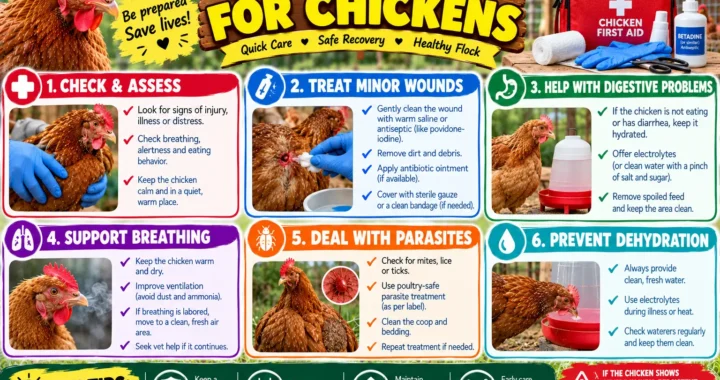
- Isolate the hen immediately. Move her to a quiet, dimly lit space, such as a covered dog crate, away from the rest of the flock. Even a few minutes of exposure can result in serious pecking injury.
- Clean the area gently. Use warm water, or warm water with a mild antiseptic, to gently rinse away debris and droppings without scrubbing the tissue.
- Reduce swelling before repositioning. Many keepers use a small amount of sugar solution or hemorrhoid cream on the tissue, since these products can help shrink swelling and make the tissue easier to reposition. A vet-approved lubricant also helps.
- Gently reposition the tissue. With clean, lubricated hands, use light, steady pressure to guide the tissue back through the vent opening. Never force it or use excessive pressure.
- Keep her isolated afterward. Continue housing her alone in a calm, dark space for several days to a week so the tissue can heal without re-prolapsing or attracting pecking.
- Limit light exposure. Reducing daylight hours to under 12 per day can slow egg production temporarily, giving the reproductive tract time to rest and heal.
- Monitor closely. Check the vent daily for redness, swelling, or a repeat prolapse, and watch for appetite, energy, and droppings returning to normal.
Expert Tip: Wrapping the hen loosely in a towel, with her head gently covered, can help keep her calm and still during cleaning and repositioning. A calm bird is easier and safer to treat than a struggling one.
Treatment Options Compared
| Approach | Best For | Notes |
| Home first aid (cleaning, reducing swelling, repositioning) | Mild, fresh prolapses with no major tissue damage | Success is highest when treated within the first hour |
| Veterinary care | Prolapses that won’t stay in, show heavy bleeding, or involve intestine rather than oviduct tissue | May include suturing, antibiotics, or further diagnostics |
| Ongoing management (light control, weight management, diet changes) | Hens prone to repeat prolapse or with an underlying cause | Addresses the root cause, not just the immediate tissue |
| Euthanasia | Severe, repeated, or badly damaged prolapses with poor prognosis | A humane option when tissue can’t be saved or infection is advanced |
Why Some Prolapses Keep Coming Back
A prolapsed vent in chickens is often a symptom of a bigger underlying issue rather than a standalone problem. If conditions such as egg binding, oviduct infection, or chronic straining are not addressed, the same hen can prolapse again even after successful first aid. This is one reason ongoing management, not just the first fix, matters so much for hens who have prolapsed once.
H3: How to Prevent Prolapsed Cloaca Issues Long-Term
- Keep hens at a healthy body weight with a balanced layer feed
- Provide free-choice calcium, such as oyster shell, to support strong shell formation and muscle tone
- Avoid stimulating pullets into laying too early with excess artificial light
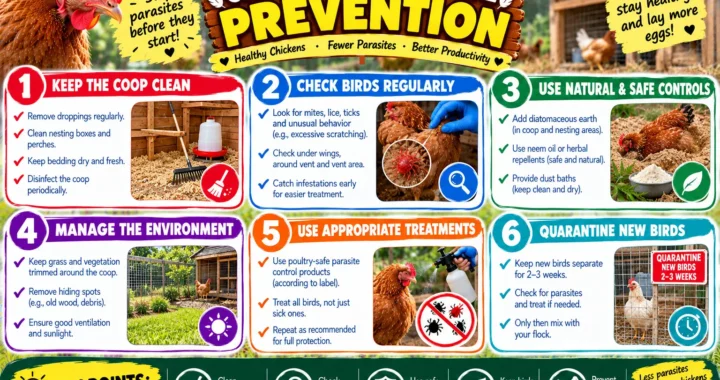
- Keep nest boxes clean, dark, and appropriately sized to reduce straining and stress
- Ensure constant access to fresh water to prevent constipation-related straining
- Watch older, high-production hens more closely, since repeated laying over time can weaken vent tissue
- Separate any hen that has prolapsed before and monitor her at each laying cycle
Common Mistakes Chicken Keepers Make
- Waiting to see if it resolves on its own. A true prolapse does not retract by itself, and every minute of delay raises infection and pecking risk.
- Leaving the hen with the flock. Even a short delay in isolating her can result in life-threatening pecking injuries.
- Using too much force when repositioning tissue. This can cause tearing or push contamination further inside.
- Skipping the underlying cause. Repositioning tissue without addressing obesity, diet, or reproductive disease often leads to repeat prolapses.
- Assuming every red tissue sighting is an emergency. Brief post-lay eversion is normal, so knowing the difference prevents unnecessary stress for you and the hen.
Warning: Never attempt to cut, trim, or apply harsh chemicals to prolapsed tissue. This can cause severe injury and worsen the hen’s prognosis. Only gentle cleaning, approved lubricants, and careful repositioning are appropriate for home care.
When to Call a Vet
Contact a poultry-experienced veterinarian right away if any of the following apply:
- The tissue will not stay in place after repositioning
- There is significant bleeding or visibly torn tissue
- The prolapsed tissue looks like intestine rather than reproductive tract tissue
- The hen shows labored breathing, extreme lethargy, or collapse
- Home treatment has not resolved the issue within 24 to 48 hours
- The prolapse recurs repeatedly despite management changes
A vet can suture the tissue in place, treat infection with antibiotics, and rule out underlying reproductive disease that home care cannot address.
Recovery and Outlook
Hens treated within the first hour or two, with minimal tissue damage, generally have a good outlook and often return to normal laying after a rest period. Hens with pecking injuries, extensive tissue damage, or a prolapse left untreated for many hours face a much more guarded prognosis. Close monitoring for the following one to two weeks, along with reduced light exposure, gives the reproductive tract the best chance to fully heal.
Final Thoughts
A prolapsed vent in chickens is frightening to discover, but fast isolation, gentle cleaning, and careful repositioning save most hens when the problem is caught early. Because a prolapsed cloaca often points to an underlying issue like obesity, poor nutrition, or reproductive strain, ongoing prevention matters just as much as the initial fix. Keep a close eye on your flock’s body condition, egg size, and vent health, and don’t hesitate to call a vet if the tissue won’t stay in place or the hen isn’t improving.
5. FAQ
Q: What does a prolapsed vent in chickens look like? A: It appears as red, pink, or purplish tissue protruding from the vent opening, often swollen and moist. Unlike normal post-lay tissue, it does not retract on its own within seconds.
Q: Can a chicken recover from a prolapsed vent? A: Yes, especially when treated within the first hour or two. Hens with minor prolapses and no significant tissue damage often make a full recovery with prompt isolation and gentle first aid.
Q: What causes chicken vent prolapse most often? A: Straining while laying an oversized, double-yolked, or misshapen egg is the most common trigger, often combined with obesity, poor nutrition, or an underlying reproductive issue.
Q: Is a prolapsed cloaca the same as egg binding? A: No, but they are related. Egg binding, a stuck egg inside the oviduct, is one of several causes of straining that can lead to a prolapse. A hen can have one condition without the other, or both at once.
Q: How do I stop my hen’s flock from pecking at a prolapse? A: Isolate the affected hen from the rest of the flock immediately in a separate, dimly lit space. Even a brief delay can allow flockmates to peck at the exposed tissue.
Q: Will a prolapsed vent happen again? A: It can, particularly if the underlying cause, such as obesity, chronic straining, or reproductive disease, isn’t addressed. Hens that have prolapsed once should be monitored closely at each future laying cycle.
Q: Can I use hemorrhoid cream on a chicken’s prolapse? A: Many keepers use a small amount of over-the-counter hemorrhoid cream to reduce swelling and ease repositioning, since it has mild anti-inflammatory and lubricating properties. Confirm the approach with a vet if you’re unsure, especially for larger or repeat prolapses.
Q: How long does it take for a prolapsed vent to heal? A: Mild cases can heal within days to about a week with isolation and rest. More severe cases involving tissue damage or infection may take longer and often need veterinary treatment.