What Is Vent Gleet in Chickens?

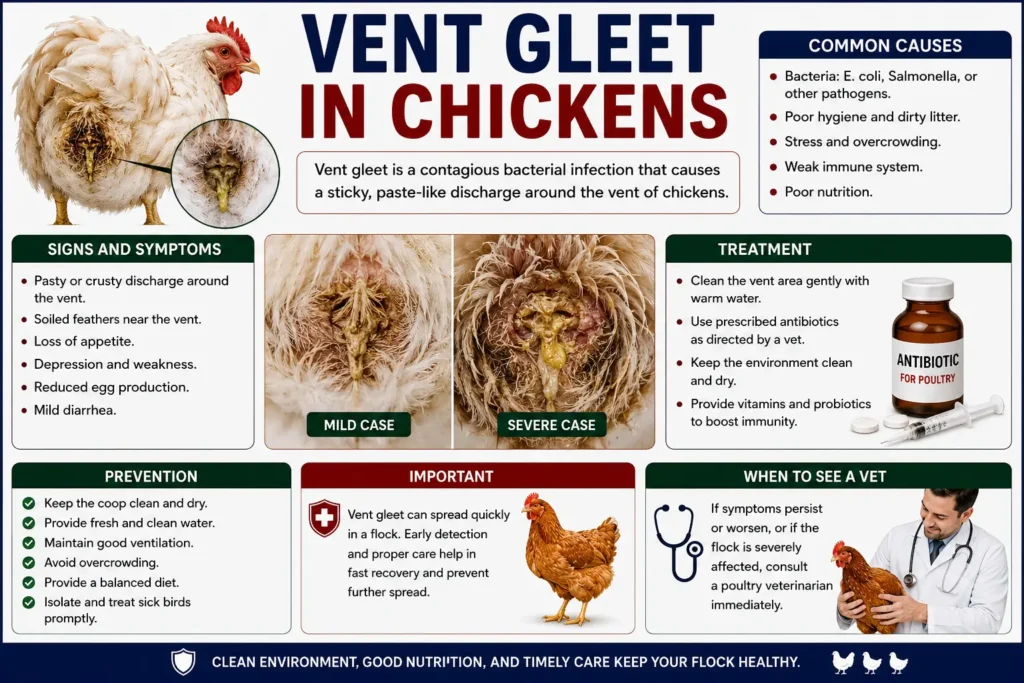
Vent gleet in chickens is a common cloaca problem that leaves a hen’s vent area crusty, swollen, or coated in a foul-smelling discharge. Most keepers notice it first as matted feathers under the tail, a sour yeasty smell, or a hen that suddenly stops laying. It looks worse than it usually is, and in most cases it responds well to prompt care.
The medical term for vent gleet is cloacitis, which simply means inflammation of the cloaca. The cloaca is the single opening chickens use for droppings, urates, and egg laying, so when it gets irritated, several body systems feel the effects at once. Vent gleet isn’t one specific disease. It’s a symptom pattern that shows up when the gut, the immune system, or the cloacal lining is out of balance.
Table of Contents
Quick Answer: Vent gleet in chickens is usually caused by an overgrowth of Candida albicans yeast in the digestive tract, though bacteria, parasites, stress, and poor diet can trigger it too. Mild cases often improve with probiotics, a cleaned vent, and better husbandry within a few days. Severe, recurring, or bloody cases need a poultry vet.
Why Vent Gleet in Chickens Deserves Fast Attention
A hen with dirty vent gleet symptoms is uncomfortable, at higher risk of flystrike in warm weather, and more likely to be picked at by flockmates. Left untreated, chronic cloacitis can affect egg production, spread bacteria internally, and in advanced cases lead to a prolapsed or scarred cloaca. Catching it early makes recovery much faster.
Read More: https://lashegg.com/how-to-prevent-prolapsed-vent/
Vent Gleet in Chickens: Signs and Symptoms
Symptoms range from mild to severe, and they usually build over several days rather than appearing overnight.
Early signs:
- Slightly crusty or matted feathers below the vent
- A faint sour or yeasty odor
- Mild redness or puffiness around the vent opening
Moderate to advanced signs:
- Thick, whitish or yellowish discharge, sometimes described as looking like cottage cheese
- Strong, sour, “fermenting bread” smell
- Swollen, inflamed, or crusted-over vent
- Feathers pasted together or missing around the tail
- Straining, or a hen that looks like she’s trying to lay but can’t
- Drop in appetite, energy, or egg production
- Diarrhea or unusually loose droppings
Emergency signs (call a vet the same day):
- Bleeding from the vent
- Visible tissue protruding from the cloaca (prolapse)
- A hen that is lethargic, hunched, or not eating at all
- Maggots or fly eggs near the vent (flystrike risk)
Quick Symptom Checklist Table
| Symptom | Mild Case | Advanced Case |
| Vent appearance | Slightly crusty | Swollen, raw, or ulcerated |
| Discharge | Thin, small amount | Thick, white or yellow, heavy |
| Odor | Faint sour smell | Strong, sour, fermented smell |
| Behavior | Normal activity | Lethargic, straining, hiding |
| Egg laying | Usually unaffected | Reduced or stopped |
| Feathers | Slightly matted | Pasted, missing, or stained |
What Causes Vent Gleet in Chickens?
Vent gleet develops when the normal balance of bacteria and yeast in a hen’s digestive tract tips in the wrong direction. Several factors can push things off balance at once, which is why two hens on the same diet can react differently.
Fungal and Yeast Overgrowth
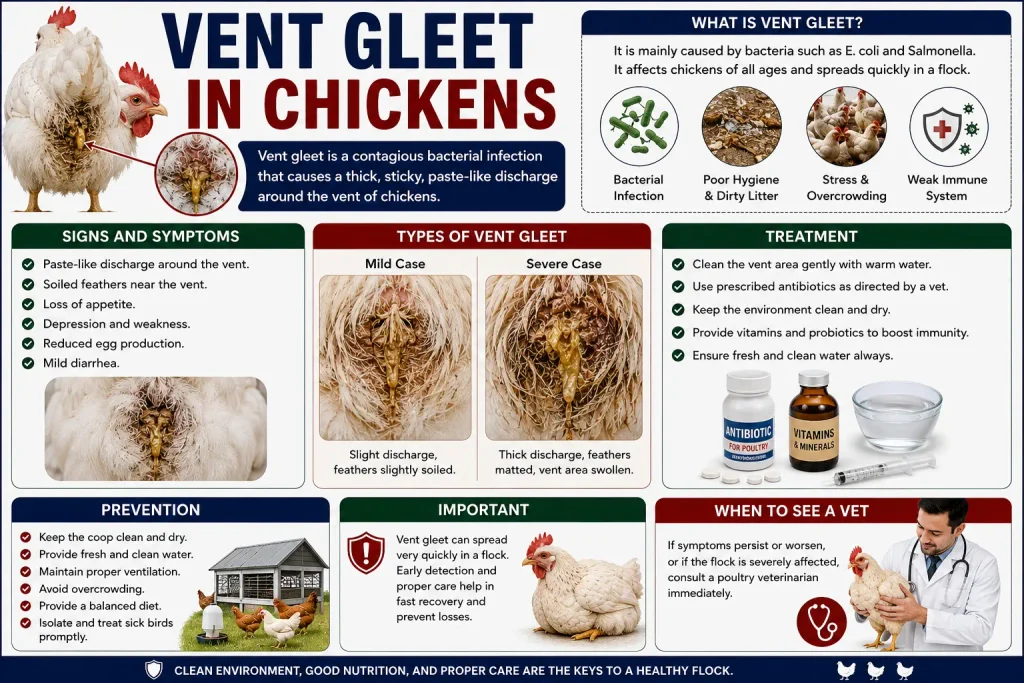
The most frequently cited cause of chicken vent gleet is an overgrowth of Candida albicans, a yeast that lives in small amounts in a healthy gut. When conditions favor its growth, such as excess sugar in the diet, antibiotic use, or a stressed immune system, Candida multiplies and irritates the cloacal lining.
Bacterial Infection
Harmful bacteria can also colonize the vent, especially after the tissue is already irritated. Bacterial cloacitis tends to be more stubborn and may not respond to the same home remedies that work for yeast-driven cases.
Internal Parasites and Protozoa
Worms and protozoal organisms can inflame the gut lining and disrupt digestion, creating the same kind of pH imbalance that lets yeast and bacteria take hold.
Diet and Nutrition
A diet too high in sugary treats, scratch grains, or fermented feed can feed yeast overgrowth. Diets low in key nutrients, including calcium and phosphorus, can weaken a hen’s natural defenses against infection.
Stress and Hormonal Changes
Molting, a new flock introduction, extreme heat, predator scares, or the hormonal demands of heavy egg laying can all raise cortisol and disrupt gut balance, making a hen more prone to cloacitis.
Poor Sanitation and Environment
A damp, dirty coop or contaminated waterer gives harmful organisms more opportunity to multiply and reach the vent area.
Underlying Reproductive Issues
Because the cloaca and the reproductive tract share the same opening, problems like egg binding, salpingitis, or an internal layer can sometimes look like or worsen vent gleet symptoms.
Cause Comparison Table
| Cause Category | Common Triggers | Typical Discharge |
| Fungal (Candida) | Sugary treats, antibiotics, stress | White, curd-like, yeasty smell |
| Bacterial | Contaminated water, prior injury | Yellow or greenish, foul smell |
| Parasitic | Worm burden, protozoa | Watery, may include diarrhea |
| Nutritional | Low calcium/phosphorus, poor feed | Varies, often with soft eggs |
| Stress-related | Molting, heat, overcrowding | Mild, intermittent |
How Vent Gleet Is Diagnosed
A visual check of the vent area is the first step, but because several conditions can mimic cloacitis, a proper diagnosis sometimes needs more than a look.
- Physical exam. A vet or experienced keeper checks the vent for swelling, discharge color, odor, and skin condition.
- Fecal exam. This rules out or confirms internal parasites as a contributing cause.
- Culture or swab. In persistent cases, a vet may take a sample of the discharge to identify whether yeast or bacteria are driving the infection, and which treatment will work.
- Palpation and history review. The vet checks for signs of egg binding or reproductive tract issues and asks about recent diet, stress, or flock changes.
Expert Tip: Take a few photos of the vent area as symptoms progress. A visual timeline helps a vet assess severity quickly, especially for a phone or video consult.
Vent Gleet in Chickens Treatment: Step-by-Step
Treatment approach depends on severity. Mild, early-stage vent gleet in chickens often responds to supportive home care. Advanced or recurring cases need veterinary treatment.
Home Care for Mild Cases
- Isolate the affected hen. Move her to a clean, quiet space away from the flock to prevent pecking and reduce stress.
- Trim and clean the area. Carefully trim soiled feathers around the vent, then gently clean with warm water. Pat dry completely; a damp vent stays inflamed longer.
- Soak in a warm bath. A short warm-water soak (with the vent submerged for 10-15 minutes) softens crusted discharge and soothes irritated skin.
- Apply a gentle topical treatment. Some keepers use a diluted antifungal or soothing ointment recommended by a vet; avoid harsh products on broken skin.
- Support gut health. Offer poultry-specific probiotics in feed or water to help restore healthy gut flora.
- Adjust the diet. Cut back on scratch grains, bread, and sugary treats while the hen recovers.
- Monitor daily. Check the vent every day for improvement. Cleaner feathers and reduced odor within a few days are good signs.
- Watch droppings and appetite. A return to normal droppings and appetite usually signals the gut balance is recovering.
When Home Care Isn’t Enough
If a hen shows no improvement within three to five days, or symptoms worsen, it’s time for professional veterinary treatment rather than continued home remedies.
Veterinary Treatment Options
A poultry veterinarian may prescribe:
- Targeted antifungal medication if a Candida overgrowth is confirmed
- Antibiotics only if a bacterial cause is confirmed by culture, since inappropriate antibiotic use can worsen yeast-driven gleet
- Deworming treatment if a fecal exam shows a parasite load
- Anti-inflammatory or supportive care for a badly irritated or swollen vent
- Surgical correction in rare cases involving prolapse or scarring
<div class=”callout warning”>
Warning: Do not reach for over-the-counter human antifungal or antibiotic creams without guidance. Some ingredients are unsafe for chickens, and using the wrong treatment can delay recovery or mask a more serious underlying issue.
</div>
Home Care vs. Veterinary Treatment
| Factor | Home Care | Veterinary Treatment |
| Best for | Mild, early symptoms | Moderate to severe, recurring cases |
| Typical timeframe | 3-7 days | Varies by diagnosis |
| Tools used | Cleaning, probiotics, diet changes | Diagnostic testing, prescription medication |
| Risk if wrong cause | Delayed healing | Lower, since cause is confirmed |
| When to escalate | No improvement in 3-5 days | Bleeding, prolapse, or lethargy |
Common Mistakes When Treating Vent Gleet
<div class=”callout common-mistakes”>
- Assuming every dirty vent is vent gleet without checking for other causes like pasty butt in chicks or worms
- Reaching for antibiotics first, which can wipe out beneficial bacteria and worsen a yeast infection
- Skipping the diet review and only treating the vent topically
- Returning the hen to the flock too soon, before the area is fully healed
- Ignoring mild symptoms until they progress to swelling or bleeding
</div>
How to Prevent Vent Gleet in Chickens
Prevention focuses on gut health, hygiene, and reducing avoidable stress.
- Feed a balanced, age-appropriate layer diet and limit sugary scratch or treats
- Provide clean, fresh water daily, and consider a poultry-safe water additive during high-stress periods
- Keep the coop dry, well-ventilated, and cleaned on a regular schedule
- Offer routine access to probiotics, especially after antibiotic treatment or a stressful event
- Deworm on a schedule appropriate for your flock and region
- Reduce overcrowding to lower stress and disease spread
- Check vents regularly during routine flock handling so problems are caught early
<div class=”callout did-you-know”>
Did You Know? A chicken’s cloaca does triple duty. It’s the shared exit point for the digestive, urinary, and reproductive systems, which is exactly why an imbalance in one system can show up as vent trouble.
</div>
Vent Gleet vs. Similar Conditions
Several chicken health issues can look similar to vent gleet at a glance, so it helps to know the differences.
| Condition | Main Difference from Vent Gleet |
| Pasty butt (chicks) | A mechanical blockage of dried droppings in young chicks, not an infection |
| Prolapse | Visible tissue protruding from the vent, often after egg laying |
| Egg binding | An egg stuck internally, often with straining but no discharge |
| Worm infestation | May cause vent irritation but usually without the yeasty odor |
| Flystrike | Maggots present, usually secondary to an existing wound or dirty vent |
When to Call a Vet
<div class=”callout when-to-call-a-vet”>
Call a poultry vet promptly if you see any of the following:
- Bleeding or open wounds around the vent
- Tissue protruding from the cloaca
- A hen that stops eating or becomes lethargic
- No improvement after several days of home care
- Symptoms spreading to multiple hens in the flock
</div>
Recovery Timeline and Outlook
Most mild cases of vent gleet in chickens improve within three to seven days once the underlying cause is addressed and the vent is kept clean. Cases involving bacterial infection, parasites, or reproductive issues can take longer and may need a full course of veterinary treatment. Hens that recover fully can return to normal laying and flock activity, though it’s worth keeping an eye on diet and stress levels going forward, since chickens that have had vent gleet once are more prone to a repeat episode.
Conclusion
Vent gleet in chickens is uncomfortable for the hen and alarming for the keeper, but it’s rarely a mystery once you know what to look for. A crusty, foul-smelling vent almost always points back to a gut imbalance, whether that’s yeast, bacteria, parasites, diet, or stress. Clean the area, support gut health, adjust the diet, and watch closely for a few days. If a case of vent gleet in chickens doesn’t turn around quickly, or if you see bleeding, swelling, or a lethargic hen, don’t wait; get a poultry vet involved so the right cause gets treated the right way.
5. FAQ
Is vent gleet in chickens contagious? Vent gleet itself isn’t typically considered contagious in the way a virus is, but the underlying conditions that cause it, such as contaminated water or poor sanitation, can affect more than one bird in a flock at the same time.
Can vent gleet in chickens go away on its own? Very mild cases sometimes improve as gut balance corrects itself, but most cases benefit from active care, including cleaning, probiotics, and diet changes, to fully resolve and avoid recurrence.
What does vent gleet smell like? A distinct sour, yeasty odor similar to fermenting bread or beer is one of the most recognizable signs of vent gleet in chickens.
Can I use apple cider vinegar for vent gleet in chickens? Some keepers add diluted apple cider vinegar to drinking water as part of a gut-support routine, though it should be viewed as a supportive measure alongside proper cleaning and, when needed, veterinary treatment rather than a standalone cure.
Does vent gleet affect egg laying? Yes, moderate to severe cases often reduce or temporarily stop egg production because the hen’s body is focused on fighting the infection.
How long does vent gleet take to heal? Mild cases often improve within three to seven days with consistent home care, while more severe or bacterial cases may take longer under veterinary guidance.
Can roosters get vent gleet too? Yes, though it’s reported more often in hens due to the added stress of egg laying, roosters can also develop cloacitis.
Is vent gleet in chickens painful? The swelling, irritation, and straining associated with moderate to severe vent gleet suggest real discomfort, which is part of why prompt treatment matters for welfare as well as recovery speed.