
Vent Gleet Symptoms: How to Spot This Common Chicken Condition Early

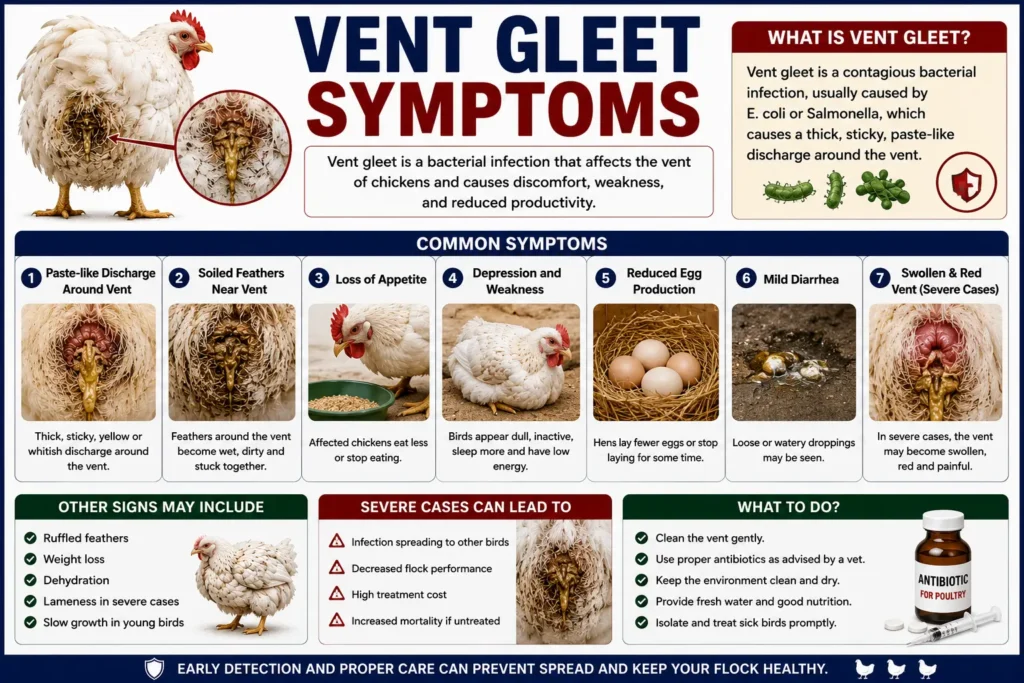
The most reliable vent gleet symptoms to watch for are a foul, sour-smelling discharge from the vent, crusty or matted feathers around a hen’s backside, and redness or swelling of the vent skin itself. Also known as cloacitis, vent gleet is uncomfortable for your hen and can worsen quickly if it’s missed in the early stages.
This guide covers every stage of vent gleet, from the subtle early clues most keepers miss to the more advanced signs that mean it’s time to call a vet. You’ll also find a symptom comparison table to help rule out similar-looking conditions, plus answers to the most common questions chicken keepers ask about this issue.
Table of Contents
Quick Answer: Vent gleet symptoms include a whitish or yellowish discharge that often smells like fermenting yeast, matted or missing feathers around the vent, redness and swelling of the vent skin, a pasty or crusted backside, and in more advanced cases, lethargy, reduced appetite, and straining. Mild cases caught early are usually very manageable, while symptoms lasting more than a few days without improvement need veterinary attention.
What Vent Gleet Actually Is
Vent gleet is an old term describing a slimy discharge oozing from a chicken’s vent. The modern medical name is cloacitis, meaning inflammation of the cloaca, the internal chamber where the digestive, reproductive, and urinary systems all meet before exiting through the vent. It isn’t one single disease. Instead, it’s a description of symptoms that can come from several different underlying causes, including fungal overgrowth, bacterial infection, parasites, or chronic stress.
The most commonly cited cause is an overgrowth of Candida albicans, a yeast that normally lives in small numbers in a healthy chicken’s gut. When the balance of good and harmful microorganisms shifts, this yeast multiplies and irritates the cloacal lining, producing the classic symptoms below.
Read More: https://lashegg.com/vent-gleet-in-chickens/
Early Vent Gleet Symptoms Most Keepers Miss
Catching vent gleet symptoms in the early stages makes treatment far easier, but the first signs are often subtle.
- Slightly more moisture or mucus than usual in the droppings
- Mild soiling of the feathers just below the vent, before any obvious discharge appears
- Faint redness or puffiness around the vent during a routine health check
- A hen preening or paying unusual attention to her own vent area
- A slight, easy-to-miss change in odor near the back end of the bird
Expert Tip: Make a habit of gently checking under the tail feathers during your regular flock health checks. Early vent gleet symptoms are far easier to spot with hands-on feathers than from a distance.
Classic, More Obvious Vent Gleet Symptoms
Once the condition progresses, symptoms become much easier to recognize.
Discharge and Odor
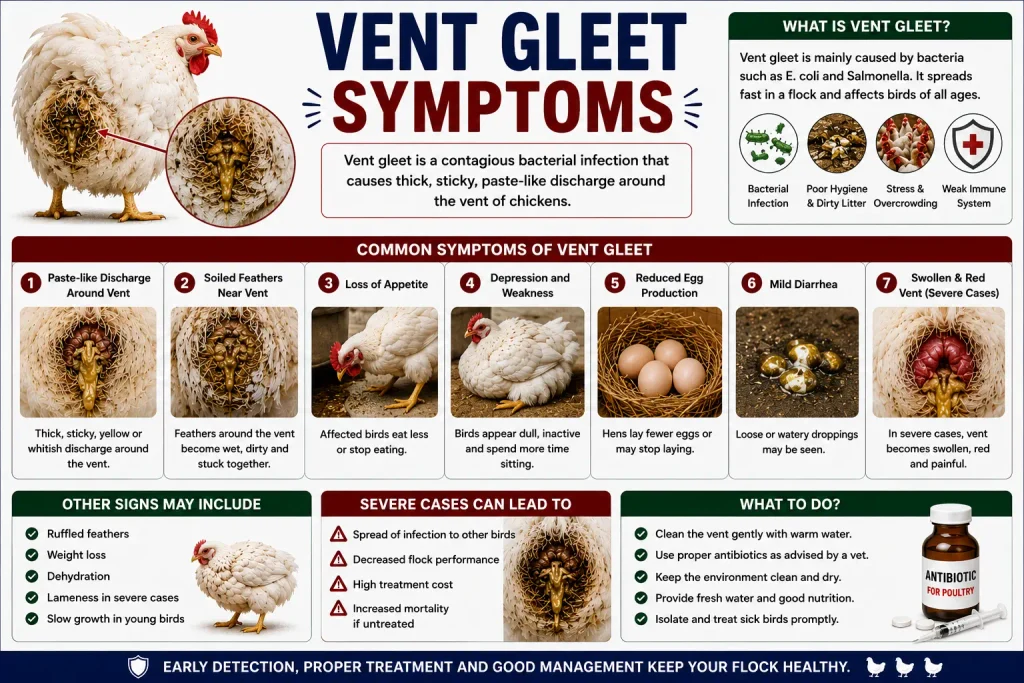
The hallmark sign is a whitish or yellowish discharge from the vent, often with a strong, sour smell similar to fermenting yeast or beer. This discharge is what gives the condition its old-fashioned name.
Feather and Skin Changes
- Feathers around the vent and lower abdomen become matted, crusted, or coated in discharge
- Feather loss directly around the vent, sometimes leaving bare, irritated skin
- Skin that looks red, inflamed, or swollen around the vent opening
- A generally “dirty” or unkempt look to the back end of the bird that doesn’t improve with normal preening
Behavioral and Digestive Symptoms
- Decreased appetite
- Lethargy or a noticeable drop in energy
- Changes in posture, including hunching or sitting more than usual
- Straining or apparent difficulty passing droppings (tenesmus)
- Diarrhea or noticeably looser droppings than normal
- Reduced overall dropping production
Advanced or Severe Vent Gleet Symptoms
In cases that have progressed further or involve a more serious underlying infection, additional signs can appear:
- Fresh blood visible in the droppings
- Foul-smelling feces beyond the usual sour discharge odor
- Noticeable swelling extending beyond the immediate vent area
- Signs of general illness, such as fluffed feathers, isolation from the flock, or weight loss
Warning: Outlook becomes much more guarded once symptoms have been present for more than about two days without improvement, especially if the infection has spread deeper into reproductive tissue. Don’t wait out worsening symptoms hoping they’ll resolve on their own.
Vent Gleet Symptoms by Severity
| Stage | Typical Signs | Urgency |
| Early / Mild | Slight mucus in droppings, faint redness, minor feather soiling | Monitor closely, begin supportive care |
| Moderate | Visible whitish discharge, matted feathers, mild redness and swelling | Begin treatment, reassess in a few days |
| Advanced | Feather loss, significant swelling, lethargy, reduced appetite, straining | Veterinary evaluation recommended |
| Severe | Blood in droppings, systemic illness, symptoms lasting beyond 2 days | Veterinary care needed promptly |
Signs of Vent Gleet vs. Look-Alike Conditions
Several other chicken health issues can resemble vent gleet at first glance, which is why an accurate read on the specific signs matters.
| Condition | Key Distinguishing Feature |
| Vent gleet (cloacitis) | Discharge with a sour, yeasty odor plus matted or crusted feathers |
| Vent prolapse | Visible red tissue protruding from the vent opening, not just discharge |
| Vent pecking injury | Wound or damaged skin from flockmates, without the characteristic discharge |
| External parasites (lice or mites) | Irritation and feather damage around the vent without discharge or odor |
| Biotin deficiency | Skin irritation around the vent area without infectious discharge |
| Pasty butt (common in chicks) | Dried droppings blocking the vent, typically without the sour smell of gleet |
Did You Know? Vent gleet can affect chickens of any age, but hens are more commonly diagnosed since egg-laying itself can be a source of the stress and hormonal shifts that contribute to cloacal inflammation. Roosters can develop it too, often linked more to constipation-related stress than reproductive activity.
Common Mistakes When Identifying Vent Gleet Symptoms
- Assuming any discharge is automatically vent gleet. Reproductive discharge from other conditions, like salpingitis, can look similar and needs a different treatment approach.
- Waiting for feather loss before taking action. By the time feathers are visibly matted or missing, the condition has usually progressed past its earliest, easiest-to-treat stage.
- Overlooking behavior changes. Subtle signs like reduced appetite or unusual preening often show up before discharge becomes obvious.
- Confusing vent gleet with prolapse. Discharge and inflammation point to gleet, while protruding tissue points to prolapse; treating one as the other delays proper care.
- Ignoring recurring mild cases. Repeated mild episodes can signal an ongoing gut imbalance or underlying nutritional issue worth addressing, not just a one-time problem.
What Causes These Symptoms to Appear
Vent gleet symptoms typically stem from one or more of the following:
- Fungal overgrowth, most often Candida albicans, thriving in a moist, pH-imbalanced cloacal environment
- Bacterial or parasitic infection affecting the cloaca or nearby reproductive and digestive tissue
- Chronic stress, often tied to egg-laying, which can raise cloacal pH and make infection more likely
- Nutritional deficiencies, particularly low calcium or phosphorus, which can weaken immune defenses
- Contaminated food or water, disrupting normal gut flora balance
- Intestinal parasites, which stress the digestive system and make secondary infection more likely
When to Call a Vet
While mild vent gleet symptoms sometimes respond to careful home management, certain signs mean it’s time for professional care:
- Symptoms lasting more than three to four days without improvement
- Blood visible in the droppings
- Signs of systemic illness, such as lethargy, weight loss, or loss of appetite
- Significant swelling or tissue damage around the vent
- Recurring episodes despite consistent home care
- Any uncertainty about whether you’re seeing vent gleet or a different condition, such as prolapse or an oviduct infection
A vet can run diagnostic tests to identify the exact organism involved and prescribe treatment suited to the true underlying cause, something home observation alone can’t always determine.
Final Thoughts
Recognizing vent gleet symptoms early, from subtle mucus changes and mild redness through to the classic sour-smelling discharge and matted feathers, gives you the best chance of a smooth recovery for your hen. Because vent gleet can stem from several different underlying causes, symptoms that don’t improve within a few days of home care, or that come with blood, lethargy, or repeated flare-ups, are worth a veterinary visit. Keep checking your flock’s vent area regularly as part of routine health monitoring, since catching these signs early is what makes vent gleet a manageable problem rather than a serious one.
5. FAQ
Q: What are the very first vent gleet symptoms to look for? A: The earliest signs are often subtle: slightly more mucus in the droppings, mild feather soiling below the vent, and faint redness or puffiness around the vent area during a routine check.
Q: What does vent gleet discharge look and smell like? A: It typically appears whitish or yellowish and carries a strong, sour odor often compared to fermenting yeast or beer, which is one of the clearest signs of vent gleet.
Q: Can vent gleet symptoms be confused with other chicken health issues? A: Yes. Vent prolapse, vent pecking injuries, external parasites, and even biotin deficiency can all cause vent-area irritation, so the presence of sour-smelling discharge and matted feathers is what specifically points to vent gleet.
Q: Are vent gleet symptoms different in roosters compared to hens? A: The underlying signs, discharge, feather matting, and irritation, look similar in both sexes, though vent gleet in roosters is more often linked to stress-related constipation rather than the hormonal and egg-laying factors more common in hens.
Q: How long do vent gleet symptoms usually last before they need veterinary attention? A: If symptoms haven’t improved within about three to four days of home care, or if they’ve already been present for more than two days without any sign of getting better, it’s time to involve a vet.
Q: Can vent gleet symptoms come back after treatment? A: Yes, especially if an underlying cause like gut imbalance, nutritional deficiency, or chronic stress isn’t addressed. Recurring mild episodes are worth investigating further rather than treating as isolated events each time.
Q: Is blood in the droppings always a vent gleet symptom? A: Not always, but it can appear in more advanced or severe cases. Blood in the droppings is a sign that warrants prompt veterinary evaluation rather than continued home care alone.
Q: Do all chickens with vent gleet show visible discharge? A: No. Mild or early cases can show only subtle signs, like slight feather soiling or minor redness, without an obvious discharge yet, which is why regular hands-on health checks matter.