Sour Crop in Chickens: The Complete Guide to Symptoms, Causes, and Treatment

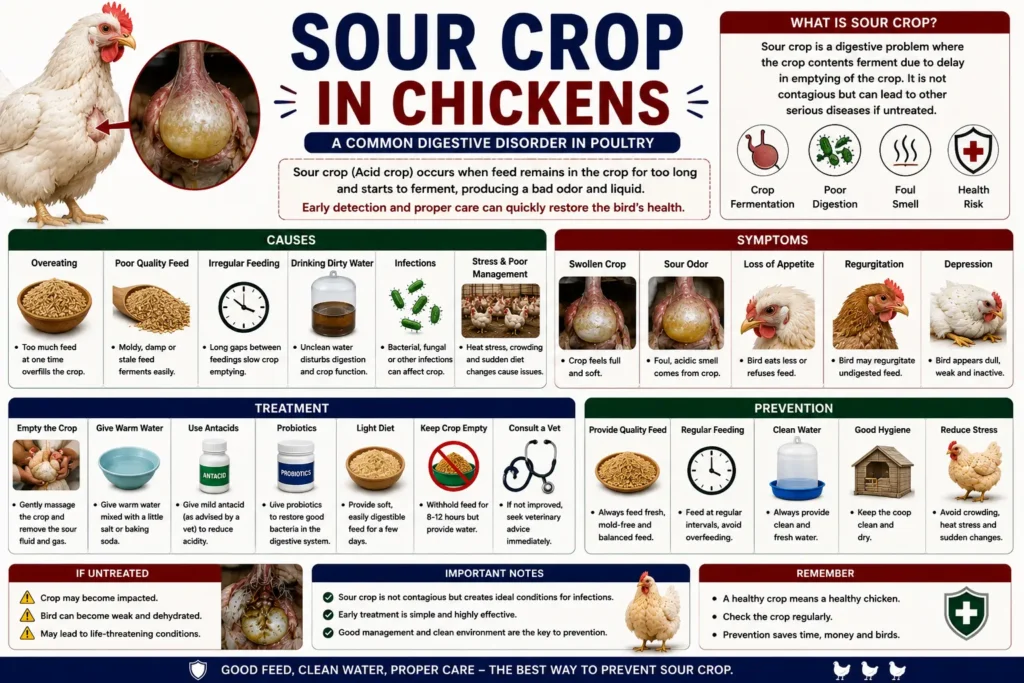
If your hen’s crop feels squishy and balloon-like instead of firm, and her breath carries a sour, yeasty smell, you’re likely dealing with sour crop in chickens. This common digestive condition develops when food lingers too long in the crop, allowing yeast to ferment its contents. It’s uncomfortable for your bird and can turn serious if it goes untreated, but most cases respond well to prompt, consistent home care.
This guide covers everything from the first signs to watch for through the full treatment process, what causes it in the first place, and when the situation calls for a vet instead of home remedies. You’ll find comparison tables, step-by-step instructions, and answers to the questions chicken keepers ask most.
Table of Contents
Quick Answer: Sour crop in chickens, also called crop candidiasis, happens when the crop doesn’t empty properly overnight, allowing the yeast Candida albicans to overgrow and ferment the trapped food. It causes a squishy, fluid-filled crop, sour-smelling breath, and reduced appetite. Mild cases often improve with 12 to 24 hours of fasting, gentle crop massage, and probiotics, while cases involving a hard blockage or no improvement need veterinary care.
What Is the Crop, and Why Does Sour Crop Happen?
The crop is a stretchy pouch at the base of a chicken’s neck where food is temporarily stored before moving into the rest of the digestive tract. In a healthy bird, the crop fills up during the day as she eats and empties out overnight, so it should feel flat, or only slightly full, first thing in the morning.
Sour crop develops when this normal emptying process breaks down. Food and liquid sit in the crop longer than they should, creating a warm, moist environment where Candida albicans, a yeast that’s normally present in small amounts, can multiply out of control. The result is fermentation: the trapped contents sour, the crop swells with fluid and gas, and the bird’s breath takes on a distinct, unpleasant odor.
Read More: https://lashegg.com/vent-gleet-causes/
Sour Crop vs. Impacted Crop vs. Pendulous Crop
These three crop conditions are often confused, but they aren’t the same, and they don’t call for the same treatment.
| Condition | What’s Happening | How the Crop Feels |
| Sour crop (candidiasis) | Yeast overgrowth ferments stagnant crop contents | Soft, squishy, fluid-filled |
| Impacted crop | A physical blockage, often from long grass, string, or fibrous material, prevents emptying | Firm, hard, doesn’t move when pressed |
| Pendulous crop | Stretched-out crop muscle allows the crop to sag, often after repeated overfilling | Distended but feels relatively normal, sags low |
Did You Know? These three conditions often overlap. An impacted crop that isn’t caught early can lead directly to sour crop, since trapped food ferments the longer it sits. Checking your flock’s crops each morning helps you catch either problem before it progresses.
Symptoms of Sour Crop in Chickens
Sour crop symptoms range from subtle early signs to more obvious, advanced indicators.
Early and Mild Symptoms
- A crop that still feels full or squishy first thing in the morning, instead of flat
- Slightly reduced appetite or interest in food
- A faint sour or yeasty smell noticeable when the bird is close to your face
Classic Sour Crop Symptoms
- A soft, swollen, squishy crop that feels like a water balloon
- Strong, sour-smelling breath, often compared to the smell of fermenting yeast
- Regurgitation of undigested food or liquid, since chickens cannot vomit in the way mammals do
- Lethargy and reduced activity
- Noticeable weight loss over several days
- Decreased egg production in laying hens
Advanced or Severe Symptoms
- White plaques or patches inside the mouth or under the tongue, a hallmark sign of candidiasis
- Watery, brownish droppings
- Depression, fluffed feathers, and reluctance to move
- Gas or liquid escaping from the beak when the crop is gently pressed
Warning: Sour crop can affect more than just the crop itself. In more advanced infections, candidiasis can spread to the mouth, esophagus, proventriculus, intestines, and vent area, which is part of why prompt treatment matters.
What Causes Sour Crop in Chickens
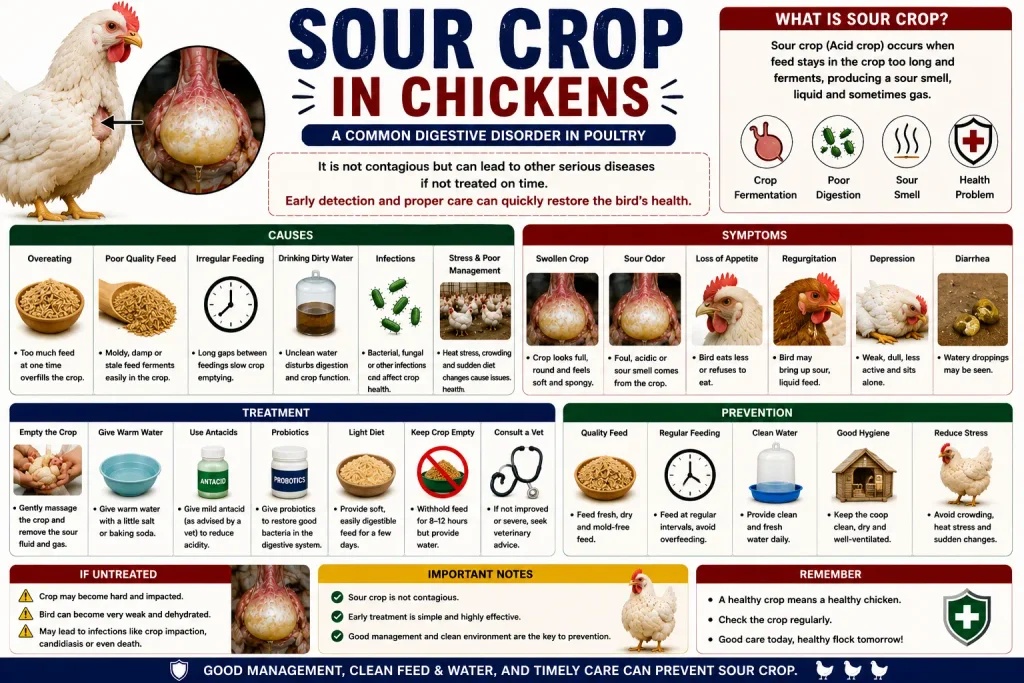
Sour crop is almost always a symptom of an underlying issue rather than a random, isolated event.
- Slow or incomplete crop emptying, often the direct trigger that allows fermentation to begin
- Impacted crop, a physical blockage from long grass, string, or fibrous material that prevents normal digestion
- Gut microbiome disruption, frequently linked to recent antibiotic use, sudden feed changes, or general stress
- Moldy or contaminated feed, which introduces additional fungal organisms directly into the digestive tract
- Poor sanitation, including dirty feeders and waterers that harbor yeast and bacteria
- Heavy internal parasite loads, which stress the digestive system and disrupt normal gut balance
- High-carbohydrate diets, which can encourage yeast overgrowth
- Nutritional deficiencies, which weaken the immune system’s ability to keep yeast populations in check
- Immune-suppressing illness, since a weakened immune system makes candidiasis more likely to take hold
Expert Tip: If a hen has recently finished a course of antibiotics, consider offering a probiotic supplement for a week or two afterward. This helps rebuild healthy gut bacteria before yeast has a chance to fill the gap.
How Sour Crop in Chickens Is Diagnosed
You can identify most cases of sour crop through hands-on observation:
- Check the crop first thing in the morning, before your hen has eaten. A crop that’s still full, especially if it feels soft and squishy rather than firm, is the clearest sign.
- Smell her breath. A strong, sour, yeasty odor is one of the most distinctive indicators of sour crop.
- Look inside the mouth, gently, for white plaques or patches, which point toward a more established candidiasis infection.
- Watch her droppings for a watery, brownish appearance, which can accompany more advanced cases.
- Note her behavior and appetite, since lethargy and reduced eating often accompany the physical symptoms.
A veterinarian can confirm the diagnosis and rule out other crop or digestive conditions through physical exam and, if needed, further testing.
Step-by-Step Sour Crop Treatment
Follow these steps for a mild to moderate case with no sign of a hard blockage.
- Isolate the hen. Move her to a quiet, separate space so you can monitor her closely and control her food and water intake.
- Withhold food for 12 to 24 hours. This gives the crop a chance to empty rather than continuing to add material to an already backed-up system. Keep fresh water available throughout.
- Gently massage the crop. Several times a day, use light, circular pressure to help break up the contents and encourage them to move into the rest of the digestive tract.
- Elevate her head slightly during massage. This can help fluid and gas move downward rather than back up toward the mouth.
- Offer diluted apple cider vinegar in her water, about one tablespoon per gallon. This is a traditional supportive step, since the added acidity is thought to make the crop environment less favorable to yeast; treat it as a helpful addition, not a stand-alone cure.
- Introduce probiotics once she resumes eating, to help restore a healthy balance of gut bacteria.
- Reintroduce small, easily digestible meals gradually after the fasting period, rather than returning to a full feed all at once.
- Clean and disinfect feeders and waterers to reduce ongoing yeast and bacterial exposure.
- Monitor daily. Check the crop each morning to confirm it’s emptying normally, and watch appetite, energy, and breath odor for improvement.
Expert Tip: Massage sessions of just a minute or two, done gently several times a day, are more effective and less stressful for the hen than one long, forceful session.
Sour Crop Treatment Options Compared
| Approach | Best For | Notes |
| Fasting (12–24 hours) with water access | Nearly all cases, as a first step | Gives the crop a chance to empty before further treatment |
| Crop massage | Mild to moderate cases without a hard blockage | Repeat several times daily |
| Apple cider vinegar in water | Supportive care alongside other steps | Not effective as a stand-alone treatment |
| Probiotics | Restoring gut balance after fasting or antibiotic use | Best introduced once the hen resumes eating |
| Veterinary antifungal medication (e.g., Nystatin) | Confirmed or advanced candidiasis | Requires veterinary diagnosis and dosing |
| Manual crop emptying by a vet | Severe cases or suspected impaction | Performed by a professional to avoid injury |
When Home Treatment Isn’t Enough
Sour crop that doesn’t respond to fasting, massage, and supportive care within a day or two often needs veterinary-level intervention. A vet may:
- Manually empty the crop to relieve severe fermentation or fluid buildup
- Prescribe an antifungal medication such as Nystatin, dosed appropriately for the bird
- Investigate and treat an underlying impacted crop if a physical blockage is present
- Run diagnostic tests to confirm candidiasis and rule out other causes
Warning: Left untreated, sour crop can become life-threatening. It can also progress into impacted crop, or allow the underlying infection to spread beyond the crop itself, so don’t wait too long before seeking help if home care isn’t working.
Preventing Sour Crop in Chickens
| Prevention Step | Why It Helps |
| Provide access to grit | Supports normal digestion and crop function |
| Avoid feeding long grass or fibrous treats in excess | Reduces the risk of material tangling and slowing crop emptying |
| Keep feeders and waterers clean | Limits yeast and bacterial buildup |
| Support gut health with probiotics, especially after antibiotic use | Helps maintain a healthy balance of gut microorganisms |
| Store feed properly to avoid mold | Prevents introducing additional fungal contamination |
| Manage parasites regularly | Reduces digestive strain that can disrupt gut balance |
| Reduce flock stress and overcrowding | Supports overall immune health |
| Check crops each morning as a routine habit | Catches slow emptying before it progresses to sour crop |
Common Mistakes When Dealing with Sour Crop
- Continuing to feed a hen with a full, squishy crop. Adding more food before the crop empties makes fermentation worse.
- Massaging too hard or too long in one session. Gentle, brief, frequent massage works better and is less stressful for the bird.
- Assuming it’s the same as impacted crop. The two conditions share some symptoms but need different approaches, so confirming which one you’re dealing with matters.
- Relying on apple cider vinegar alone. It’s a helpful supportive step, not a complete treatment on its own.
- Waiting too long to seek veterinary care. Severe or unresponsive cases can become life-threatening if home treatment continues without improvement.
When to Call a Vet
Reach out to a poultry-experienced veterinarian if:
- The crop hasn’t improved after 24 hours of fasting and massage
- The crop feels hard rather than squishy, suggesting an impacted crop instead
- You see white plaques in the mouth, a sign of more advanced candidiasis
- The hen shows severe lethargy, significant weight loss, or stops eating and drinking entirely
- Sour crop recurs repeatedly despite good management and prevention
Final Thoughts
Sour crop in chickens is uncomfortable for your bird but very manageable when you catch it early and treat it consistently: fast the crop, massage gently, support gut health, and clean up the underlying conditions that let yeast take hold in the first place. Most mild cases improve within a day or two of dedicated home care. Keep checking your flock’s crops each morning as part of your routine, and don’t hesitate to call a vet if symptoms don’t improve or the crop feels hard rather than soft.
5. FAQ
Q: What does sour crop in chickens look and feel like? A: It feels soft, squishy, and swollen, like a water balloon at the base of the neck, and is usually accompanied by a strong, sour, yeasty smell on the bird’s breath.
Q: What are the earliest sour crop symptoms to watch for? A: The earliest sign is often a crop that still feels full or squishy first thing in the morning instead of flat, sometimes paired with a faint sour smell and slightly reduced appetite.
Q: What causes sour crop in chickens most often? A: It’s most often caused by slow or incomplete crop emptying, which allows the yeast Candida albicans to overgrow and ferment trapped food, frequently triggered by an underlying gut imbalance, recent antibiotic use, or an impacted crop.
Q: How long does it take to treat sour crop at home? A: Mild cases often show improvement within 12 to 24 hours of fasting and crop massage, though full recovery with dietary support can take a few days.
Q: Is sour crop the same as impacted crop? A: No. Sour crop involves a soft, fluid-filled, fermenting crop caused by yeast overgrowth, while impacted crop involves a firm, hard blockage from indigestible material. One can lead to the other if left untreated.
Q: Can chickens die from sour crop? A: Yes, if left untreated. Severe or advanced cases can become life-threatening, which is why prompt recognition and treatment matter.
Q: Does apple cider vinegar cure sour crop in chickens? A: Not on its own. It’s a helpful supportive addition to water during treatment, but fasting, crop massage, and probiotics are the core steps that actually address the underlying fermentation.
Q: How can I prevent sour crop in my flock? A: Keep feeders and waterers clean, provide grit, avoid excess long grass or fibrous treats, manage parasites, and support gut health with probiotics, especially after any antibiotic treatment.