Bumblefoot in Chickens: A Complete Guide to Symptoms, Causes, and Treatment

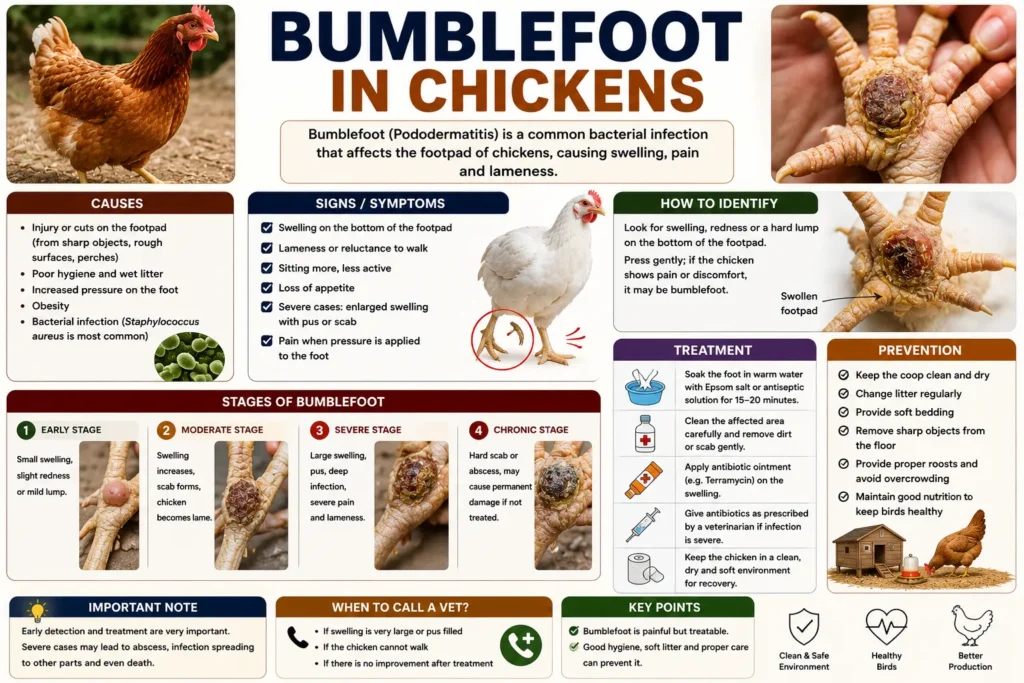
If your hen is limping and you’ve spotted a dark, hard scab on the bottom of her foot, you’re likely looking at bumblefoot in chickens, a bacterial infection of the footpad that starts small but can become serious without proper care. It’s one of the most common foot problems backyard keepers encounter, and catching it early makes an enormous difference in how easily it resolves.
This guide walks through everything from the earliest signs to the full treatment process, including when home care is appropriate and when a case needs a vet. You’ll find a staging table, a step-by-step home treatment protocol, and answers to the most common questions keepers have about this condition.
Table of Contents
Quick Answer: Bumblefoot in chickens is a bacterial infection, most often caused by Staphylococcus aureus, that enters through a small cut, scrape, or pressure sore on the foot. It shows up as swelling, redness, and a characteristic black or brown scab on the bottom of the foot, often paired with limping. Mild, early cases can sometimes be managed with soaking and topical care, but cases involving a firm, embedded core almost always need the infected material physically removed, either by a vet or through careful home treatment, to fully resolve.
What Is Bumblefoot?
Bumblefoot is the common name for plantar pododermatitis, an infection of the footpad most often caused by Staphylococcus bacteria entering through broken skin. Veterinary sources describe the condition more broadly as pododermatitis, a general term covering any inflammatory or degenerative condition of the foot, ranging from mild redness at the surface to deep, chronic infections that can reach bone.
Once bacteria get past the skin barrier, they trigger swelling and pus formation, which the body walls off into a firm, cheese-like mass called a caseous core. This core is what makes bumblefoot different from a simple cut: it’s a self-contained pocket of infection that needs to be addressed directly rather than left to heal on its own.
What Causes Bumblefoot in Chickens
Bumblefoot rarely has a single cause. It typically develops when a skin injury combines with ongoing pressure or poor foot health, creating an entry point bacteria can exploit.
Read More : https://lashegg.com/sour-crop-vs-impacted-crop/
Common Entry Points for Infection
- Cuts or scrapes from sharp objects, splinters, or wire flooring
- Puncture wounds from stepping on debris
- Pressure sores from repeated hard landings off high roosts
- Cracked or irritated skin from consistently wet, dirty bedding
Predisposing Risk Factors
- Obesity, since heavier birds place more pressure on their footpads with every step and landing
- Overgrown toenails, which can throw off normal foot positioning and create uneven pressure points
- Improperly sized or textured perches, especially those that are too narrow, too smooth, or made of harsh material
- Hard, rough flooring, such as concrete or coarse litter, which increases wear and injury risk
- Poor coop hygiene, since dirty, damp bedding softens skin and raises bacterial exposure
- Being at the bottom of the pecking order, since frequently chased birds take more hard landings and foot trauma
- Foot or leg deformities, which can create uneven weight distribution on one foot
- Age, illness, or immune suppression, since older, sedentary, or chronically ill birds are less able to fight off the initial infection
Did You Know? Heavier chicken breeds and older hens are more commonly affected by bumblefoot, largely because of the added pressure their feet absorb with every landing and step over time.
Symptoms of Bumblefoot in Chickens
Bumblefoot symptoms range from barely noticeable to severe, depending on how far the infection has progressed.
Early Signs
- Mild redness or swelling on the bottom of the foot
- A small, dark scab beginning to form
- Slight favoring of the affected foot
Classic, More Obvious Signs
- A firm, pus-filled lump on the footpad, typically covered by a black or brown scab
- Noticeable swelling, warmth, and redness around the site
- Limping or reluctance to walk
- Reduced activity, spending more time sitting than usual
Advanced or Severe Signs
- Significant lameness or refusal to bear weight on the foot
- Visible spreading of swelling up the leg
- Lethargy, reduced appetite, and general illness
- In severe, long-neglected cases, infection reaching the joints or bone, which can become life-threatening if it spreads further
Warning: Left untreated, bumblefoot can progress from a simple foot infection into a serious, potentially fatal illness if the infection spreads into deeper tissue, joints, or bone. Catching and treating it early is far easier than managing an advanced case.
The Stages of Bumblefoot
Understanding how bumblefoot progresses helps you judge how urgently your hen needs care and whether home treatment is realistic.
| Stage | Description | Typical Approach |
| Stage 1 | Mild redness or a small, shiny, smooth area on the pad, no scab yet | Prevention-focused: address the cause, monitor closely |
| Stage 2 | Small black or brown scab forms, mild swelling, no deep infection yet | Soaking and topical care may be enough if caught here |
| Stage 3 | Larger scab with a firm core underneath, visible swelling and discomfort | Core removal typically needed; conservative care alone often isn’t enough |
| Stage 4 | Infection has spread into deeper tissue, tendons, or joints | Veterinary care required, often with imaging and surgery |
| Stage 5 | Infection reaches bone (osteomyelitis) or systemic illness develops | Emergency veterinary care; prognosis becomes more guarded |
Expert Tip: Veterinary sources note that conservative treatment, meaning soaking and topical care without removing the core, isn’t effective once a lesion has a penetrating scab and firm mass underneath. If you can feel a hard lump under the scab, that’s your sign that removal, not just soaking, is likely necessary.

How to Check Your Flock for Bumblefoot
- Pick up each bird and turn her foot over during routine health checks, ideally every few weeks.
- Look for discoloration, especially a black, brown, or dark red scab on the pad.
- Feel for swelling or a firm lump beneath the skin, gently pressing to check for heat or tenderness.
- Watch her gait as she walks, since limping or uneven weight-bearing is often one of the first things you’ll notice.
- Check toenail length and perch condition at the same time, since both are common contributing factors.
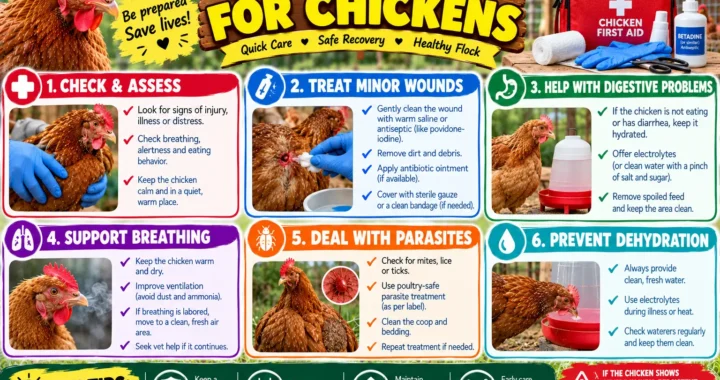
Step-by-Step Bumblefoot Treatment
Mild, Early-Stage Home Care
For a Stage 1 or early Stage 2 case, with minimal swelling and no firm core, supportive home care is often appropriate:
- Soak the foot in warm water with Epsom salt for 10 to 15 minutes to soften the scab and reduce swelling.
- Clean the area gently with a mild antiseptic solution.
- Apply a topical antibiotic ointment to the affected area.
- Bandage the foot loosely to protect it and keep the area clean.
- Repeat daily, monitoring closely for improvement or worsening over several days.
- Address the underlying cause at the same time, whether that’s a rough perch, overgrown nails, or excess weight.
Moderate to Advanced Cases: Core Removal
Once a firm, embedded core has developed, soaking and ointment alone generally aren’t enough. The infected core needs to be physically removed, either by a veterinarian or, in some cases, by an experienced keeper following careful protocol at home.
- Soak the foot thoroughly in warm Epsom salt water to soften the scab and surrounding tissue.
- Sanitize all tools and hands thoroughly before beginning.
- Carefully lift and remove the scab, then gently work the caseous core free from the surrounding tissue.
- Flush the wound with a saline or antiseptic solution to remove any remaining debris.
- Apply antibiotic ointment and pack the wound if directed by a vet.
- Bandage the foot to keep it clean and protected during healing.
- Change the bandage and repeat cleaning daily until the wound has fully closed.
- Monitor closely for signs of worsening infection, such as increased swelling, spreading redness, or lethargy.
Warning: Home core removal carries real risk if done incorrectly, including incomplete removal, excessive bleeding, or introducing further infection. Advanced, deep, or recurring cases are safer left to a veterinarian, who can also prescribe appropriate antibiotics based on culture and sensitivity testing when needed.
Bumblefoot Treatment Options Compared
| Approach | Best For | Notes |
| Epsom salt soaking and topical ointment | Stage 1–2, no firm core present | Often insufficient alone once a core has formed |
| Home core removal | Experienced keepers, moderate cases | Requires careful technique and strict hygiene |
| Veterinary debridement and antibiotics | Stage 3 and above, or any uncertain case | Includes proper wound care, pain management, and antibiotic selection |
| Radiographic imaging | Suspected bone or joint involvement | Confirms extent of infection and guides treatment |
| Surgical intervention | Deep, embedded, or recurring cores | Performed under anesthesia by a veterinarian |
Common Mistakes When Treating Bumblefoot
- Treating a firm-core case with soaking alone. Once a penetrating scab and core have formed, conservative care by itself typically isn’t enough to resolve the infection.
- Skipping the underlying cause. Removing the core without fixing the perch, weight, or hygiene issue that caused it invites a repeat case.
- Bandaging too tightly. This can cut off circulation to the foot and slow healing rather than help it.
- Stopping care too early. Wounds need daily attention until fully closed, not just until visible symptoms improve.
- Attempting deep or advanced core removal without experience. More severe cases are safer handled by a vet, especially where infection may have reached tendons, joints, or bone.
- Ignoring the other foot. If one foot developed bumblefoot due to a systemic risk factor like obesity or a rough perch, the other foot is often at risk too.
Preventing Bumblefoot in Chickens
| Prevention Step | Why It Helps |
| Maintain a healthy body weight | Reduces pressure on the footpads |
| Provide properly sized, varied perches | Prevents uneven pressure points and injury |
| Avoid hard, rough, or wire flooring | Reduces cuts, scrapes, and pressure sores |
| Keep bedding clean and dry | Limits bacterial exposure and skin softening |
| Trim overgrown toenails regularly | Prevents abnormal foot positioning |
| Remove sharp debris from runs and coops | Reduces puncture wound risk |
| Monitor lower-ranked, frequently chased birds | These birds take more hard landings and foot trauma |
| Check feet regularly as part of flock health routines | Catches early-stage bumblefoot before it progresses |
Bumblefoot Recovery Stories Keepers Can Relate To
Real recoveries vary depending on how early the condition was caught. Some hens treated early with consistent Epsom salt soaks and topical ointment are back to normal activity within a couple of weeks. Others with more advanced, embedded cores need veterinary-level core removal and a longer recovery period involving bandage changes and antibiotics, but they typically return to normal walking and activity once the wound fully heals egg.
When to Call a Vet
Home care is reasonable for very early, mild bumblefoot, but involve a veterinarian if:
- A firm core is present under the scab, since conservative soaking alone usually won’t resolve it
- The swelling extends beyond the immediate footpad or up the leg
- The chicken shows significant lameness, lethargy, or loss of appetite
- You’re not confident performing a clean, safe core removal yourself
- The wound doesn’t show improvement within several days of home treatment
- The infection recurs after a previous treatment
A vet can use imaging to check for bone or joint involvement, prescribe antibiotics based on culture and sensitivity testing, and perform surgical debridement for cases too advanced for home care.
Final Thoughts
Bumblefoot in chickens starts small, a scrape, a rough perch landing, a little redness, but it can turn into a serious infection if it’s ignored. Catching it early, at the redness or small-scab stage, gives you the best chance of resolving it with simple soaking and topical care. Once a firm core has formed, removal becomes necessary, and more advanced cases deserve veterinary attention rather than a DIY approach. Keep checking your flock’s feet regularly, address perches, weight, and hygiene as part of routine care, and don’t hesitate to call a vet if a case looks more serious than a simple scab.
5. FAQ
Q: What does bumblefoot look like in chickens? A: It typically appears as swelling and redness on the bottom of the foot, often with a distinctive black or brown scab covering a firm, pus-filled area underneath.
Q: What causes bumblefoot in chickens most often? A: It’s usually caused by Staphylococcus bacteria entering through a cut, scrape, or pressure sore, often linked to rough perches, hard flooring, obesity, or poor coop hygiene.
Q: Can bumblefoot heal on its own without treatment? A: Very mild, early-stage cases with no firm core sometimes improve with basic soaking and care, but once a hard core has formed, the infection usually needs to be physically removed to fully resolve.
Q: Is bumblefoot painful for chickens? A: Yes. As the infection progresses, discomfort increases, often leading to limping or reluctance to walk, which is one of the more noticeable outward signs.
Q: Can I treat bumblefoot at home, or do I need a vet? A: Mild cases without a firm core can often be managed at home with Epsom salt soaks and topical ointment. Cases with an embedded core, spreading swelling, or significant lameness are safer handled by a veterinarian.
Q: How long does bumblefoot take to heal? A: Mild, early cases can improve within one to two weeks of consistent home care. More advanced cases requiring core removal or veterinary treatment often take several weeks to fully heal.
Q: Can bumblefoot in chickens spread or become fatal? A: Yes, if left untreated. The infection can spread into deeper tissue, tendons, joints, or even bone, which can become life-threatening in severe, neglected cases.
Q: What breeds or types of chickens are most at risk for bumblefoot? A: Heavier breeds, older or less active hens, and birds housed on hard or rough flooring or with improperly sized perches face a higher risk due to increased foot pressure and injury potential.