Chicken Swollen Abdomen: What It Means and Why It Happens

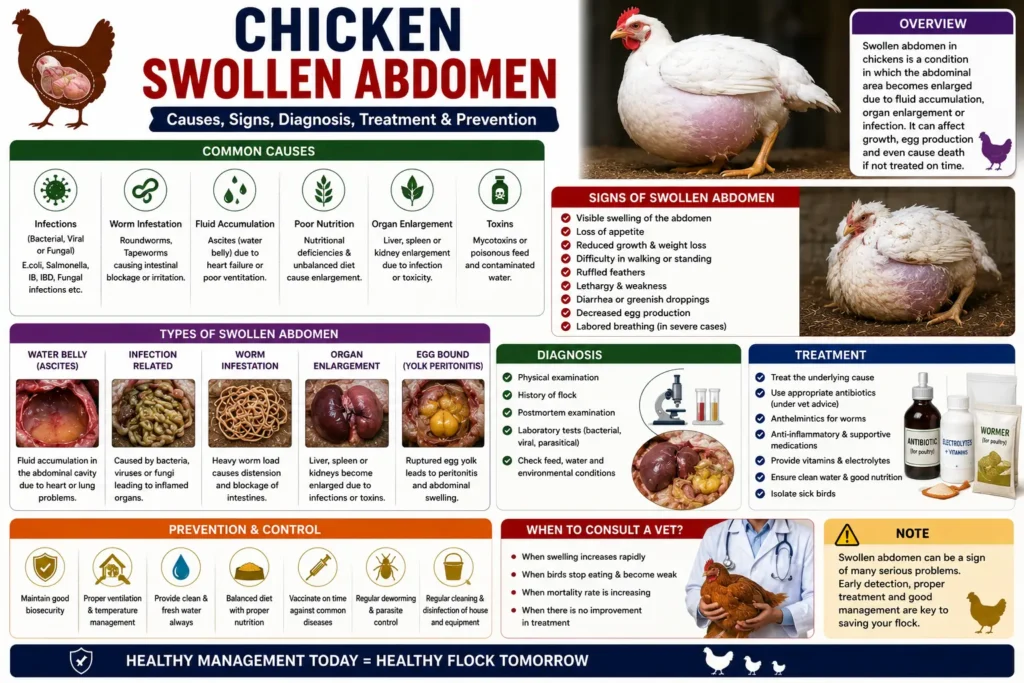
Quick Answer: A chicken swollen abdomen can result from several very different causes, ranging from fairly manageable issues like egg binding or fluid buildup, to more serious conditions like internal laying, tumors, or organ failure. Because the possible causes vary so much in severity, a swollen or distended belly is one of the symptoms that most consistently warrants a vet visit rather than home guesswork alone.
If you’ve picked up a hen and noticed her belly feels unusually full, firm, or fluid-filled, a chicken swollen abdomen is a symptom that deserves attention rather than a wait-and-see approach. Unlike some backyard chicken issues with an obvious single cause, abdominal swelling can point to several different underlying conditions, some far more serious than others.
This guide walks through every major cause of a swollen belly in chicken health issues, how to tell them apart by other accompanying signs, and exactly when this symptom needs urgent veterinary care.
Table of Contents
Why Abdominal Swelling Is Hard to Diagnose at Home
The abdominal cavity in a chicken houses several organs and systems, including the reproductive tract, digestive organs, and in hens, the egg-laying pathway. Because so many different systems share this same space, abdominal swelling doesn’t point to one specific problem the way a limp or a respiratory symptom often does.
This is exactly why abdominal swelling in chickens is one of the harder symptoms to interpret without veterinary examination or imaging, even for experienced flock owners.
Common Causes of Chicken Swollen Abdomen
1. Egg Binding
Egg binding happens when an egg becomes stuck in the reproductive tract, unable to pass normally. This can cause visible abdominal swelling along with straining, lethargy, and a hen sitting with an unusual posture.
2. Internal Laying (Egg Yolk Peritonitis)
Sometimes an egg yolk releases into the abdominal cavity instead of moving into the oviduct as normal. The body may treat this as a foreign substance, leading to inflammation, infection, and a swollen, fluid-filled abdomen over time.
3. Ascites (Fluid Buildup)
Ascites refers to fluid accumulation in the abdominal cavity, often linked to heart or liver problems, or in some cases, respiratory issues that affect oxygen circulation. This cause is more common in fast-growing meat breeds but can occur in layers too.
4. Reproductive Tumors or Cysts
Tumors or cysts on the ovary or oviduct can cause gradual, sometimes significant abdominal swelling, often without other obvious symptoms early on.
5. Bacterial Infection (Salpingitis or Peritonitis)
Infections of the reproductive tract or abdominal lining can lead to swelling, often accompanied by lethargy, reduced appetite, and sometimes a foul-smelling discharge.
6. Obesity or Excess Fat Deposits
In some cases, a swollen or distended appearance is related to excess internal fat rather than fluid or an organ-related issue, particularly in overfed or under-exercised birds.
Chicken Swollen Abdomen Causes at a Glance
| Cause | Typical Onset | Key Additional Signs |
| Egg binding | Sudden | Straining, unusual posture, lethargy |
| Internal laying | Gradual to sudden | Fluid-filled feel, lethargy over time |
| Ascites | Gradual | Labored breathing, blue-tinged comb in severe cases |
| Reproductive tumor/cyst | Gradual | Slow, progressive swelling |
| Bacterial infection | Variable | Lethargy, reduced appetite, possible discharge |
| Obesity/fat deposits | Gradual | Overall body weight higher than normal |
Symptoms That Often Accompany Abdominal Swelling
- Lethargy and reduced activity
- Reduced or stopped egg production
- Straining or unusual posture, especially with suspected egg binding
- Labored breathing, particularly with fluid buildup pressing on the lungs
- Pale or bluish comb in severe cases
- Reduced appetite
- A waddling or penguin-like walk due to abdominal pressure
Did You Know? A hen with significant abdominal swelling may adopt a wider, more upright stance simply to accommodate the internal pressure, which is often one of the more noticeable early behavioral clues.
How to Check for Abdominal Swelling at Home
Step-by-Step Home Check:
- Gently feel the lower abdomen between the legs and vent
- Compare firmness and size to what feels normal for that particular bird
- Note whether the area feels fluid-like, firm, or has a distinct mass
- Check for straining, unusual posture, or reluctance to move
- Monitor appetite, droppings, and egg-laying activity over the following day
- Avoid excessive squeezing or pressure, which can cause pain or injury if an egg is present
Warning: Never attempt to manually break or dislodge a suspected stuck egg without proper guidance, since this can cause serious internal injury. If egg binding is suspected, warm supportive soaks and vet consultation are safer first steps.
Read More: https://lashegg.com/chicken-respiratory-disease-prevention/
Distinguishing Between Common Causes
| Cause | Swelling Feel | Breathing Affected? | Egg-Laying Impact |
| Egg binding | Firm, localized | Rarely | Stops abruptly |
| Internal laying | Fluid-like, diffuse | Sometimes | Gradual decline |
| Ascites | Fluid-like, diffuse | Often | Variable |
| Tumor/cyst | Firm, sometimes uneven | Occasionally | Gradual decline |
| Bacterial infection | Variable, often tender | Rarely | Often stops |
How Vets Diagnose the Cause of Abdominal Swelling
A vet typically starts with a physical exam, checking for fluid, firmness, and posture changes, then may use imaging like X-rays or ultrasound to get a clearer picture of what’s happening internally. In some cases, a fluid sample may be drawn and analyzed to help distinguish between infection, internal laying, and other fluid-related causes.
According to guidance found in the Merck Veterinary Manual, because abdominal swelling in poultry can stem from such a wide range of causes, imaging and clinical history often provide far more useful information than external examination alone.
Expert Tip: Keep a simple record of your hen’s egg-laying pattern, appetite, and behavior changes leading up to the swelling. This timeline can be genuinely useful information for a vet trying to narrow down the cause.
Treatment Options by Cause
| Cause | Typical Treatment Approach |
| Egg binding | Warm soaks, lubrication, vet intervention if not resolved quickly |
| Internal laying | Vet-guided management, sometimes long-term supportive care |
| Ascites | Address underlying cause (heart/liver/respiratory); fluid drainage in some cases |
| Tumor/cyst | Vet evaluation; surgical options limited and case-dependent |
| Bacterial infection | Vet-prescribed antibiotics based on diagnosis |
| Obesity-related | Dietary adjustment and increased activity |
Warning: Home treatment is reasonable for suspected mild, early egg binding, but any abdominal swelling involving breathing difficulty, lethargy, or that doesn’t resolve within a day should be treated as a reason for prompt veterinary evaluation.
Common Mistakes When Dealing With a Swollen Belly in Chicken Health Issues
Common Mistakes:
- Assuming all abdominal swelling is egg binding without considering other causes
- Attempting to physically manipulate or break a suspected stuck egg
- Waiting too long to seek vet care when breathing is also affected
- Overlooking gradual, slow-developing swelling as “just weight gain”
- Not tracking egg-laying and appetite changes that could help with diagnosis
When to Call a Vet
When to Call a Vet:
- The abdomen is visibly swollen and the bird is lethargic or not eating
- Breathing appears labored alongside the swelling
- Swelling has developed gradually over days or weeks without a clear cause
- Home care for suspected egg binding doesn’t resolve the issue within 24 hours
- The comb appears pale or bluish, suggesting a more serious internal issue
Given how many possible underlying conditions can cause a chicken swollen abdomen, and how differently each needs to be managed, veterinary evaluation is often the most reliable path to an accurate diagnosis and appropriate treatment.
Can a Swollen Abdomen in Chickens Resolve on Its Own?
Mild, early egg binding sometimes resolves with basic supportive care like a warm soak. However, most other causes, including internal laying, ascites, and tumors, don’t resolve without addressing the underlying issue, and delaying care can allow the condition to worsen.
Is Abdominal Swelling More Common in Certain Breeds or Ages?
Yes, to some degree. Fast-growing meat breeds are more prone to ascites due to increased demand on the heart and lungs relative to body size. Older laying hens are more commonly affected by reproductive-related causes like internal laying, tumors, or cysts, simply due to years of consistent egg production.
FAQ: People Also Ask About Chicken Swollen Abdomen
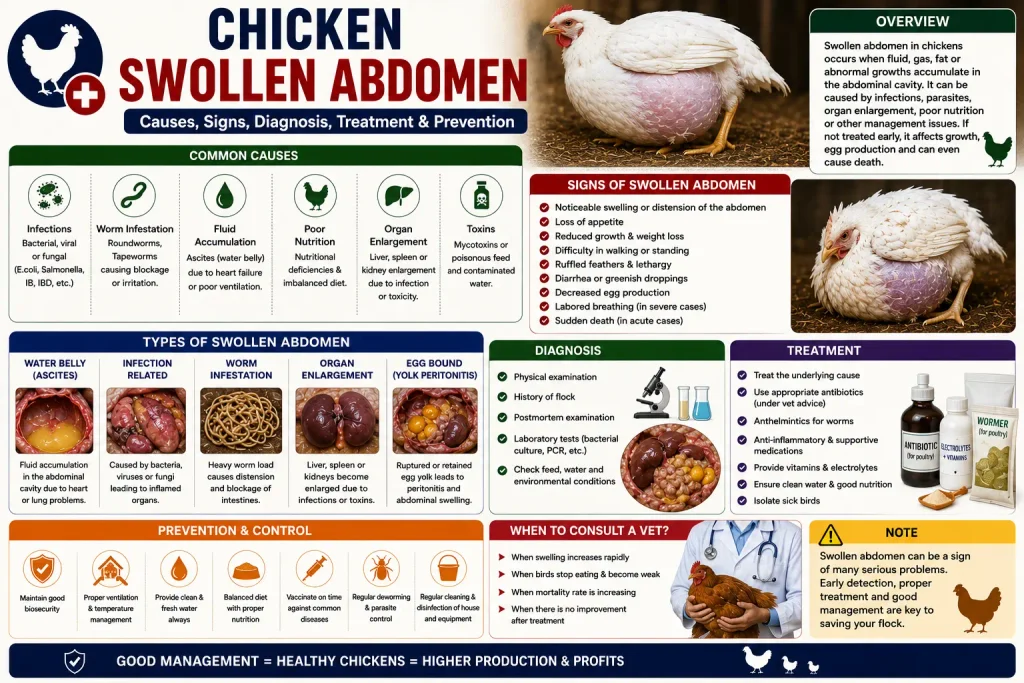
What causes a chicken’s abdomen to swell? Common causes include egg binding, internal laying, fluid buildup (ascites), reproductive tumors or cysts, bacterial infection, and in some cases, excess body fat.
Is a swollen belly in chicken health always serious? Not always, but it often warrants attention since several possible causes, including internal laying and tumors, are more serious and need veterinary evaluation.
Can egg binding cause abdominal swelling? Yes. A stuck egg can cause visible, often localized abdominal swelling along with straining and unusual posture.
How do vets diagnose the cause of abdominal swelling in chickens? Vets typically use physical exams, imaging like X-rays or ultrasound, and sometimes fluid sampling to identify the underlying cause.
Can abdominal swelling in chickens be treated at home? Mild, early egg binding may respond to home care like warm soaks, but most other causes need veterinary diagnosis and treatment.
Does abdominal swelling always affect egg production? Often, yes, especially with reproductive-related causes, though the pattern of decline varies depending on the specific underlying condition.
Wrapping Up: Responding to a Chicken Swollen Abdomen
A chicken swollen abdomen can stem from a wide range of causes, some manageable at home and others requiring prompt veterinary care. Because the possible underlying issues range from egg binding to more serious conditions like internal laying or tumors, this is a symptom worth taking seriously rather than guessing at.
Keep track of your hen’s egg-laying pattern, appetite, and behavior, and don’t wait if you notice labored breathing, lethargy, or swelling that doesn’t improve quickly. A vet exam, often supported by imaging, remains the most reliable way to identify exactly what’s causing the swelling and get your bird the right care.
5. FAQ Section (Structured)
Q: What does a chicken swollen abdomen usually mean? A: It can indicate several conditions, including egg binding, internal laying, fluid buildup, reproductive tumors, or infection, so a vet exam is often needed to confirm the cause.
Q: What are signs of abdominal swelling in chickens? A: Signs include a visibly distended belly, lethargy, reduced appetite, straining, and sometimes labored breathing.
Q: Can a swollen belly in chicken health issues be treated at home? A: Mild, early egg binding sometimes responds to warm soaks, but most other causes need veterinary diagnosis and treatment.
Q: When should I worry about abdominal swelling in a chicken? A: Worry if swelling comes with labored breathing, lethargy, a pale or bluish comb, or if it doesn’t improve within a day of home care.