Chicken Respiratory Disease Prevention: Building a Healthier Flock

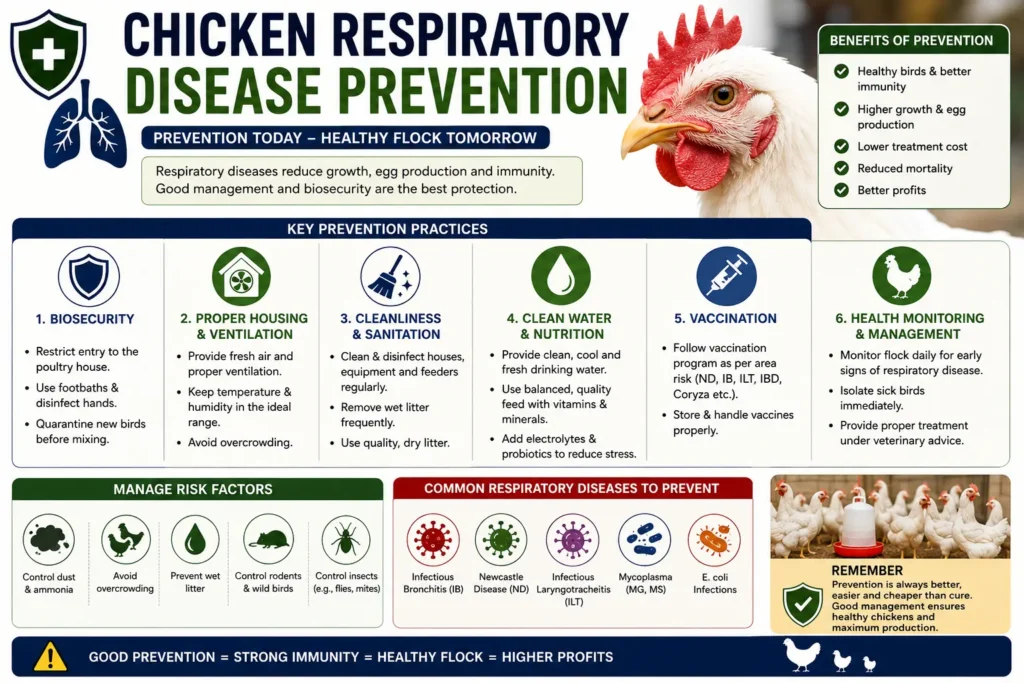
Quick Answer: Chicken respiratory disease prevention relies on three main pillars: strong biosecurity, good coop ventilation and hygiene, and reducing stress that weakens immune defenses. Quarantining new birds, controlling ammonia buildup, and limiting contact with wild birds are some of the most effective, practical steps backyard flock owners can take. Vaccination adds another layer of protection for flocks at higher risk.
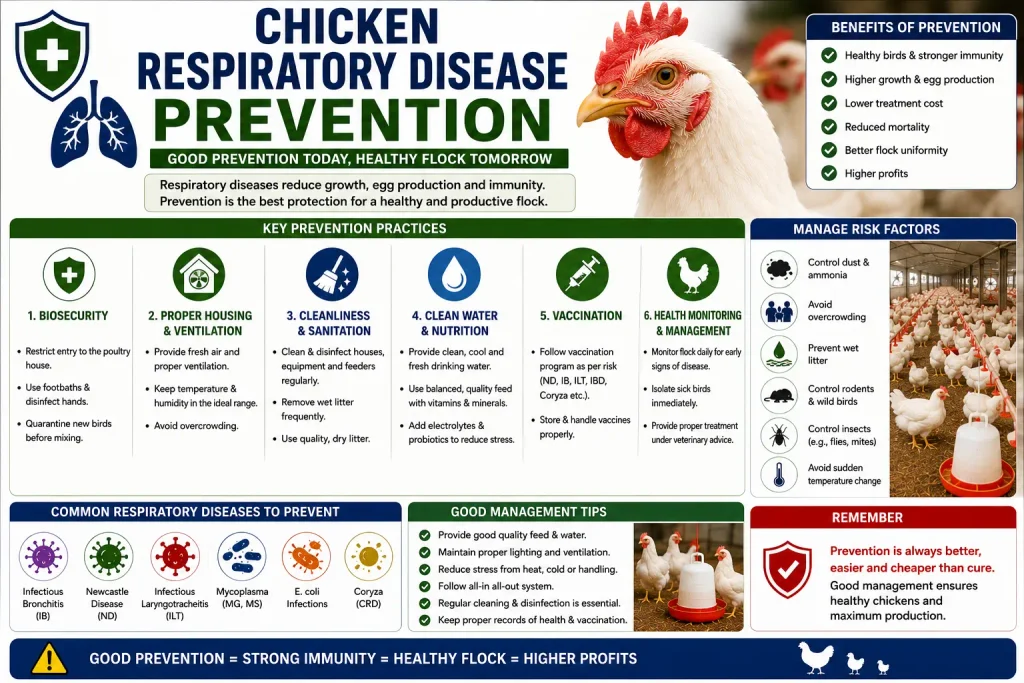
If you’ve dealt with a respiratory outbreak before, or you’re simply trying to avoid one, prevention comes down to a handful of consistent habits rather than one single fix. Respiratory illness spreads fast in poultry, and once it’s in a flock, treatment options are often limited, especially for viral causes.
This guide breaks down every major area of chicken respiratory disease prevention, from biosecurity basics to coop design choices, so you can build habits that actually reduce outbreak risk over time.
Table of Contents
Why Prevention Matters More Than Treatment Here
Many respiratory illnesses in chickens are viral, meaning there’s no direct cure once a bird is infected. Treatment for these cases relies entirely on supportive care while the immune system does the work. This is exactly why prevention carries so much weight with chicken respiratory disease.
Bacterial causes are more treatable, but by the time symptoms show up and a vet confirms a diagnosis, the infection has often already spread to other birds sharing the same coop and airspace.
Flock Biosecurity: The Foundation of Prevention
Quarantine New Birds
New birds, whether purchased, rescued, or received from a swap, should be kept separate from the existing flock for at least 2 to 4 weeks. This gives enough time for most respiratory illnesses to show symptoms before the new bird has contact with the rest of the flock. egg
Limit Visitor and Equipment Contact
- Change or clean footwear before entering different coop areas
- Avoid sharing feeders, waterers, or tools between separate flocks
- Ask visitors who keep their own birds to avoid direct contact with your flock when possible
Control Wild Bird Access
Wild birds can carry and spread respiratory pathogens without showing obvious symptoms themselves. Covering feed storage, using enclosed feeders, and reducing open water sources can lower the chances of cross-contamination.
Biosecurity Checklist for Flock Owners
| Practice | Why It Matters |
| Quarantine new birds 2–4 weeks | Catches symptoms before flock exposure |
| Separate equipment per flock | Reduces cross-contamination risk |
| Limit visitor contact | Reduces pathogen introduction from outside sources |
| Control wild bird access | Prevents silent pathogen introduction |
| Clean footwear between coop areas | Reduces tracking pathogens between spaces |
Coop Environment and Ventilation
Why Ventilation Matters So Much
Poor airflow allows ammonia from droppings to build up, which irritates the respiratory tract and makes birds more vulnerable to infection. Good ventilation, without creating cold drafts directly on roosting birds, is one of the single most effective respiratory infection prevention tools available.
- Ensure vents or openings allow consistent airflow without direct drafts on perches
- Avoid overcrowding, which increases both ammonia levels and moisture from respiration
- Check for musty smells or visible condensation, both signs of inadequate ventilation
Bedding and Cleanliness
- Change bedding regularly to prevent ammonia buildup
- Keep bedding dry, since damp bedding accelerates ammonia production
- Clean feeders and waterers routinely to reduce bacterial buildup
Warning: If you can smell ammonia strongly when entering the coop, respiratory irritation is likely already affecting your birds even before other symptoms appear.
Reducing Stress to Support Immune Function
Stress weakens a bird’s immune response, making respiratory infections more likely to take hold and spread once introduced. Common stressors worth managing include:
- Overcrowding
- Sudden temperature swings
- Frequent handling or transport
- Introducing new birds without a gradual transition
- Poor nutrition or inconsistent feeding
Expert Tip: Even small, avoidable stressors, like moving feeders around too often or handling birds excessively, can add up and lower overall flock resilience against respiratory illness.
Read More: https://lashegg.com/infectious-bronchitis-in-chickens/
Vaccination as a Prevention Layer
Vaccination is a valuable prevention tool, particularly for viral causes like infectious bronchitis, where no treatment exists once a bird is infected. Vaccination programs are more standardized in commercial poultry but increasingly available to backyard flock owners.
| Consideration | Why It Matters |
| Timing | Often most effective when given early in a chick’s life |
| Strain matching | Regional strain prevalence affects vaccine choice |
| Flock size/risk | Higher-risk or larger flocks benefit more from structured vaccination |
| Ongoing exposure risk | Flocks near live bird markets or frequent bird swaps face higher risk |
A vet or local extension poultry specialist can help determine whether vaccination makes sense for your specific flock size, location, and risk factors.
Common Mistakes in Respiratory Disease Prevention
Common Mistakes:
- Skipping quarantine for new birds because they “look healthy”
- Overcrowding coops, which increases both stress and pathogen transmission
- Ignoring ammonia smell as just a minor nuisance rather than a health risk
- Assuming vaccination alone eliminates all respiratory disease risk
- Sharing equipment between flocks without cleaning it first
Seasonal Considerations for Prevention
| Season | Key Risk Factors | Prevention Focus |
| Winter | Poor ventilation from closed-up coops | Balance warmth with adequate airflow |
| Spring/Fall | Temperature swings | Reduce stress from sudden weather shifts |
| Summer | Overcrowding near shade/water | Ensure adequate space and airflow |
| Year-round | New bird introductions | Maintain consistent quarantine practices |
Did You Know? Cold weather often leads owners to seal up coops too tightly to conserve heat, which can trap ammonia and moisture, ironically increasing respiratory disease risk during the exact season owners are trying hardest to protect their flock.
Building a Prevention Routine: Weekly and Monthly Habits
Weekly:
- Check for ammonia smell and general air quality in the coop
- Inspect birds briefly for early respiratory signs like sneezing or discharge
- Clean and refill waterers, checking for contamination
Monthly:
- Deep clean bedding and disinfect high-touch surfaces like perches and nest boxes
- Review flock for any new birds still within their quarantine period
- Assess overall coop ventilation, especially with seasonal changes
Can Chicken Respiratory Disease Prevention Guarantee an Outbreak-Free Flock?
No approach guarantees complete protection, since some pathogens can be introduced through wild birds or environmental exposure despite strong precautions. However, combining biosecurity, good ventilation, low-stress management, and vaccination where appropriate significantly reduces both the likelihood and severity of outbreaks.
Does Flock Size Affect Prevention Needs?
Yes. Larger flocks generally face higher transmission risk simply due to more birds sharing space and airflow, making biosecurity and ventilation practices even more important as flock size increases.
When to Call a Vet
When to Call a Vet:
- You’re setting up a vaccination plan and need strain-specific guidance
- You’ve had repeated respiratory outbreaks despite good prevention practices
- You’re unsure whether your coop ventilation setup is adequate
- New birds show any signs of illness during their quarantine period
- You want a biosecurity assessment for a growing or higher-risk flock
A vet or poultry extension specialist can offer flock-specific prevention advice based on your location, flock size, and any regional disease patterns, drawing on resources like university extension services and guidance from the USDA and AVMA.
FAQ: People Also Ask About Chicken Respiratory Disease Prevention
How can I prevent respiratory infections in my flock? The most effective steps include quarantining new birds, maintaining good coop ventilation, reducing stress, and considering vaccination for higher-risk flocks.
What is flock biosecurity? Flock biosecurity refers to practices that reduce the risk of introducing or spreading disease, including quarantine, equipment hygiene, and limiting outside contact.
Does coop ventilation really affect respiratory disease risk? Yes. Poor ventilation allows ammonia buildup, which irritates airways and increases susceptibility to respiratory infections.
Should I vaccinate my backyard flock against respiratory diseases? It depends on flock size, location, and risk factors. A vet can help determine whether vaccination makes sense for your specific situation.
How long should new chickens be quarantined? Most experts recommend at least 2 to 4 weeks of quarantine before introducing new birds to an existing flock.
Can stress really cause more respiratory illness in chickens? Yes. Stress weakens immune function, making birds more vulnerable to infections they might otherwise resist or handle more mildly.
Wrapping Up: Making Chicken Respiratory Disease Prevention a Habit
Chicken respiratory disease prevention isn’t about one big fix. It’s a combination of consistent habits: quarantining new birds, keeping the coop well-ventilated and clean, minimizing stress, and considering vaccination where it makes sense for your flock.
Build these practices into your regular routine rather than reacting only after symptoms appear, and keep watching your flock for early signs even when things seem fine. If you’re unsure about your current setup or have dealt with repeated outbreaks, a vet or extension poultry specialist can help fine-tune your prevention plan.
5. FAQ Section (Structured)
Q: What steps help with chicken respiratory disease prevention? A: Key steps include quarantining new birds, maintaining strong biosecurity, keeping the coop well-ventilated, and reducing stress factors.
Q: How important is biosecurity for preventing respiratory infections? A: Very important. Most respiratory disease introductions happen through new birds, shared equipment, or wild bird contact, all of which biosecurity practices directly address.
Q: Can good ventilation alone prevent respiratory illness? A: Ventilation helps significantly by reducing ammonia buildup, but it works best combined with biosecurity and stress reduction, not as a standalone solution.
Q: Is vaccination necessary for respiratory disease prevention? A: Not always required, but it’s a valuable added layer of protection, especially for larger flocks or those in higher-risk areas.