Chicken Not Eating: Why It Happens and What to Do

Quick Answer: A chicken not eating can be caused by something as minor as heat stress or molting, or something more serious like a respiratory infection, internal parasites, or egg binding. The key is looking at accompanying symptoms and how quickly the appetite loss developed. A healthy bird that skips a treat is different from a lethargic bird refusing everything, and telling these apart guides your next step.
If one of your hens suddenly walked away from her favorite feed, or a normally food-motivated rooster seems uninterested, a chicken not eating is one of the more common and genuinely worrying signs flock owners deal with. Appetite loss on its own doesn’t point to one specific problem, but paired with other signs, it often narrows things down quickly.
This guide covers every major cause behind chicken loss of appetite, how to tell mild causes from serious ones, and a clear step-by-step plan for what to do next.
Table of Contents
Why Appetite Loss Matters So Much in Chickens
Chickens generally have a strong, consistent drive to eat, so a sudden change is often one of the earliest visible signs that something isn’t right. This makes appetite one of the most useful, if nonspecific, symptoms to track for overall flock health.
Because a sick chicken not eating can decline quickly, especially in smaller or younger birds, appetite loss deserves attention even before more dramatic symptoms show up.
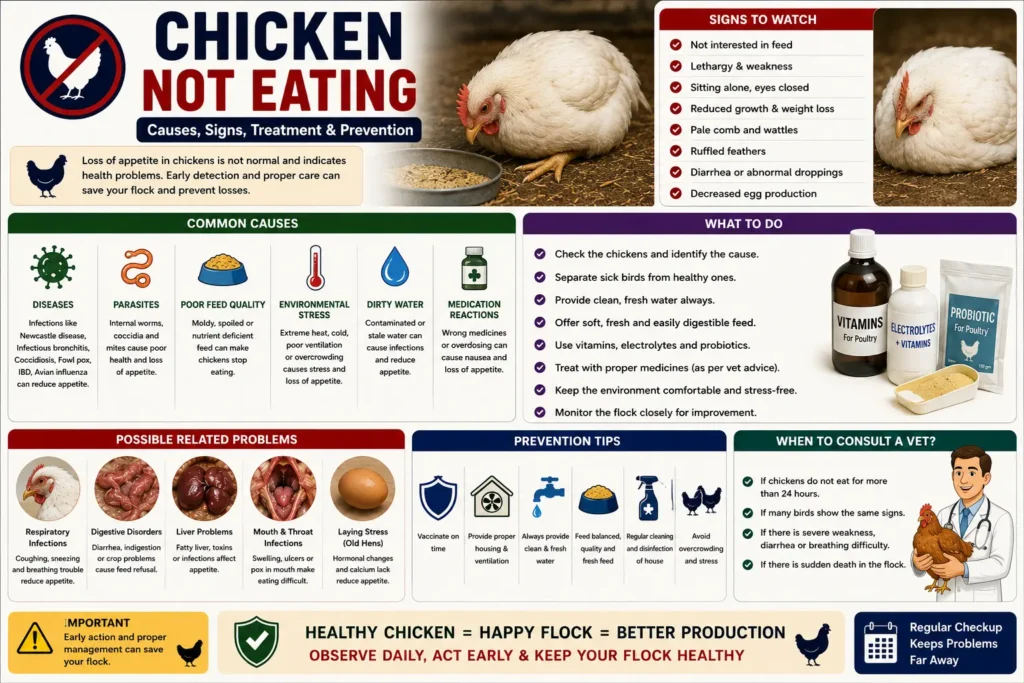
Common Causes of a Chicken Not Eating
1. Heat Stress
In hot weather, chickens often eat less, especially during the hottest part of the day, since digestion generates internal heat they’re trying to avoid. This is usually temporary and resolves as temperatures drop.
2. Molting
During a molt, energy shifts toward feather regrowth, and some birds naturally eat less or seem pickier about food during this period, even though overall nutritional needs actually increase.
3. Respiratory Illness
Birds with a respiratory infection often lose interest in food as part of general lethargy and discomfort, frequently alongside sneezing, discharge, or labored breathing.
4. Internal Parasites (Worms or Coccidiosis)
A heavy worm burden or an active coccidiosis infection can both reduce appetite significantly, often paired with weight loss, diarrhea, or visible parasites in droppings.
5. Egg Binding or Reproductive Issues
Hens dealing with egg binding, internal laying, or other reproductive problems often stop eating as part of broader lethargy and discomfort.
6. Crop Issues (Impaction or Sour Crop)
A blocked or infected crop can make eating physically uncomfortable or difficult, leading a bird to avoid food even while still appearing alert otherwise.
7. Stress From Environmental Changes
New flock introductions, predator scares, sudden environment changes, or transport can all cause temporary appetite loss tied to stress rather than illness.
8. Old Age or Underlying Chronic Conditions
Older birds sometimes eat less overall, and gradual appetite decline can be part of the natural aging process or a sign of an underlying chronic health issue.
Read More: https://lashegg.com/chicken-swollen-abdomen-causes/
Chicken Not Eating: Causes at a Glance
| Cause | Onset | Other Common Signs |
| Heat stress | Sudden, weather-related | Panting, wings held away from body |
| Molting | Gradual | Feather loss, patchy plumage |
| Respiratory illness | Sudden to gradual | Sneezing, discharge, labored breathing |
| Internal parasites | Gradual | Weight loss, diarrhea, visible worms |
| Egg binding/reproductive issues | Sudden | Straining, abdominal swelling, lethargy |
| Crop issues | Sudden to gradual | Swollen or hard crop, foul breath |
| Environmental stress | Sudden | Hiding, unusual behavior, temporary |
| Age/chronic conditions | Gradual | General decline, reduced activity |
How to Tell Mild From Serious Appetite Loss
Not every instance of a chicken not eating needs immediate concern, but certain patterns signal something more serious.
| Sign | Likely Mild | Likely Serious |
| Duration | A few hours, resolves same day | Persists more than 24 hours |
| Other symptoms | None | Lethargy, discharge, diarrhea, swelling |
| Activity level | Normal otherwise | Reduced or absent |
| Water intake | Normal | Also reduced or absent |
| Number of birds affected | One bird, situational (heat, stress) | Multiple birds at once |
Did You Know? A chicken that’s still drinking water normally while skipping food is generally in a less urgent situation than one that’s stopped both eating and drinking.
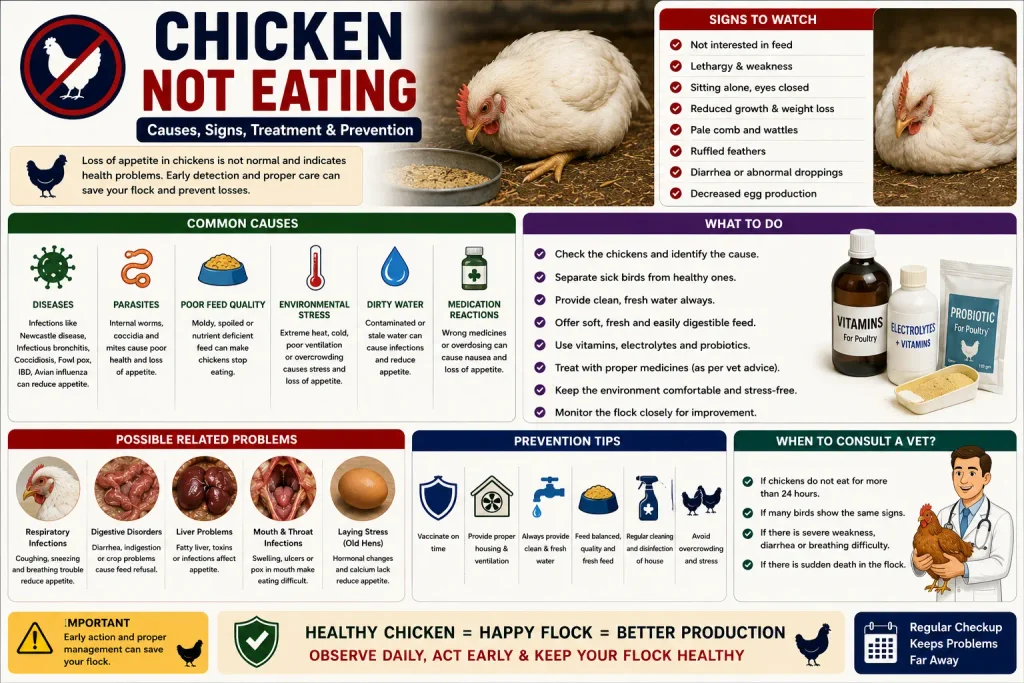
Step-by-Step Response When a Chicken Isn’t Eating
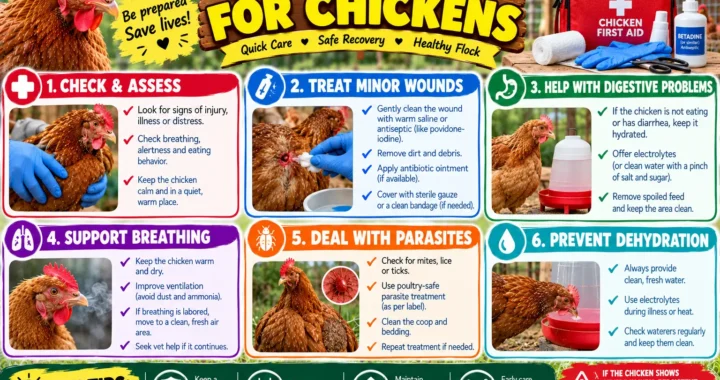
- Check the bird’s overall behavior: is it alert, active, and otherwise normal?
- Feel the crop gently to check for swelling, hardness, or an unusual smell
- Look for other symptoms: discharge, diarrhea, abnormal droppings, or abdominal swelling
- Check environmental factors like recent heat, stress, or flock changes
- Offer a variety of feed, including a favorite treat, to see if interest returns
- Monitor water intake closely, since dehydration compounds appetite issues quickly
- Isolate the bird if illness is suspected, to protect the rest of the flock
- Contact a vet if appetite loss persists beyond 24 hours or other symptoms develop
Expert Tip: Offering scrambled eggs, mashed feed with warm water, or other soft, appealing foods can sometimes tempt a mildly reluctant eater back to normal feeding while you monitor for other symptoms.
Sick Chicken Not Eating: When Supportive Care Helps
For birds showing mild illness alongside reduced appetite, supportive care can make a real difference while the underlying cause resolves or awaits diagnosis.
- Offer electrolyte water to prevent dehydration
- Keep the bird warm and in a low-stress environment
- Provide soft, easy-to-eat food options
- Reduce handling and other stressors during recovery
- Monitor droppings, breathing, and overall alertness closely
Warning: Supportive care helps a bird cope while you figure out the cause, but it isn’t a substitute for identifying and addressing a serious underlying illness. If a sick chicken not eating shows worsening symptoms, don’t rely on supportive care alone.
Common Mistakes When Dealing With a Chicken Not Eating
Common Mistakes:
- Assuming appetite loss is always about heat or minor stress without checking for other symptoms
- Waiting too long to check the crop for impaction or infection
- Not isolating a potentially sick bird, risking spread to the rest of the flock
- Overlooking reduced water intake as less important than food refusal
- Ignoring gradual appetite decline in older birds as “just aging” without ruling out treatable causes
When to Call a Vet
When to Call a Vet:
- Appetite loss lasts more than 24 hours
- The bird also stops drinking water
- You notice lethargy, discharge, diarrhea, or abdominal swelling alongside appetite loss
- The crop feels swollen, hard, or has a foul odor
- Multiple birds in the flock show reduced appetite around the same time
A vet can help narrow down the cause through physical examination and, when needed, further testing, especially important since chicken loss of appetite can stem from so many different underlying conditions, some requiring specific treatment.
Can a Chicken Refuse Food and Still Be Healthy?
Yes, in some situations. Brief appetite dips during extreme heat, molting, or short-term stress are common and don’t necessarily indicate illness, especially if the bird is otherwise active, alert, and drinking normally. The key distinction is whether the reduced appetite is brief and isolated, or persistent and accompanied by other symptoms.
Does Age Affect How Chickens Respond to Appetite Loss?
Yes. Younger chicks can decline quickly when they stop eating, since they have fewer energy reserves, making prompt attention especially important. Older hens may show more gradual appetite changes tied to natural aging, though sudden appetite loss at any age still warrants a closer look.
FAQ: People Also Ask About Chicken Not Eating
Why is my chicken not eating but acting normal? Mild causes like heat stress, molting, or minor environmental stress can reduce appetite temporarily without significantly affecting a bird’s overall behavior.
What does it mean when a sick chicken is not eating? It often signals an underlying illness like respiratory infection, parasites, or a crop issue, especially when paired with lethargy or other symptoms.
How long can a chicken go without eating before it’s a problem? Generally, appetite loss lasting more than 24 hours, especially combined with reduced water intake, should be treated as a reason for closer evaluation or veterinary care.
Can stress cause a chicken to stop eating? Yes. Environmental changes, predator scares, or new flock introductions can all cause temporary chicken loss of appetite tied to stress rather than illness.
Should I isolate a chicken that isn’t eating? If illness is suspected, isolating the bird helps protect the rest of the flock while you monitor symptoms or seek veterinary guidance.
What can I offer a chicken that won’t eat? Soft, appealing foods like scrambled eggs, mashed feed with warm water, or a favorite treat can sometimes encourage a mildly reluctant eater, though persistent refusal needs further investigation.
Wrapping Up: Responding to a Chicken Not Eating
A chicken not eating can mean very little, like a hot afternoon or a molt in progress, or it can be an early sign of a more serious health issue. Looking at how long it’s lasted, whether other symptoms are present, and how the bird is behaving overall gives you the clearest picture of what’s really going on.
Keep an eye on water intake alongside appetite, since the two together tell a more complete story than either alone. If appetite loss persists, comes with other symptoms, or affects multiple birds at once, a vet visit is the safest way to get an accurate answer and the right treatment plan.
5. FAQ Section (Structured)
Q: What causes a chicken not eating? A: Common causes include heat stress, molting, respiratory illness, internal parasites, crop issues, and reproductive problems like egg binding.
Q: Is chicken loss of appetite always a sign of illness? A: Not always. Mild, temporary causes like heat or stress can reduce appetite without indicating illness, especially if the bird is otherwise active and drinking normally.
Q: What should I do if I have a sick chicken not eating? A: Check the crop, look for other symptoms, offer supportive care like electrolyte water, and contact a vet if appetite loss persists beyond 24 hours.
Q: When is a chicken not eating an emergency? A: It becomes urgent when paired with lethargy, reduced water intake, labored breathing, or abdominal swelling, all of which warrant prompt veterinary attention.