When Your Chicken Is Lethargic and Weak: What It Means and What to Do

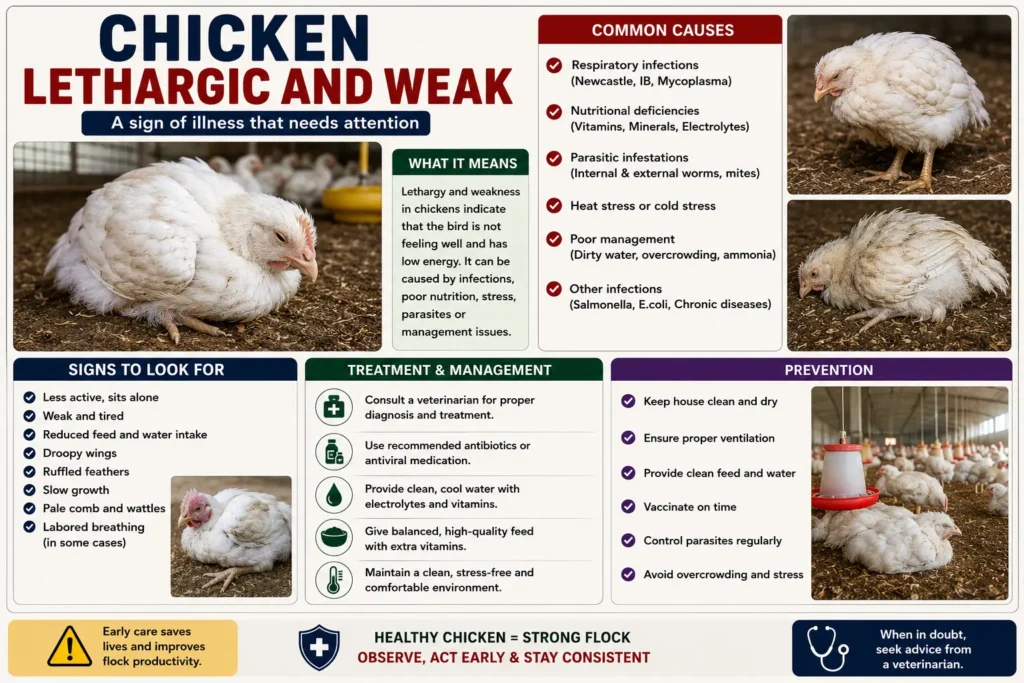
A chicken lethargic and weak is one of the clearest signals that something in your flock has gone wrong. Chickens are prey animals, so they hide illness until they can no longer manage the pain or exhaustion. By the time a bird looks droopy, sits with fluffed feathers, or refuses to move, the problem has usually been building for a day or more.
This guide walks through every major cause of a weak, lethargic chicken, how to tell them apart, what you can safely do at home, and when the situation calls for a veterinarian. Whether you keep two backyard hens or manage a larger flock, the goal here is the same: catch the problem early and respond correctly.
Quick Answer: A lethargic chicken that seems weak is usually reacting to one of four things — internal or external parasites, a bacterial or viral infection, nutritional deficiency, or environmental stress like heat, cold, or poor housing. Isolate the bird, check for obvious injury or discharge, offer electrolyte water, and watch closely for 24 hours. If the bird can’t stand, won’t eat, or has labored breathing, contact a poultry vet right away.
Table of Contents
Why a Chicken Becomes Lethargic and Weak
Chickens have a fast metabolism and a strong survival instinct. Because predators target the weakest bird in a group, chickens instinctively mask pain and sickness. A lethargic chicken has often stopped hiding its symptoms only because it has no energy left to keep up appearances.
Weakness can come from something minor, like a molt or a bout of cold weather, or from something serious, like a respiratory infection or internal parasite overload. The key is to look at the whole picture: how long has the bird been acting this way, what else has changed, and are other birds affected too.
Recognizing Lethargic Chicken Symptoms Early
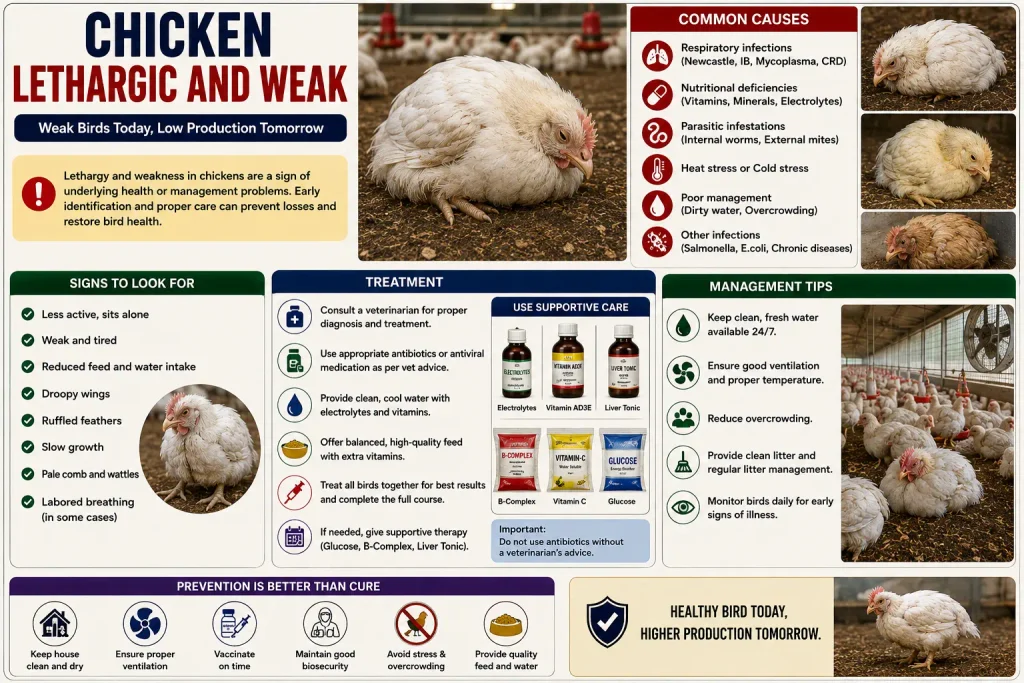
Lethargic chicken symptoms rarely appear alone. Watch for combinations of the signs below, since a single symptom on its own might just mean the bird is resting or molting.
- Sitting hunched with fluffed-up feathers, even in warm weather
- Reduced or absent interest in food and water
- Pale or purplish comb and wattles instead of bright red
- Reluctance to move, or a wobbly, unsteady walk
- Closed or half-closed eyes during the day
- Separating from the flock or hiding in a corner
- Labored, open-mouth, or noisy breathing
- Diarrhea, unusual droppings, or vent pasting
| Symptom | Possible Meaning | Urgency |
| Fluffed feathers, standing alone | Early illness or cold stress | Monitor closely |
| Pale comb, weakness, not eating | Anemia, parasites, or blood loss | Vet visit soon |
| Labored breathing, gasping | Respiratory infection | Urgent |
| Sudden collapse, can’t stand | Heatstroke, poisoning, or severe infection | Emergency |
| Diarrhea with lethargy | Coccidiosis or bacterial infection | Vet visit soon |
Top Causes of a Weak Chicken
1. Internal Parasites (Worms and Coccidia)
A heavy worm burden or a coccidiosis outbreak is one of the most common reasons for a weak chicken, especially in young birds or flocks on damp litter. These parasites damage the intestinal lining, which blocks nutrient absorption and causes anemia over time.
According to the Merck Veterinary Manual, coccidiosis is one of the most economically significant diseases in poultry, and it spreads quickly through contaminated litter and droppings. Signs include bloody or watery droppings, pale combs, ruffled feathers, and a hunched posture.
2. External Parasites (Mites and Lice)
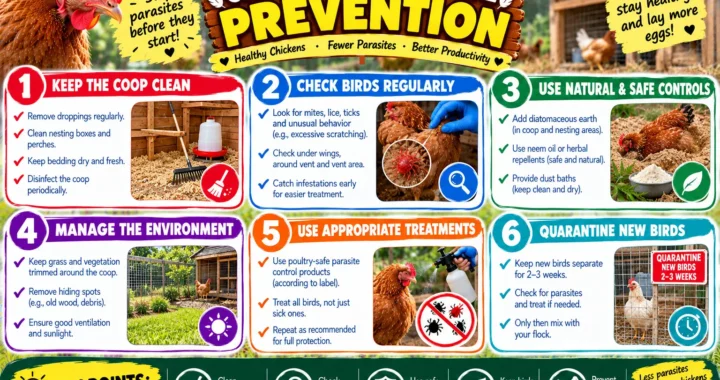
Heavy mite or lice infestations drain a bird’s blood supply and disturb sleep, which leads to exhaustion and anemia. Check under the wings, around the vent, and at the base of feathers for small moving insects or clusters of eggs.
3. Respiratory and Bacterial Infections
Illnesses such as infectious bronchitis, Mycoplasma gallisepticum, or fowl cholera cause fatigue alongside coughing, sneezing, or nasal discharge. A chicken lethargic and weak with breathing changes needs prompt attention, since respiratory disease spreads fast through a flock.
4. Nutritional Deficiencies
A diet lacking protein, vitamin E, selenium, or B vitamins can cause weakness, poor coordination, and low energy. This is common in flocks fed too many treats or scraps instead of a balanced layer or grower feed.
5. Heat Stress or Cold Stress
Chickens regulate body temperature poorly compared to mammals. In extreme heat, they pant, hold wings away from the body, and can become weak or collapse. In cold weather, especially without proper shelter, energy reserves drop fast trying to stay warm.
6. Egg-Related Problems
Hens can become weak from egg binding (a stuck egg), reproductive infections, or the general depletion that comes with heavy laying breeds. A hen straining, walking like a penguin, or sitting with her tail pumping needs immediate evaluation.
7. Injury or Predator Attack
Even a hidden wound, sprain, or internal injury from a bullying flock mate or a predator attempt can leave a chicken weak and reluctant to move.
8. Poisoning or Toxin Exposure
Moldy feed, certain garden plants, and some pesticides can cause sudden weakness. According to the USDA, storing feed properly and keeping chickens away from treated lawns or known toxic plants reduces this risk significantly.
Did You Know? A chicken’s normal body temperature runs between 105°F and 107°F, higher than most mammals. This means chickens overheat faster than people expect, especially breeds with heavy feathering.
Read More: https://lashegg.com/chicken-not-eating-causes/
Weak Chicken Causes: A Comparison Table
| Cause | Key Signs | Contagious? | Home Care Possible? |
| Internal parasites | Pale comb, bloody droppings, weight loss | Yes, flock-wide | Partially, with dewormer |
| External parasites | Feather loss, visible mites/lice, anemia | Yes | Yes, with treatment |
| Respiratory infection | Coughing, discharge, breathing trouble | Yes, high risk | No, needs vet input |
| Nutrient deficiency | Poor growth, weakness, leg issues | No | Yes, diet correction |
| Heat/cold stress | Panting or huddling, sudden weakness | No | Yes, with environment fix |
| Egg binding | Straining, penguin walk, no eggs laid | No | Limited, often needs vet |
| Poisoning | Sudden onset, neurological signs | No | No, emergency vet care |
What to Do When You Find a Lethargic Chicken
Step-by-Step: Immediate Home Care
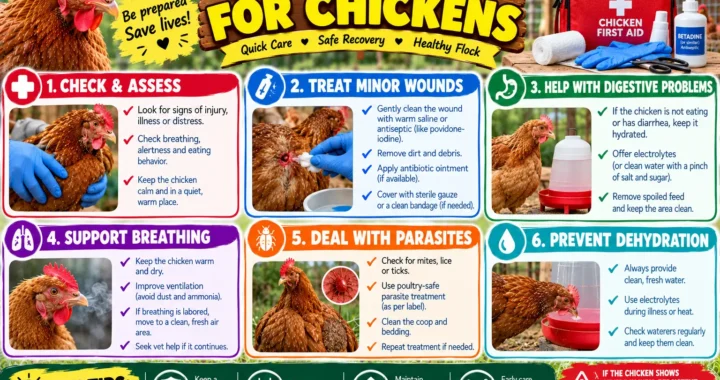
- Isolate the bird. Move it to a quiet, warm, draft-free space away from the rest of the flock to prevent bullying and possible disease spread.
- Check the basics. Look at the comb color, feel the crop for blockages, check under wings for parasites, and examine the vent for pasting or prolapse.
- Offer electrolyte water. A simple electrolyte and vitamin solution in water helps rehydrate a weak bird faster than plain water.
- Keep it warm, not hot. A weak chicken often can’t regulate its own temperature. A heat lamp on low, or a warm towel, can help without overheating the bird.
- Offer easy nutrition. Scrambled egg, moistened feed, or a small amount of poultry vitamin supplement can support a bird that won’t eat much.
- Watch droppings and behavior. Track changes over the next 12 to 24 hours to see whether the bird is improving or declining.
- Contact a vet if there is no improvement. A bird that hasn’t perked up within a day, or that worsens, needs professional evaluation.
Expert Tip
Weigh the bird if you can, and repeat the weight check every day it’s under observation. A dropping weight, even without other clear symptoms, is one of the most reliable ways to catch a chicken that is quietly losing the fight against illness.
Common Mistakes to Avoid
- Assuming the bird is “just molting” without checking for other symptoms
- Force-feeding a bird that is too weak to swallow safely
- Treating the whole flock with medication before confirming a diagnosis
- Waiting several days before isolating a sick bird
- Ignoring pale combs, which often signal anemia or blood loss
Warning
Never give human medications, essential oils, or unproven home remedies to a sick chicken. Many common household products are toxic to poultry, and incorrect dosing of even approved medications can cause more harm than the original illness.
Diagnosing the Cause: What Vets and Experienced Keepers Check
Physical Examination Checklist
- Comb and wattle color (bright red vs. pale or blue-tinged)
- Body condition by feeling the keel bone for excess prominence
- Crop fullness and texture (hard, sour-smelling crop suggests impaction)
- Vent area for pasting, prolapse, or swelling
- Feathers and skin for mites, lice, or wounds
- Breathing sounds, nostrils, and eyes for discharge
When Lab Testing Helps
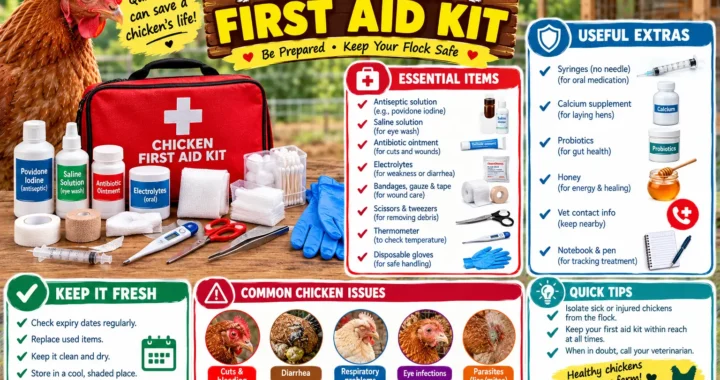
A veterinarian may recommend a fecal float to check for worms or coccidia, a blood test to assess anemia or infection, or a swab for respiratory pathogens. These tests remove the guesswork, which matters most in flocks with repeated illness.
When to Call a Vet
Call a poultry veterinarian if the chicken cannot stand, refuses all food and water for more than 24 hours, shows labored breathing, has blood in the droppings, or if more than one bird in the flock is affected at the same time. Rapid decline in a young chick also warrants an urgent call.
Treatment Options Based on Cause
| Diagnosis | Typical Treatment | Recovery Outlook |
| Worms | Approved poultry dewormer, repeat dose per label | Good, 1–2 weeks |
| Coccidiosis | Amprolium-based treatment, clean dry litter | Good if caught early |
| Mites/lice | Poultry-safe insecticide dust or spray, coop cleaning | Good, may take 2–3 treatments |
| Bacterial infection | Vet-prescribed antibiotics | Variable, depends on severity |
| Nutrient deficiency | Balanced feed, targeted vitamin supplement | Good with correction |
| Heat stress | Cooling, shade, electrolytes | Good if treated quickly |
| Egg binding | Warm bath, lubrication, vet assistance if needed | Variable, can be urgent |
Preventing a Chicken From Becoming Lethargic and Weak
Coop and Flock Management
- Keep bedding dry and change it regularly to reduce parasite and bacterial buildup
- Provide proper ventilation without direct drafts on roosting birds
- Separate new birds for at least two weeks before introducing them to the flock
- Maintain a consistent feeding schedule with age-appropriate, complete feed
Seasonal Considerations
Cold weather calls for insulated, draft-free housing and extra calories from scratch grains in the evening. Hot weather calls for shade, ventilation, and constant access to cool water, since heat stress can turn a healthy chicken into a lethargic chicken within hours.
Routine Health Checks
A monthly hands-on check of comb color, weight, and parasite load catches problems long before a bird looks visibly sick. University extension poultry programs consistently recommend this kind of proactive monitoring as the most effective way to reduce flock losses.
People Also Ask
Why is my chicken lethargic but still eating? A chicken that eats but seems lethargic may be in the early stage of illness, dealing with mild parasites, or adjusting to heat or cold. Watch closely for 24–48 hours, since appetite is often the last thing to disappear in a sick bird.
How long can a weak chicken survive without treatment? This depends entirely on the cause. A bird with heat stress may recover in hours with cooling and fluids, while one with a severe infection or advanced parasite load can decline within a day or two without intervention.
Can stress alone make a chicken weak? Yes. Overcrowding, bullying, extreme temperatures, and predator scares can all cause temporary weakness, though these cases usually improve once the stressor is removed.
Is a lethargic chicken always contagious to the rest of the flock? Not always, but isolating any weak bird is still the safest first step, since several common causes of lethargic chicken symptoms, including respiratory disease and parasites, do spread easily between birds.
What does a pale comb mean in a weak chicken? A pale or grayish comb usually points to anemia, often from a heavy parasite load, blood loss, or chronic illness, and it’s one of the more reliable warning signs of a genuinely sick bird.
Final Thoughts
A chicken lethargic and weak is telling you, in the only language it has, that something needs attention. Most cases trace back to parasites, infection, poor nutrition, or environmental stress, and most respond well to prompt isolation, supportive care, and, when needed, veterinary treatment.
Keep watching the bird’s weight, droppings, and comb color over the following days, since these three signs reveal recovery or decline faster than behavior alone. When in doubt, especially with sudden or severe symptoms, a poultry veterinarian remains the safest and most reliable resource for both diagnosis and peace of mind.
5. FAQ
Q: What is the first thing I should do if I notice a chicken lethargic and weak? A: Isolate the bird from the flock, check its comb color, crop, and vent, and offer electrolyte water while you monitor it closely over the next several hours.
Q: Can a weak chicken recover on its own? A: Mild cases caused by heat, cold, or minor stress can resolve with supportive home care, but infections, parasites, and egg binding usually need targeted treatment or veterinary help.
Q: How do I know if my weak chicken needs a vet instead of home care? A: If the bird can’t stand, refuses food and water for over 24 hours, has labored breathing, or shows blood in its droppings, contact a poultry veterinarian promptly.
Q: Are lethargic chicken symptoms different in chicks versus adult birds? A: Chicks decline much faster than adults because of their small size and limited energy reserves, so any weakness in a chick should be treated as more urgent.
Q: Does molting cause a chicken to look lethargic and weak? A: Molting can cause reduced activity and appetite due to the energy cost of regrowing feathers, but a molting bird should still respond to stimuli and move normally; true lethargy points to another cause.