Chicken Not Laying Eggs in Summer: The Heat Connection

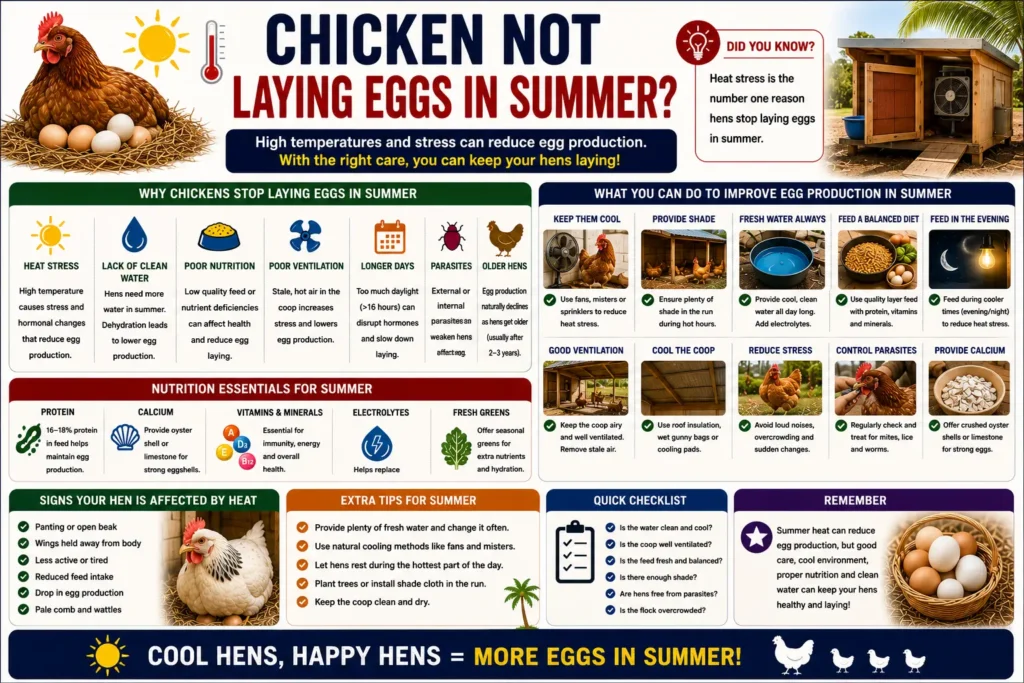
A chicken not laying eggs in summer catches many keepers off guard, since summer feels like it should be the easy season with long daylight hours and no snow to shovel. In reality, extreme heat is just as disruptive to egg production as winter’s short days, just through a completely different mechanism.
This guide breaks down exactly how heat affects laying, how to tell normal heat-related slowdown from a genuine emergency, and practical steps to help hot weather chickens stay comfortable and productive through the hottest months.
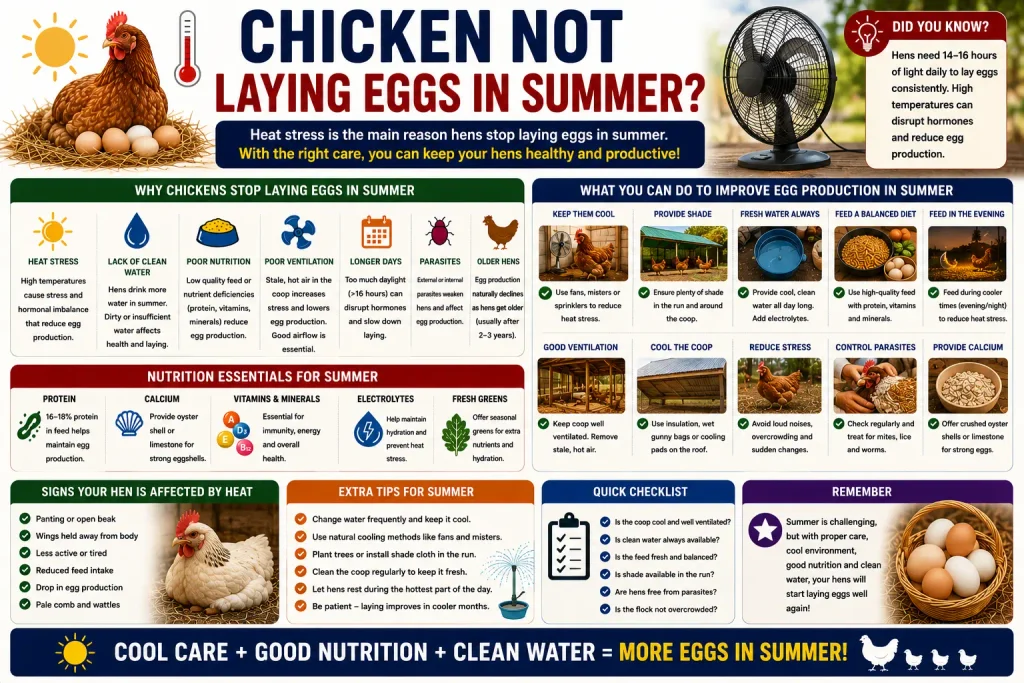
Quick Answer: Chickens stop laying in summer mainly due to heat stress, which redirects the body’s energy toward cooling rather than egg formation. High heat also reduces feed intake, which limits the nutrients needed for consistent laying. Shade, ventilation, cool water, and heat-adjusted feeding all help support hot weather chickens through summer slowdowns.
Table of Contents
Why Heat Stress and Egg Production Are So Closely Linked
How Chickens Cool Down
Unlike mammals, chickens don’t sweat. They rely on panting, holding their wings away from the body, and seeking shade to release heat, all of which use energy that would otherwise support normal body functions, including egg formation.
The Direct Impact on Laying
When body temperature rises, a hen’s system prioritizes survival over reproduction. Heat stress and egg production have an inverse relationship: as stress increases, laying frequency, shell quality, and egg size often decline together, sometimes within just a few days of a heat wave.
| Temperature Range | Typical Effect on Hens | Laying Impact |
| Below 75°F (24°C) | Comfortable, normal activity | Minimal to none |
| 75–85°F (24–29°C) | Mild panting, reduced activity | Slight decline possible |
| 85–95°F (29–35°C) | Heavy panting, wings held out | Noticeable decline |
| Above 95°F (35°C) | Severe distress risk, lethargy | Significant drop or full stop |
Recognizing Heat Stress in Hot Weather Chickens
Early Warning Signs
- Panting with an open beak, even at rest
- Wings held away from the body
- Seeking shade and reduced overall activity
- Pale comb or wattles, sometimes from reduced blood flow to extremities
- Reduced feed intake alongside increased water consumption
Signs of Severe Heat Stress
- Labored, rapid breathing that doesn’t ease in shade
- Lethargy, stumbling, or an unwillingness to move
- Collapse or unresponsiveness
Warning: Severe heat stress can progress to heatstroke within a short window, especially during sudden heat spikes. A chicken showing labored breathing, stumbling, or collapse during hot weather needs immediate cooling and, if there’s no rapid improvement, emergency veterinary care.
Why Feed Intake Drops in Hot Weather
The Appetite-Heat Connection
Digesting food generates internal heat, so hens naturally eat less during high temperatures to avoid adding to their heat load. This reduced intake means fewer of the nutrients, especially protein and calcium, needed to consistently form eggs.
Adjusting Feed for Summer
- Offer feed during the cooler parts of the day, early morning and evening
- Consider a slightly higher-protein feed if a hen’s intake has dropped noticeably
- Provide crumble or mash over whole grains, which can be easier to eat in small amounts
- Offer cooling treats like chilled watermelon or cucumber in moderation
Read More: https://lashegg.com/chicken-not-laying-eggs-in-winter/
Heat Stress and Egg Production: What’s Normal vs. Concerning
| Pattern | Likely Explanation | Action Needed |
| Gradual decline during a heat wave | Normal heat stress response | Support with shade, water, cooling |
| Sudden full stop, no other symptoms | Acute heat stress | Cool immediately, monitor closely |
| Decline with lethargy or collapse | Severe heat stress or heatstroke | Emergency cooling, possible vet visit |
| Decline with pale comb, weight loss | Possible unrelated illness | Rule out parasites or infection |
Step-by-Step: Helping Hot Weather Chickens Through Summer
- Provide constant shade. Natural shade from trees or shade cloth over the run reduces direct sun exposure throughout the day.
- Improve ventilation. Open windows, vents, or fans in the coop keep air moving, which helps chickens release heat more effectively.
- Offer cool, clean water constantly. Check water at least twice daily in extreme heat, since warm water is less appealing and chickens may drink less than they need.
- Add electrolytes during heat waves. A poultry electrolyte solution helps replace what’s lost through heavy panting and supports overall hydration.
- Reduce stocking density if possible. Crowded coops trap heat, so extra space during summer months helps birds cool more effectively.
- Offer frozen treats. Frozen fruit or ice cubes in the water can help lower body temperature during the hottest part of the day.
- Avoid handling during peak heat. Save health checks, coop cleaning, and flock activities for cooler morning or evening hours.
Expert Tip
Watch your flock’s behavior around midday during a heat wave rather than relying on the thermometer alone. Panting, spread wings, and shade-seeking tell you more about how your specific birds are coping than the temperature reading does, since factors like humidity, breed, and body condition all affect individual heat tolerance.
Common Mistakes to Avoid
- Assuming a chicken not laying eggs in summer is automatically sick rather than checking for heat stress first
- Leaving water in direct sun, where it can become too warm to encourage adequate drinking
- Overcrowding the coop during summer, which traps heat overnight
- Ignoring early panting and shade-seeking until a bird shows severe distress
- Using a heat lamp or other heat source unnecessarily during already-hot weather
Breed Differences in Heat Tolerance
Some breeds handle heat far better than others. Lighter-bodied, single-comb breeds with less dense feathering, such as Leghorns, generally tolerate heat better than heavily feathered, cold-hardy breeds like Orpingtons or Chanteclers. According to university extension poultry resources, comb size and feather density are among the most reliable indicators of a breed’s natural heat tolerance.
| Breed Type | Heat Tolerance | Summer Laying Impact |
| Leghorn-type, light body | High | Minimal decline |
| Standard dual-purpose | Moderate | Noticeable decline in extreme heat |
| Heavy, cold-hardy breeds | Lower | Significant decline likely |
When to Call a Vet
Contact a poultry veterinarian if a chicken shows labored breathing, stumbling, or collapse during hot weather that doesn’t improve quickly with shade and cooling. A chicken not laying eggs in summer that also shows pale comb color, ongoing lethargy beyond a heat wave, or weight loss may be dealing with an unrelated illness rather than heat stress alone, and deserves a closer evaluation.
Getting Laying Back on Track After a Heat Wave
What to Expect
Most hens resume normal laying within a few days to about a week once temperatures moderate and hydration and feed intake return to normal. A prolonged decline lasting several weeks past a heat event is less likely to be heat-related alone.
Long-Term Prevention
- Plan coop ventilation improvements before summer arrives, not during a heat wave
- Choose more heat-tolerant breeds if your region regularly sees extreme summer temperatures
- Maintain a consistent water and shade setup year-round rather than reacting only during emergencies
People Also Ask
Why is my chicken not laying eggs in summer if she seems healthy otherwise? A healthy-looking hen can still reduce laying purely from heat stress, since her body redirects energy toward cooling rather than egg production during hot weather.
How hot does it need to be before chickens stop laying? Noticeable declines often begin around 85°F (29°C), with more significant drops likely once temperatures climb above 90–95°F (32–35°C), depending on humidity and breed.
Can heat stress and egg production issues cause permanent damage? Mild to moderate heat stress typically causes only temporary declines, but severe, prolonged heat stress or heatstroke can cause lasting harm or death without prompt intervention.
Do hot weather chickens need extra calcium in summer? Reduced feed intake during heat can lower overall calcium consumption, so offering free-choice oyster shell alongside a complete layer feed helps support shell quality during summer.
Will my chicken’s eggs look different during a heat wave? Yes, thinner shells and smaller eggs are common during heat stress, since reduced feed intake limits the calcium and nutrients needed for normal shell formation.
Final Thoughts
A chicken not laying eggs in summer is very often responding to heat stress rather than illness, though the two can look similar at first glance. Shade, ventilation, constant cool water, and smart feeding adjustments go a long way toward helping hot weather chickens stay comfortable and keep production as steady as possible.
Keep watching for signs that go beyond normal heat-related decline, like labored breathing, collapse, or symptoms lasting well past a heat wave, and don’t hesitate to involve a poultry veterinarian if severe heat stress or an unrelated illness seems to be at play.
5. FAQ
Q: Why is my chicken not laying eggs in summer during a heat wave specifically? A: Heat waves push hens into survival mode, redirecting energy toward cooling and reducing the resources available for consistent egg formation.
Q: How can I tell if heat stress and egg production issues are related in my flock? A: A decline that starts with a heat spike, affects the whole flock, and comes with panting or shade-seeking points strongly toward heat stress rather than illness.
Q: Do hot weather chickens need a different feeding schedule? A: Yes, offering feed during cooler morning and evening hours, rather than midday, often improves intake and supports more consistent laying during summer.
Q: Can I use a fan to help my chickens during summer heat? A: Yes, fans that improve airflow in the coop can meaningfully help chickens cool down, especially when combined with shade and constant access to cool water.
Q: How long does it take for laying to recover after a heat wave ends? A: Most hens return to normal laying within a few days to about a week once temperatures drop and hydration and appetite return to their usual levels.