Chicken Not Laying Eggs in Winter: Why It Happens

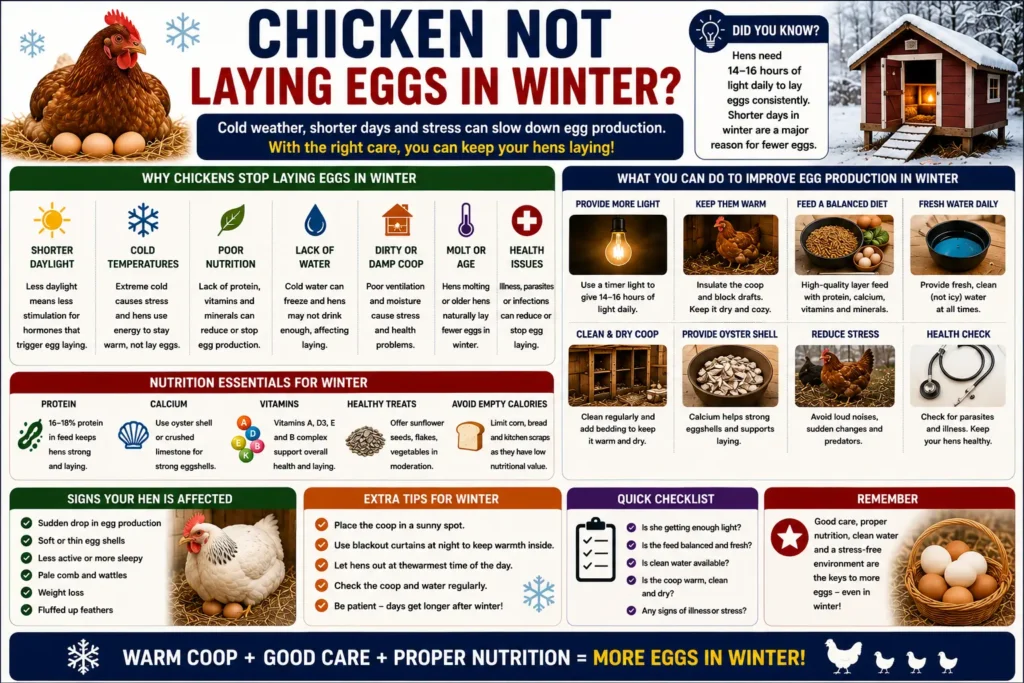
A chicken not laying eggs in winter is one of the most predictable, least alarming patterns in backyard keeping, even though it can feel worrying the first time you experience it. Shorter days, colder temperatures, and natural seasonal rhythms all work together to slow or stop egg production during the coldest months.
This guide explains the biology behind winter egg production drops, what’s genuinely normal versus what deserves closer attention, and practical, realistic ways to support your flock through the season without forcing hens into unhealthy overproduction.
Quick Answer: Chickens stop laying in winter mainly because of shorter daylight hours, which reduce the hormone signals that trigger egg formation. Cold temperatures, natural molting timing, and age also play a role. Supplemental lighting, proper nutrition, and a well-insulated coop can support winter laying, though some seasonal slowdown is normal and healthy.
Table of Contents
The Biology Behind Winter Egg Production Drops
Daylight and Hormone Signals
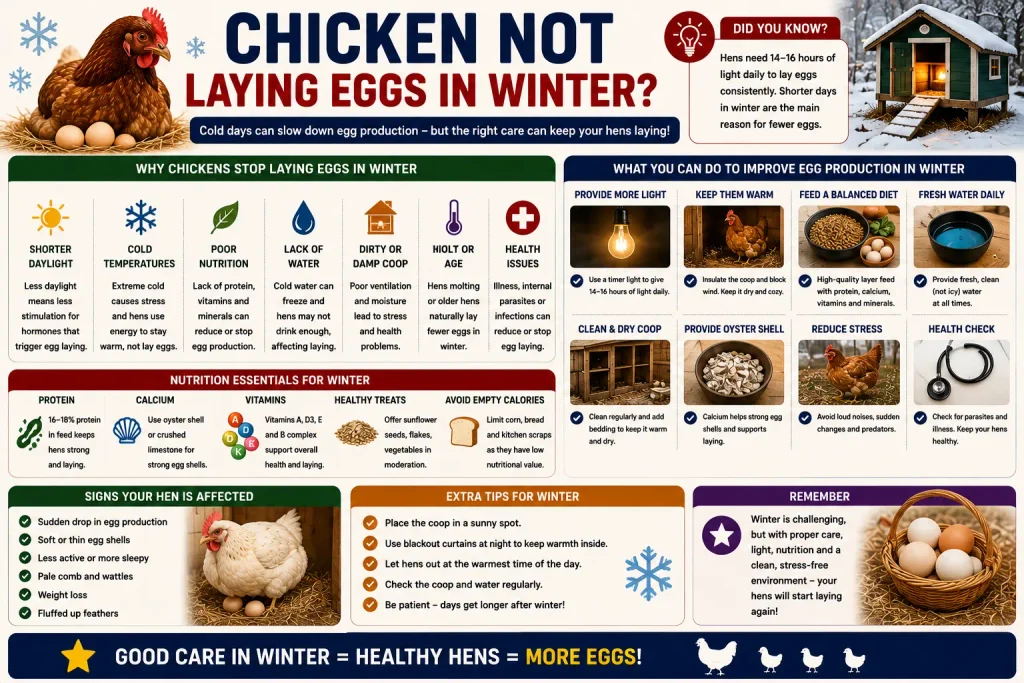
A hen’s reproductive system relies on light exposure to trigger the hormones responsible for forming and laying eggs. Chickens generally need 14 to 16 hours of light daily for steady production, and natural winter daylight in most regions falls well short of that.
Why This Is a Natural, Protective Response
Historically, reduced winter laying gave wild and early domesticated fowl a survival advantage, since raising chicks during the coldest, food-scarcest months offered poor odds of success. Modern hens still carry this same seasonal instinct, even in a backyard coop with reliable food.
| Factor | Effect on Winter Laying | Fixable? |
| Short daylight | Major reduction or full stop | Yes, with supplemental light |
| Cold temperatures | Energy diverted to warmth | Partially, with insulation |
| Molting timing | Often overlaps with early winter | No, natural process |
| Hen age | Older hens slow down more | No, natural decline |
How Much Winter Egg Production Drop Is Normal
What to Expect by Hen Type
Production breeds like leghorns or hybrid layers often continue laying through winter with only a modest dip, especially with some daylight support. Heritage and dual-purpose breeds typically slow far more dramatically, and some stop laying almost entirely until early spring.
Signs the Drop Is Normal
- Gradual decline over several weeks rather than a sudden stop
- Whole flock affected similarly, not just one hen
- Hens otherwise appear healthy, active, and eating normally
- Production picks back up as daylight increases in late winter or early spring
Signs Something Else Might Be Going On
If a chicken not laying eggs in winter also shows lethargy, pale comb color, weight loss, or vent discharge, the cause may not be seasonal at all. Winter conditions can sometimes mask or worsen an unrelated health issue, so it’s worth ruling out illness before assuming the season explains everything.
Read More: https://lashegg.com/why-did-my-chicken-stop-laying-eggs/
Winter Egg Production: Causes Compared
| Cause | Typical Pattern | Response Needed |
| Short daylight | Flock-wide, gradual | Supplemental lighting if desired |
| Cold stress | Flock-wide, worsens in extreme cold | Insulation, draft-proofing |
| Natural molt | Individual or flock-wide, feather loss visible | None, self-resolving |
| Age-related decline | Individual, gradual over seasons | None, natural |
| Illness (less common) | Individual, with other symptoms | Veterinary evaluation |
Should You Use Supplemental Light?
The Case for Adding Light
Extending daylight with a simple coop light on a timer can maintain or restore laying through winter. Many keepers add light in the early morning hours rather than the evening, since this mimics a more natural sunrise pattern and reduces the risk of hens getting caught off-guard by sudden darkness at “lights out.”
The Case for Letting Hens Rest
Some keepers choose not to supplement light at all, allowing hens a natural winter rest. This approach may extend a hen’s overall productive lifespan, since continuous year-round laying places ongoing calcium and metabolic demands on the body without a seasonal break.
How to Add Light Responsibly
- Use a timer for consistency. Random or inconsistent light exposure can be more disruptive than no supplemental light at all.
- Aim for a total of 14 to 16 hours. Calculate natural daylight hours first, then add only what’s needed to reach that range.
- Extend mornings rather than evenings. This allows hens to settle onto the roost naturally as it gets dark.
- Increase gradually if starting from full winter darkness. Adding 30 minutes every few days is gentler than an abrupt jump.
- Use warm-toned, low-intensity bulbs. Harsh lighting can increase stress rather than simply extending day length.
Did You Know? Some heritage chicken breeds were specifically developed in regions with long, dark winters and naturally lay more consistently through the cold season than modern hybrid layers, which is worth considering when choosing breeds for year-round production.
Supporting Chickens Through Winter Beyond Lighting
Nutrition Adjustments
- Increase scratch grains slightly in the evening to support overnight body heat
- Maintain a complete layer feed with adequate calcium even during reduced laying
- Offer warm water on the coldest days to encourage adequate drinking
Coop and Housing
- Ensure proper ventilation without direct drafts on the roosting area
- Add deep litter bedding for insulation and natural warmth from decomposition
- Avoid heat lamps where possible, since they carry fire risk and can disrupt natural cold tolerance
Managing Frozen Water
Water access matters just as much in winter as summer. A hen without water for even part of a day, whether from freezing or neglect, can show reduced laying on top of the seasonal winter slowdown already at play.
When Winter Isn’t the Whole Story
Expert Tip
Keep a simple laying log through the fall and winter months. A gradual decline that lines up with shortening days looks very different on paper than a sudden stop, and having that record makes it much easier to tell the difference between normal winter egg production changes and something that needs a closer look.
Common Mistakes to Avoid
- Assuming every winter slowdown is automatically due to season without checking hen health
- Using heat lamps carelessly, which creates fire risk in dry bedding
- Adding light inconsistently, which can confuse rather than support a hen’s cycle
- Ignoring vent discharge, lethargy, or weight loss because “it’s probably just winter”
- Forcing supplemental light onto very young pullets who haven’t started laying yet
Warning
Sudden, severe lethargy, pale comb color, or vent discharge during winter should never be dismissed as a normal seasonal pause. Cold weather can worsen an existing illness, and these signs deserve veterinary attention regardless of the season.
When to Call a Vet
Contact a poultry veterinarian if a chicken not laying eggs in winter also shows lethargy, weight loss, labored breathing, vent discharge, or a swollen abdomen. A hen who was laying consistently and then stopped very suddenly, rather than gradually declining with the season, also deserves a closer look rather than an assumption that winter explains it.
People Also Ask
Is it normal for chickens to stop laying completely in winter? Yes, especially for heritage or dual-purpose breeds, a complete winter pause is common and usually resolves as daylight increases in late winter or spring.
Do all chicken breeds stop laying in winter? No, production-focused hybrid breeds often continue laying through winter with a much smaller dip, particularly with some supplemental daylight support.
Does supplemental light harm chickens? Used consistently and at a reasonable intensity, supplemental light is generally considered safe, though some keepers prefer allowing a natural winter rest for long-term flock health.
How can I tell if winter or illness is causing my chicken not laying eggs? A gradual, flock-wide decline that lines up with shorter days points to season, while lethargy, pale comb color, or symptoms in just one bird suggest illness is worth ruling out.
When will winter egg production return to normal? Most flocks see laying pick back up as daylight naturally extends in late winter or early spring, typically without any intervention needed.
Final Thoughts
A chicken not laying eggs in winter is, in most cases, simply responding to shorter days, colder temperatures, and natural seasonal rhythms rather than facing any real problem. Supplemental lighting and solid winter husbandry can support production for keepers who want it, while others may choose to let hens rest through the season entirely.
Keep watching for signs that point beyond normal winter egg production changes, like lethargy, weight loss, or vent discharge, and involve a poultry veterinarian if a sudden or unusual pattern shows up rather than a gradual seasonal decline.
5. FAQ
Q: Why is my chicken not laying eggs in winter even with a heated coop? A: Heating the coop addresses cold stress but doesn’t replace the daylight hours hens need for consistent laying, so supplemental light is usually the more effective fix.
Q: Can I force winter egg production with light alone? A: Supplemental light extending the day to 14–16 hours often restores or maintains laying, though it may not fully override natural factors like molting or age.
Q: Do chickens stop laying in winter every single year? A: Most hens show at least some seasonal slowdown each winter, though the severity varies by breed, age, and whether supplemental lighting is used.
Q: Is it bad for hens to lay year-round with added light? A: Continuous laying without a seasonal break can place ongoing calcium and metabolic demands on hens, which is why some keepers prefer to let their flock rest naturally each winter.
Q: Should young pullets get supplemental light in their first winter? A: Most keepers wait until pullets reach a healthy laying age and body weight before introducing supplemental light, since forcing early production can strain a still-developing bird.