Calcium Deficiency in Chickens: Why It Matters So Much

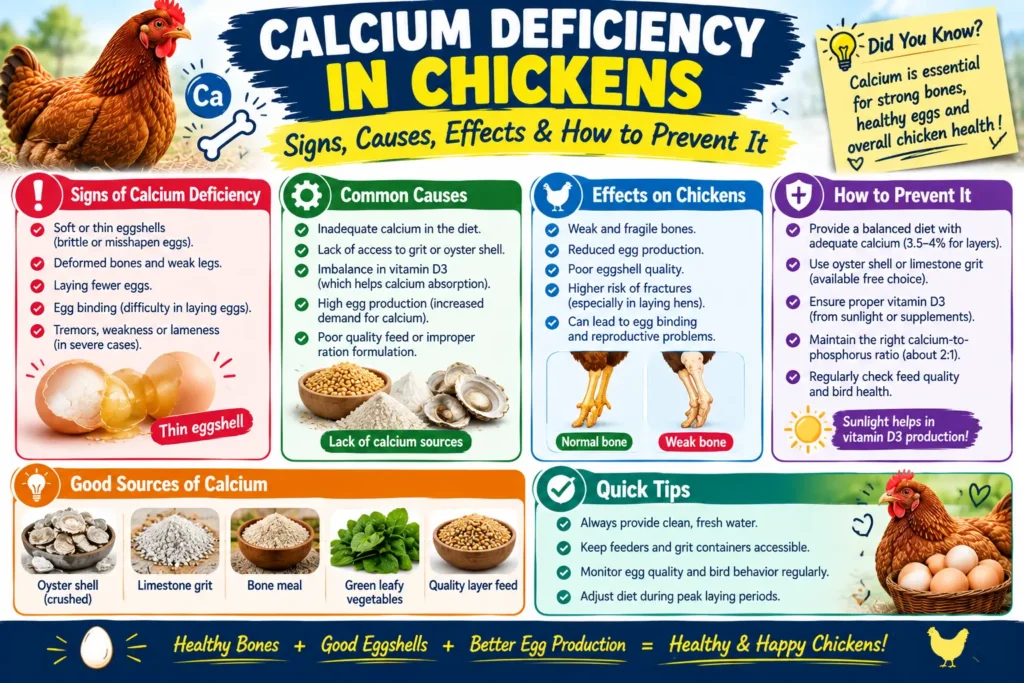
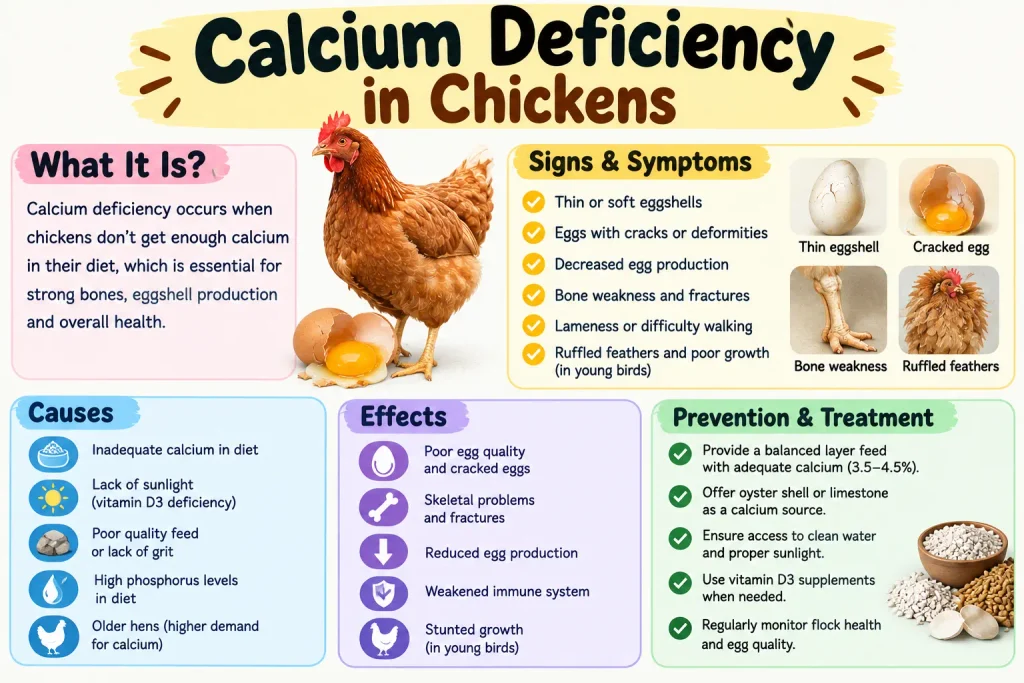
Calcium deficiency in chickens affects far more than just egg quality, even though thin shells are usually the first sign keepers notice. Calcium plays a central role in bone strength, muscle function, and even nerve signaling, which means a shortfall can quietly affect a hen’s overall health well before shell problems become obvious.
This guide covers the full range of calcium deficiency symptoms, why laying hens are especially vulnerable, and exactly how to correct low calcium in hens through diet and management, along with when the problem has gone beyond a simple feed fix.
Quick Answer: Calcium deficiency in chickens most often shows up as thin, soft, or shell-less eggs, but can also cause weak bones, leg problems, and reduced egg production. Laying hens need significantly more dietary calcium than non-laying birds due to daily shell formation demands. Correcting the diet with a complete layer feed and free-choice oyster shell resolves most cases within one to two weeks.
Table of Contents
Why Laying Hens Need So Much Calcium
The Daily Demand
A laying hen puts roughly 2 grams of calcium into each eggshell, and since she may lay nearly every day during peak production, her calcium needs vastly exceed those of a non-laying bird or a growing chick. According to university extension poultry resources, a laying hen’s calcium requirement increases dramatically compared to earlier growth stages specifically to meet this demand.
Where the Calcium Comes From
When dietary calcium intake falls short, a hen’s body pulls reserves from her medullary bone, a specialized calcium reservoir in the long bones that exists specifically to buffer short-term shell formation needs. Chronic, ongoing deficiency depletes this reserve, which is when calcium deficiency in chickens starts affecting skeletal health beyond just shells.
Read More: https://lashegg.com/low-egg-production-in-chickens/
| Hen Type | Approximate Daily Calcium Need |
| Non-laying pullet or grower | Lower, growth-focused |
| Actively laying hen | Significantly higher, tied to shell formation |
| Molting hen | Reduced, since laying pauses |
Recognizing Calcium Deficiency Symptoms
Egg-Related Signs
- Thin, fragile shells that crack easily
- Soft or shell-less eggs, sometimes called “rubber eggs“
- Wrinkled, oddly textured, or misshapen shells
- Reduced overall egg production as the body prioritizes survival over laying
Bone and Physical Signs
- Weak, brittle bones more prone to fractures
- Leg weakness, stiffness, or reluctance to move
- Lameness or an abnormal gait
- In severe, prolonged cases, spontaneous fractures with minimal trauma
Behavioral Signs
- Reduced activity level overall
- Reluctance to jump down from roosts or perches
- General lethargy in advanced cases
| Symptom | Likely Stage of Deficiency | Urgency |
| Thin or soft shells only | Early | Diet correction usually sufficient |
| Reduced laying frequency | Moderate | Diet correction, monitor closely |
| Leg weakness or lameness | Advanced | Veterinary evaluation recommended |
| Spontaneous fractures | Severe | Veterinary care needed |
Did You Know? A hen’s medullary bone reserve can supply roughly enough calcium for about one eggshell on its own, which is exactly why consistent daily dietary calcium, not just occasional supplementation, is so important for laying hens.
What Causes Low Calcium in Hens
1. Inadequate Diet
Feeding an all-flock or grower feed to actively laying hens, rather than a complete layer feed, is one of the most common root causes of calcium deficiency in chickens, since these feeds aren’t formulated for high calcium demand.
2. Insufficient Free-Choice Calcium
Even with a proper layer feed, hens with unusually high individual demand, larger breeds, or heavy production schedules sometimes benefit from additional free-choice oyster shell beyond what’s mixed into standard feed.
3. Poor Calcium Absorption
Vitamin D3 is essential for calcium absorption, and a deficiency in D3, whether from diet or inadequate light exposure, can cause calcium deficiency symptoms even when dietary calcium intake looks adequate on paper.
4. Age-Related Changes
Older hens sometimes show reduced calcium absorption efficiency, meaning previously adequate diets may need adjustment as a flock ages.
5. Underlying Illness
Certain diseases and parasites can interfere with normal digestion and nutrient absorption, indirectly contributing to low calcium in hens even when the diet itself is well balanced.
Diagnosing Calcium Deficiency in Chickens
What to Check at Home
- Review current feed type and confirm it’s an appropriate layer formulation
- Check whether free-choice oyster shell is available and being consumed
- Inspect recent eggs for shell thickness and texture changes
- Watch for leg strength and general mobility during normal activity
When Veterinary Testing Helps
A veterinarian can assess bone density and blood calcium levels in more severe or unclear cases, which is particularly useful when calcium deficiency symptoms appear despite an apparently adequate diet, suggesting an absorption or underlying health issue instead.
| Diagnostic Step | What It Reveals |
| Feed and supplement review | Whether diet is the likely root cause |
| Shell examination over time | Severity and progression of deficiency |
| Physical/mobility check | Whether bone health is already affected |
| Veterinary blood work | Confirms deficiency and rules out other causes |
Correcting Calcium Deficiency Symptoms
Step-by-Step: Fixing the Diet
- Switch to a complete layer feed. This should be the base diet for any actively laying flock, formulated specifically for their calcium needs.
- Offer free-choice crushed oyster shell separately. This allows hens to self-regulate intake based on individual need rather than relying solely on what’s mixed into feed.
- Ensure adequate vitamin D3 exposure. Natural sunlight or a feed with proper D3 fortification supports calcium absorption, not just intake.
- Limit excessive treats and scratch grains. These dilute the overall nutritional balance of the diet, indirectly reducing effective calcium intake.
- Monitor shell quality over the following two weeks. Improvement in shell thickness is usually the first visible sign the correction is working.
Expert Tip
Don’t mix oyster shell directly into feed for a mixed-age flock that includes non-laying pullets or roosters. Offering it separately, free-choice, in its own dish lets laying hens take what they need without over-supplying calcium to birds that don’t require nearly as much.
Common Mistakes to Avoid
- Feeding a grower or all-flock feed to actively laying hens long-term
- Assuming thin shells are simply “normal” without checking the diet
- Overloading calcium in a mixed-age flock by mixing it directly into shared feed
- Ignoring leg weakness or lameness as unrelated to diet
- Waiting until fractures occur before addressing a long-term deficiency
Warning
Severe, prolonged calcium deficiency in chickens can lead to weakened bones prone to fractures, sometimes from routine activity like jumping off a roost. If a hen shows lameness, reluctance to move, or a sudden fracture, this requires prompt veterinary attention rather than diet correction alone.
When to Call a Vet
Contact a poultry veterinarian if calcium deficiency symptoms include leg weakness, lameness, or any suspected fracture, since these signs suggest the deficiency has progressed beyond what diet correction alone can quickly resolve. A vet visit is also worthwhile if shell quality doesn’t improve within two to three weeks despite proper feed and free-choice oyster shell.
People Also Ask
What are the first signs of calcium deficiency in chickens? Thin, soft, or shell-less eggs are typically the earliest and most visible calcium deficiency symptoms, often appearing before any physical signs in the hen herself.
How much oyster shell should I give my laying hens? Most keepers offer free-choice oyster shell in a separate dish alongside a complete layer feed, allowing each hen to consume as much as her individual body needs.
Can low calcium in hens cause more than just bad eggshells? Yes, prolonged deficiency can lead to weakened bones, leg problems, and reduced overall egg production as the body prioritizes essential functions over shell formation.
Does vitamin D affect calcium deficiency in chickens? Yes, adequate vitamin D3 is necessary for calcium absorption, meaning a D3 deficiency can cause calcium-related symptoms even with sufficient dietary calcium intake.
How long does it take to fix calcium deficiency symptoms with diet changes? Most mild to moderate cases show improved shell quality within one to two weeks of correcting the diet and adding free-choice oyster shell.
Final Thoughts
Calcium deficiency in chickens starts subtly, usually with shell quality, but can progress to affect bone health and overall wellbeing if left uncorrected. A complete layer feed paired with free-choice oyster shell resolves the vast majority of cases within a couple of weeks.
Watch for leg weakness or lameness as signs the deficiency has become more serious, and reach out to a poultry veterinarian if calcium deficiency symptoms don’t improve with proper diet correction or if bone-related signs appear.
5. FAQ
Q: What causes calcium deficiency in chickens even with a good feed? A: Inadequate vitamin D3 for absorption, insufficient free-choice supplementation for high-demand hens, or an underlying health issue can all cause deficiency despite an apparently adequate diet.
Q: Are calcium deficiency symptoms reversible? A: Mild to moderate symptoms, especially shell-related ones, typically resolve within one to two weeks of dietary correction, though severe bone damage may need longer-term veterinary management.
Q: How can I tell if my flock has low calcium in hens versus another shell issue? A: Consistently thin, soft, or shell-less eggs across multiple hens strongly suggest a dietary calcium issue, while occasional isolated shell problems in one hen may point to a different individual cause.
Q: Do all hens need the same amount of calcium? A: No, actively laying hens need significantly more calcium than non-laying pullets, roosters, or hens in an active molt, which is why free-choice supplementation works better than mixing calcium directly into shared feed.
Q: Can too much calcium cause problems in chickens? A: Yes, excessive calcium, particularly in non-laying birds, can strain the kidneys, which is another reason free-choice oyster shell alongside appropriate feed is safer than over-supplementing the entire flock’s diet.