Low Egg Production in Chickens: Define It Before You Fix It

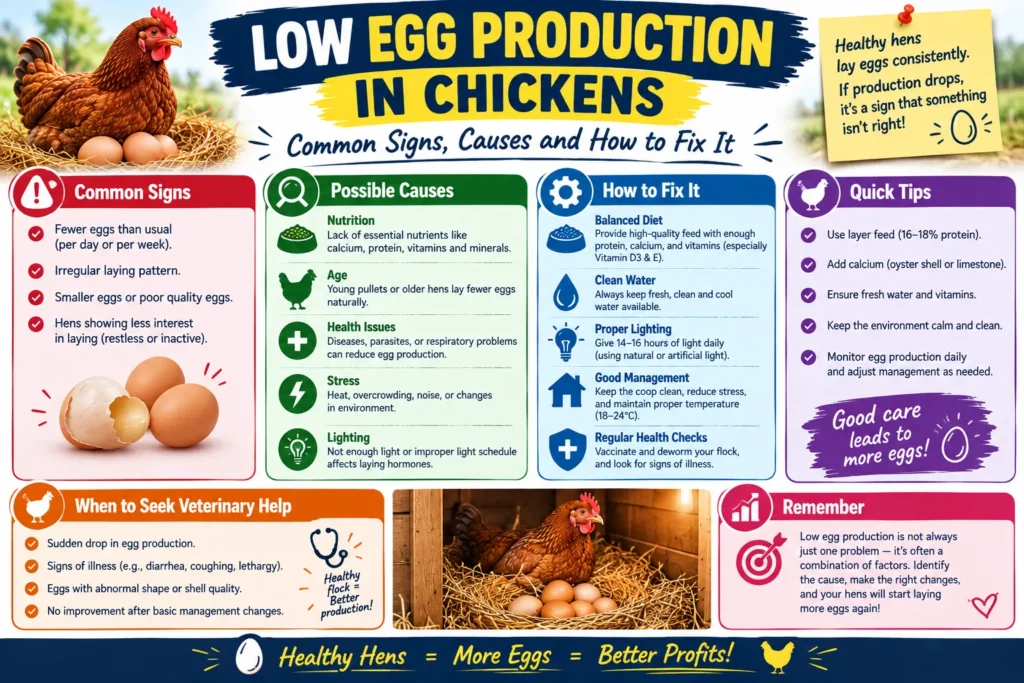
Low egg production in chickens means something different for every flock, which is exactly why so much advice on the topic falls flat. A flock of six aging heritage hens producing three eggs a day isn’t struggling; a flock of six one-year-old hybrids producing three eggs a day very well might be.
This guide takes a numbers-first approach instead of jumping straight to causes. You’ll learn how to calculate your flock’s actual lay rate, compare it to a realistic benchmark for your specific birds, and only then figure out whether declining egg production reflects a real problem or simply expected variation.
Quick Answer: Low egg production in chickens is best measured as a percentage: eggs collected divided by number of hens, per day. A lay rate above 70–80% is strong for young hybrid layers, 50–70% is reasonable for mixed or older flocks, and anything below 30–40% outside of molting or winter deserves a closer look at nutrition, stress, or health.
Table of Contents
Step 1: Calculate Your Flock’s Actual Lay Rate
The Simple Formula
Divide the number of eggs collected in a day by the number of hens old enough to lay, then multiply by 100 to get a percentage. Tracking this over a week or two, rather than judging a single day, gives a far more accurate picture of fewer chicken eggs than expected versus normal daily variation.
Example Calculation
| Hens of Laying Age | Eggs Collected (Weekly Average) | Lay Rate |
| 10 | 60 | 60/70 possible = 86% |
| 10 | 40 | 40/70 possible = 57% |
| 10 | 20 | 20/70 possible = 29% |
(Weekly possible total assumes roughly 7 eggs per hen per week at 100% daily laying, which real hens rarely sustain due to the natural laying cycle.)
Did You Know? Even at peak biological performance, most hens don’t lay a true 100% rate, since the natural 24-to-26-hour laying cycle includes built-in rest days. A “perfect” sustained rate for top hybrids realistically tops out closer to 85–90%, not 100%.
Step 2: Compare Against a Realistic Benchmark
Lay Rate Benchmarks by Flock Type
| Flock Type | Strong Lay Rate | Reasonable Lay Rate | Concerning Lay Rate |
| Young hybrid layers (Year 1–2) | 70–90% | 50–70% | Below 40% |
| Mixed dual-purpose flock | 60–75% | 40–60% | Below 25% |
| Heritage/older flock | 40–60% | 25–40% | Below 15% |
Why Benchmarks Must Match Your Flock
Comparing a mixed-age heritage flock against hybrid-layer benchmarks will make almost any flock look like it has declining egg production, even when everything is completely normal for those specific birds. Always benchmark against your flock’s actual composition, not a generic online average.
Read More: https://lashegg.com/how-to-increase-egg-production-in-chickens/
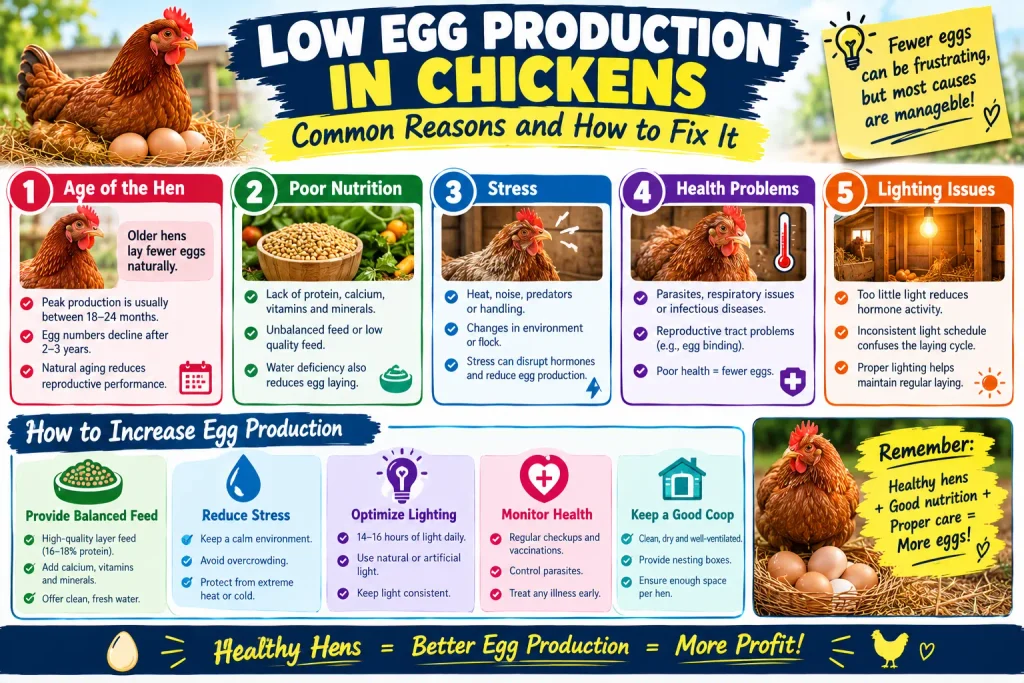
Step 3: Identify Whether the Decline Is Seasonal, Cyclical, or Real
Expected, Non-Concerning Dips
- Winter months with reduced natural daylight
- Active molting period across part or all of the flock
- A flock with several hens past their peak first two laying years
- Recent addition of young pullets not yet laying, temporarily lowering the flock-wide percentage
Declines Worth Investigating Further
- A drop that doesn’t match season, molting, or age composition
- A rate that falls well below the benchmark range for more than two to three weeks
- A decline paired with other symptoms like lethargy, weight loss, or abnormal droppings
| Pattern | Likely Explanation | Action |
| Seasonal, gradual decline | Daylight or weather | Monitor, consider supplemental light |
| Sudden, sharp decline | Stress, illness, or environmental change | Investigate promptly |
| Decline matching flock age | Normal aging curve | None needed |
| Decline after new birds added | Temporary dilution of flock average | Recalculate once new birds mature |
Common Root Causes Once You’ve Confirmed a Real Decline
Nutrition Gaps
Inadequate protein or calcium in the diet is one of the most common, and most fixable, causes of a lay rate sitting below benchmark. A complete layer feed with free-choice oyster shell addresses this in most cases within one to two weeks.
Environmental Stress
Overcrowding, predator pressure, or recent flock changes can suppress the flock-wide lay rate even when individual hens appear outwardly healthy.
Health Issues
Parasites, respiratory illness, and reproductive disease all reduce individual hens’ contribution to the overall rate, sometimes affecting multiple birds simultaneously if the cause is contagious.
Lighting Deficits
Flocks without supplemental light naturally show a lower percentage during shorter days, which is expected rather than a true health-based decline.
Step-by-Step: Investigating a Confirmed Low Lay Rate
- Recalculate over two full weeks. Rule out short-term variation before assuming a lasting problem.
- Check the calendar. Cross-reference the decline against season, molting timing, and each hen’s approximate age.
- Review recent changes. New birds, a coop move, or a diet change around the same time as the decline are strong clues.
- Inspect the flock physically. Check comb color, body condition, and vent area across several hens for signs of illness.
- Adjust one variable at a time. Correct lighting, then nutrition, then housing, tracking the lay rate after each change rather than adjusting everything simultaneously.
- Involve a vet if the rate stays low. A persistent, unexplained decline despite ruling out the usual factors warrants professional evaluation.
Expert Tip
Keep your lay rate calculation as an ongoing habit, not just something you check during a slump. A running record makes it far easier to spot a real, meaningful decline early, before low egg production in chickens turns into a much harder problem to diagnose retroactively.
Common Mistakes to Avoid
- Judging production from a single day’s egg count instead of a weekly average
- Comparing your flock against benchmarks meant for a completely different flock type
- Assuming any decline is automatically a health problem before checking season and age
- Overlooking the diluting effect of newly added, not-yet-laying pullets on the overall rate
- Changing multiple variables at once, making it impossible to know what actually helped
Warning
A sharp, sudden drop in lay rate across multiple hens at once, especially paired with lethargy, respiratory symptoms, or unusual droppings, can indicate a contagious illness moving through the flock. This pattern needs prompt veterinary attention rather than routine troubleshooting.
When to Call a Vet
Contact a poultry veterinarian if a properly calculated, benchmark-adjusted lay rate stays well below expected levels for more than two to three weeks despite correcting lighting, nutrition, and stress. A sudden, flock-wide drop paired with other symptoms, such as respiratory signs or lethargy, deserves prompt attention rather than continued at-home troubleshooting.
People Also Ask
What counts as low egg production in chickens? A lay rate below 40% for young hybrid layers, or below 25% for mixed or heritage flocks, outside of molting or winter, generally counts as low and worth investigating.
How do I know if declining egg production is just normal seasonal change? If the decline lines up with shorter daylight, an active molt, or an aging flock composition, it’s very likely normal rather than a true problem.
Why am I getting fewer chicken eggs after adding new pullets? New pullets added to the flock haven’t started laying yet, which temporarily lowers the overall flock lay rate until they mature into production.
Can stress alone cause low egg production in chickens? Yes, chronic stress from overcrowding, predator pressure, or flock disruption can meaningfully suppress the flock-wide lay rate even without any illness present.
How long should I wait before worrying about declining egg production? Give any single change, like a new light schedule or feed adjustment, one to three weeks to show results before assuming it isn’t working or the cause lies elsewhere.
Final Thoughts
Low egg production in chickens is often a math problem before it’s a health problem. Calculating an actual lay rate and comparing it to a benchmark that matches your specific flock’s age and breed composition frequently reveals that a perceived decline is completely normal.
Once a true decline is confirmed, work through lighting, nutrition, stress, and health in that order, and reach out to a poultry veterinarian if declining egg production persists well below benchmark despite addressing the usual factors.
5. FAQ
Q: What lay rate percentage counts as low egg production in chickens? A: Below roughly 40% for young hybrid layers or below 25% for mixed and heritage flocks, outside of seasonal factors, generally signals low production worth investigating.
Q: How is declining egg production different from a flock that was never very productive? A: Declining production refers to a drop from a previously higher, established rate, while a flock with naturally lower output, like heritage breeds, may simply be performing as expected for that type.
Q: Can weather alone explain fewer chicken eggs for weeks at a time? A: Yes, extended heat waves or cold snaps can suppress lay rate for as long as the weather event lasts, typically recovering once conditions moderate.
Q: Should I cull hens contributing to low egg production in chickens? A: That’s a personal decision based on your goals; many keepers keep lower-producing older hens for companionship rather than culling based on lay rate alone.
Q: Is a 100% lay rate realistic for any flock? A: No, even top-performing hybrid layers rarely sustain a true 100% rate due to the natural laying cycle’s built-in rest days, so expecting anything close to perfect daily output isn’t realistic.