Vitamins for Laying Hens: The Overlooked Nutritional Piece

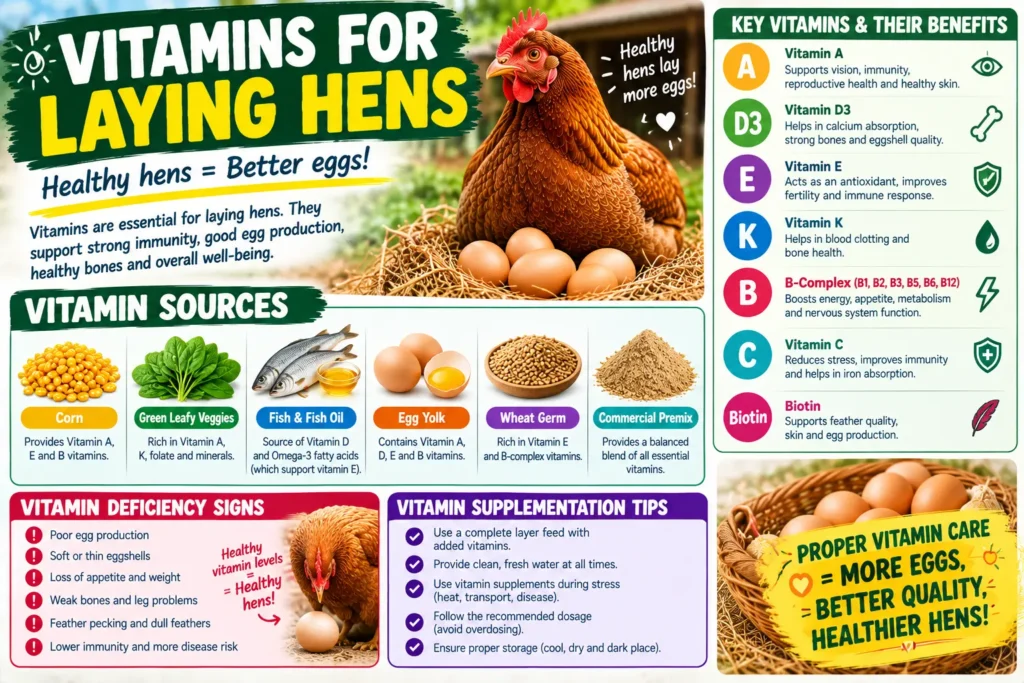
Vitamins for laying hens rarely get the same attention as protein or calcium, yet several of them are directly responsible for whether those other nutrients even get used properly. A hen can eat plenty of calcium and still develop weak shells if her vitamin D3 status is inadequate, which is exactly why this piece of the nutritional puzzle matters more than it might seem.
This guide covers the specific vitamins for egg production that matter most, what happens when they’re lacking, and how a complete layer feed typically covers these needs without requiring a cabinet full of separate chicken vitamins.
Quick Answer: The most important vitamins for laying hens are D3, A, E, and the B-complex vitamins, particularly riboflavin. A complete, properly stored layer feed generally provides adequate levels of all of these. Deficiency symptoms vary by vitamin but often include poor shell quality, reduced hatchability, weakness, or specific nerve and vision-related signs in more severe cases.
Table of Contents
Vitamin D3: The Calcium Partner
Why D3 Matters So Much
Vitamin D3 is required for a hen’s body to absorb and use dietary calcium effectively, which means adequate calcium intake alone isn’t enough without sufficient D3 alongside it. This is one of the most important vitamins for egg production specifically because of this direct calcium connection.
Sources of D3
- Fortification in complete layer feed
- Direct sunlight exposure, which allows hens to synthesize D3 naturally
- Limited natural food sources, making feed fortification especially important for hens with limited outdoor access
| Deficiency Sign | Likely Cause | Correction |
| Thin or soft shells despite adequate calcium | Low D3, poor absorption | Verify feed fortification, increase sunlight access |
| Weak leg bones | Chronic D3/calcium deficiency | Veterinary evaluation if severe |
Vitamin A: Vision, Immunity, and Reproduction
Its Role in Laying Hens
Vitamin A supports vision, immune function, and reproductive health, including egg formation. Deficiency can reduce egg production and hatchability in flocks raising chicks, alongside more general immune weakness.
Recognizing Deficiency
- Reduced egg production and shell quality
- Increased susceptibility to respiratory and other infections
- In severe cases, vision problems or swelling around the eyes
Did You Know? Vitamin A deficiency was historically one of the more common nutritional problems in poultry before modern fortified feeds became standard, which is part of why complete commercial layer feed represented such a major improvement in overall flock health outcomes.
Vitamin E and Selenium: The Partner Nutrients
Why These Are Often Discussed Together
Vitamin E and selenium work closely together in the body, supporting immune function, muscle health, and reproductive performance. A deficiency in one can worsen the effects of a deficiency in the other.
Read More: https://lashegg.com/protein-for-laying-hens/
Signs to Watch For
| Deficiency Sign | Nutrient Involved | Notes |
| Muscle weakness, poor coordination | Vitamin E/selenium | More common in chicks than adult layers |
| Reduced fertility/hatchability | Vitamin E | Relevant for flocks hatching eggs |
| General weakness | Selenium | Regional soil selenium levels can affect natural feed content |
B-Complex Vitamins: Riboflavin and Beyond
Riboflavin’s Specific Importance
Riboflavin, or vitamin B2, deficiency is particularly well documented in poultry, historically causing a distinctive curled-toe paralysis in chicks and reduced hatchability in breeding flocks. While less common with modern fortified feed, it remains one of the more recognizable chicken vitamins deficiencies in poultry health literature.
Other B Vitamins
Thiamine, niacin, and B12 all play supporting roles in metabolism and nerve function, with deficiencies generally rare in flocks fed a complete, properly stored layer feed.
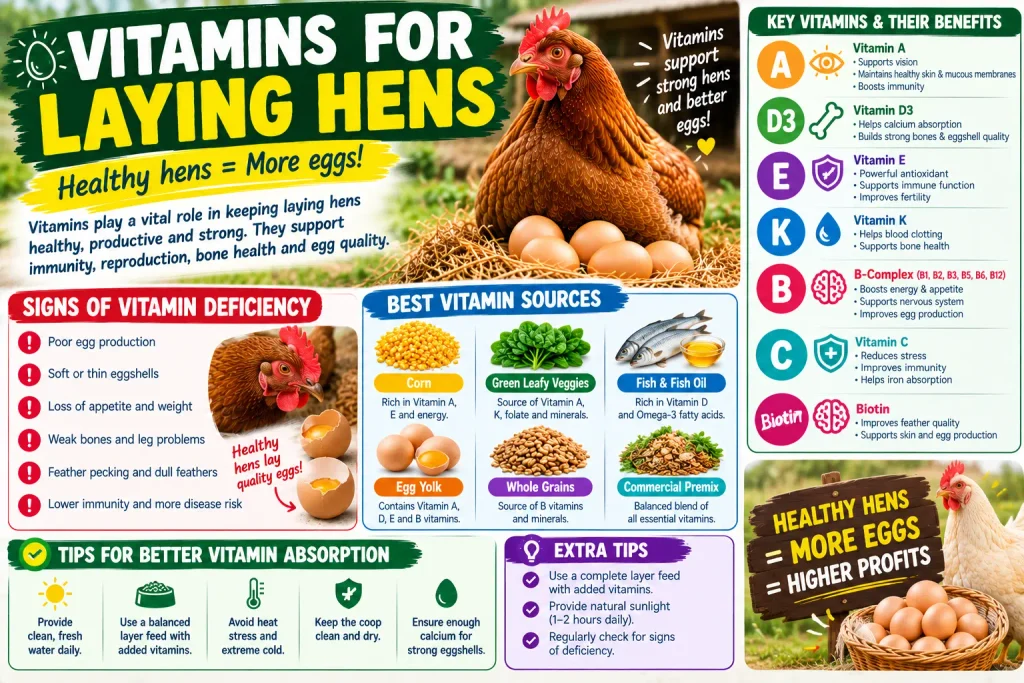
| B Vitamin | Role | Deficiency Sign |
| Riboflavin (B2) | Nerve function, growth | Curled-toe paralysis (mainly in chicks) |
| Thiamine (B1) | Nerve function, appetite | Loss of appetite, weakness |
| Niacin (B3) | Skin and leg health | Leg weakness, poor growth |
Do Laying Hens Need Vitamin Supplements Beyond Feed?
When a Complete Feed Is Enough
A fresh, properly stored, complete layer feed generally provides adequate levels of all major vitamins for laying hens under normal conditions. Most healthy backyard flocks eating a consistent, quality diet don’t require additional vitamin supplementation.
When Additional Support Might Help
- During and after illness or a significant stress event
- In flocks with limited outdoor access and sunlight exposure, relevant specifically to D3
- During extreme heat, when overall feed intake drops and nutrient intake follows
- When feed has been stored improperly or for an extended period, since vitamin potency degrades over time
| Situation | Supplement Consideration |
| Healthy flock, fresh complete feed | Generally unnecessary |
| Recent illness or stress | Temporary poultry vitamin/electrolyte supplement often helpful |
| Limited sunlight exposure | Confirm D3 fortification, consider supplementation |
| Old or improperly stored feed | Replace feed rather than relying on added supplements |
Expert Tip
Check the manufacture date on feed bags rather than assuming freshness based on purchase date alone. Vitamin potency in stored feed declines gradually over time, meaning older feed may technically list adequate vitamin content on the label while no longer delivering that full potency.
Recognizing and Addressing Vitamin Deficiencies
Step-by-Step: Investigating Suspected Deficiency
- Review feed freshness and storage. Confirm feed hasn’t been stored too long or exposed to heat, moisture, or sunlight, all of which degrade vitamin content.
- Check for adequate D3 given sunlight access. Flocks with very limited outdoor time may need extra attention to this specific vitamin.
- Observe for specific deficiency patterns. Match observed symptoms against the vitamin-specific signs covered above rather than assuming a generic cause.
- Consider a temporary poultry vitamin supplement during recovery periods. This can support a flock recovering from illness, stress, or a recent feed quality issue.
- Involve a vet for unclear or severe cases. Some deficiency symptoms overlap with other health issues and benefit from professional evaluation.
Common Mistakes to Avoid
- Assuming a flock needs vitamin supplements without evidence of an actual deficiency
- Using old, improperly stored feed and expecting full vitamin potency
- Confusing general lethargy or weakness with a specific vitamin deficiency without other supporting signs
- Over-supplementing vitamins without addressing an underlying feed quality or storage issue
- Ignoring sunlight access as a factor in vitamin D3 status
Warning
Some vitamins, including vitamin A and D3, can cause toxicity when significantly over-supplemented, unlike water-soluble B vitamins which are more easily excreted. Avoid stacking multiple supplement products without understanding their combined vitamin content, particularly for fat-soluble vitamins.
When to Call a Vet
Contact a poultry veterinarian if you notice specific neurological signs like curled toes or poor coordination, vision problems, or persistent weakness that doesn’t improve with feed quality correction. These symptoms can overlap with several conditions beyond simple vitamin deficiency, making professional diagnosis valuable rather than guessing at supplementation.
People Also Ask
Do laying hens need extra vitamins beyond their regular feed? Most healthy flocks eating a fresh, complete layer feed don’t need additional vitamins, though temporary supplementation can help during illness, stress, or extreme heat.
What vitamins for egg production matter most? Vitamin D3, essential for calcium absorption and shell quality, along with vitamin A and E, play some of the most direct roles in supporting consistent, healthy egg production.
Can a vitamin deficiency cause a hen to stop laying? Yes, deficiencies in key vitamins like A, D3, or E can reduce egg production and quality, particularly when combined with other nutritional gaps.
Are chicken vitamins in water necessary during hot weather? Many keepers use a poultry electrolyte and vitamin supplement in water during heat waves, since reduced feed intake during extreme heat can lower overall nutrient consumption.
How can I tell if my flock has a vitamin deficiency versus another health issue? Specific patterns, like curled-toe paralysis in chicks or shell quality issues despite adequate calcium, point toward particular vitamin deficiencies, though a vet can help rule out overlapping causes.
Final Thoughts
Vitamins for laying hens work quietly behind the scenes, often determining whether other nutrients like calcium actually get absorbed and used effectively. A fresh, complete layer feed covers most flocks’ needs without requiring additional chicken vitamins under normal, healthy conditions.
Watch feed freshness, sunlight access, and flock health as your main indicators, and reach out to a poultry veterinarian if deficiency-like symptoms appear despite what looks like an adequate, well-stored diet.
5. FAQ
Q: What are the most important vitamins for laying hens? A: Vitamin D3, A, E, and the B-complex vitamins, particularly riboflavin, are generally considered the most important for supporting consistent, healthy egg production.
Q: Can I give my chickens human vitamin supplements? A: It’s best to use products specifically formulated for poultry, since dosing and ingredient ratios in human supplements aren’t designed for a chicken’s specific nutritional needs.
Q: How do I know if my flock’s vitamins for egg production are adequate? A: A fresh, properly stored, complete layer feed from a reputable manufacturer generally provides adequate levels for most healthy backyard flocks under normal conditions.
Q: Does sunlight really affect chicken vitamins like D3? A: Yes, direct sunlight exposure allows hens to synthesize vitamin D3 naturally, which is particularly relevant for flocks with limited outdoor access relying more heavily on feed fortification.
Q: Can too many vitamins harm my chickens? A: Yes, particularly fat-soluble vitamins like A and D3, which can reach toxic levels when significantly over-supplemented, unlike water-soluble vitamins that are more easily excreted.