Supplements for Laying Hens: What’s Actually Worth Adding

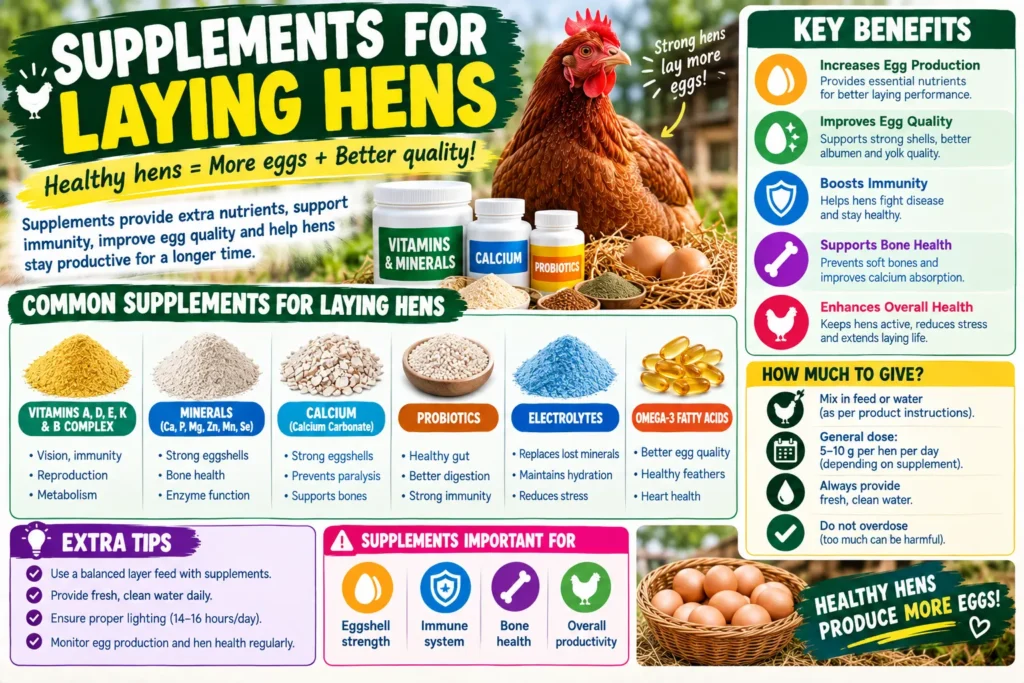
Supplements for laying hens cover a lot of ground, and it’s easy to end up with a shelf full of products that mostly duplicate what a complete layer feed already provides. Calcium, protein, and core vitamins deserve their own detailed discussion elsewhere; this guide focuses specifically on the additional chicken supplements many keepers consider once the basics are already covered.
This piece walks through probiotics, electrolytes, and natural additives like apple cider vinegar and kelp, what the evidence actually supports for each, and how to tell a genuinely useful addition from marketing built around a healthy flock that didn’t need it in the first place.
Quick Answer: Beyond a complete layer feed, the supplements for laying hens worth considering situationally include electrolytes during heat stress or illness recovery, probiotics after antibiotic treatment or during stressful transitions, and occasional natural additives like kelp for trace minerals. None of these replace a properly balanced diet, and most healthy flocks don’t need them as a daily routine.
Table of Contents
Probiotics for Chickens
What They’re Meant to Do
Probiotics introduce beneficial bacteria intended to support gut health and digestion, similar to their intended role in other animals and humans. In poultry, they’re most commonly used to help restore gut balance after antibiotic treatment or during stressful periods like transport or flock introductions.
When Probiotics Make Sense
- Following a course of antibiotics, when normal gut bacteria may need support to recover
- During and after a stressful event, such as a move, predator scare, or new flock introduction
- For chicks during their first few days, when some keepers use probiotics to support gut development
| Situation | Probiotic Use Reasonable? | Notes |
| Healthy flock, stable routine | Not necessary | Complete feed already supports gut health |
| Recent antibiotic treatment | Often recommended | Helps restore normal gut bacteria |
| High-stress event | Reasonable | Short-term use during the stressful period |
| Ongoing daily use, healthy flock | Limited additional benefit | Not typically necessary long-term |
Electrolyte Supplements
Why They’re Different From Everyday Nutrition
Electrolyte supplements for egg production support hydration and mineral balance specifically during periods of stress, heat, or illness, rather than serving as an everyday nutritional addition. They’re most valuable exactly when a hen’s normal intake and balance are disrupted.
When to Reach for Electrolytes
- During heat waves. Heavy panting increases fluid and mineral loss, making electrolyte-supplemented water genuinely helpful.
- After illness or during recovery. Hens recovering from sickness often benefit from the extra hydration and mineral support.
- During transport or a stressful move. Short-term use around a known stressful event can support faster recovery afterward.
- Not as a permanent daily addition. Continuous, unnecessary electrolyte use isn’t harmful in most cases, but it also isn’t providing ongoing benefit for a healthy, stable flock.
Did You Know? Electrolyte supplements for egg production are essentially the poultry equivalent of a human sports drink, useful during genuine physical stress but unnecessary as a daily beverage replacement for an otherwise healthy individual.
Natural and Herbal Additives
Apple Cider Vinegar
Apple cider vinegar is one of the most commonly discussed natural chicken supplements, often added to water in small amounts. While anecdotal keeper experience suggests some digestive and general wellness benefits, rigorous scientific evidence specifically confirming these effects in poultry remains limited.
Kelp and Seaweed Meal
Kelp meal provides trace minerals, including iodine, that may be under-supplied in some standard feed formulations. Many keepers add small amounts as an occasional trace mineral boost rather than a core dietary component.
Garlic and Other Herbs
Garlic, oregano, and various herbal blends are marketed for general immune support in poultry. As with apple cider vinegar, keeper anecdotes are common, but robust, poultry-specific research supporting strong health claims is limited.
Read More : https://lashegg.com/vitamins-for-laying-hens/
| Additive | Claimed Benefit | Evidence Level |
| Apple cider vinegar | Digestive support, general wellness | Anecdotal, limited formal research |
| Kelp/seaweed meal | Trace minerals, particularly iodine | Reasonable basis for trace mineral content |
| Garlic/herbal blends | Immune support | Anecdotal, limited formal research |
A Reasonable Approach to Natural Additives
Using small amounts of these additives occasionally is unlikely to cause harm in a healthy flock, but they shouldn’t be relied upon as a substitute for addressing an actual nutritional gap or health issue with more established solutions.
Supplements That Overlap With Core Nutrition
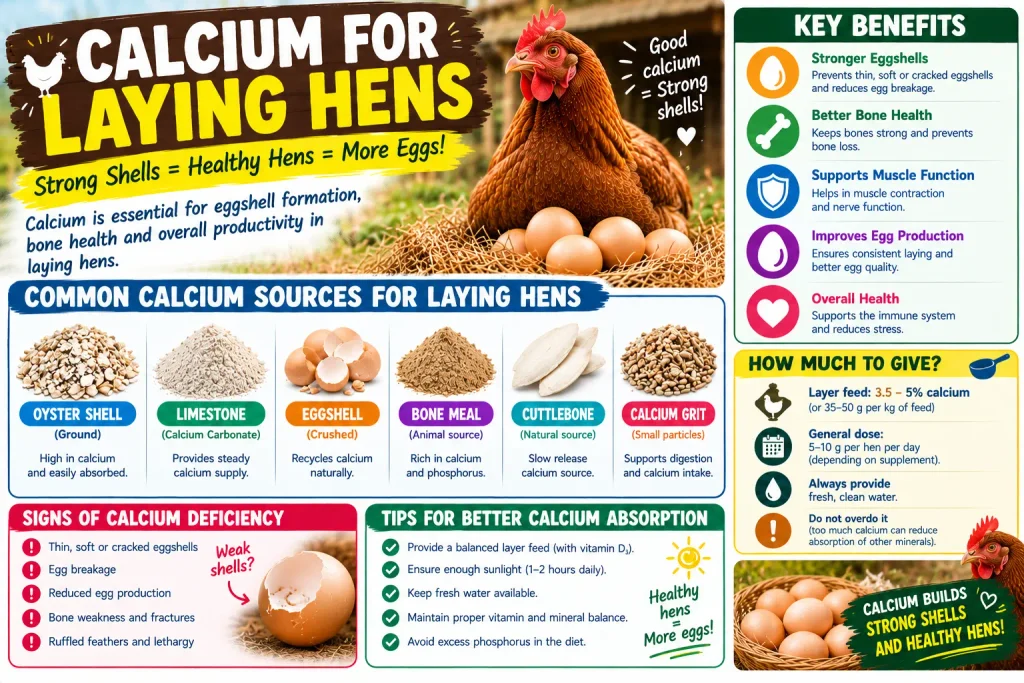
Calcium, protein, and vitamin needs are significant enough topics that they deserve dedicated coverage rather than a brief summary here. If you’re wondering whether your flock needs additional calcium, protein, or specific vitamins, those questions are covered in depth in the linked guides below, including how much is actually needed and the best sources for each.
| Core Nutrient | Where It’s Covered |
| Calcium | Dedicated requirements and deficiency guides |
| Protein | Dedicated requirements guide |
| Vitamins (D3, A, E, B-complex) | Dedicated vitamins guide |
How to Decide What Your Flock Actually Needs
Step-by-Step: A Reasonable Supplement Approach
- Start with a complete, quality layer feed. This should be the foundation before considering any additional chicken supplements.
- Identify a specific situation or gap. Heat stress, recent illness, or a known trace mineral question are legitimate reasons to consider a targeted supplement.
- Choose a supplement matched to that specific need. Electrolytes for heat or illness, probiotics for gut recovery, kelp for trace minerals, rather than a blanket “everything” approach.
- Use supplements situationally rather than continuously. Most of these products are designed for temporary use during a specific need, not permanent daily addition.
- Watch for actual results. Improved recovery time, better hydration signs, or resolved digestive issues indicate the supplement is serving its purpose.
Expert Tip
Before buying a new supplement, ask what specific problem it’s meant to solve for your flock right now. If the honest answer is “nothing in particular, it just seemed like a good idea,” that’s usually a sign the money is better spent on a higher-quality base feed instead.
Common Mistakes to Avoid
- Assuming more supplements automatically means a healthier flock
- Using electrolytes or probiotics continuously rather than during actual periods of need
- Relying on natural additives like garlic or apple cider vinegar to treat an actual illness rather than supporting genuine veterinary care
- Overlooking a poor-quality base feed while focusing energy on supplements instead
- Combining multiple products without checking for overlapping ingredients or excessive doses of the same nutrient
Warning
Supplements are not a substitute for veterinary care when a hen is genuinely sick. Natural additives and general wellness products may support a healthy flock’s routine, but relying on them instead of appropriate treatment for illness, parasites, or injury can allow a real problem to worsen.
When to Call a Vet
Contact a poultry veterinarian if a hen shows signs of illness that supplements alone haven’t resolved, or if you’re unsure whether a symptom reflects a nutritional gap versus a health condition needing actual treatment. A vet can help distinguish between a situation where supplements for laying hens are genuinely useful and one that requires medical care instead.
People Also Ask
Do healthy laying hens need supplements beyond their feed? Most healthy flocks eating a complete, quality layer feed don’t need regular chicken supplements, though situational use during stress, heat, or recovery can be helpful.
Are probiotics worth giving to chickens regularly? Probiotics are most useful after antibiotic treatment or during specific stressful events rather than as a continuous daily addition for an otherwise healthy flock.
Can supplements for egg production actually increase how many eggs a hen lays? Supplements can help correct a genuine deficiency affecting production, but they won’t push a healthy, well-fed hen beyond her natural genetic potential.
Is apple cider vinegar safe for chickens? Small amounts added occasionally to water are generally considered safe, though scientific evidence for specific health benefits in poultry remains limited compared to anecdotal keeper experience.
What’s the difference between electrolytes and regular vitamins for chickens? Electrolytes address short-term hydration and mineral balance during stress or illness, while vitamins support ongoing metabolic and physiological functions as part of the regular diet.
Final Thoughts
Supplements for laying hens work best as targeted tools for specific situations, not as a blanket addition to an already well-fed, healthy flock. Electrolytes, probiotics, and natural additives like kelp each have a reasonable place when matched to an actual need, while core nutrients like calcium, protein, and vitamins deserve their own dedicated attention.
Match any supplement to a genuine situation rather than a general sense that more is better, and reach out to a poultry veterinarian whenever a symptom suggests illness rather than a simple nutritional gap that supplements alone can address.
5. FAQ
Q: What are the most useful supplements for laying hens during summer? A: Electrolyte supplements are particularly useful during hot weather, helping replace fluids and minerals lost through heavy panting and reduced feed intake.
Q: Do chicken supplements expire or lose effectiveness over time? A: Yes, like feed, most supplements have a shelf life and can lose potency if stored too long or improperly, so checking expiration dates matters.
Q: Can I combine multiple supplements for egg production at once? A: It’s generally fine to use targeted supplements for different specific needs, but avoid stacking multiple products with overlapping ingredients, which can lead to unintentional over-supplementation.
Q: Are natural chicken supplements like garlic actually effective? A: Keeper anecdotes are common, but rigorous scientific evidence in poultry specifically remains limited, so these are reasonable as general wellness additions rather than treatments for actual illness.
Q: Should new keepers start with supplements right away? A: No, a complete, quality layer feed should always come first; supplements are best introduced later, matched to specific situations rather than as an automatic starting routine.