Anti-Inflammatory Treatment for Chickens: A Vet-Backed Guide

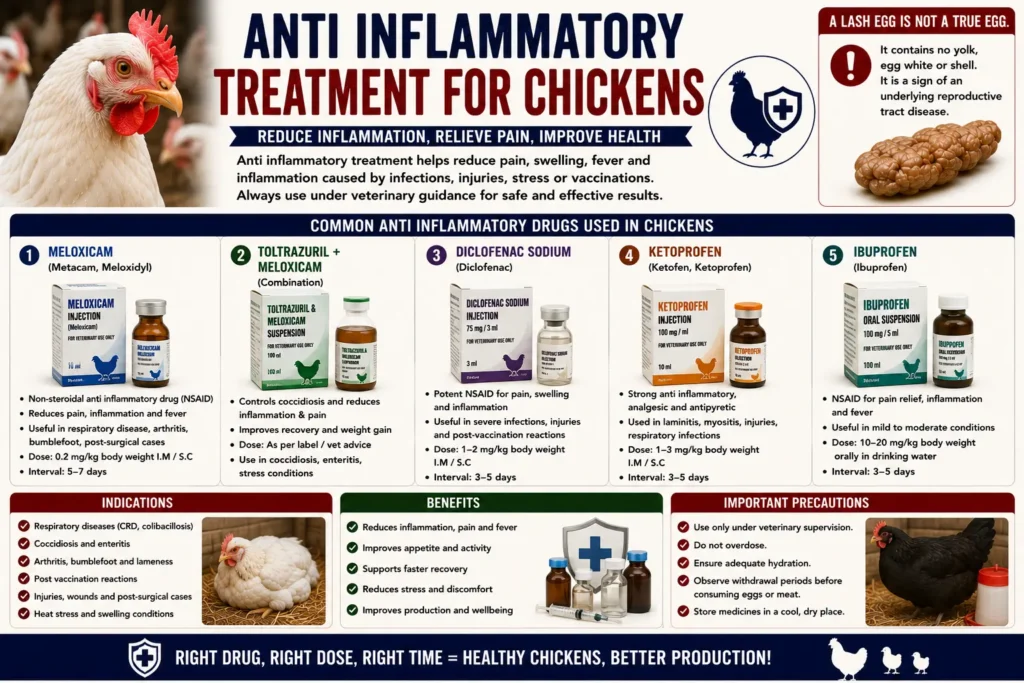
A limping hen, a swollen joint, or a bird that just won’t stand normally usually sends keepers straight to searching for anti-inflammatory treatment for chickens. It’s a fair instinct — pain and swelling are uncomfortable, and chickens can’t tell you where it hurts. But not every anti-inflammatory drug is safe for birds, and getting this wrong can do real harm. This guide covers what’s actually used, what to avoid, and how pain relief fits into a full recovery plan.
Table of Contents
What Counts as Anti-Inflammatory Treatment for Chickens?
Quick Answer: Anti-inflammatory treatment for chickens usually means a veterinarian-prescribed NSAID, most commonly meloxicam, used to reduce pain and swelling from injury, arthritis, or post-surgical recovery. Some common human and mammal anti-inflammatories, including ibuprofen and naproxen, are considered unsafe for birds and should never be given without veterinary guidance.
Chickens process drugs differently than mammals do. A medication that’s perfectly safe for a dog can be toxic to a bird, even at what looks like a small dose. That single fact is the reason this topic needs more caution than most home-care questions.
Pain relief matters for welfare, not just comfort. Untreated pain slows healing, suppresses appetite, and adds stress that can make an existing illness or injury worse.
Read More: https://lashegg.com/supportive-care-for-sick-hens/
Why Chickens Need Pain Relief Too
Birds are prey animals, and they’re built to hide pain and weakness. A hen limping openly, refusing to put weight on a leg, or sitting hunched with fluffed feathers is often experiencing more discomfort than her behavior first suggests.
Common Reasons Chickens Need Anti-Inflammatory Treatment
- Bumblefoot — bacterial infection and swelling in the footpad
- Leg or wing injuries — sprains, fractures, or soft tissue trauma
- Arthritis — more common in older or heavier breeds
- Post-surgical recovery — after procedures like spay/neuter or mass removal
- Reproductive conditions — such as egg binding or salpingitis, where inflammation contributes to pain
- Respiratory or systemic infections — where inflammation adds to overall discomfort
Signs a Hen May Be in Pain
| Sign | What It Often Means |
| Limping or reluctance to walk | Leg, foot, or joint pain |
| Hunched posture, fluffed feathers | General pain or illness |
| Reduced appetite | Pain, nausea, or systemic illness |
| Aggression or unusual vocalizing when touched | Localized pain on handling |
| Reluctance to perch or stand | Joint, foot, or leg discomfort |
| Isolating from the flock | Pain, weakness, or being targeted for being sick |
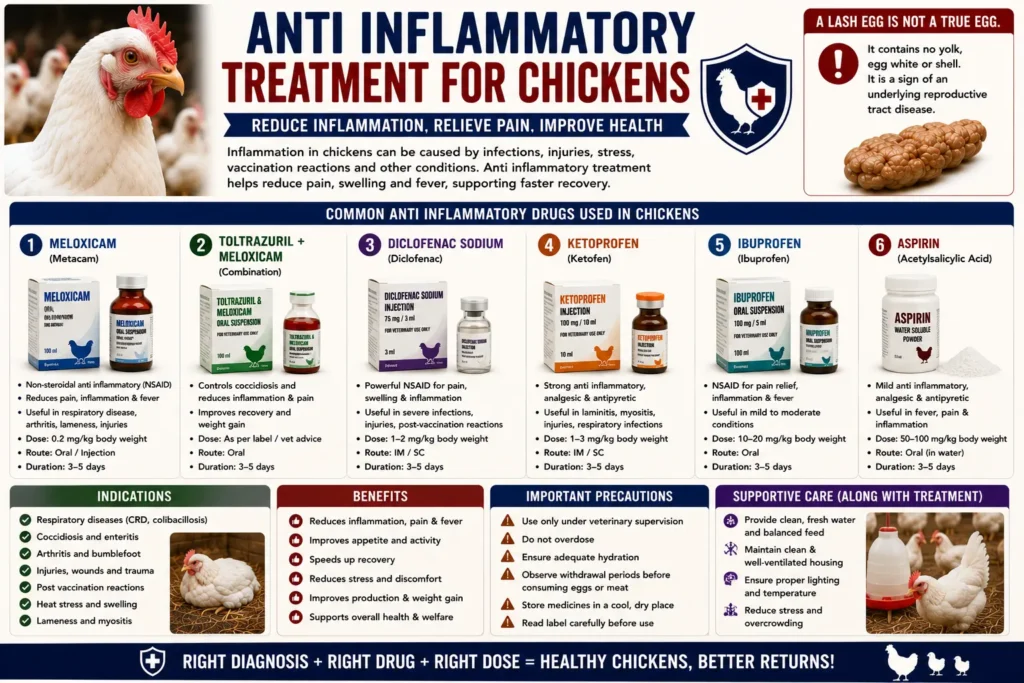
Common Anti-Inflammatory Drugs Used in Poultry
Meloxicam: The Most Common NSAID for Chickens
Meloxicam is the anti-inflammatory most frequently used by avian and exotic vets for chickens. It’s part of the NSAID (non-steroidal anti-inflammatory drug) class and works by reducing the chemical signals that cause pain and swelling.
- Used for injuries, arthritis, and post-surgical pain
- Prescription-only in most countries
- Dosing is calculated by body weight and condition, and must come from a vet
- Not approved for long-term, unsupervised use without monitoring
Other Anti-Inflammatory Options
| Drug Type | Example | Notes |
| NSAIDs | Meloxicam, carprofen | Prescription-only; dosed by weight and condition |
| Corticosteroids | Dexamethasone | Used short-term for severe inflammation; vet-supervised only |
| Topical anti-inflammatories | Vet-approved wound gels | Used for localized swelling, such as bumblefoot |
Warning: Never give a chicken ibuprofen, naproxen, or aspirin without direct veterinary guidance. These drugs are processed very differently by birds than by mammals, and some poultry research and clinical case reports have linked NSAID misuse to kidney damage and gastrointestinal ulcers in birds. Dosing that seems safe for a mammal of similar size is not automatically safe for a chicken.
Why Dosing Anti-Inflammatory Treatment for Chickens Is Different
Birds have a faster metabolism and different kidney function than mammals, which changes how drugs are absorbed, processed, and cleared from the body. This is why anti-inflammatory treatment for chickens always needs weight-based, species-specific dosing from a vet, not a scaled-down human or dog dose.
Anti-Inflammatory Treatment vs. General Pain Relief
| Anti-Inflammatory Treatment | General Pain Relief | |
| What it targets | Swelling, inflammation, and the pain it causes | Pain signals broadly, with or without inflammation |
| Examples | Meloxicam, corticosteroids | NSAIDs, opioid-class drugs used off-label in some avian cases |
| Typical use | Injury, arthritis, post-surgical swelling | Any painful condition, inflammatory or not |
| Prescription required | Yes, in most regions | Yes, for effective and safe options |
| Home-safe options | None reliably proven | Comfort measures only (warmth, rest, soft bedding) |
Pain relief and anti-inflammatory treatment overlap significantly in chickens, since most effective avian pain medications also reduce inflammation.
Supportive Care Alongside Anti-Inflammatory Treatment
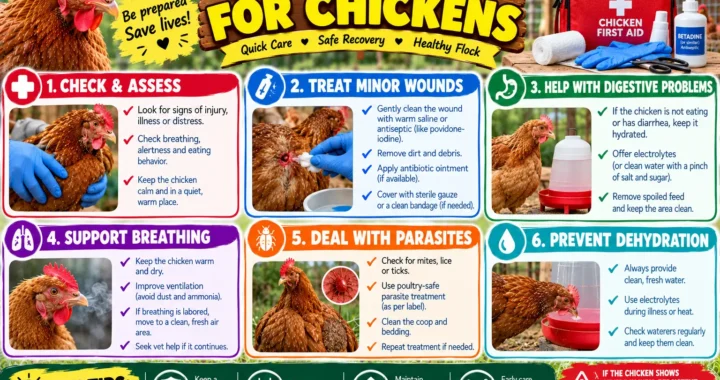
Medication works better when paired with basic comfort care.
- Provide soft, low bedding to reduce pressure on sore feet or joints
- Lower perches or remove them temporarily for birds with leg or foot pain
- Keep her isolated from flockmates that might peck at an injured area
- Offer easy access to food and water so she doesn’t need to strain to reach them
- Monitor weight and appetite daily to track whether pain relief is actually working
Expert Tip: A hen that starts eating, standing, and moving more normally within a day or two of starting anti-inflammatory treatment is a good sign it’s working. No change after several days is a reason to call the vet back, not to increase the dose yourself.
Did You Know?
Chickens have been shown in avian veterinary literature to display fewer obvious pain behaviors than mammals do, even when experiencing similar tissue damage. This is part of why vets increasingly recommend proactive pain management after injuries or surgery, rather than waiting for obvious distress signals.
Common Mistakes With Anti-Inflammatory Treatment for Chickens
- Using human NSAIDs like ibuprofen without any veterinary guidance
- Guessing the dose based on the bird’s size instead of getting a vet-calculated amount
- Stopping treatment early once the hen seems more comfortable
- Ignoring the underlying cause, treating pain without addressing what’s causing it
- Combining multiple anti-inflammatories without veterinary approval, which raises the risk of side effects
When to Call a Vet
- A hen is limping, non-weight-bearing, or reluctant to move at all
- Swelling appears suddenly or is spreading
- She stops eating or drinking due to apparent pain
- You suspect a fracture, dislocation, or deep wound
- Pain or swelling persists more than a day or two without improvement
- You’re unsure whether a condition, like bumblefoot or a reproductive issue, needs anti-inflammatory treatment, antibiotics, or both
Only a vet can properly diagnose the cause of pain and prescribe anti-inflammatory treatment for chickens at a safe, effective dose.
Recovery Timelines With Anti-Inflammatory Treatment
| Condition | Typical Recovery With Treatment |
| Mild sprain or soft tissue injury | Days to about two weeks |
| Bumblefoot (early stage) | One to several weeks, depending on severity |
| Arthritis | Ongoing management rather than a cure |
| Post-surgical inflammation | Days to a couple of weeks, per vet guidance |
Recovery speed depends heavily on the underlying cause, the hen’s age, and how quickly treatment started.
Preventing Pain and Inflammation in Your Flock
- Keep perches at a reasonable height to reduce jump-related injuries
- Provide soft bedding and clean, dry flooring to prevent bumblefoot
- Manage body weight, since excess weight increases joint strain
- Inspect feet and legs regularly, especially in older or heavier birds
- Address minor injuries early, before they progress to infection or chronic pain
Final Thoughts
Anti-inflammatory treatment for chickens plays a real role in easing pain, supporting healing, and improving quality of life, but it needs to be handled carefully. The wrong drug, or the wrong dose, can cause more harm than the original injury. Watch your flock for early signs of discomfort, provide comfort care where you safely can, and bring in a vet for proper diagnosis and pain relief whenever something looks off. That combination gives your hen the safest path back to normal.
FAQ
What is the safest anti-inflammatory for chickens? Meloxicam, prescribed and dosed by a veterinarian, is the most commonly used anti-inflammatory treatment for chickens. Safety depends heavily on correct, weight-based dosing rather than the drug alone.
Can I give my chicken ibuprofen for pain relief? No. Ibuprofen and similar human NSAIDs are not considered safe for chickens and have been associated with kidney and gastrointestinal damage in birds. Any pain relief should come from a veterinarian.
How do I know if my chicken is in pain? Look for limping, hunched posture, reduced appetite, reluctance to move or perch, and isolation from the flock. Chickens hide pain well, so subtle changes in behavior often matter more than obvious distress.
Is anti-inflammatory treatment the same as antibiotics for chickens? No. Anti-inflammatory treatment reduces pain and swelling, while antibiotics target bacterial infection. Some conditions, like bumblefoot, may need both together.
How long does it take for anti-inflammatory treatment to work in chickens? Many hens show improved comfort, appetite, and movement within one to two days of starting a properly dosed anti-inflammatory. No improvement after several days should prompt a follow-up with the vet.
Can I use topical anti-inflammatory products on a chicken? Some vet-approved topical products are used for localized swelling, such as with bumblefoot, but they should be selected and directed by a veterinarian rather than chosen based on human or general pet products.
Is pain relief necessary after chicken surgery? Yes. Post-surgical pain relief, typically an anti-inflammatory like meloxicam, is considered standard supportive care in avian veterinary practice to support comfort and recovery.