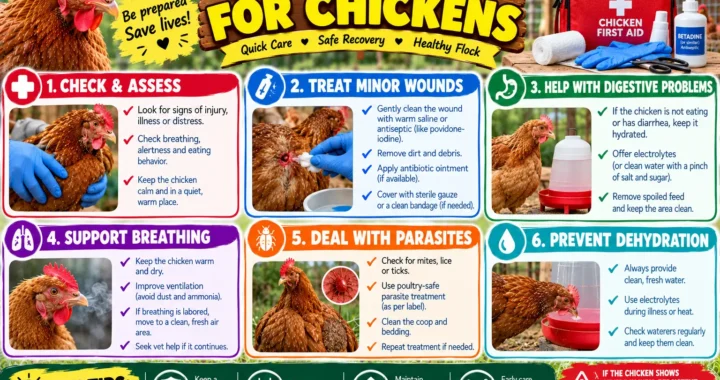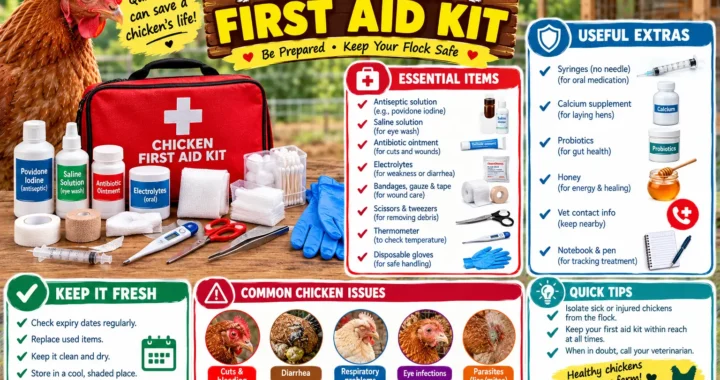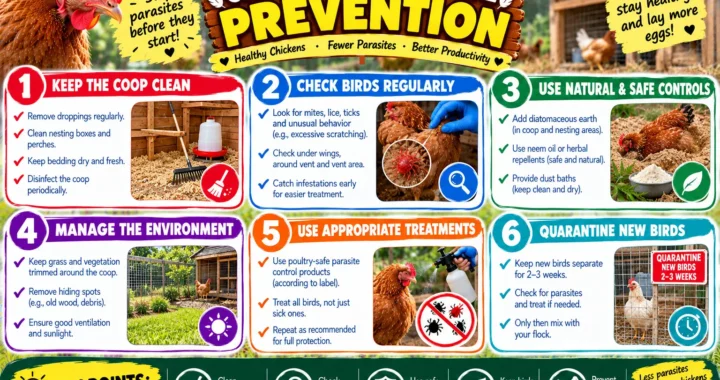
Coccidiosis Symptoms in Chickens: What to Look For First

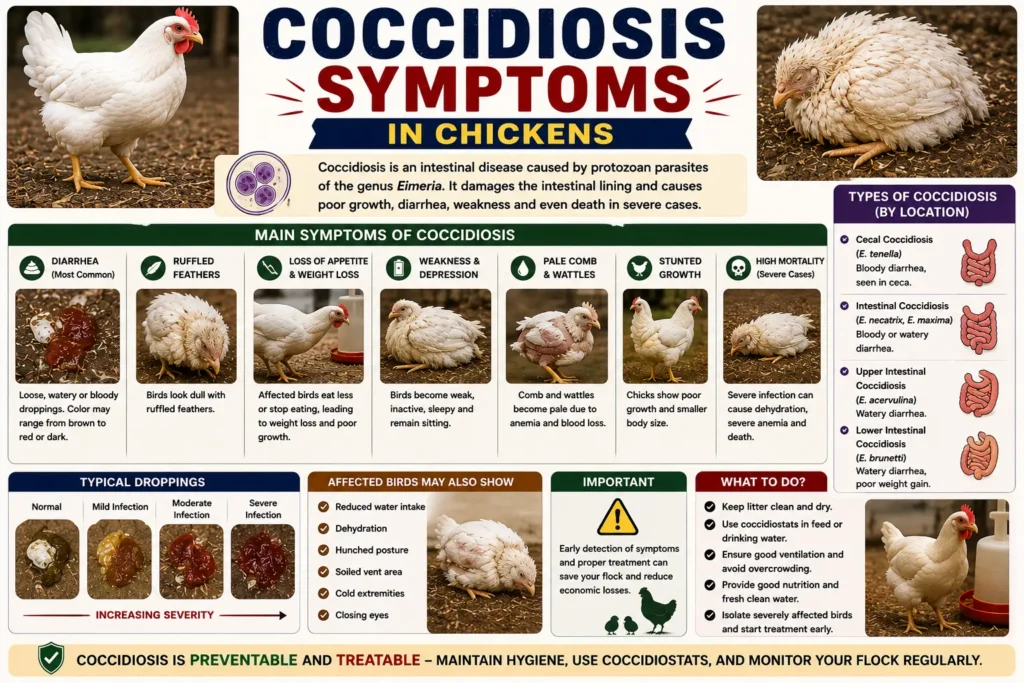
Quick Answer: The earliest coccidiosis symptoms in chickens are usually subtle: a slightly hunched posture, reduced appetite, and droppings that look a bit watery or off-color. As the infection progresses, symptoms can escalate to bloody droppings, pale combs, and severe lethargy within just a day or two. Catching the early signs is what makes the difference between a quick recovery and a serious outbreak.
If a chick in your brooder suddenly seems “off,” quiet, fluffed up, not eating like usual, coccidiosis is one of the first things worth ruling out. It’s one of the most common causes of illness in young backyard flocks, and it can go from mild to life-threatening in under 48 hours.
This guide breaks down every symptom stage, from the first subtle signs to full-blown outbreak symptoms, plus how to tell coccidiosis apart from other common chick illnesses. We’ll also cover what to do the moment you spot a red flag.
Table of Contents
Why Symptoms Matter More Than You’d Think
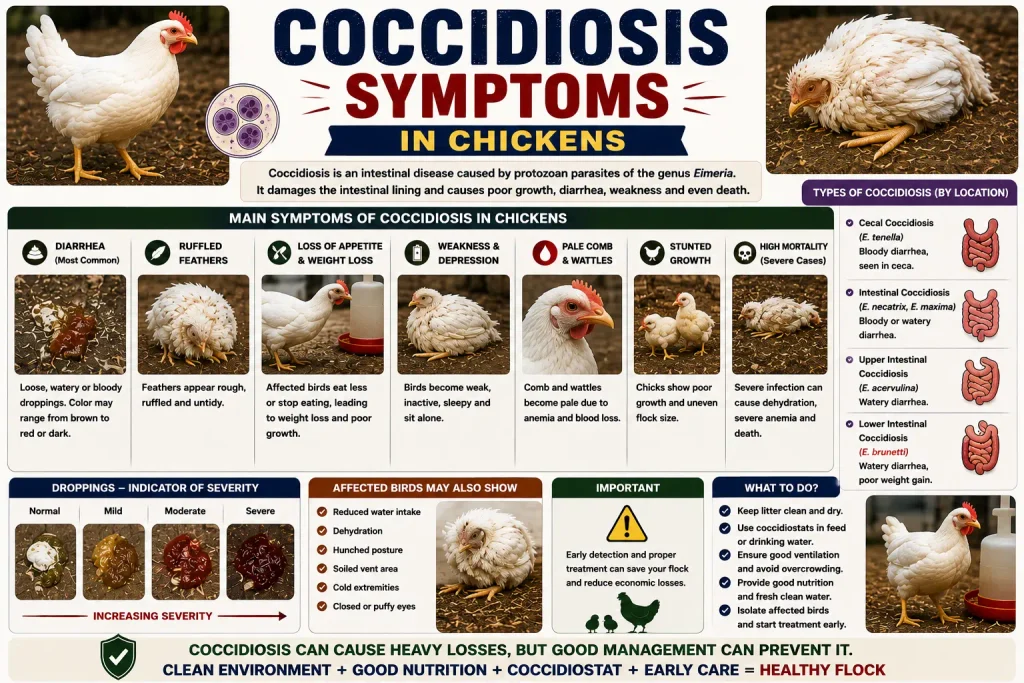
Coccidiosis is caused by Eimeria parasites that damage the intestinal lining as they multiply. The severity of symptoms depends on which Eimeria species is involved, how heavy the parasite load is, and the bird’s age and immune status.
This is why coccidiosis symptoms in chickens don’t always look the same. A chick infected with Eimeria tenella often shows dramatic bloody droppings, while other species cause quieter, harder-to-spot symptoms like poor growth and mild diarrhea.
Read More: https://lashegg.com/coccidiosis-in-chickens/
Early-Stage Coccidiosis Symptoms
Catching symptoms at this stage gives you the best shot at fast, simple treatment.
- Slightly reduced appetite
- Mild, occasional loose droppings
- Slower movement or less interest in normal activity
- Slightly ruffled feathers
- Mild huddling near the heat source, even when warm enough
Did You Know? Many early coccidiosis symptoms in chickens overlap with normal tired behavior after a busy day, which is exactly why regular flock checks matter more than reacting only when something looks dramatically wrong.
Moderate Coccidiosis Symptoms
At this stage, the infection is clearly affecting the bird’s gut and energy levels.
- Watery, mucus-like diarrhea
- Noticeably reduced appetite or refusal to eat
- Pale comb and wattles
- Visible weight loss over a few days
- Reduced egg production in laying hens
- Increased huddling and lethargy
Severe Coccidiosis Symptoms
Severe symptoms signal a medical emergency for the bird and need immediate action.
- Blood visible in the droppings
- Extreme lethargy or a bird that won’t stand
- Cold to the touch, especially the feet
- Labored or open-mouth breathing
- Sudden collapse
- Death, in advanced untreated cases
Warning: If you see blood in the droppings combined with a bird that won’t move or eat, treat this as an emergency. Isolate the bird, start supportive care immediately, and contact a vet the same day if possible.
Coccidiosis Symptom Progression Table
| Stage | Droppings | Behavior | Appetite | Urgency |
| Early | Slightly loose | Mildly quiet | Slightly reduced | Monitor closely |
| Moderate | Watery, mucus-like | Lethargic, huddled | Reduced or picky | Start treatment |
| Severe | Bloody, watery | Won’t stand, collapsed | Refuses food | Emergency care |
Signs of Coccidiosis by Body System
Breaking symptoms down by what’s actually happening in the body helps make sense of why they show up the way they do.
Digestive System Signs
- Diarrhea, ranging from watery to bloody
- Reduced feed intake
- Visible weight loss despite normal feeding access
Circulatory and Skin Signs
- Pale comb, wattles, and skin due to internal blood loss in severe cases
- Cold extremities from poor circulation as the bird weakens
Behavioral Signs
- Lethargy and reduced movement
- Huddling or isolating from the rest of the flock
- Reduced vocalization or unusual quietness
Coccidiosis Symptoms in Chicks vs. Adult Chickens
| Factor | Chicks (3–8 weeks) | Adult Chickens |
| Symptom onset | Fast, often within 4–7 days of exposure | Slower, often mild |
| Common severity | Moderate to severe | Usually mild |
| Bloody droppings | More common | Less common |
| Recovery time | Days to a week with treatment | Often self-limiting |
| Risk of death | Higher without treatment | Lower due to partial immunity |
Expert Tip: Adult hens can carry low-level Eimeria infections with barely noticeable symptoms, which means they can still shed oocysts into bedding and expose chicks without ever looking sick themselves.
How to Tell Coccidiosis Apart From Other Illnesses
Several chick illnesses share overlapping symptoms, which makes correct identification important before starting any treatment.
| Condition | Similar Symptom | Key Difference |
| Coccidiosis | Diarrhea, lethargy | Often bloody droppings, rapid onset |
| Marek’s disease | Weakness | Leg paralysis, tumors, slower progression |
| Bacterial enteritis | Loose droppings | Usually no blood, different bacterial cause |
| Worms (intestinal parasites) | Weight loss | Gradual onset, visible worms possible in droppings |
| Vitamin deficiency | Weakness, poor growth | No diarrhea typically, linked to diet gaps |
How Vets Confirm Coccidiosis Symptoms
A vet typically confirms suspected coccidiosis through a fecal float test, which identifies and counts Eimeria oocysts under a microscope. This step matters because visible symptoms alone can’t confirm which parasite species is involved or how severe the internal damage is.
According to information summarized in the Merck Veterinary Manual, oocyst counts paired with clinical signs like bloody ceca droppings give the most reliable diagnosis, especially in flocks with repeated outbreaks.
What to Do When You Spot Coccidiosis Symptoms
Step-by-Step Response Plan:
- Isolate the symptomatic bird from the rest of the flock immediately
- Check droppings for blood, mucus, or unusual color
- Offer clean water with poultry-safe electrolytes
- Start an approved anticoccidial medication such as amprolium if symptoms match coccidiosis
- Keep the bird warm, quiet, and away from stress
- Monitor droppings and appetite daily during treatment
- Contact a vet if symptoms worsen or don’t improve within 48 hours
Common Mistakes:
- Waiting to isolate a sick bird because “it’s probably nothing”
- Assuming normal-looking droppings rule out coccidiosis entirely
- Treating based on guesswork without checking for blood or behavior changes
- Stopping medication as soon as symptoms improve slightly, risking relapse
When to Call a Vet
When to Call a Vet:
- You see blood in the droppings
- A bird stops eating or drinking completely
- Multiple birds show symptoms within a day or two of each other
- Symptoms don’t improve within 48 hours of starting treatment
- You’re treating young or very small chicks and unsure of safe dosing
A vet visit is especially worthwhile for flocks with recurring symptoms, since a fecal test can confirm the exact Eimeria species involved and rule out co-infections that look similar on the surface.
Can Coccidiosis Symptoms Come and Go?
Yes. Mild cases can show intermittent symptoms, especially in adult birds with partial immunity. This doesn’t mean the infection has resolved. Parasite shedding can continue even when visible symptoms temporarily improve, which is part of why coop hygiene matters as much as medication.
Do All Infected Chickens Show Symptoms?
No. Some birds, particularly adults with prior exposure, carry subclinical infections with no obvious signs at all. These birds can still shed oocysts and expose more vulnerable chicks in the flock, according to general poultry health guidance from university extension programs.
FAQ: People Also Ask About Coccidiosis Symptoms in Chickens
What are the first signs of coccidiosis symptoms in chickens? The earliest signs include reduced appetite, mild lethargy, and slightly loose droppings, often before any blood appears.
Do all chickens with coccidiosis have bloody droppings? No. Bloody droppings are common with certain Eimeria species, but others cause watery diarrhea without visible blood.
How fast do coccidiosis symptoms in chickens appear after infection? Symptoms often appear within 4 to 7 days after a bird ingests infective oocysts, depending on the parasite load and species.
Can coccidiosis symptoms be mistaken for something else? Yes. Symptoms can resemble bacterial enteritis, worms, or nutritional deficiencies, which is why a fecal test is the most reliable way to confirm the cause.
Are coccidiosis symptoms worse in chicks than adult chickens? Yes, generally. Young chicks lack built-up immunity, so symptoms tend to appear faster and more severely than in adult birds.
Can a chicken recover fully from coccidiosis symptoms? Most birds recover fully with prompt treatment, though severe, untreated cases can cause lasting intestinal damage or death.
Wrapping Up: Watching for Coccidiosis Symptoms in Your Flock
Coccidiosis symptoms in chickens range from barely noticeable to a full emergency within a matter of days. The earlier you catch signs like reduced appetite, quiet behavior, or slightly off droppings, the easier treatment tends to be.
Make quick daily checks a habit, especially for chicks under 8 weeks old, and don’t wait on isolating a bird that seems off. If you see blood, extreme lethargy, or symptoms across multiple birds at once, treat it as urgent and loop in a vet the same day.
5. FAQ Section (Structured)
Q: What are common coccidiosis symptoms in chickens? A: Common symptoms include lethargy, reduced appetite, watery or bloody droppings, and pale combs in more advanced cases.
Q: What are early signs of coccidiosis in chickens? A: Early signs of coccidiosis include mild appetite loss, slightly loose droppings, and quiet or huddled behavior before blood appears.
Q: How do chicken coccidiosis symptoms progress over time? A: Symptoms typically move from mild appetite and behavior changes to watery diarrhea, then to bloody droppings and severe lethargy if untreated.
Q: When should I worry about coccidiosis symptoms? A: Worry immediately if you see blood in droppings, a bird that won’t eat or stand, or symptoms spreading to multiple birds at once.