Dirty Nesting Boxes and Infections: Why This Overlooked Habit Matters

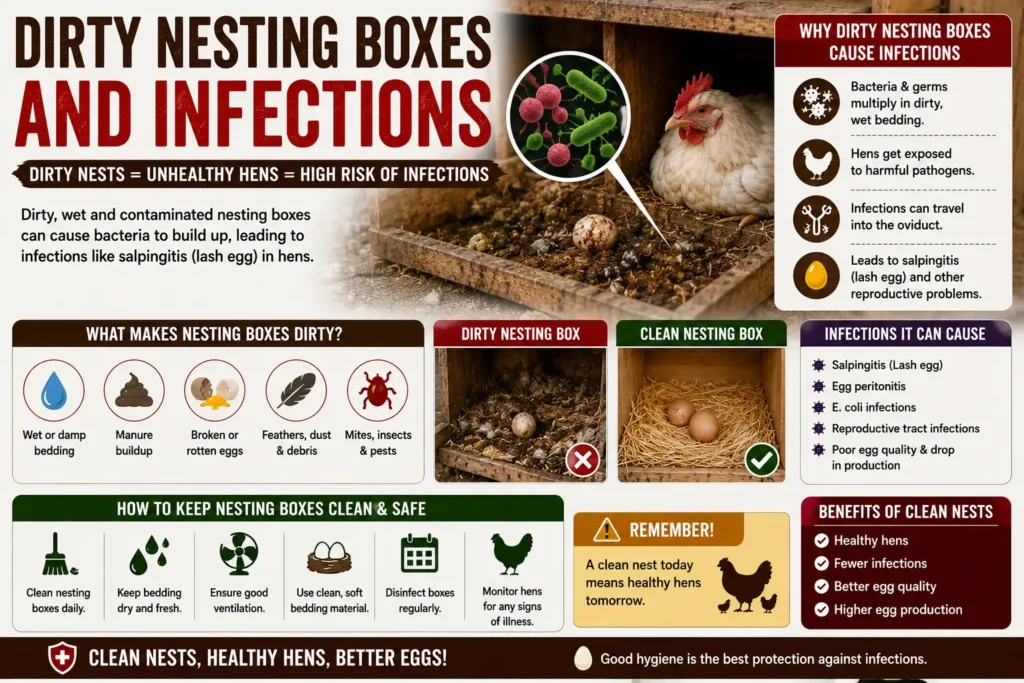
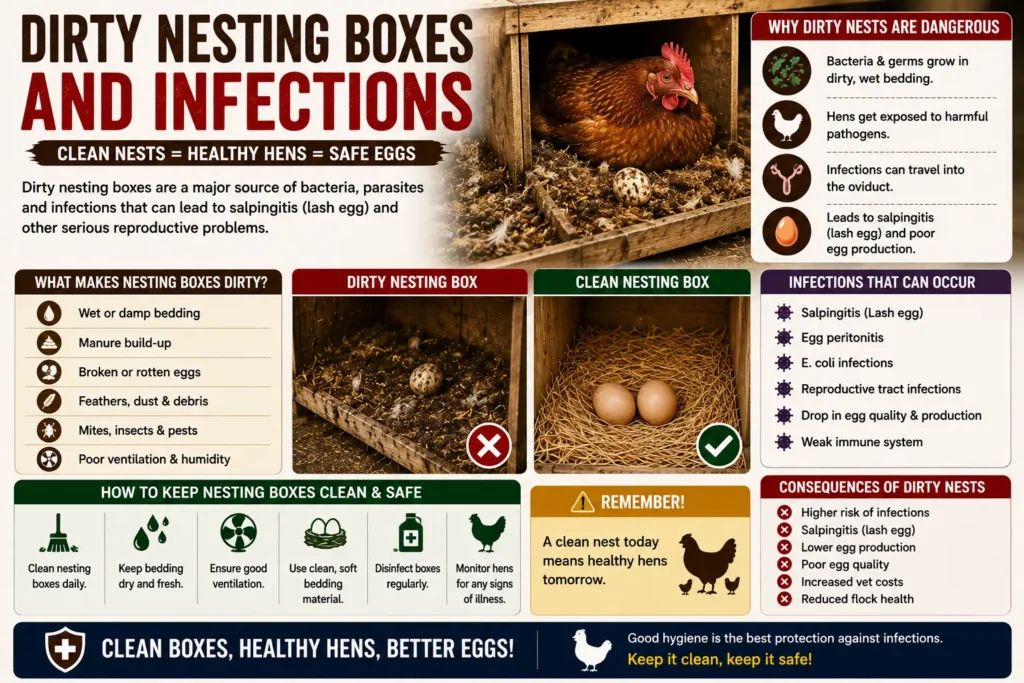
Dirty nesting boxes and infections show up together more often than most flock owners realize, and the connection is simple biology, not bad luck. A soiled nest box puts bacteria in direct contact with the vent, the entry point to a hen’s reproductive tract, every single time she lays an egg.
This isn’t just about smell or mess. Bacteria from droppings, damp bedding, and old egg residue can travel upward into the oviduct, leading to infections like salpingitis or vent inflammation. It’s one of the most preventable risk factors in backyard and small-flock poultry keeping.
Quick Answer: Dirty nesting boxes and infections are linked because contaminated bedding exposes the vent to bacteria like E. coli, which can travel up the reproductive tract and cause conditions such as salpingitis or skin infections around the vent.
This guide covers exactly how nest box hygiene affects hen health, what bacteria are involved, how to spot early warning signs, and a practical, no-nonsense cleaning routine that actually works for busy flock owners.
Table of Contents
How Dirty Nesting Boxes Lead to Infections
The vent is a shared opening used for both egg-laying and waste elimination. This anatomy makes hens naturally more vulnerable to ascending infections than most other animals, and it’s why nest box cleanliness matters so much more than people expect.
Read More: https://lashegg.com/calcium-deficiency-and-salpingitis-in-hens/
The Bacterial Pathway
- Contamination builds in bedding. Droppings, broken eggs, and moisture create a bacteria-friendly environment within days if boxes aren’t cleaned.
- Bacteria contact the vent during laying. Each time a hen sits in a soiled box, bacteria have direct access to vent tissue.
- Bacteria can travel upward. Organisms like E. coli can move from the vent into the oviduct, especially if tissue is irritated or a hen is straining.
- Infection develops. This can range from mild vent irritation to more serious conditions like salpingitis, depending on exposure level and the hen’s immune status.
Expert Tip: Nest box hygiene isn’t just about preventing dirty eggs. It’s one of the most direct, controllable ways to reduce reproductive tract infection risk in a flock.
Common Bacteria Found in Dirty Nesting Boxes
| Bacteria | Common Source | Health Risk |
| E. coli | Droppings, contaminated bedding | Vent infection, salpingitis, egg contamination |
| Salmonella | Feces, contaminated feed or water | Reproductive tract infection, food safety risk |
| Staphylococcus | Skin, minor wounds near vent | Localized skin infection, bumblefoot in severe cases |
| Clostridium species | Decomposing organic matter, wet bedding | Digestive upset, occasional systemic infection |
Poultry Hygiene: The Bigger Picture Beyond the Nest Box
Poultry hygiene involves more than one dirty box. It’s a full-system approach that includes bedding, water sources, feeders, and general coop cleanliness, all of which influence how much bacterial pressure your flock faces day to day.
Core Areas of Poultry Hygiene
- Nest boxes: Cleaned and re-bedded regularly to reduce direct vent contact with bacteria.
- Coop flooring: Deep litter or regularly changed bedding to control ammonia and bacterial buildup.
- Water sources: Cleaned daily, since contaminated water is a major vector for Salmonella and E. coli.
- Feeders: Kept dry and free of mold, which can introduce different but equally harmful pathogens.
- Outdoor run areas: Managed to reduce standing water and excessive droppings buildup.
Did You Know?
A single hen produces enough droppings in one day to meaningfully contaminate a small nest box if it isn’t cleaned regularly. Multiply that across a full flock sharing a few boxes, and bacterial buildup happens faster than most owners expect.
Signs an Infection May Be Developing
Because dirty nesting boxes and infections often develop gradually, early signs are easy to miss.
- Vent redness, swelling, or irritation
- Feather loss or pecking damage around the vent
- Foul-smelling discharge
- Reduced or irregular egg laying
- Lethargy or reduced appetite
- Dirty, stained, or fecal-covered eggs (a strong hygiene red flag even before illness appears)
- Swollen abdomen in more advanced reproductive tract infections
Early Hygiene Red Flags vs. Infection Symptoms
| Category | Hygiene Red Flag | Possible Infection Symptom |
| Eggs | Dirty, stained shells | Reduced production, thin shells |
| Vent area | Damp or soiled feathers | Redness, swelling, discharge |
| Behavior | Reluctance to use certain boxes | Lethargy, appetite loss |
| Odor | Ammonia smell from bedding | Foul smell specifically from the vent |
When to Call a Vet
When to Call a Vet: Contact a poultry veterinarian if you see vent discharge, persistent swelling, a hen straining without laying, or a sudden drop in egg production alongside lethargy. These signs can indicate an infection has moved beyond simple irritation into the reproductive tract.
Basic hygiene improvements can resolve mild vent irritation within days. Anything beyond mild irritation, especially discharge or abdominal swelling, needs professional evaluation. Home cleaning fixes the environment, but it cannot treat an active infection.
How Vets Diagnose Infections Linked to Poor Hygiene
- Physical exam of the vent area. Checking for swelling, discharge, or tissue damage.
- History review. Vets often ask about coop cleaning frequency and nest box conditions, since environmental factors are a key diagnostic clue.
- Culture and sensitivity testing. Identifies the exact bacteria involved and which antibiotics will work.
- Abdominal palpation or ultrasound. Used if reproductive tract involvement, such as salpingitis, is suspected.
- Bloodwork. Elevated white blood cell counts can confirm an active infection.
Treatment: Hygiene Fixes vs. Medical Treatment
What You Can Fix Through Hygiene Alone
- Mild vent irritation with no discharge or swelling
- Dirty or stained eggs with no signs of illness in the hen
- Ammonia buildup and general coop odor issues
- Early-stage feather loss around the vent from damp bedding
What Requires Veterinary Treatment
- Vent discharge or foul odor from the hen herself
- Abdominal swelling or a “penguin stance”
- Lethargy combined with reduced egg production
- Any suspected case of salpingitis or systemic infection
| Aspect | Home Hygiene Fix | Veterinary Treatment Needed |
| Cause | Environmental contamination | Established bacterial infection |
| Action | Clean and re-bed nest boxes | Antibiotics, possible surgery |
| Timeframe | Immediate improvement possible | Diagnosis and treatment plan required |
| Risk if ignored | Can progress to infection | Can become life-threatening |
Warning: Cleaning the nest box after symptoms appear helps prevent further exposure, but it will not treat an infection that has already developed. A vet visit is still necessary once symptoms are present.
Common Mistakes Owners Make With Nest Box Hygiene
- Cleaning only when boxes look visibly dirty, missing bacterial buildup that isn’t visually obvious.
- Using damp or low-quality bedding that holds moisture and encourages bacterial growth.
- Overcrowding nest boxes, forcing multiple hens to share the same soiled space repeatedly in one day.
- Ignoring broken eggs immediately, since leftover yolk is an especially strong bacteria magnet.
- Skipping full box disinfection, and only removing visible debris without addressing bacteria in seams and corners.
A Practical Poultry Hygiene Routine for Nest Boxes
Daily Habits
- Check nest boxes each morning for droppings, broken eggs, or damp bedding.
- Remove eggs promptly to reduce breakage risk and bacterial contact time.
- Spot-clean any visible mess immediately rather than waiting for a full cleaning day.
Weekly Habits
- Fully remove old bedding from each nest box.
- Wipe down box surfaces with a poultry-safe disinfectant, then let them dry completely before adding new bedding.
- Inspect boxes for cracks or rough surfaces that can trap bacteria and are harder to clean.
Monthly Habits
- Deep clean the entire coop, not just nest boxes, since bacteria spread easily between areas.
- Check ventilation to reduce moisture buildup, a major driver of bacterial growth.
- Evaluate whether you have enough nest boxes for your flock size, generally one box per four to five hens.
Common Mistake to Avoid: Many owners assume more frequent full coop cleanings automatically fix nest box hygiene. In practice, nest boxes get dirty faster than open coop floors because of direct, repeated contact with individual hens, so they need separate, more frequent attention.
Choosing Nesting Materials That Support Better Hygiene
| Material | Moisture Control | Ease of Cleaning | Notes |
| Pine shavings | Good | Easy | Popular, absorbent, widely available |
| Straw | Moderate | Moderate | Can mat down and trap moisture if not changed often |
| Sand | Excellent | Easy | Dries quickly, but heavier to fully replace |
| Shredded paper | Moderate | Easy | Affordable, but breaks down faster than shavings |
| Hemp bedding | Excellent | Easy | Highly absorbent, though pricier than other options |
Prevention Beyond the Nest Box
Reducing dirty nesting boxes and infections long-term means looking at the whole flock environment, not just bedding.
- Maintain proper stocking density to reduce overcrowding stress and box competition.
- Support overall immune health through balanced nutrition and clean water access.
- Monitor for vent pecking, since open wounds increase infection risk significantly.
- Quarantine new birds before flock introduction to avoid bringing in new bacterial or parasitic risks.
- Keep the outdoor run reasonably dry, since muddy conditions track contamination directly into nest boxes.
Recovery Outlook for Hygiene-Related Infections
| Condition Severity | Typical Recovery | Notes |
| Mild vent irritation | Days, with improved hygiene | Usually resolves without medication |
| Localized skin infection | 1–2 weeks with treatment | May need topical or oral antibiotics |
| Early reproductive tract infection | 1–3 weeks with antibiotics | Requires veterinary diagnosis |
| Advanced salpingitis from prolonged exposure | Weeks to months, guarded | May require surgery in severe cases |
Frequently Asked Questions (People Also Ask)
Can dirty nesting boxes actually cause infections in hens? Yes. Dirty nesting boxes and infections are connected because contaminated bedding exposes the vent to bacteria that can travel into the reproductive tract, potentially leading to conditions like salpingitis.
How often should nest boxes be cleaned? Spot-clean daily and fully clean and re-bed nest boxes at least once a week, more often if you notice damp bedding or broken eggs.
What bedding is best to prevent bacterial buildup? Pine shavings, sand, and hemp bedding all offer good moisture control, which helps reduce the bacterial growth linked to dirty nesting boxes and infections.
Can dirty eggs make people sick, not just hens? Yes. Eggs from dirty nest boxes can carry bacteria like Salmonella, which is a food safety concern for humans as well as a health risk for the hen.
Is nest box hygiene really that different from general coop hygiene? Yes. Nest boxes involve direct, repeated vent contact during laying, making them a higher-risk area than open coop flooring, which is why they need more frequent, targeted attention.
Can good hygiene alone prevent salpingitis? Good hygiene significantly lowers risk but cannot guarantee prevention, since other factors like stress, nutrition, and individual hen immunity also play a role.
5. FAQ Section (Expanded)
Do all hens face the same infection risk from dirty nesting boxes?
No. Hens with existing vent irritation, high egg production, or weaker immune function tend to face higher risk from the same level of nest box contamination compared to a generally healthy hen.
How many nest boxes do I need to reduce contamination risk?
A general guideline is one nest box for every four to five hens, which reduces overcrowding and repeated exposure to a single soiled space.
Can I use the same disinfectant I use for the coop floor on nest boxes?
Most poultry-safe disinfectants work for both areas, but always check that the product is safe for use around egg-laying hens and let boxes dry fully before adding fresh bedding.
Is it normal for eggs to have a little dirt on them?
Light dust is normal, but visible fecal staining or moisture on eggs is a clear sign that nest box hygiene needs immediate attention.