Making an Euthanasia Decision for Hens: What Every Keeper Needs to Know

An euthanasia decision for hens is one of the hardest calls a chicken keeper ever has to make. You watch a bird you’ve raised from a chick struggle to stand, stop eating, or hide in a corner, and you’re left wondering whether she can recover or whether continuing to wait is only prolonging her pain. This guide walks you through how to read the signs, when home care is enough, and when humane treatment means letting her go.
There’s no single rulebook that fits every flock or every bird. But there are clear signs vets and experienced keepers use to judge suffering, and knowing them takes some of the guesswork out of a decision nobody wants to make alone.
Table of Contents
Quick Answer
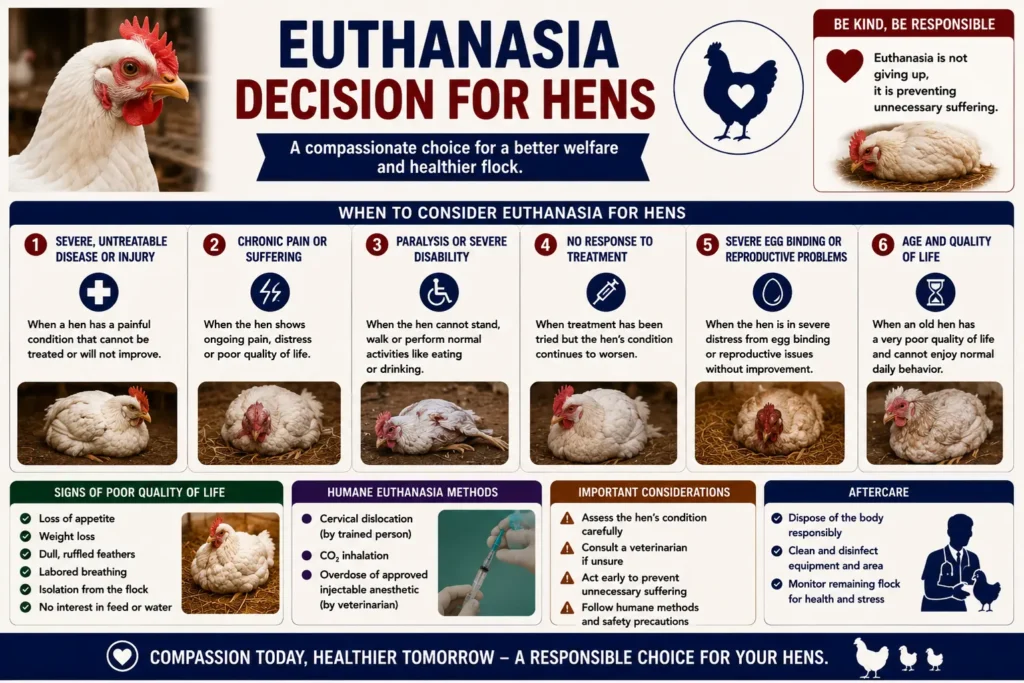
If a hen shows severe, unrelenting pain, can’t stand or eat for more than a day or two despite treatment, or has an incurable illness or injury, euthanasia is usually the most humane choice. When in doubt, a poultry-experienced veterinarian can help you weigh the options.
Why This Decision Feels So Hard
Chickens hide illness well. It’s an instinct left over from their wild ancestors — a visibly sick bird is a target for predators, so hens mask pain until they can no longer function. By the time symptoms are obvious, the underlying problem is often advanced. This is one reason the euthanasia decision for hens catches so many keepers off guard.
Backyard flocks also blur the line between livestock and pet. A hen might have a name, a favorite perch, and years of history with your family. That emotional bond makes the decision heavier, but it shouldn’t change the standard you use to judge her suffering.
Did You Know?
Hens can lose up to 20% of their body weight before keepers notice anything is wrong, because feathers hide a shrinking frame. Weighing your birds monthly helps you catch decline early.
Read More: https://lashegg.com/when-surgery-is-needed-hen-reproductive-issues/
How to Assess a Hen’s Quality of Life
Veterinarians and poultry researchers often use a quality-of-life framework built around basic needs. Walking through it gives you a structured way to think, rather than reacting purely on emotion.
Key Quality-of-Life Questions
- Can she stand, walk, and reach food and water without help?
- Is she eating and drinking on her own?
- Is she breathing normally, without gasping or open-mouth breathing?
- Does she respond to her surroundings, or is she withdrawn and unresponsive?
- Is there a visible wound, tumor, or deformity causing ongoing pain?
- Has a treatable condition already been treated without improvement?
If most answers point to “no,” that hen’s quality of life has likely dropped below a humane threshold, and an euthanasia decision for hens in this condition becomes about preventing further suffering, not giving up on her.
Signs of Poultry Pain and Distress
| Sign | What It May Indicate | Urgency |
| Hunched posture, fluffed feathers, eyes closed | General illness or pain | Monitor closely; vet visit if it persists past 24 hours |
| Labored or open-mouth breathing | Respiratory disease, heat stress, or fluid in the chest | Urgent — same-day evaluation |
| Inability to stand or bear weight | Injury, paralysis, or advanced illness | Urgent |
| Prolapse or visible internal tissue | Reproductive injury | Same-day vet care |
| Bloody or watery diarrhea | Infection or parasites | Vet evaluation within 24 hours |
| Sudden collapse | Heart failure, heatstroke, or internal bleeding | Emergency |
When to Call a Vet
Any time a hen stops eating and drinking for more than 24 hours, struggles to breathe, has a visible injury, or shows sudden collapse, contact a veterinarian experienced with poultry. Not every vet clinic treats chickens, so it helps to locate one in advance rather than during an emergency.
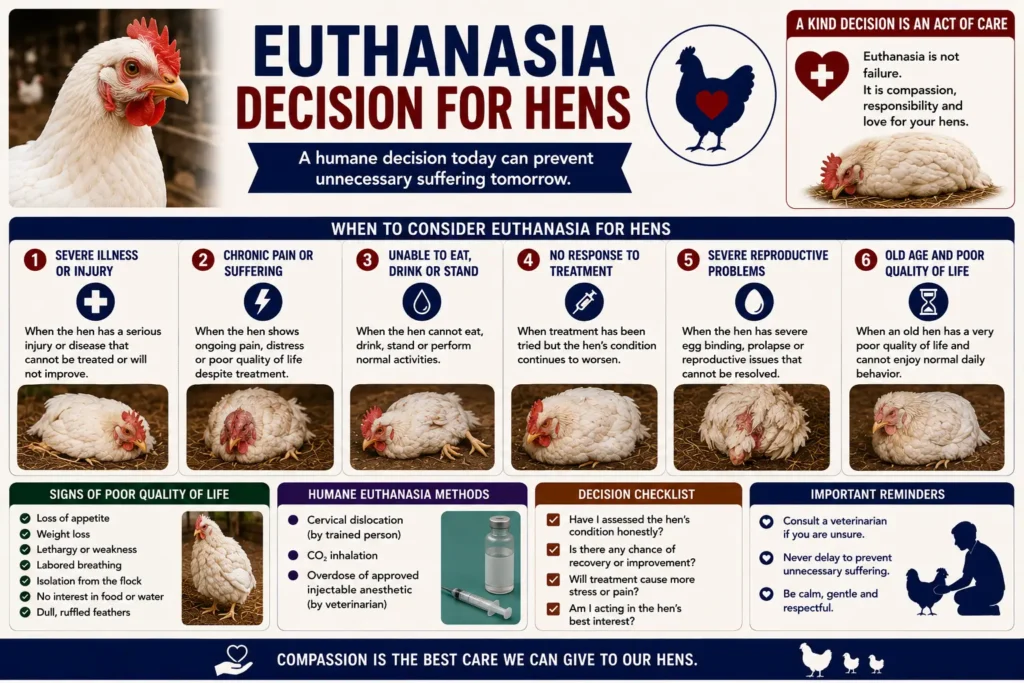
Common Conditions That Lead to an Euthanasia Decision for Hens
Some illnesses and injuries in backyard flocks are treatable with time and supportive care. Others are progressive, incurable, or too advanced by the time they’re caught. Understanding the difference helps you make a clearer euthanasia decision for hens facing these conditions.
Reproductive Disorders
Egg-laying hens are prone to internal laying, egg yolk peritonitis, and reproductive cancers, especially as they age past three or four years. These conditions often cause a swollen abdomen, lethargy, and labored breathing. According to the Merck Veterinary Manual, reproductive disease is among the leading causes of death in older laying hens, and many cases aren’t diagnosable or treatable without surgery, which most backyard settings can’t provide.
Marek’s Disease
This viral disease attacks the nervous system and can cause paralysis of the legs or wings. There’s no cure once symptoms appear, and affected birds often can’t reach food or water. Vaccination at hatch prevents most cases, but unvaccinated birds that develop paralysis are candidates for euthanasia rather than prolonged suffering.
Severe Injuries
Predator attacks, broken legs, or wing fractures with exposed bone are painful and slow to heal in birds. A vet can sometimes splint a simple fracture, but injuries involving major blood loss, spinal damage, or infection usually don’t have a good recovery path.
Bumblefoot and Chronic Infection
Bumblefoot, a bacterial infection in the foot pad, is treatable in early stages with cleaning, soaking, and sometimes antibiotics from a vet. Left untreated, it can spread to the bone and become extremely painful, at which point treatment options narrow.
Old Age and General Decline
Hens can live 6–10 years, but egg production and mobility usually decline well before that. A hen that’s simply old, thin, and slowing down isn’t automatically a candidate for euthanasia — but if she stops eating, can’t keep up with the flock, or shows signs of organ failure, that’s a different picture.
Home Care vs. When Home Care Isn’t Enough
| Situation | Home Care May Help | Veterinary Care or Euthanasia Needed |
| Mild lethargy, still eating | Isolate, offer electrolytes, monitor 24 hrs | If no improvement in 24–48 hrs |
| Minor cut or scrape | Clean wound, apply antiseptic | If wound worsens or shows infection |
| Early bumblefoot | Soak foot, clean and bandage | If swelling spreads or bird won’t bear weight |
| Broken leg, simple fracture | Confine and rest | If bone is exposed or bird is in visible distress |
| Labored breathing | None — this needs urgent evaluation | Always seek vet care immediately |
| Paralysis, can’t stand | None | Vet evaluation; euthanasia likely if incurable |
Expert Tip
Keep a simple health log for each hen — weight, appetite, and behavior notes once a month. A sudden change from her own baseline is often more telling than comparing her to the rest of the flock.
Common Mistakes Keepers Make
- Waiting too long, hoping a bird will “snap out of it” on its own
- Assuming all poultry illness is untreatable and skipping the vet call entirely
- Comparing a sick hen to healthy flockmates instead of tracking her own trend over time
- Using home remedies for conditions that need antibiotics or surgery
- Making the decision in a moment of panic without a quick quality-of-life check
Warning
Never attempt euthanasia methods you haven’t researched or been trained in. Improperly performed euthanasia can cause more suffering, not less. If you’re unsure how to proceed humanely, a vet, extension office, or experienced poultry rescue can guide you or perform the procedure.
Humane Euthanasia Methods for Hens
The American Veterinary Medical Association (AVMA) publishes guidelines on humane euthanasia methods for poultry, which most extension services and veterinarians follow. The two most widely accepted methods for backyard settings are:
- Cervical dislocation — performed correctly by a trained, confident hand, this method causes near-immediate loss of consciousness. It requires proper technique to be humane; done incorrectly, it can cause prolonged suffering.
- Veterinary-administered injection — a vet can perform euthanasia using sedation followed by an injectable agent, similar to companion animal euthanasia. This is often the least stressful option for both the bird and the keeper, though it comes with a clinic cost.
Cutting the throat, drowning, or blunt trauma are not considered humane and are not recommended by veterinary or animal welfare organizations. If you’re not confident performing cervical dislocation correctly, ask a vet, a 4-H extension agent, or an experienced local keeper to help, or transport the bird to a clinic.
Step-by-Step: Preparing for a Humane Euthanasia Decision
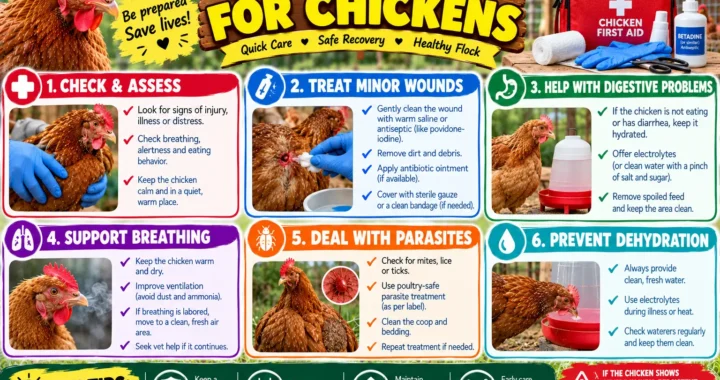
- Confirm the bird’s condition with a vet consultation when possible, even a phone or video call.
- Separate her from the flock to reduce her stress and protect her from pecking.
- Decide on a method in advance — cervical dislocation by a trained person, or a vet visit.
- Handle her calmly and minimize the time between decision and action.
- Confirm death has occurred before disposal — look for absence of breathing, heartbeat, and blink reflex.
- Dispose of the body according to local regulations; many areas require burial depth or approved disposal methods.
The Emotional Side of the Euthanasia Decision for Hens
Grief over a chicken is real grief, even if others don’t understand it. Keepers who’ve raised hens from chicks, hand-fed them, or relied on them for years of eggs often describe the loss as similar to losing any other pet. Giving yourself permission to grieve, and involving children age-appropriately if they were part of the bird’s care, helps process the loss in a healthy way.
Some keepers find it helpful to keep a small record — a feather, a photo, or a note in a flock journal — as a way to mark the bird’s life. There’s no wrong way to grieve an animal that mattered to you.
Preventing the Need for Difficult Decisions
While illness and injury can’t always be avoided, good flock management lowers the odds of facing an urgent euthanasia decision for hens unprepared.
- Vaccinate chicks against Marek’s disease before introducing them to your flock.
- Quarantine new birds for at least two weeks before mixing them with your existing flock.
- Provide a balanced layer feed appropriate to age and production stage.
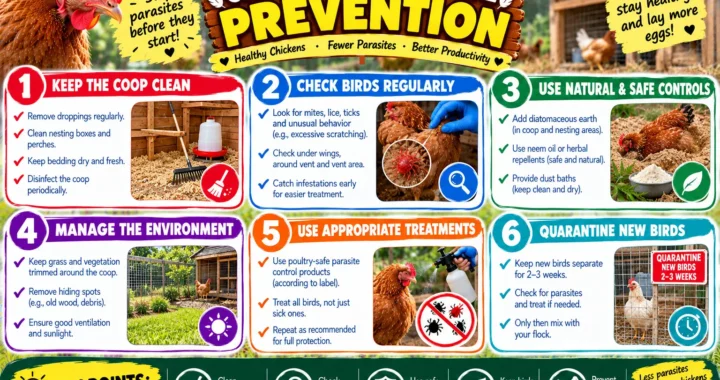
- Keep the coop clean and dry to reduce bacterial and parasite load.
- Predator-proof runs and coops to prevent traumatic injuries.
- Build a relationship with a poultry-experienced vet before you need one urgently.
Did You Know?
Regular flock check-ups, even informal ones during coop cleaning, catch most illnesses a full week or more before symptoms become severe enough for an emergency decision.
People Also Ask
How do I know if my chicken is suffering? Look for labored breathing, inability to stand or reach food, unresponsiveness, or a wound that isn’t healing. A hen hunched with closed eyes and fluffed feathers that doesn’t perk up after 24 hours is likely in distress.
Is it humane to let a sick chicken die naturally? Not usually. Natural death from illness or injury in poultry is often slow and painful. Veterinary or animal welfare organizations generally recommend euthanasia over allowing a suffering bird to die without intervention.
Can a hen recover from not being able to walk? It depends on the cause. Vitamin deficiencies or minor injuries can sometimes resolve with rest and supplements. Paralysis from Marek’s disease or a spinal injury usually does not improve, which is why a vet evaluation matters before deciding.
How much does it cost to euthanize a chicken at the vet? Costs vary by clinic and region, generally ranging from a modest office visit fee to a higher cost if sedation and disposal services are included. Calling ahead to ask about poultry-specific pricing is the most reliable way to know your local cost.
What’s the difference between euthanasia and culling? Euthanasia refers to ending suffering in a sick or injured bird as an act of humane treatment. Culling is a broader farming term that can include removing healthy but non-productive birds, which is a separate practice with different ethical considerations.
Final Thoughts
An euthanasia decision for hens is never made lightly by a keeper who cares about their flock. Using a clear quality-of-life check, knowing which conditions are treatable versus progressive, and consulting a poultry-savvy vet when you’re unsure all make the process less overwhelming. Keep monitoring your flock’s daily behavior, act early on changes, and lean on humane treatment as the guiding standard whenever a bird’s suffering can’t be resolved.
FAQ
Q: What is the kindest way to handle an euthanasia decision for hens? A: Assess her quality of life using clear signs of pain or decline, consult a vet if possible, and choose a method recommended by veterinary organizations such as cervical dislocation by a trained handler or a vet-administered injection.
Q: Should I wait to see if my hen improves before making an euthanasia decision? A: A short observation window of 24–48 hours is reasonable for mild symptoms, paired with supportive care. For severe pain, breathing distress, or inability to stand, don’t wait — seek veterinary guidance right away.
Q: Is euthanizing a hen at home ever appropriate? A: Yes, when performed correctly by someone trained in humane methods like cervical dislocation. If you’re not confident in your technique, a vet visit is the safer and more humane route.
Q: Do all sick hens need to be euthanized? A: No. Many common issues — parasites, minor wounds, mild respiratory infections — respond well to treatment. Euthanasia becomes the humane choice mainly when a condition is incurable, causing unrelenting pain, or has already failed to respond to treatment.
Q: How can I tell the difference between a hen that’s molting and one that’s sick? A: Molting hens lose feathers in a patchy but predictable pattern and generally keep eating and behaving normally. A sick hen often shows lethargy, appetite loss, or abnormal droppings alongside any feather changes.