Salpingitis in Laying Hens: What Every Flock Owner Needs to Know

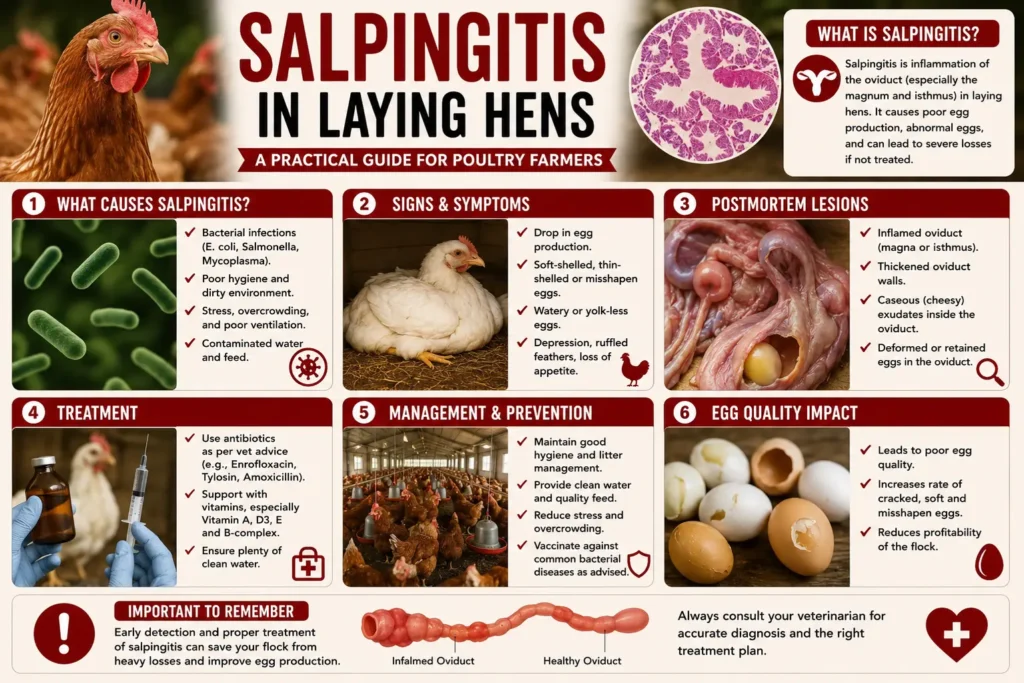
Salpingitis in laying hens is one of the most common — and most misunderstood — reproductive diseases in backyard and commercial flocks. It happens when the oviduct, the tube that forms and moves the egg, becomes inflamed or infected. The result can be a hen that stops laying, looks like she’s carrying a lump, or passes a strange, solid mass instead of a normal egg.
If you’ve ever found a firm, egg-shaped object in the nest box that isn’t quite an egg, you may already be dealing with this condition. This guide walks through the causes, symptoms, diagnosis, treatment, and prevention of salpingitis in laying hens, based on veterinary poultry medicine and current flock management research.
Table of Contents
What Is Salpingitis in Laying Hens?
Salpingitis is inflammation or infection of the oviduct — the long, coiled tube where a hen’s egg is formed, layer by layer, before it’s laid. In healthy hens, the oviduct produces the yolk covering, egg white, shell membranes, and shell in a precise sequence over about 24–26 hours.
When bacteria invade this tube, the normal egg-forming process breaks down. Instead of a smooth, complete egg, the hen’s body may produce clumped, cheese-like layers of material. This buildup is commonly called a “lash egg,” though it isn’t a true egg at all — it’s a mass of inflammatory debris, yolk material, and bacteria wrapped in egg-white-like protein.
Read More: https://lashegg.com/what-is-salpingitis/
Salpingitis is considered one of the leading causes of death in adult laying hens, particularly in hens over two years old that have laid heavily for multiple seasons.
Why Laying Hen Salpingitis Is So Common
Laying hen salpingitis develops more often in hens that lay eggs frequently, because a constantly active oviduct has more chances for bacteria to travel upward from the vent. Modern hybrid layers, bred for high egg output, are especially prone to this condition as they age.
Anatomy Refresher: How the Oviduct Works
Understanding the oviduct helps explain why infections happen here so easily.
| Oviduct Section | Function | Time Spent |
| Infundibulum | Catches the yolk, site of fertilization | ~15–18 minutes |
| Magnum | Adds egg white (albumen) | ~3 hours |
| Isthmus | Forms shell membranes | ~1.25 hours |
| Uterus (shell gland) | Adds shell and pigment | ~20 hours |
| Vagina | Egg passes through before laying | Brief |
The oviduct opens directly into the cloaca, the shared exit point for the digestive, urinary, and reproductive systems in birds. This shared opening is the main reason bacteria can move from the gut or environment into the reproductive tract.
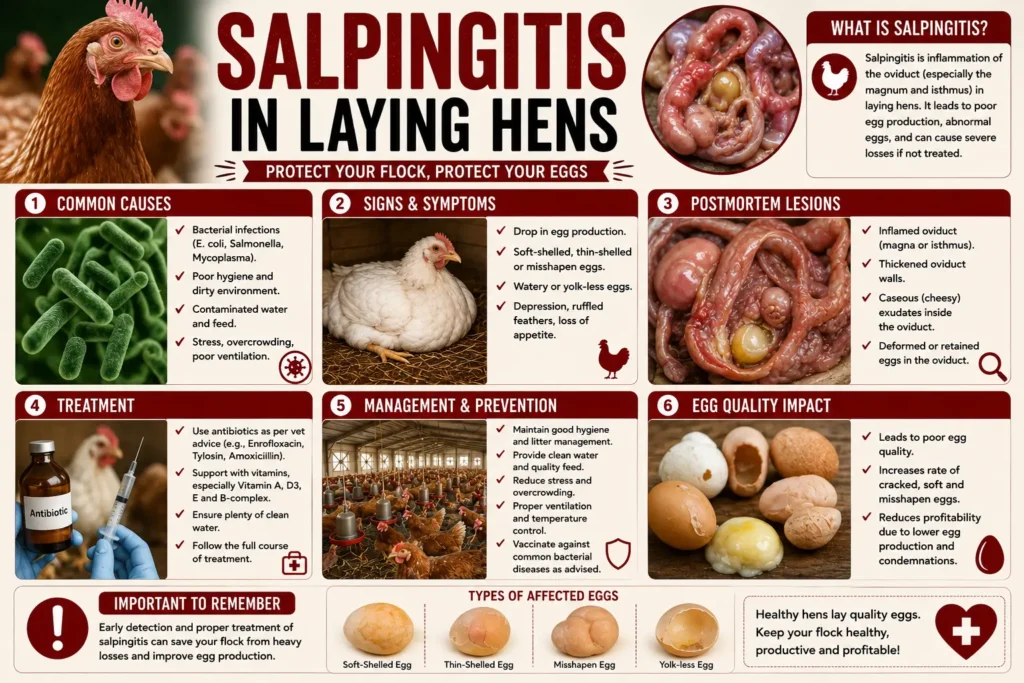
Causes of Salpingitis in Laying Hens
Salpingitis rarely has one single cause. It’s usually the result of bacteria entering the oviduct combined with a factor that weakens the hen’s natural defenses.
1. Bacterial Infection (Ascending Infection)
The most common route is bacteria traveling up from the cloaca into the oviduct. E. coli is the bacterium most frequently isolated from cases of salpingitis in laying hens, according to poultry pathology research. Other bacteria involved include Salmonella, Pasteurella, and Mycoplasma species.
2. Respiratory Disease Spread
Some respiratory infections, including infectious bronchitis virus and Mycoplasma gallisepticum, can damage the oviduct lining early in a pullet’s life. This early damage can set the stage for salpingitis months or years later, even after the respiratory illness has resolved.
3. Egg-Laying Stress and High Production
Hens bred for maximum egg output place continuous demand on the oviduct. Frequent ovulation increases the number of opportunities for bacteria to enter, especially in hens laying daily or near-daily.
4. Internal Laying (Egg Yolk Peritonitis Overlap)
When a yolk is released but doesn’t enter the oviduct properly, it can fall into the abdominal cavity. This triggers inflammation that often accompanies or leads to salpingitis, since the two conditions frequently occur together.
5. Poor Nest Box and Coop Hygiene
Dirty bedding, damp litter, and fecal contamination near the vent increase bacterial load around the cloaca, raising the risk of ascending infection.
6. Genetics and Breed Predisposition
Commercial hybrid layers (such as high-production brown egg layers) show higher rates of oviduct disease compared to slower-laying heritage breeds, largely due to selective breeding for egg output.
7. Age
Hens over two years old, especially those past their second or third laying cycle, are statistically more likely to develop salpingitis as reproductive tissues become less resilient over time.
Did You Know? Necropsy studies of hens that died of natural causes on commercial farms consistently list salpingitis or salpingoperitonitis among the top two or three causes of mortality in laying flocks.
Symptoms of Salpingitis in Laying Hens
Signs of salpingitis in laying hens range from subtle to severe, and they often overlap with other reproductive issues, which is why proper diagnosis matters.
Early or Mild Signs
- Reduced egg production or skipped laying days
- Soft-shelled, misshapen, or wrinkled eggs
- Slightly swollen abdomen
- Mild lethargy
Moderate to Advanced Signs
- A firm, distended abdomen (“penguin stance” — walking upright with a wide gait)
- Passing a lash egg (a lumpy, layered, foul-smelling mass)
- Complete stop in egg laying
- Loss of appetite
- Pale or dull comb and wattles
- Weight loss despite a swollen belly
Emergency Signs
- Labored breathing (from abdominal pressure on air sacs)
- Sitting hunched and unwilling to move
- Sudden collapse or death
What a Lash Egg Actually Looks Like
A lash egg is typically firm to rubbery, layered like an onion when cut open, ranges from white or yellow to greenish or bloody in color, and often smells strongly foul. Finding one is a strong indicator — though not 100% proof — of salpingitis in laying hens.
Quick Answer: If your hen passes a lash egg, isolate her, monitor for other symptoms like lethargy or a swollen abdomen, and contact a poultry veterinarian for guidance. A lash egg alone doesn’t always mean an emergency, but it’s a signal that something is wrong internally.
Salpingitis vs. Other Reproductive Conditions
Because several hen reproductive illnesses cause similar symptoms, it helps to compare them.
| Condition | Main Cause | Key Symptom | Egg Passed? |
| Salpingitis | Bacterial infection of oviduct | Lash egg, swollen abdomen | Lash egg, not a true egg |
| Egg Yolk Peritonitis | Yolk released into abdomen | Fluid-filled belly, lethargy | No |
| Egg Binding | Egg stuck in oviduct/vagina | Straining, no egg for days | Stuck egg, visible or felt |
| Prolapse | Oviduct pushed outside vent | Visible tissue at vent | May follow a laid egg |
| Ascites (Water Belly) | Fluid buildup, often heart/liver related | Swollen belly, blue comb | No |
Salpingitis and egg yolk peritonitis often occur together, since both involve breakdown of normal reproductive function, and one can lead to the other over time.
How Salpingitis Is Diagnosed
A definitive diagnosis of laying hen salpingitis usually requires veterinary involvement, since many symptoms overlap with other illnesses.
At-Home Observation
Flock owners can note egg production changes, abdominal swelling, posture changes, and any unusual material found in nest boxes. Keeping a simple laying log helps a vet spot patterns faster.
Veterinary Diagnostic Steps
- Physical exam — checking abdominal fluid, body condition, and vent area
- Palpation — feeling for masses or fluid in the abdomen
- Radiographs (X-rays) — to look for internal masses or retained eggs
- Ultrasound — increasingly used to visualize oviduct changes
- Bloodwork — checking white blood cell counts for signs of infection
- Culture and sensitivity — if fluid or discharge is available, to identify the exact bacteria and the right antibiotic
- Necropsy — in cases of death, a necropsy is often the only way to confirm salpingitis definitively, since the thickened, pus-filled, or cheesy oviduct is visible internally
When to Call a Vet: If a hen stops eating, sits hunched with a swollen abdomen, struggles to breathe, or passes a lash egg alongside other symptoms, veterinary evaluation is warranted rather than home treatment alone.
Treatment Options for Salpingitis in Laying Hens
Treatment depends heavily on how advanced the condition is at the time it’s caught.
Veterinary Treatment
- Antibiotics — prescribed based on culture results when possible, since resistance varies by bacteria and farm
- Anti-inflammatory support — to reduce discomfort and swelling
- Fluid therapy — for dehydrated or severely ill hens
- Surgical removal (salpingohysterectomy) — in some cases, especially chronic or recurrent salpingitis, a vet may recommend surgically removing the oviduct so the hen can live comfortably without laying
- Hormonal implants — used in some cases to suppress egg-laying and give the reproductive tract time to recover
Supportive Home Care (Alongside, Not Instead of, Veterinary Care)
- Isolating the affected hen from the flock to reduce stress and monitor food/water intake
- Providing a calm, quiet, low-stress environment
- Offering easily digestible, high-quality feed
- Keeping fresh water available at all times
- Monitoring droppings and appetite daily
Warning: Salpingitis is not something to treat with guesswork antibiotics from a farm store without guidance. Incorrect or incomplete antibiotic use can worsen resistance and delay effective treatment. Always seek professional input when a hen shows signs of internal infection.
Expert Tip
Track the exact day symptoms started, egg production changes, and any lash eggs found, then bring this record to the vet visit. This timeline often speeds up diagnosis significantly.
Prognosis: Can a Hen Recover from Salpingitis?
Recovery depends on how early the condition is caught. Mild cases identified early, especially with prompt antibiotic treatment, sometimes resolve with the hen returning to reduced or normal laying. Advanced cases, particularly those involving egg yolk peritonitis or significant abdominal fluid buildup, have a more guarded outlook, and some hens do not recover fully even with treatment.
Hens that survive a serious episode of salpingitis often lay fewer eggs afterward, or stop laying permanently, since the oviduct tissue may be permanently scarred or partially removed.
Common Mistakes Owners Make
- Waiting too long to seek help because “she’s still eating a little”
- Assuming a lash egg is a one-time fluke rather than a warning sign
- Treating with random over-the-counter antibiotics without knowing the bacteria involved
- Returning a sick hen to the flock too soon, increasing her stress
- Ignoring gradual drops in egg production over several weeks
Preventing Salpingitis in Laying Hens
Prevention focuses on reducing bacterial exposure and supporting overall reproductive health.
Coop and Nest Box Hygiene
- Clean nest boxes and bedding regularly to reduce fecal contamination
- Keep the coop dry, since damp litter encourages bacterial growth
- Provide enough nest boxes so hens aren’t standing in soiled bedding while laying
Nutrition
- Feed a complete, balanced layer ration with adequate calcium and protein
- Avoid sudden feed changes, which stress the digestive and reproductive systems
- Provide clean, fresh water at all times
Flock Management
- Avoid overcrowding, which raises stress hormones and bacterial spread
- Reduce stress from predators, loud noise, and abrupt environmental changes
- Consider limiting supplemental lighting that pushes hens toward year-round heavy laying, since constant high production increases long-term oviduct strain
Health Monitoring
- Check hens regularly for early signs like soft-shelled eggs or reduced laying
- Quarantine and observe any new birds before adding them to the flock
- Keep vaccination status current for respiratory diseases linked to oviduct damage, following guidance from a poultry veterinarian
Step-by-Step: Responding to a Suspected Case
- Isolate the hen from the rest of the flock immediately.
- Note all symptoms, including egg production changes and any lash eggs.
- Provide food, water, and a calm space while arranging veterinary evaluation.
- Contact a poultry veterinarian or agricultural extension service for diagnosis.
- Follow the prescribed treatment plan fully, even if symptoms improve early.
- Monitor for weeks afterward, since salpingitis can recur.
Salpingitis in Backyard Flocks vs. Commercial Operations
Backyard keepers usually notice individual hen symptoms faster because flocks are smaller and hens are observed daily. Commercial operations, working with much larger numbers, often rely more on production data — like flock-wide drops in egg output — and necropsy of dead birds to identify salpingitis trends. Both settings benefit from the same core prevention steps: hygiene, nutrition, and stress reduction.
University extension poultry programs and organizations such as the USDA and AVMA publish flock health guidance that applies to both backyard and commercial settings, since the underlying biology of the disease doesn’t change with flock size.
FAQ
Q: What does a lash egg look like? A lash egg is a firm, layered mass, often yellow, white, or tinged with blood, that a hen passes instead of a normal egg. It’s a common sign associated with salpingitis in laying hens, though other reproductive issues can occasionally produce similar material.
Q: Is salpingitis in laying hens contagious to other hens? Salpingitis itself, as an internal infection, doesn’t spread directly hen to hen. However, if a shared underlying cause exists — like a coop-wide respiratory infection or poor hygiene — multiple hens in the same flock can develop it around the same time.
Q: Can a hen with salpingitis still lay eggs? Some hens with mild salpingitis continue to lay irregularly, while others stop entirely. As the condition progresses, egg production typically declines or stops altogether.
Q: How long can a hen live with salpingitis? This varies widely. Some hens live for months with mild, chronic salpingitis, while others decline rapidly within days if the infection is severe or accompanied by egg yolk peritonitis.
Q: Can salpingitis in laying hens be cured? Mild cases caught early sometimes resolve with antibiotics and supportive care. Advanced or chronic cases are harder to cure fully, and some hens require surgery or ongoing management rather than a complete cure.
Q: Is it safe to eat eggs from a flock where one hen has salpingitis? Eggs from healthy hens in the same flock are generally still safe to eat, since salpingitis is an individual bird’s internal condition rather than a contamination of the whole flock’s eggs. Never eat a lash egg or an abnormal egg from an affected hen.
Q: What is the difference between salpingitis and egg yolk peritonitis? Salpingitis is infection or inflammation of the oviduct itself, while egg yolk peritonitis happens when yolk material enters the abdominal cavity instead of the oviduct. The two conditions often occur together in the same hen.
Q: Should I cull a hen with salpingitis? This is a personal and situational decision. Some owners pursue veterinary treatment or surgery, while others choose humane euthanasia for hens with advanced, poor-prognosis cases. A veterinarian can help assess quality of life and realistic recovery chances.