Salpingitis Symptoms in Chickens: What to Watch For

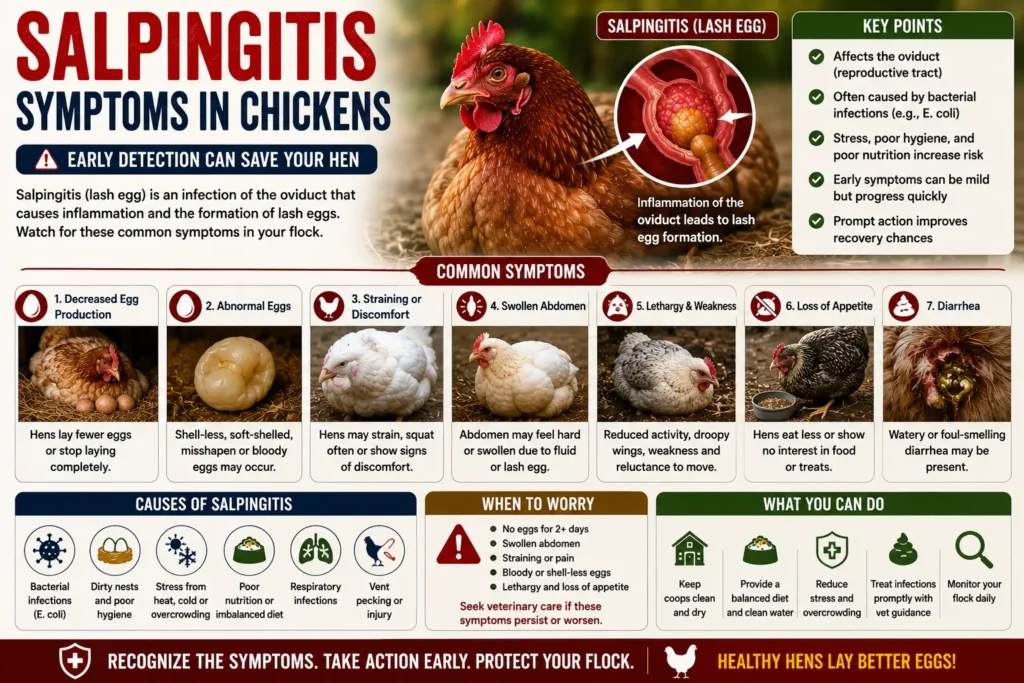
Recognizing salpingitis symptoms in chickens early can be the difference between a hen that recovers fully and one that doesn’t survive the illness. Salpingitis is inflammation or infection of the oviduct, and it’s one of the leading causes of death in laying hens, largely because the early signs are so easy to miss.
This guide walks through every stage of symptom development, from the first subtle changes to the more obvious signs of advanced illness, so you know exactly what to look for at each point.
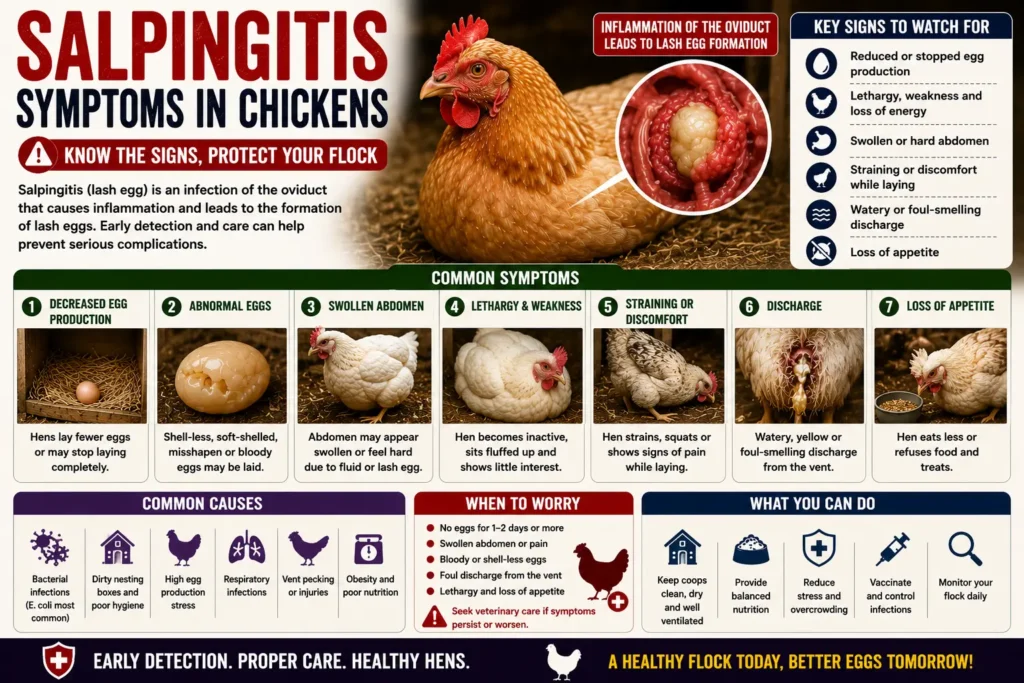
Quick Answer: Early salpingitis symptoms in chickens include reduced egg laying, soft or misshapen eggs, and mild lethargy. As the condition progresses, signs of salpingitis can include abdominal swelling, foul-smelling discharge, and a hunched or upright “penguin” stance.
Chickens instinctively hide illness as a survival trait, which means by the time symptoms are obvious, the infection has often been developing for some time. Understanding the full symptom range helps you catch it sooner.
Table of Contents
Why Salpingitis Symptoms Are Often Missed Early On
Chickens are prey animals, and showing weakness makes them a target in the wild. This instinct carries over into domestic flocks, even in a safe backyard coop. A hen with early-stage salpingitis may still eat, drink, and move around normally while internal changes are already underway.
This is exactly why understanding subtle, early signs of salpingitis matters as much as recognizing the more dramatic later-stage symptoms. Waiting for obvious illness often means waiting too long.
Did You Know? Some hens with confirmed salpingitis show almost no outward behavior change until the disease reaches an advanced stage, which is one reason veterinarians recommend tracking egg patterns closely rather than relying on behavior alone.
Early Salpingitis Symptoms in Chickens
These signs often appear first, sometimes weeks before more serious symptoms develop.
- Reduced egg production. A hen may lay less frequently or skip days without an obvious cause.
- Soft-shelled or shell-less eggs. Weakening oviduct function can affect shell formation before infection is fully established.
- Slightly duller comb color. A subtle change, easy to miss without regular observation.
- Mild changes in appetite. Not always dramatic, but worth noting if it continues for more than a day or two.
- Small changes in droppings. Slightly looser or more watery droppings can sometimes accompany early internal changes.
Read More: https://lashegg.com/risk-factors-for-salpingitis-in-hens/
Early Symptom Checklist
- Track egg-laying frequency for each hen individually if possible.
- Check shell quality regularly, noting any soft, thin, or misshapen eggs.
- Observe comb and wattle color during daily feeding.
- Note any hens eating less than usual for more than one day.
Progressive Salpingitis Symptoms in Chickens
As the infection develops, signs of salpingitis typically become more noticeable and specific.
- Noticeable drop or complete stop in egg laying
- Lethargy and reduced activity, including less interaction with flock mates
- Pale comb and wattles, a sign of declining overall health
- Straining without producing an egg, sometimes mistaken for egg binding
- Mild abdominal fullness, which may not yet be visually obvious without handling the hen
Advanced Salpingitis Symptoms in Chickens
These signs typically indicate the infection has progressed significantly and usually require urgent veterinary attention.
- Swollen, fluid-filled abdomen
- “Penguin stance” — standing more upright than normal to accommodate abdominal swelling
- Foul-smelling discharge from the vent
- Severe lethargy, including reluctance to move or reduced response to handling
- Labored breathing, if abdominal swelling begins pressing on the lungs and air sacs
- Sudden collapse or death, particularly if the oviduct ruptures or the condition progresses to egg yolk peritonitis
Warning: Advanced symptoms like abdominal swelling and labored breathing indicate a medical emergency. Delaying veterinary care at this stage significantly reduces the chances of recovery.
Salpingitis Symptom Progression at a Glance
| Stage | Key Symptoms | Urgency |
| Early | Reduced laying, soft-shelled eggs, mild appetite change | Monitor closely, no immediate emergency |
| Progressive | Stopped laying, lethargy, pale comb, straining | Schedule veterinary evaluation |
| Advanced | Abdominal swelling, penguin stance, discharge, labored breathing | Seek veterinary care immediately |
Signs of Salpingitis vs. Other Common Conditions
Because several reproductive issues share overlapping symptoms, it helps to compare them directly.
| Condition | Similar Symptom | Key Difference |
| Egg binding | Straining, reduced laying | Sudden onset, usually no discharge or long-term abdominal swelling |
| Egg yolk peritonitis | Abdominal swelling, lethargy | Often follows salpingitis; more severe, faster decline |
| Internal laying | Reduced egg output | May not show discharge or obvious illness for a longer period |
| Reproductive tumors | Abdominal swelling, reduced laying | Slower onset, doesn’t typically respond to antibiotics |
| Ascites (fluid buildup) | Abdominal swelling | Not connected to laying pattern; often heart or liver related |
When to Call a Vet
When to Call a Vet: Contact a poultry veterinarian if you notice any combination of stopped egg laying, abdominal swelling, foul vent discharge, or a hen standing in an upright “penguin” posture. These salpingitis symptoms in chickens can progress quickly, and prompt treatment significantly improves outcomes.
Mild, early symptoms are worth monitoring closely for a day or two, especially if only one sign is present. Multiple symptoms together, or any advanced-stage sign, call for prompt veterinary evaluation rather than a wait-and-see approach.
How Vets Confirm Salpingitis From Symptoms
- Physical exam. Checking body condition, abdominal fluid, and vent health based on reported symptoms.
- Abdominal palpation. Helps distinguish fluid-filled swelling from a solid mass or retained egg.
- Ultrasound or radiographs. Confirms the extent of fluid buildup or identifies retained eggs.
- Bloodwork. Elevated white blood cell counts support an active infection diagnosis.
- History review. Vets often ask when symptoms started and how they progressed, since symptom timeline helps guide diagnosis.
Treatment Based on Symptom Severity
Early-Stage Symptoms
- Veterinary evaluation to confirm salpingitis versus another cause
- Antibiotics if infection is confirmed, based on culture and sensitivity testing
- Supportive care: hydration, warmth, low-stress environment
Advanced-Stage Symptoms
- Surgical intervention in some cases, including drainage or oviduct removal
- Longer-term antibiotic therapy with close monitoring
- Hospitalization or intensive supportive care for severely ill hens
Home Care vs. Veterinary Treatment
| Aspect | What You Can Do at Home | What Requires a Vet |
| Monitoring | Track symptoms, egg quality, behavior | Diagnostic imaging, bloodwork |
| Comfort care | Quiet space, easy food and water access | Prescription antibiotics |
| Early symptoms | Close observation for 24–48 hours | Persistent or worsening symptoms |
| Advanced symptoms | Not manageable at home | Immediate veterinary treatment |
Expert Tip: Keep a simple written or app-based log of each hen’s laying pattern. Reviewing a week or two of data makes subtle symptom changes far easier to spot than relying on memory alone.
Common Mistakes Owners Make With Symptom Recognition
- Waiting for abdominal swelling before seeking help, when earlier signs like reduced laying were already present.
- Assuming one skipped egg means nothing, when it can be an early warning sign worth tracking.
- Confusing straining from salpingitis with simple egg binding and delaying appropriate treatment.
- Overlooking comb color changes, which are subtle but genuinely useful early indicators.
- Not separating a symptomatic hen from the flock, which can increase stress and risk of pecking injury during recovery.
Tracking Symptoms: A Simple Monitoring System
- Daily egg check. Note which hens laid, and flag any soft, thin, or unusual eggs.
- Weekly weight check. Sudden weight loss or gain (from fluid buildup) is a useful early indicator.
- Behavior scan. Spend a few minutes daily simply observing flock behavior for outliers.
- Comb and wattle color check. Compare against each hen’s normal baseline color.
- Vent check. During regular handling, glance at vent-area feathers for discharge or staining.
Recovery Outlook by Symptom Stage
| Symptom Stage at Diagnosis | Typical Recovery Outlook | Recovery Time |
| Early symptoms only | Good with prompt treatment | 1–3 weeks |
| Progressive symptoms | Fair to good, depending on speed of care | 2–4 weeks |
| Advanced symptoms | Guarded, may require surgery | Several weeks to months |
| Ruptured oviduct or collapse | Poor without emergency intervention | Variable |
Frequently Asked Questions (People Also Ask)
What is the very first sign of salpingitis in chickens? Reduced egg production or soft-shelled eggs are often the earliest salpingitis symptoms in chickens, sometimes appearing weeks before more obvious illness develops.
Can a hen show no symptoms at all with salpingitis? It’s uncommon but possible in very early stages. Most hens eventually show at least subtle signs of salpingitis, such as changes in laying pattern, even before advanced symptoms appear.
How can I tell if my hen is egg bound or has salpingitis? Egg binding usually has a sudden onset with straining and no discharge, while salpingitis symptoms in chickens tend to develop more gradually and may include discharge or a longer decline in laying.
Is a swollen belly always a sign of salpingitis? Not always. Abdominal swelling can also indicate egg yolk peritonitis, ascites, or reproductive tumors, which is why veterinary diagnosis is important rather than assuming based on one symptom.
How fast do salpingitis symptoms progress? Progression varies. Some hens decline over weeks, while others move from mild symptoms to advanced illness within days, especially if an underlying infection is severe.
Can salpingitis symptoms come and go? Mild symptoms can sometimes fluctuate, but true improvement without treatment is uncommon. Apparent “good days” don’t mean the underlying infection has resolved.
5. FAQ Section (Expanded)
Do all hens show the same salpingitis symptoms?
No. Individual hens can show different combinations and severity of symptoms, which is why tracking each bird’s normal baseline behavior and laying pattern is more useful than relying on a fixed symptom checklist alone.
Can stress make salpingitis symptoms appear worse than they are?
Stress can affect appetite and behavior on its own, which sometimes makes it harder to separate stress-related changes from early infection symptoms. When in doubt, veterinary evaluation helps clarify the cause.
Are salpingitis symptoms different in young hens versus older hens?
Older hens may show symptoms more readily due to cumulative reproductive tract strain, while younger hens can sometimes mask early signs longer, though the general symptom pattern remains similar across ages.
Should I isolate a hen showing early symptoms?
Isolating a symptomatic hen can reduce stress from flock dynamics and make monitoring easier, though it isn’t a treatment on its own and shouldn’t replace veterinary evaluation if symptoms persist or worsen.