Salpingitis vs Egg Peritonitis: Two Reproductive Diseases Owners Often Confuse

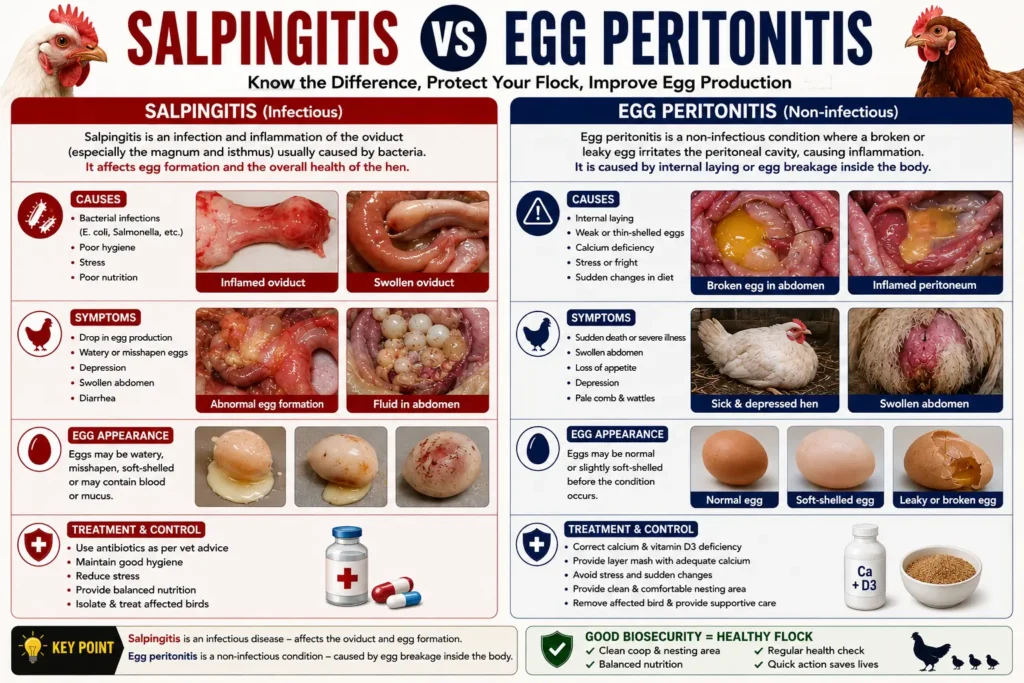
A hen with a swollen belly, hunched posture, and no interest in food could be dealing with one of two serious reproductive diseases. Understanding salpingitis vs egg peritonitis matters because both conditions cause similar outward symptoms but start from different points of failure inside the hen’s body. One is an infection of the oviduct. The other happens when yolk material ends up somewhere it should never be.
This guide compares both conditions side by side, covers what causes each one, and explains when home monitoring is enough versus when a hen needs emergency veterinary care.
Quick Answer: Salpingitis is an infection or inflammation of the oviduct, the tube that forms and moves eggs. Egg peritonitis happens when yolk material escapes into the abdominal cavity instead of traveling down the oviduct, triggering severe inflammation. The two conditions often occur together, since a damaged or infected oviduct raises the risk of yolk misdirection.
Table of Contents
What Is Salpingitis?
Salpingitis is inflammation or infection of the oviduct. This tube plays a central role in egg formation, adding albumen, membranes, and shell as a yolk travels from the ovary toward the vent. When bacteria infect this tissue, the normal laying process breaks down, and the hen’s overall health can decline quickly.
Veterinary pathology data reviewed through poultry extension programs consistently list salpingitis among the leading causes of death in mature laying hens, particularly those several years into egg production.
Read More: https://lashegg.com/salpingitis-vs-egg-binding/
Common Causes of Salpingitis
- Bacterial infection, most often E. coli, along with Salmonella and other organisms in some cases
- Ascending infection that travels upward from the cloaca into the reproductive tract
- Respiratory illness that spreads into the reproductive system
- Chronic stress, from overcrowding, poor ventilation, or environmental changes
- Age, since older hens face higher risk after years of laying
- Genetics, with some high-production breeds showing elevated rates
Symptoms of Salpingitis
- Declining or stopped egg production over time
- Swollen, fluid-filled abdomen
- Lethargy and reduced appetite
- Foul-smelling discharge from the vent
- Passing a lash egg, a solid mass of pus and tissue
- Penguin-like stance in advanced cases
What Is Egg Peritonitis?
Egg peritonitis, more precisely called egg yolk peritonitis, occurs when yolk material is released into the abdominal cavity instead of moving down the oviduct as intended. Once inside the abdomen, this yolk material acts as a foreign substance, triggering a strong inflammatory response and creating an environment where bacteria can thrive.
This condition is one of the most common reproductive diseases in commercial and backyard laying hens, and it becomes more frequent as hens age past their peak laying years.
Common Causes of Egg Peritonitis
- Internal laying, where the ovary releases a yolk that the oviduct fails to capture
- Oviduct blockage or damage, often linked to prior salpingitis or scarring
- Reverse peristalsis, where abnormal muscle contractions push egg material backward into the abdomen
- Ruptured ovarian follicles, allowing yolk to spill directly into the body cavity
- Trauma or injury to the reproductive tract
Symptoms of Egg Peritonitis
- Rapidly swollen, fluid-filled abdomen
- Sudden lethargy and weakness
- Loss of appetite
- Labored breathing, since abdominal fluid can press on the air sacs
- Pale comb and wattles
- Sudden death in acute or advanced cases
Salpingitis vs Egg Peritonitis: Side-by-Side Comparison Table
Comparing salpingitis vs egg peritonitis directly makes the overlap and the differences easier to understand.
| Feature | Salpingitis | Egg Peritonitis |
| Root cause | Bacterial infection or inflammation of the oviduct | Yolk material escaping into the abdominal cavity |
| Onset | Gradual, over days or weeks | Can be sudden and acute |
| Egg production | Declines steadily | Often stops abruptly |
| Abdominal fluid | Common in advanced cases | Common, often more pronounced |
| Discharge | Frequently present | Less commonly seen externally |
| Lash egg present | Sometimes | Rare |
| Relationship | Can lead to egg peritonitis if untreated | Can develop as a complication of salpingitis |
| Emergency level | Ranges from mild to severe | Frequently severe, especially in acute cases |
Reproductive Diseases: Where Salpingitis and Egg Peritonitis Fit Together
Among common poultry reproductive diseases, salpingitis and egg peritonitis are closely linked rather than fully separate conditions. Salpingitis damages or inflames the oviduct, which raises the odds that yolk material will end up misdirected into the abdomen, leading to egg peritonitis. Many veterinarians consider egg peritonitis a possible downstream complication of unresolved salpingitis, though it can also occur on its own without a prior infection.
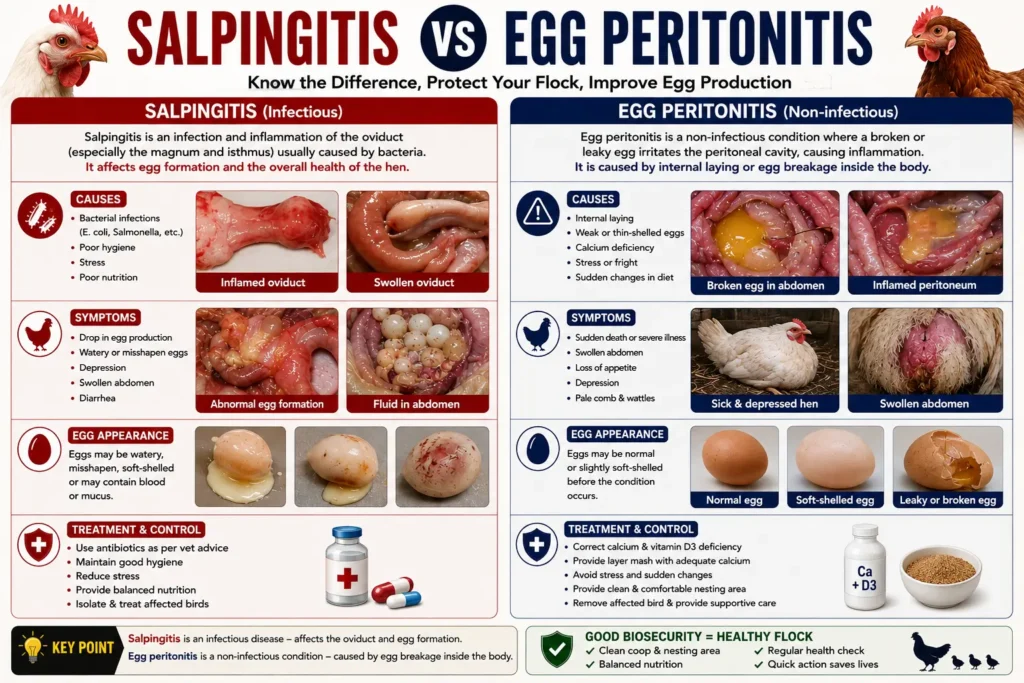
How Egg Peritonitis Develops After Salpingitis
Understanding the connection between these two reproductive diseases helps explain why prompt treatment matters. When the oviduct becomes inflamed from infection, its lining can lose the normal muscle tone and structure needed to catch and guide each yolk. A yolk released from the ovary at this point may miss the oviduct’s opening entirely.
Once yolk material sits in the abdominal cavity, the body treats it as a foreign substance. Bacteria already present from the original salpingitis infection can spread into this newly contaminated space, compounding the problem and accelerating the hen’s decline.
Did You Know?
Egg yolk peritonitis is sometimes nicknamed “internal laying” because the yolk essentially gets laid inside the hen’s body instead of passing through the vent. Despite the name, it is not a normal or harmless variation of laying. It is a serious medical emergency.
Diagnosing Salpingitis and Egg Peritonitis
A veterinarian experienced with poultry can distinguish between these conditions using several diagnostic tools, since symptoms alone often aren’t enough to confirm which one, or both, are present.
- Physical exam and abdominal palpation to assess swelling and fluid
- Radiographs or ultrasound to visualize the abdominal cavity and reproductive tract
- Abdominal fluid analysis, since fluid from egg peritonitis often has a distinct appearance
- Bloodwork to evaluate infection markers and overall organ function
- Culture and sensitivity testing to identify specific bacteria involved
- Necropsy, in hens that have already died, to confirm the diagnosis definitively
Expert Tip
If your hen has a history of a prior salpingitis diagnosis and later develops sudden abdominal swelling, mention that history to your vet right away. It significantly narrows down the likely cause and speeds up treatment decisions.
Treatment Options
Salpingitis Treatment
- Antibiotics selected based on culture results
- Anti-inflammatory medication to reduce swelling and pain
- Fluid drainage for hens with abdominal fluid buildup
- Supportive care, including isolation, clean bedding, and easy food and water access
Egg Peritonitis Treatment
- Antibiotics to address bacterial contamination in the abdominal cavity
- Fluid drainage, often needed more urgently than in salpingitis alone
- Anti-inflammatory support to manage pain and swelling
- Surgery, in select cases to remove yolk material or address a ruptured follicle
- Hormonal treatment, sometimes used to suppress further egg production and reduce recurrence risk
Warning
Egg peritonitis can progress from mild symptoms to critical illness within a short window, especially in acute cases. Do not wait to “see how she does” if a hen shows sudden abdominal swelling combined with lethargy or labored breathing. Rapid veterinary evaluation gives the best chance of a positive outcome.
Recovery and Long-Term Outlook
| Factor | Salpingitis | Egg Peritonitis |
| Typical recovery time | Days to weeks with treatment | Variable; acute cases progress quickly |
| Recurrence risk | Higher with chronic infection | Higher if underlying salpingitis isn’t resolved |
| Long-term laying | Often reduced in severe cases | Frequently reduced or stopped after recovery |
| Overall prognosis | Guarded to good, depending on stage | Guarded, especially in acute presentations |
Hens diagnosed early, before significant fluid buildup or organ stress, generally have better outcomes with either condition. Chronic or repeated cases of salpingitis carry a higher long-term risk of progressing to egg peritonitis, which is one more reason early treatment matters.
Prevention Strategies
- Maintain clean, dry coop bedding to reduce bacterial exposure
- Provide adequate space to lower crowding-related stress
- Feed a balanced, age-appropriate layer diet
- Support good ventilation to reduce respiratory illness risk
- Treat respiratory infections quickly before they can spread
- Monitor older hens more closely, since age raises risk for both conditions
- Address any prior salpingitis diagnosis fully, rather than assuming symptoms resolving means the infection is gone
Common Mistakes Owners Make
- Assuming abdominal swelling always means the same thing without vet input
- Treating a resolved case of salpingitis as fully behind you without monitoring for recurrence
- Delaying care for sudden, severe swelling, assuming it will pass on its own
- Not mentioning a hen’s prior reproductive health history to the vet
- Feeding lash egg material to other animals instead of disposing of it safely
- Skipping follow-up care after a salpingitis diagnosis, which raises the risk of complications like egg peritonitis
When to Call a Vet
Contact a poultry-experienced veterinarian promptly for any of these signs:
- Sudden or rapidly worsening abdominal swelling
- Labored or open-mouth breathing
- Complete loss of appetite lasting more than a day
- Foul-smelling vent discharge
- A lash egg found in the nesting box
- Sudden collapse or extreme lethargy
When to Call a Vet: Salpingitis vs Egg Peritonitis Urgency
Salpingitis symptoms often build gradually, giving owners a window to schedule a prompt but not necessarily same-day appointment. Egg peritonitis, especially acute cases, can escalate within hours. Treat any sudden abdominal swelling paired with breathing difficulty or collapse as an emergency requiring immediate veterinary attention.
Can Salpingitis Turn Into Egg Peritonitis?
Yes. Unresolved or chronic salpingitis can damage the oviduct enough that yolk material starts missing its intended path, leading to egg peritonitis. This progression is one of the strongest reasons to treat salpingitis fully and follow up with a vet rather than assuming symptoms improving means the infection has cleared completely.
Is Egg Peritonitis Always Fatal?
Not always, but outcomes vary widely depending on how quickly it’s caught and treated. Mild or early cases can respond well to antibiotics, fluid drainage, and supportive care. Acute, advanced cases carry a more serious prognosis, particularly when the hen already shows labored breathing or extreme lethargy at diagnosis.
The Role of Nutrition and Flock Management
Diet and daily management affect risk for both of these reproductive diseases more than most owners expect. Hens fed a balanced, calcium-appropriate layer diet tend to maintain stronger oviduct tone, which supports normal yolk capture and reduces the odds of internal laying. Overweight hens, by contrast, often show a higher rate of both salpingitis and egg peritonitis, since excess body fat can crowd the abdominal cavity and interfere with normal reproductive function.
Housing conditions matter just as much. Overcrowded coops raise baseline stress hormones, which can suppress immune response and make bacterial infections more likely to take hold in the first place. Consistent access to clean water, good ventilation, and enough space to move all support a healthier reproductive tract over the long term.
Age-Related Risk for Reproductive Diseases
Both salpingitis and egg peritonitis become more common as hens move past their peak laying years. Years of consistent egg production put cumulative wear on the oviduct and surrounding tissue, which raises vulnerability to infection and structural changes that allow yolk material to end up misdirected.
Owners keeping hens well into their third, fourth, or later laying seasons should watch more closely for early warning signs, including gradual changes in appetite, posture, or egg frequency. Catching either condition in its earlier stages consistently leads to better outcomes than waiting for more dramatic symptoms to appear.
Frequently Asked Questions
What is the main difference between salpingitis and egg peritonitis? Salpingitis is an infection of the oviduct itself. Egg peritonitis happens when yolk material escapes into the abdominal cavity. Looking at salpingitis vs egg peritonitis, one is a localized infection and the other is a broader inflammatory response inside the abdomen.
Can egg peritonitis happen without salpingitis? Yes. Egg peritonitis can occur on its own, often due to internal laying or a ruptured ovarian follicle, without a prior salpingitis diagnosis.
How are these two reproductive diseases connected? Among common reproductive diseases in laying hens, salpingitis and egg peritonitis frequently overlap because oviduct damage from salpingitis raises the risk of yolk material ending up misdirected into the abdomen.
Is egg peritonitis contagious to other hens? Egg peritonitis itself is not directly contagious, since it stems from an internal anatomical or infection-related issue in that specific hen. However, if a bacterial infection is the underlying driver, other hens sharing the same environment may face similar risk factors.
How can I tell if my hen has salpingitis or egg peritonitis at home? You generally cannot tell for certain without veterinary imaging and testing, since both conditions can cause abdominal swelling and lethargy. A vet exam with radiographs or ultrasound is the most reliable way to confirm which condition is present.
Can a hen recover fully from egg peritonitis? Some hens recover well, particularly with early treatment, though egg production often declines afterward. Severe or repeated cases carry a more guarded outlook for both survival and future laying.
What does abdominal fluid from egg peritonitis look like? It often has a thick, yellowish, or cloudy appearance due to yolk material and inflammatory cells, which differs from the clearer fluid sometimes seen in other causes of abdominal swelling. A vet can confirm this through fluid analysis.