Salpingitis vs Lash Egg: What Every Chicken Keeper Needs to Know

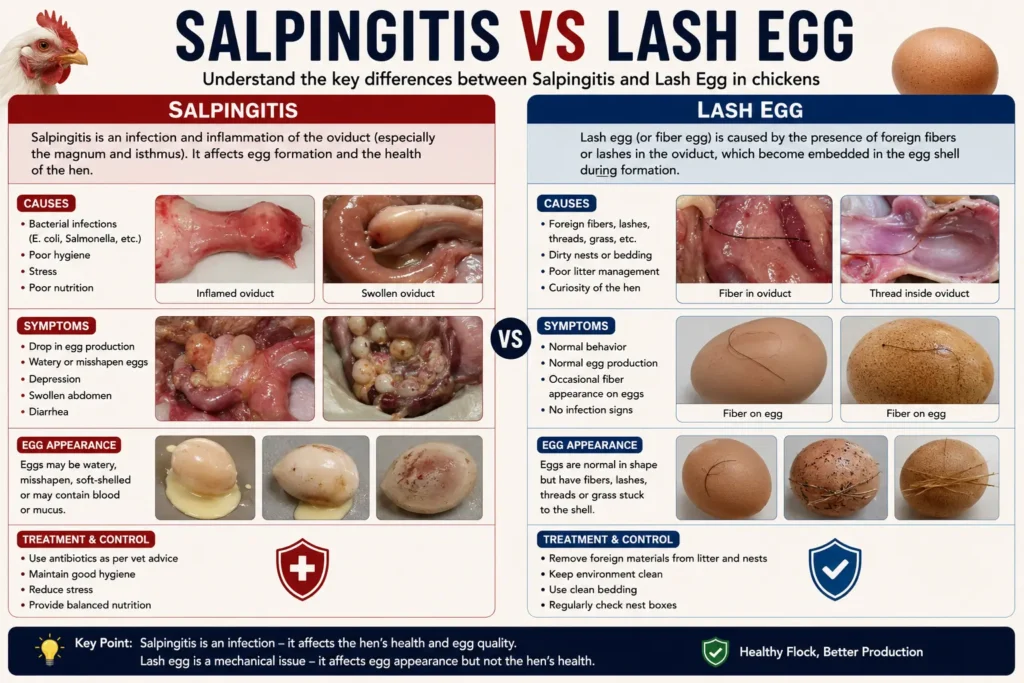
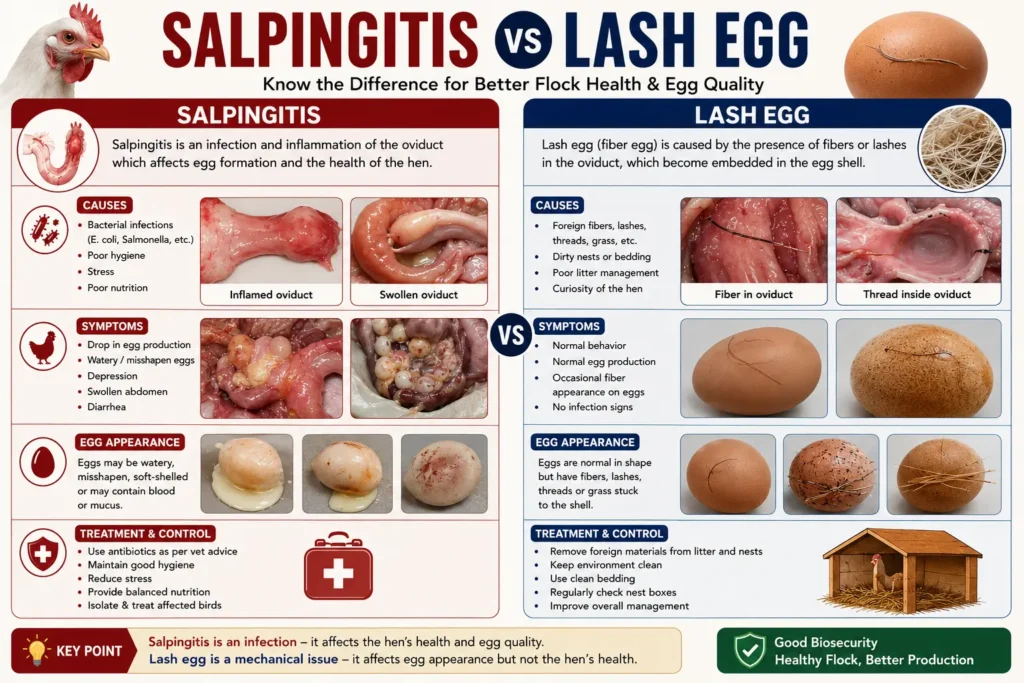
If you found a strange, rubbery, layered mass in your nesting box, you’re probably trying to figure out salpingitis vs lash egg and whether your hen is in danger. A lash egg is not really an egg at all. It’s a physical sign that your hen has salpingitis, an infection or inflammation of the oviduct. Understanding how these two terms connect — and where they differ — can help you respond correctly and get your hen the care she needs.
This guide breaks down both conditions in plain language, compares their symptoms side by side, and explains when home observation is enough and when a vet visit is not optional.
Quick Answer: Salpingitis is the disease — an infection or inflammation of the hen’s oviduct. A lash egg is the symptom — a solid, cheese-like mass of pus, tissue, and egg material that a hen with salpingitis sometimes passes. Every lash egg points to salpingitis, but not every case of salpingitis produces a lash egg.
Table of Contents
What Is Salpingitis?
Salpingitis is inflammation or infection of the oviduct, the tube that carries a developing egg from the ovary to the vent. In hens, this tube does a lot of work. It adds albumen, membranes, and shell to the yolk as it travels. When bacteria invade this tract, the tissue becomes inflamed, and the normal egg-laying process breaks down.
The condition is one of the most common reproductive disorders in backyard and commercial laying hens. It ranks among the leading causes of death in older hens that have laid eggs for several years, according to poultry pathology data reviewed by veterinary extension programs.
Read More: https://lashegg.com/vaccination-and-reproductive-health/
Common Causes of Salpingitis
Salpingitis usually starts with a bacterial infection, but several underlying factors make hens more vulnerable:
- Bacterial invasion, most often from E. coli, though Salmonella and other organisms can also be involved
- Ascending infection from the cloaca, where bacteria travel upward into the reproductive tract
- Respiratory infections that spread to the reproductive system
- Stress, including overcrowding, poor ventilation, or sudden environmental changes
- Genetics and breed, since some high-production laying breeds show higher rates
- Age, with older hens more prone to reproductive tract issues after years of laying
- Obesity or poor nutrition, which weakens the immune response
Symptoms of Salpingitis
Signs vary depending on how advanced the infection is. Early cases can look almost normal, which is part of why salpingitis is often caught late.
- Reduced or stopped egg production
- Swollen, fluid-filled abdomen (sometimes called “water belly”)
- Lethargy and reduced appetite
- A penguin-like stance from abdominal swelling
- Pale or shrunken comb
- Foul-smelling discharge from the vent
- Passing a lash egg
- Sudden death in severe or advanced cases
What Is a Lash Egg?
A lash egg is not a true egg. It’s a firm, often layered mass made of coagulated pus, cellular debris, and sometimes bits of yolk or shell membrane, all bound together by inflammatory material. It forms inside an infected oviduct and is eventually expelled the same way a normal egg would be, through the vent.
Lash eggs can look strikingly different from case to case. Some resemble a lumpy boiled egg white. Others look like a solid, rubbery mass with concentric rings, similar to an onion cut in half. Color ranges from white and yellow to green or reddish-brown, depending on the amount of blood and the type of infection present.
Did You Know?
A lash egg has zero nutritional resemblance to a real egg. It contains no usable yolk or albumen in the way a fertile or table egg does. It is essentially an infection byproduct, not a food item, and should never be eaten or fed to other animals.
Salpingitis vs Lash Egg: Side-by-Side Comparison Table
The clearest way to understand salpingitis vs lash egg is to see them next to each other. One is the disease process. The other is a possible physical result of that disease.
| Feature | Salpingitis | Lash Egg |
| What it is | An infection or inflammation of the oviduct | A solid mass of pus, tissue, and egg material |
| Category | A disease condition | A symptom or byproduct of the disease |
| Always present? | Can occur without ever producing a lash egg | Only forms in a hen that already has salpingitis |
| Visibility | Often internal; may show only as swelling or lethargy | Physically visible, usually found in the nesting box |
| Diagnosis method | Vet exam, palpation, imaging, bloodwork | Visual identification, often the first clue to salpingitis |
| Urgency | Ranges from mild to life-threatening | Always signals an active or past infection needing evaluation |
Difference Between Salpingitis and Lash Egg: The Simple Version
The difference between salpingitis and lash egg comes down to cause versus effect. Salpingitis is the underlying medical condition happening inside the hen’s reproductive tract. A lash egg is physical evidence that this condition exists or has recently occurred. Think of salpingitis as the illness and the lash egg as one possible symptom of that illness, similar to how a cough is a symptom of bronchitis rather than a separate disease.
How Lash Eggs Form Inside the Oviduct
Understanding the biology helps explain why lash eggs look the way they do. When bacteria infect the oviduct, the hen’s immune system responds by sending white blood cells to the site. These cells, along with dead tissue and inflammatory fluid, mix with any yolk material or shell membrane present at the time.
Instead of moving smoothly down the reproductive tract the way a normal egg does, this mixture clumps together. The oviduct’s muscular contractions, the same ones that would normally push an egg toward the vent, eventually expel this solid mass. That is the lash egg you find in the coop.
Diagnosing Salpingitis and Lash Egg Cases
A lash egg in the nesting box is often the first visible sign an owner notices, but it should never be treated as the whole diagnosis. A veterinarian, ideally one experienced with poultry or avian medicine, can confirm the extent of the problem through several methods.
Diagnostic Steps a Vet May Use
- Physical exam and abdominal palpation to check for fluid buildup or masses
- Bloodwork to look for signs of infection or inflammation
- Radiographs or ultrasound to visualize the reproductive tract and abdominal cavity
- Culture and sensitivity testing of any discharge to identify the specific bacteria
- Necropsy, in cases where a hen has already died, to confirm the diagnosis and rule out other conditions
Expert Tip
Bring the lash egg itself to the vet appointment if possible, sealed in a clean container. It gives the veterinarian useful physical evidence and can help guide testing, especially culture and sensitivity work.
Treatment Options
Treatment depends heavily on how advanced the infection is and how the hen is responding overall.
Home Care and Supportive Measures
- Isolate the affected hen to reduce stress and monitor food and water intake
- Keep the coop clean, dry, and well-ventilated
- Ensure easy access to fresh water and a balanced layer diet
- Watch closely for changes in droppings, appetite, and activity level
Veterinary Treatment
- Antibiotics prescribed based on culture results, since not all antibiotics are effective against the same bacteria
- Anti-inflammatory medication to reduce swelling and discomfort
- Fluid drainage, in cases of significant abdominal fluid buildup
- Surgery, in select cases where the oviduct is severely damaged or an abscess needs removal
- Egg-laying suppression, sometimes recommended long-term to reduce strain on the reproductive tract
Warning
Salpingitis is not something to treat with guesswork or leftover antibiotics from a previous flock issue. Using the wrong antibiotic, or using one without veterinary guidance, can allow resistant bacteria to develop and can delay effective treatment while the infection worsens.
Salpingitis vs Lash Egg: Recovery Outlook
| Factor | Better Prognosis | Poorer Prognosis |
| Timing | Caught early, before major swelling | Diagnosed after severe abdominal fluid buildup |
| Hen’s condition | Still eating, active, alert | Lethargic, not eating, hunched posture |
| Treatment access | Prompt vet care and targeted antibiotics | Delayed care or self-medication |
| Recurrence | Single, resolved episode | Repeated episodes in the same hen |
Some hens recover fully after a single episode of salpingitis, especially when caught early and treated promptly. Others have recurring issues, since the oviduct tissue can remain more vulnerable to future infection once it has been inflamed. Chronic or repeat cases carry a more guarded long-term outlook.
Prevention: Reducing the Risk in Your Flock
While no method guarantees a hen will never develop salpingitis, several management practices lower the risk.
- Keep coop bedding clean and dry to reduce bacterial buildup
- Provide adequate space to reduce crowding stress
- Feed a balanced, age-appropriate layer diet
- Maintain good ventilation to support respiratory health
- Avoid abrupt changes in light schedules that can overstimulate egg production
- Monitor older hens more closely, since age increases risk
- Address respiratory illness quickly, since it can ascend into the reproductive tract
Common Mistakes Owners Make
- Assuming a lash egg is just an odd-shaped egg and ignoring it
- Waiting to see if symptoms “go away on their own” before calling a vet
- Feeding the lash egg to other animals
- Using random antibiotics without a proper diagnosis
- Not isolating a sick hen, which can add stress from flock dynamics
- Overlooking early signs like reduced appetite or a slightly swollen abdomen
When to Call a Vet
Contact a poultry-experienced veterinarian promptly if you notice any of the following:
- A lash egg in the nesting box, even if the hen seems otherwise fine
- A visibly swollen or fluid-filled abdomen
- A hen standing in a penguin-like posture
- Sudden drop in egg production combined with lethargy
- Foul odor coming from the vent area
- Loss of appetite lasting more than a day
Early veterinary involvement gives a hen the best chance at a full recovery. Waiting until a hen is severely lethargic or not eating significantly lowers the odds of successful treatment.
Can a Hen Lay Normal Eggs Again After Salpingitis?
Many hens do return to normal or near-normal egg production after a mild, well-treated case of salpingitis. However, hens with more severe or repeated infections sometimes see permanently reduced production, irregular laying, or a complete stop in laying if the oviduct sustains lasting damage. Your veterinarian can give the most accurate outlook based on the hen’s specific case and response to treatment.
Is Salpingitis Contagious to Other Hens?
Salpingitis itself is not typically considered directly contagious between hens in the way a respiratory virus spreads. However, if the underlying cause is a bacterial infection tied to poor sanitation or a shared environmental source, other hens in the same coop can be at elevated risk from the same conditions. Keeping the coop clean and monitoring flockmates after a case is diagnosed is a reasonable precaution.
Salpingitis vs Egg Yolk Peritonitis: A Related Condition
Salpingitis is sometimes confused with egg yolk peritonitis, another reproductive condition in hens. Egg yolk peritonitis happens when yolk material is released into the abdominal cavity instead of traveling down the oviduct, triggering inflammation. The two conditions can occur together, since an infected or damaged oviduct raises the risk of yolk misdirection. A veterinarian can help distinguish between them through imaging and bloodwork.
Frequently Asked Questions
What is the main difference between salpingitis and lash egg? Salpingitis is the underlying infection or inflammation of a hen’s oviduct. A lash egg is a physical mass the hen may pass as a result of that infection. Comparing salpingitis vs lash egg, one is the disease and the other is a possible symptom.
Does every hen with salpingitis pass a lash egg? No. Some hens with salpingitis never produce a visible lash egg, especially in early or mild cases. Others pass one or more over time as the infection progresses.
Can a lash egg happen without salpingitis? Lash eggs are considered a direct result of salpingitis. If you find one, it’s a strong signal that salpingitis is present or has recently occurred, even if other symptoms are not obvious yet.
Is a lash egg an emergency? It’s not always an immediate emergency, but it should never be ignored. Schedule a veterinary evaluation soon after finding one, and seek urgent care right away if the hen shows lethargy, abdominal swelling, or loss of appetite.
Can salpingitis be cured? Many cases respond well to prompt veterinary treatment, particularly antibiotics chosen based on culture results. Severe or repeated cases carry a more guarded outlook and may cause lasting changes to egg production.
What does a lash egg look like compared to a normal egg? A lash egg often has a lumpy, layered, or rubbery texture and lacks a proper shell. It may show rings similar to a sliced onion and can range in color from white to yellow, green, or reddish-brown, unlike the uniform shape of a normal egg.
Should I isolate a hen after finding a lash egg? Yes. Isolating the hen reduces stress from flock dynamics, makes it easier to monitor her food, water, and droppings, and simplifies any treatment plan your vet recommends.