Soft Shell Egg vs Lash Egg: Why Telling Them Apart Matters

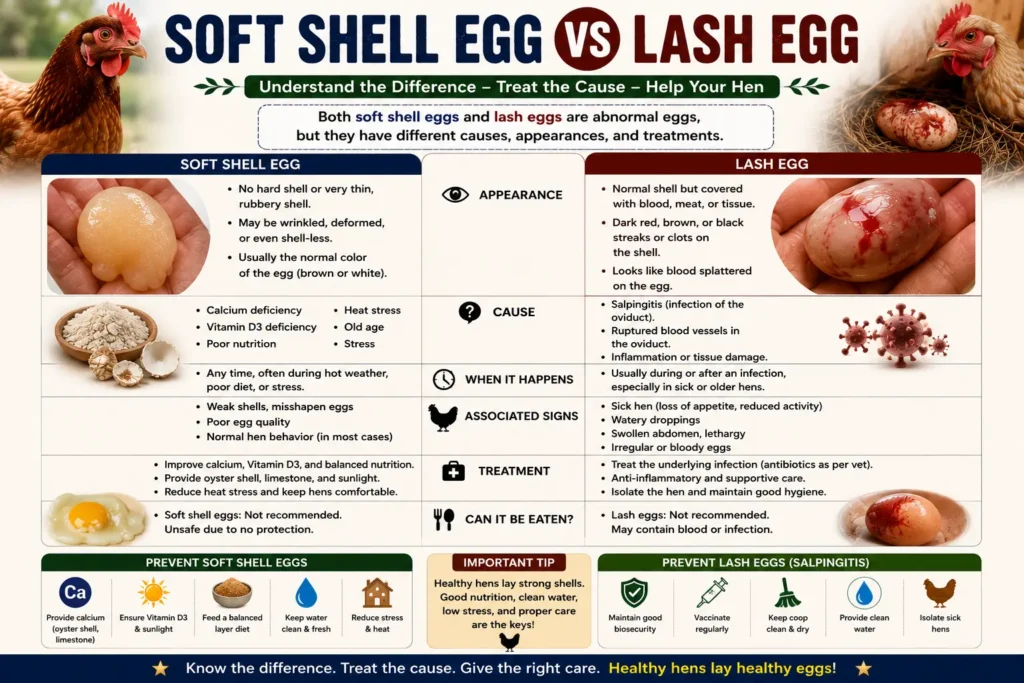
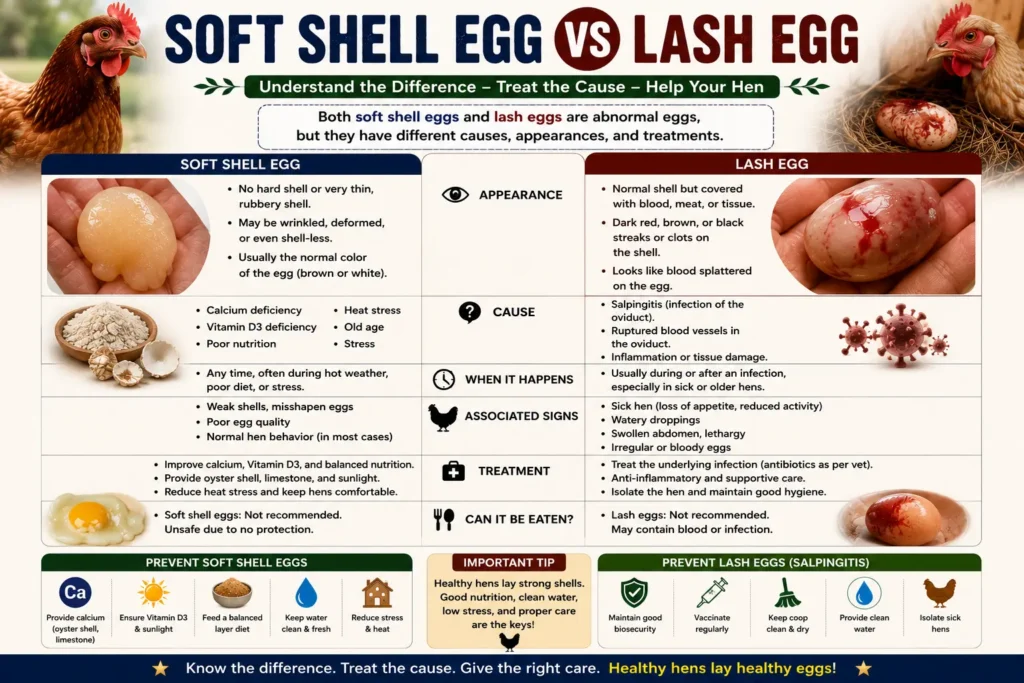
Two unusual finds in the nest box can look equally alarming at first glance, but they call for completely different responses. The soft shell egg vs lash egg comparison is one of the most important distinctions a backyard chicken owner can learn, because one usually means a quick diet fix, and the other means a same-day call to the vet.
A soft shell egg is a true egg with a thin, rubbery, or missing shell, most often caused by a calcium shortfall, heat, or stress. A lash egg isn’t a true egg at all — it’s a firm mass of pus, tissue, and egg material caused by salpingitis, a bacterial infection of the oviduct. This guide breaks down exactly how to tell them apart and what each one means for your hen’s health.
Quick Answer: A soft shell egg has all the normal internal egg components (yolk, albumen) inside a thin or missing shell, and is usually caused by calcium deficiency, heat, or stress. A lash egg is not a real egg — it’s infected material from the oviduct caused by salpingitis, and always warrants a veterinary evaluation.
Table of Contents
Soft Shell Egg vs Lash Egg: The Core Difference
The clearest way to separate these two is to understand what each one actually is, not just what it looks like.
- Soft shell egg: A genuine egg — yolk, albumen, and membrane — with an underdeveloped hard shell layer. The shell gland simply didn’t deposit enough calcium carbonate during formation.
- Lash egg: Not an egg at all, despite the nickname. It’s a solid mass built from pus, dead tissue, and sometimes egg material, produced when an infected oviduct expels its contents.
One is a nutritional or environmental hiccup in an otherwise normal egg-forming process. The other is a sign of active infection. That difference is the entire reason this comparison matters.
Read More: https://lashegg.com/soft-shell-egg-treatment/
H3: Soft Shell Egg vs Lash Egg — Side-by-Side Comparison
| Feature | Soft Shell Egg | Lash Egg |
| Is it a true egg? | Yes | No — it’s infected material shaped roughly like an egg |
| Shell present? | Yes, thin or rubbery | No true shell, may have a thin or irregular coating |
| Texture | Soft, flexible, membrane-covered | Firm, layered, sometimes described as cheese-like |
| Color | Normal egg tones | Often yellowish, grayish, or streaked with blood |
| Underlying cause | Calcium deficiency, heat, stress, age | Salpingitis (bacterial oviduct infection) |
| Associated symptoms | Usually none beyond the egg itself | Abdominal swelling, lethargy, reduced laying |
| Safe to eat? | Yes | No |
| Needs a vet? | Rarely, unless persistent | Yes, always |
What a Soft Shell Egg Actually Looks Like
A soft shell egg still has a recognizable egg shape and normal internal contents. The shell itself may be:
- Thin enough to see light through
- Rubbery or bendable rather than hard
- Wrinkled or slightly misshapen
- Occasionally absent entirely, leaving just the membrane
If you gently press it, a soft shell egg gives slightly but holds together, since the membrane underneath is intact even when the shell isn’t fully formed.
What a Lash Egg Actually Looks Like
A lash egg looks and feels distinctly different from any true egg, soft-shelled or otherwise:
- Often irregular or lumpy in shape rather than a smooth oval
- A firm, layered texture, sometimes compared to cottage cheese or a boiled egg white in consistency
- Colors ranging from pale yellow to gray, sometimes with visible blood streaking
- No genuine eggshell structure, even a thin or soft one
Warning: If what you’re holding doesn’t have a real shell at all, and instead feels like a solid, cheese-like mass, treat it as a likely lash egg rather than an extreme version of a soft shell egg. This distinction should prompt a veterinary visit, not a diet change.
Why These Two Get Confused
Both are unusual, both show up unexpectedly in the nest box, and both deviate from what a “normal” egg should look like. For an owner who’s never seen either one before, the instinct to lump them together as “weird eggs” is understandable.
The confusion becomes a real problem when it goes the wrong direction — either panicking over a harmless soft shell egg, or dismissing a genuine lash egg as “just a soft one” and delaying care an infected hen actually needs.
Causes: Why One Is a Diet Issue and the Other Is an Infection
H3: What Causes a Soft Shell Egg
- Calcium deficiency, the most common cause
- New pullets whose shell gland is still calibrating
- Heat stress, which reduces the bicarbonate needed for shell formation
- General flock stress
- Normal decline in older hens
H3: What Causes a Lash Egg
- Bacterial infection of the oviduct, most often linked to ascending E. coli
- Reproductive stress from high egg-laying frequency
- Poor sanitation contributing to bacterial exposure
- Prior reproductive tract abnormalities
Did You Know? Sources referencing the Merck Veterinary Manual identify salpingitis as one of the leading causes of mortality in laying hens, which is part of why distinguishing a lash egg from a harmless soft shell egg matters so much for early intervention.
Symptoms That Go Along With Each
A soft shell egg on its own, in a hen that’s otherwise eating, drinking, and behaving normally, typically isn’t paired with other symptoms. A lash egg almost always signals something bigger happening internally.
| Symptom | Soft Shell Egg | Lash Egg |
| Normal appetite and behavior | Usually yes | Often reduced |
| Abdominal swelling | No | Common |
| “Penguin” upright stance | No | Common in advanced cases |
| Reduced or stopped laying | Rarely, unless illness-related | Common |
| Lethargy | Rarely | Common |
| Pale comb | Rarely | Sometimes, in advanced cases |
What to Do If You Find a Soft Shell Egg
- Check your feed — confirm it’s a complete layer feed with adequate calcium
- Offer crushed oyster shell free-choice, separate from regular feed
- Ensure fresh water is always available, especially during hot weather
- Reduce any recent sources of flock stress
- Give it two to three weeks; most cases resolve with these adjustments
What to Do If You Find a Lash Egg
- Isolate the hen if you can identify her, to reduce flock stress and pecking risk
- Do not attempt to treat this at home with supplements or diet changes
- Contact a veterinarian, ideally one with poultry experience, as soon as possible
- Monitor for additional symptoms — abdominal swelling, lethargy, stopped laying — to report at the visit
- Follow the veterinarian’s diagnostic and treatment plan, which may include antibiotics, imaging, or in advanced cases, surgical evaluation
Expert Tip: Take a photo of the egg before disposing of it, whether you suspect a soft shell egg or a lash egg. A photo helps a veterinarian assess severity over the phone or during a video consult, especially useful if you’re trying to decide how urgently to schedule a visit.
When to Call a Vet
When to Call a Vet: A soft shell egg alone rarely needs a vet visit unless it persists beyond two to three weeks of proper treatment. A lash egg always warrants a same-week, ideally same-day, veterinary evaluation, especially if paired with abdominal swelling, lethargy, or stopped laying.
Common Mistakes Owners Make
Common Mistakes
- Assuming any unusual-looking egg is automatically a lash egg and panicking unnecessarily
- Dismissing a genuine lash egg as just a bad soft shell egg and delaying veterinary care
- Treating a lash egg with home remedies meant for calcium deficiency
- Not checking texture and shell structure closely enough to tell the two apart
- Ignoring accompanying symptoms that would clarify which condition is actually present
People Also Ask
Can a soft shell egg turn into a lash egg? No. They’re caused by entirely different processes — one by calcium and shell-formation issues, the other by bacterial infection. A soft shell egg doesn’t progress into a lash egg over time.
How can I tell soft shell egg vs lash egg without cutting it open? Check the texture and shape first. A soft shell egg holds an egg shape with a flexible membrane underneath; a lash egg is often irregular, firm, and layered, without true shell structure at all.
Is a lash egg always a sign of salpingitis? Yes, a lash egg is specifically associated with salpingitis, inflammation or infection of the oviduct, and its presence is considered a strong indicator of that condition.
Do both soft shell eggs and lash eggs mean my hen is sick? Not necessarily for a soft shell egg, which is often dietary or environmental. A lash egg, however, does indicate an underlying health issue that needs veterinary attention.
Can I eat either a soft shell egg or a lash egg? A soft shell egg is safe to eat if the membrane is intact and undamaged. A lash egg should never be eaten, since it’s infected material rather than a true egg.
Final Thoughts
The soft shell egg vs lash egg comparison boils down to one key question: is this a true egg with a shell problem, or infected material shaped like one? A soft shell egg, however alarming it looks the first time you find one, is usually a fixable nutritional or environmental issue. A lash egg is a genuine health concern that needs a veterinarian.
When you’re not sure which one you’re looking at, check the texture and shape first, and watch your hen for accompanying symptoms. If anything points toward infection rather than a simple shell issue, treat it as worth a veterinary opinion rather than a guessing game at home.
FAQ
What’s the main difference in the soft shell egg vs lash egg comparison? A soft shell egg is a real egg with a thin or missing shell, caused by calcium deficiency, heat, or stress. A lash egg is not a true egg — it’s infected material from the oviduct caused by salpingitis.
Which is more dangerous, a soft shell egg or a lash egg? A lash egg is far more concerning, since it points to an active bacterial infection that can be serious or even fatal if untreated. A soft shell egg is rarely dangerous on its own.
Can a lash egg look soft like a soft shell egg? It can appear soft or lumpy, but the texture is typically firmer and more layered than a soft shell egg’s flexible membrane, and it lacks the true shell structure a soft shell egg still has.
Should I take a photo before disposing of an unusual egg? Yes, a photo can help a veterinarian assess whether you’re dealing with a soft shell egg or a lash egg, especially useful for a phone consult before an in-person visit.
Do soft shell eggs and lash eggs happen for the same reasons? No. Soft shell eggs relate to calcium and shell-formation issues, while lash eggs relate to bacterial infection of the oviduct — two very different underlying processes.
Is it normal to find either a soft shell egg or a lash egg occasionally? An occasional soft shell egg is common and usually not concerning. A lash egg, even a single occurrence, is not considered a normal or expected finding and always warrants veterinary attention.