Veterinary Treatment for Lash Egg: Why the Vet Visit Matters

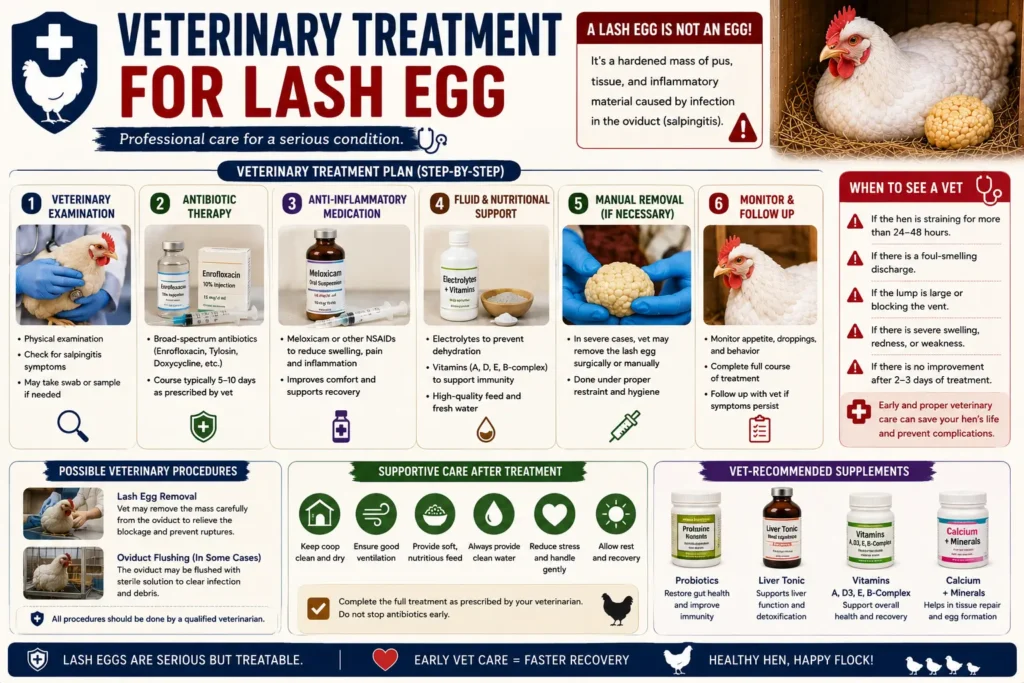
If your hen has passed a lash egg, you’ve probably already handled the first shock and started wondering what veterinary treatment for lash egg actually involves. It’s a fair question, because most online advice stops at “see a vet” without explaining what that appointment looks like. This guide walks through the exam, the testing, the medication options, and what recovery under professional care tends to involve.
Table of Contents
Quick Answer
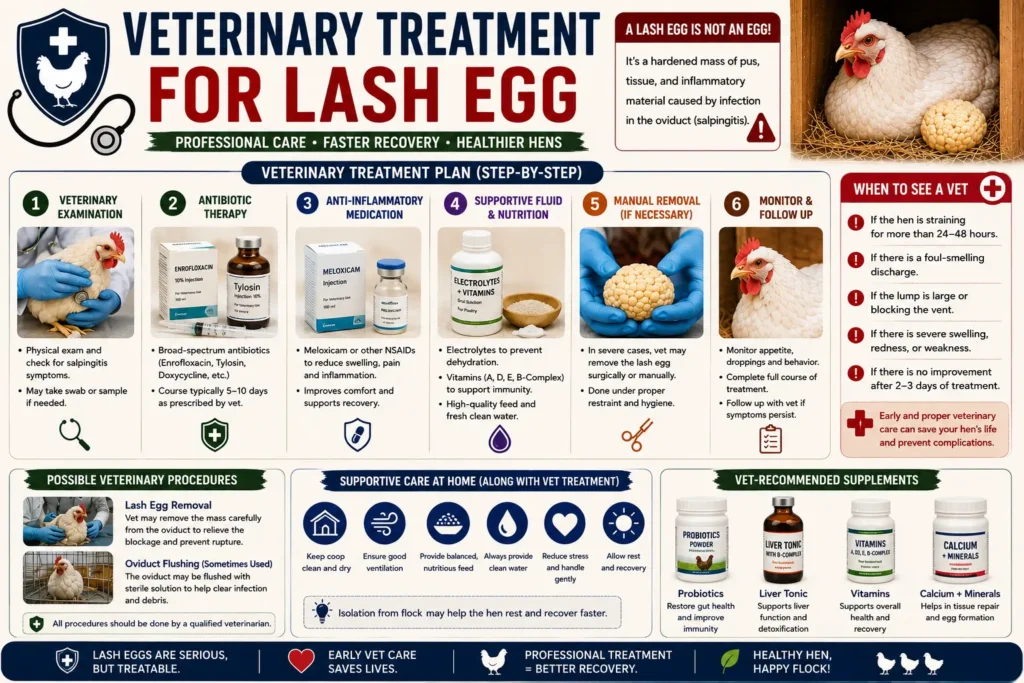
Veterinary treatment for lash egg typically starts with a physical exam, sometimes followed by imaging or bloodwork to confirm salpingitis and rule out complications. Treatment often includes prescribed antibiotics chosen based on the suspected bacteria, along with supportive care like fluids or anti-inflammatory medication. Severe or recurring cases may need surgery.
Why Professional Diagnosis Comes First
A lash egg is a visible symptom, not a diagnosis. It tells you something is wrong inside the oviduct, but not exactly what, how advanced it is, or which bacteria are involved. That’s the gap veterinary treatment for lash egg is built to close.
Home care can support a hen’s comfort and hydration, but it can’t identify the specific cause or confirm how far the infection has progressed. Only a vet visit can provide the exam, bloodwork, or imaging needed for a proper diagnosis.
Read More: https://lashegg.com/home-remedies-for-lash-egg/
Did You Know?
Salpingitis is one of the more common reproductive conditions seen in backyard laying hens, especially hybrid breeds bred for high egg output, according to general poultry veterinary literature referenced by sources like the Merck Veterinary Manual.
What Happens During a Vet Visit for a Lash Egg
Step 1: History and Physical Exam
The vet will ask about recent egg production, appetite, behavior changes, and how many lash eggs have appeared. A hands-on exam checks for abdominal swelling, body condition, and signs of pain or fluid buildup.
Step 2: Diagnostic Testing
Depending on findings, further testing helps confirm the diagnosis and guide veterinary treatment for lash egg cases accurately.
| Diagnostic Tool | What It Shows |
| Physical palpation | Abdominal swelling, fluid, or masses |
| X-ray (radiograph) | Internal structure, retained eggs, fluid |
| Ultrasound | Soft tissue detail, fluid pockets, oviduct condition |
| Bloodwork | Signs of systemic infection or inflammation |
| Culture and sensitivity testing | Identifies the exact bacteria and best-matched antibiotic |
Expert Tip
Ask specifically whether culture and sensitivity testing is an option. It takes longer than a general exam, but it tells the vet exactly which antibiotic will work best against the bacteria involved, rather than guessing based on common patterns.
Veterinary Treatment for Lash Egg: Antibiotics and Medication
Antibiotics are usually the centerpiece of veterinary treatment for lash egg cases caused by confirmed or suspected bacterial infection. The specific choice depends on the vet’s assessment, and sometimes on culture results.
Here’s what typically factors into that decision:
- Type of bacteria suspected or confirmed, since not all antibiotics work against every bacteria
- Severity of the infection, which can affect dosage duration and delivery method
- The hen’s overall health, including hydration and body condition
- Whether she’s still in lay, since some medications require an egg withdrawal period before eggs are safe to eat again
Warning
Never give a hen antibiotics left over from a previous illness or another animal without veterinary guidance. Using the wrong antibiotic, or an incorrect dose, can fail to treat the infection and contribute to antibiotic resistance.
Vet Care vs. Self-Medicating: A Quick Comparison
| Approach | Outcome |
| Vet-guided antibiotics | Matched to the likely or confirmed bacteria, dosed appropriately |
| Over-the-counter or leftover antibiotics | Risk of wrong drug, wrong dose, and treatment failure |
| No antibiotics, home care only | May work for very mild cases, risky for confirmed infection |
Beyond Antibiotics: Other Veterinary Treatment Options
Veterinary treatment for lash egg isn’t always just antibiotics. Depending on the case, a vet may also recommend:
- Anti-inflammatory medication to reduce pain and swelling
- Fluid therapy, given orally or by injection, for dehydrated hens
- Hormonal treatment in select cases, to pause egg production temporarily and let the oviduct heal
- Surgical removal of damaged tissue (salpingectomy) in severe, recurring, or advanced cases where the oviduct is significantly damaged
When to Call a Vet
Don’t wait for every symptom to appear before reaching out. Contact a vet promptly if your hen has passed more than one lash egg, seems lethargic or off her food, has a swollen abdomen, or shows a persistent bad smell from the vent.
What Vet Care Costs and Why It Varies
Costs for veterinary treatment for lash egg vary widely depending on your location, the vet’s specialty, and how much diagnostic testing is needed. A basic exam costs less than a visit involving imaging, bloodwork, and a course of medication. Because pricing varies so much by region and clinic, it’s worth calling ahead to ask for a general estimate before your appointment.
Common Mistakes With Veterinary Treatment for Lash Egg
- Stopping antibiotics early once the hen seems better, which can let the infection rebound
- Skipping the follow-up exam a vet recommends
- Assuming all vets have poultry experience, when many focus mainly on small animals
- Mixing home remedies with prescribed medication without checking for interactions
Finding the Right Vet for Lash Egg Treatment
Not every veterinary clinic treats poultry regularly. Look specifically for an avian or poultry-experienced vet, since chicken anatomy, medication dosing, and egg-withdrawal periods differ significantly from cats and dogs. University extension services and local poultry associations often maintain referral lists if your regular vet doesn’t see backyard chickens.
Recovery After Veterinary Treatment
| Stage | What to Expect |
| First 2–3 days | Medication begins; energy and appetite should start trending upward |
| First week | Continued improvement expected if the antibiotic matches the infection |
| 2–4 weeks | Egg laying may resume, sometimes at a reduced rate |
| Ongoing | Recurrence is possible, especially in high-production breeds, so monitoring continues |
Following the Full Treatment Plan
- Give the full course of medication, even after symptoms improve.
- Keep the hen isolated until the vet confirms she’s ready to rejoin the flock.
- Track appetite, energy, and droppings daily during treatment.
- Attend any recommended follow-up appointment.
- Report new or worsening symptoms immediately, rather than waiting for the next scheduled check-in.
How Vet Care and Home Support Work Together
Veterinary treatment for lash egg addresses the infection directly, while supportive home care keeps the hen comfortable and stable around it. Isolation, hydration, warmth, and a calm environment all complement prescribed medication rather than compete with it. Neither approach fully replaces the other in a confirmed infection.
Preventing Future Cases
- Schedule routine flock check-ups with a poultry-experienced vet, not just emergency visits
- Maintain clean coop conditions to reduce bacterial exposure
- Feed a balanced layer diet with adequate calcium and protein
- Watch older or high-production hens more closely for early symptoms
- Address respiratory illness quickly, since it can spread to the reproductive tract
Conclusion
Veterinary treatment for lash egg gives your hen access to diagnosis and medication that home care simply can’t provide on its own. An exam, the right testing, and a properly matched antibiotic or other treatment plan address the infection directly, while your ongoing monitoring at home supports the recovery around it. Keep watching for changes in appetite, energy, and egg production, and don’t hesitate to return to the vet if anything seems off during recovery.
5. FAQ
What does veterinary treatment for lash egg usually involve? It typically starts with a physical exam, sometimes followed by imaging or bloodwork, and often includes prescribed antibiotics along with supportive care like fluids or anti-inflammatory medication.
Do all lash eggs require antibiotics? Not always. Mild, isolated cases sometimes resolve with supportive care, but a vet exam is the best way to confirm whether antibiotics are needed.
How do vets choose which antibiotic to use for a lash egg? Vets consider the suspected bacteria, the hen’s overall health, and sometimes culture and sensitivity testing, which identifies the exact bacteria and best-matched medication.
Is surgery ever needed for lash egg treatment? Yes, in severe or recurring cases where the oviduct is significantly damaged, a vet may recommend surgical removal of the affected tissue.
How much does veterinary treatment for lash egg cost? Costs vary by region, clinic, and how much diagnostic testing is needed, so it’s best to call ahead and ask for a general estimate.
Can I treat a lash egg without a vet? Some very mild cases may improve with home care alone, but confirmed bacterial infections generally need vet-prescribed antibiotics for full recovery.
How long does antibiotic treatment for a lash egg usually last? Duration depends on the specific medication and severity, and it’s set by the prescribing vet based on the individual case.
What kind of vet treats chickens with lash eggs? Look for an avian or poultry-experienced veterinarian, since general small-animal vets may have limited chicken-specific experience.