How to Keep Chickens Cool in Summer: The Practical, Day-to-Day Side

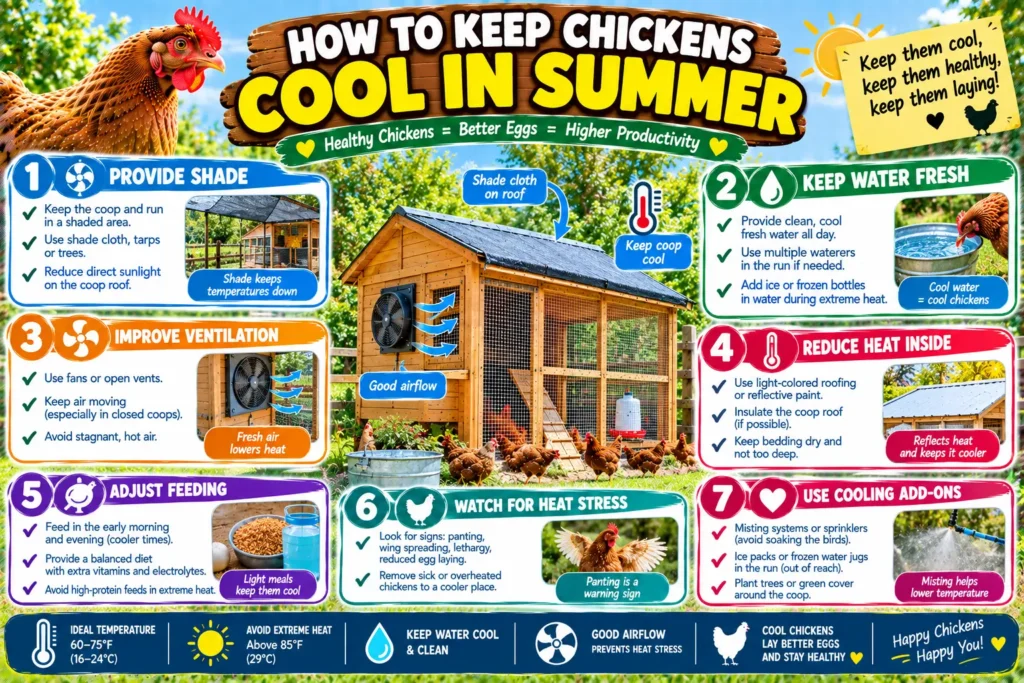
How to keep chickens cool in summer goes beyond the basic shade-and-water advice covered elsewhere. This guide focuses on two things that matter most in the moment: recognizing and responding to actual heatstroke, and the practical daily techniques that make a real difference during extended heat.
Cooling equipment and coop-level heat management get their own dedicated coverage; here, the focus is on the bird-level, hands-on side of summer chicken care.
Quick Answer: Keeping chickens cool in summer relies on shade, constant cool water, good ventilation, and reduced handling during peak heat. When a bird shows signs of heatstroke, panting heavily, pale comb, stumbling, or collapse, immediate cooling (not ice-cold, which can shock the system) and prompt veterinary contact matter more than any daily prevention step.
Table of Contents
Recognizing Heat Distress Before It Becomes an Emergency
Early Warning Signs
- Panting with an open beak, even while resting
- Wings held away from the body
- Reduced activity, seeking shade persistently
- Reduced feed intake, increased water consumption
Signs of Genuine Heatstroke Emergency
- Labored, rapid, or gasping breathing that doesn’t ease in shade
- Pale or purplish comb color
- Stumbling, loss of coordination, or inability to stand
- Collapse or unresponsiveness
| Stage | Signs | Action Needed |
| Early heat stress | Panting, wing-spreading, seeking shade | Increase cooling measures |
| Moderate heat stress | Reduced activity, less eating | Active intervention needed |
| Heatstroke emergency | Gasping, stumbling, collapse | Immediate cooling, vet contact |
Did You Know? A chicken’s normal body temperature already runs around 105–107°F, meaning the margin between normal and dangerously overheated is much narrower than in mammals, which is part of why heat stress can escalate to a genuine emergency faster than people expect. egg
Heatstroke First Aid: What to Actually Do
Step-by-Step Emergency Response
- Move the bird to shade or indoors immediately. Getting out of direct sun is the first priority.
- Cool gradually, not with ice-cold water. Lukewarm to cool (not icy) water on the feet and under the wings helps lower body temperature without shocking the system.
- Offer water with electrolytes if the bird can drink. Don’t force water into a bird that’s unresponsive, as this risks aspiration.
- Improve airflow around the bird. A fan nearby, without direct forceful airflow, supports evaporative cooling.
- Contact a veterinarian promptly. Severe heatstroke needs professional evaluation even if the bird seems to improve with initial cooling.
Why Gradual Cooling Matters
Rapid temperature change from very cold water or ice can cause additional physiological stress on a bird already in crisis. Gradual, moderate cooling is safer and more effective than shocking the system with extreme cold.
Read More: https://lashegg.com/how-to-keep-chickens-warm-in-winter/
Warning
A bird showing signs of heatstroke, gasping breath, collapse, or inability to stand, needs immediate cooling and prompt veterinary contact. Don’t wait to see if symptoms improve on their own; heatstroke can progress to death within a short window without intervention.
Daily Techniques for Keeping Chickens Cool
Frozen Treats
Frozen fruit, vegetables in ice, or even ice cubes added directly to the water source provide both a cooling effect and mental stimulation during long, hot days.
Cool, Damp Ground Areas
Some keepers create a shaded, dampened dirt patch for hens to lie in, taking advantage of ground cooling through evaporation, similar to how mud wallowing helps other animals regulate temperature.
Frozen Water Bottles
Placing frozen water bottles in shaded areas of the run gives hens a cool surface to rest near, offering passive cooling without additional equipment.
Adjusting Feeding Times
Offering the bulk of daily feed during cooler morning and evening hours, rather than midday, reduces the digestive heat load during the hottest part of the day.
| Technique | How It Helps | Effort Level |
| Frozen treats | Cooling plus mental stimulation | Low |
| Dampened dirt patch | Evaporative ground cooling | Low to moderate |
| Frozen water bottles | Passive cooling surface | Low |
| Adjusted feeding schedule | Reduces digestive heat load at peak heat | Low |
Reducing Handling and Activity During Peak Heat
Why This Matters
Handling, moving, or otherwise stressing birds during the hottest part of the day adds additional physiological demand right when a bird has the least capacity to handle it.
Step-by-Step: Adjusting Your Routine for Heat
- Move routine tasks to early morning or evening. Coop cleaning, health checks, and other handling-heavy tasks are better suited to cooler hours.
- Limit transport or travel during extreme heat. If moving birds is necessary, choose the coolest part of the day.
- Postpone non-urgent activities during heat waves. Introducing new birds or making coop changes can generally wait for milder conditions.
- Increase observation frequency instead. More frequent, brief check-ins during peak heat catch problems faster than a single daily visit.
Expert Tip
Keep a simple heat-index awareness habit, checking not just temperature but humidity, since high humidity significantly worsens heat stress by limiting a chicken’s ability to cool through respiration. A “feels like” reading often matters more than the raw temperature number.
Common Mistakes to Avoid
- Using ice-cold water for cooling, which can shock an already stressed bird
- Waiting to see if heatstroke symptoms improve before contacting a vet
- Continuing normal handling and routine tasks during the hottest part of the day
- Overlooking humidity as a factor alongside raw temperature
- Assuming shade alone is sufficient during genuine extreme heat waves
When to Call a Vet
Contact a poultry veterinarian immediately if a bird shows signs of heatstroke, gasping breath, collapse, or an inability to stand, even after initial cooling measures. Prompt professional evaluation matters significantly for heat-related emergencies, since internal damage from severe overheating isn’t always immediately obvious from the outside.
People Also Ask
How to keep chickens cool in summer without electricity? Shade structures, frozen treats, dampened ground areas, and adjusted feeding schedules all help without requiring any powered equipment.
What’s the fastest way to cool down an overheated chicken? Move the bird to shade immediately, apply cool (not ice-cold) water to the feet and under the wings, and contact a veterinarian promptly if symptoms are severe.
Do frozen treats actually help with summer chicken care? Yes, frozen fruits and vegetables provide both a direct cooling effect and mental engagement, making them a genuinely useful, low-effort tool during hot weather.
How can I tell if my chicken has heatstroke versus normal heat stress? Gasping breath, stumbling, pale comb color, or collapse indicate a genuine emergency, while panting and shade-seeking alone suggest earlier-stage heat stress that still needs attention but isn’t yet critical.
Should I limit handling my chickens during hot weather? Yes, reducing handling and routine tasks during peak afternoon heat, shifting them to cooler morning or evening hours, reduces additional stress on a bird already managing heat.
Final Thoughts
How to keep chickens cool in summer comes down to daily prevention, shade, water, adjusted routines, frozen treats, combined with knowing exactly how to respond if heat distress becomes a genuine emergency. Recognizing the difference between early heat stress and true heatstroke matters as much as prevention itself.
Watch closely during genuine heat waves, respond quickly and correctly if heatstroke signs appear, and reach out to a poultry veterinarian promptly for any bird showing severe heat-related symptoms.
5. FAQ
Q: How to keep chickens cool in summer during a sudden heat wave? A: Increase water checks, add frozen treats and cooling surfaces, adjust feeding to cooler hours, and watch closely for early heat stress signs that need faster intervention.
Q: What temperature should trigger heatstroke concern? A: Above roughly 95°F, especially with high humidity, significantly raises heatstroke risk, though individual bird tolerance varies by breed and overall health.
Q: Can keeping chickens cool with ice water cause harm? A: Yes, extremely cold water can shock an already heat-stressed bird’s system; cool or lukewarm water is safer and still effective for gradual cooling.
Q: Are some chickens more at risk during summer chicken care than others? A: Yes, heavier, more heavily feathered breeds, very young or old birds, and overweight hens all face higher heat stress risk than lighter, more heat-tolerant breeds.
Q: How quickly can heatstroke become fatal in chickens? A: Severe heatstroke can progress to death within a relatively short window without intervention, which is why immediate cooling and prompt veterinary contact matter so much.