What Can Chickens Eat? A Food-by-Food Answer

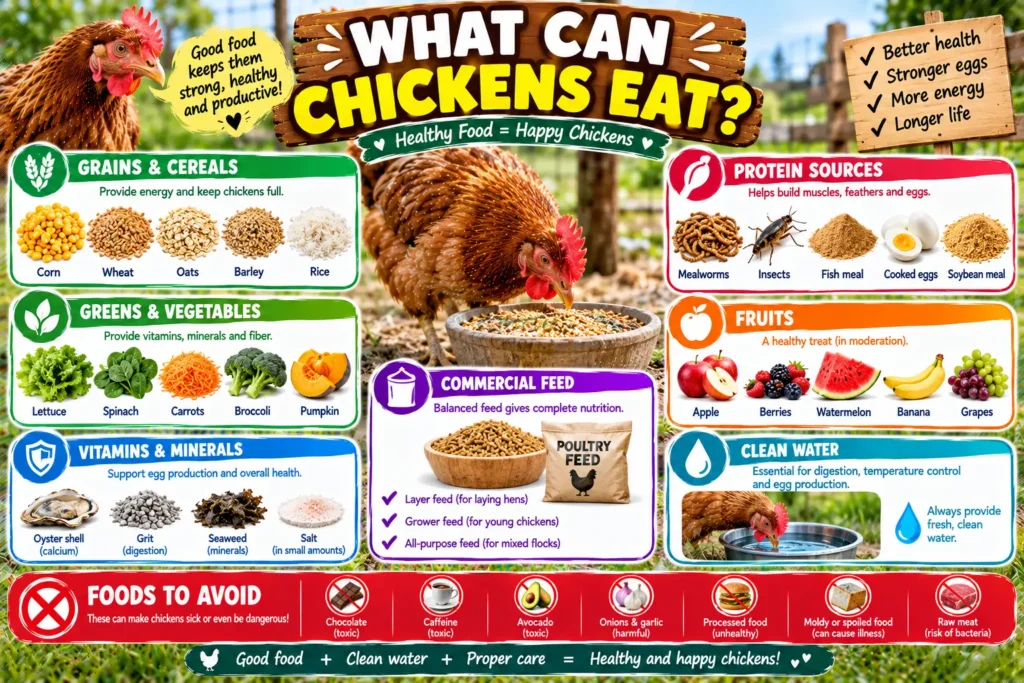
What can chickens eat is really a safety question, and the honest answer requires going food by food rather than giving one broad rule. Chickens can safely eat a surprisingly wide range of fruits, vegetables, and other foods, but a handful of common items are genuinely dangerous even in small amounts.
This guide works as a detailed lookup reference: specific safe foods for chickens organized by category, with clear verdicts, so you can check an item before offering it rather than guessing.
Quick Answer: Chickens can eat most fruits, vegetables, cooked grains, and lean proteins safely as chicken treats in moderation. They should never eat avocado skin or pit, chocolate, caffeine, raw dried beans, or green potato parts, all of which are toxic. When in doubt about an unfamiliar food, it’s safer to skip it than assume it’s fine.
Table of Contents
Fruits: What Can Chickens Eat Safely
| Fruit | Safe? | Notes |
| Apples (no seeds) | Yes | Remove seeds, which contain trace cyanogenic compounds |
| Bananas | Yes | Peel is fine in small amounts too |
| Berries (all types) | Yes | Popular, well-tolerated treat |
| Melon (all types) | Yes | Great for hydration in hot weather |
| Grapes | Yes, in moderation | Cut larger grapes to reduce choking risk |
| Citrus (orange, lemon) | Yes, in moderation | Some keepers report reduced laying with excess citrus, though evidence is anecdotal |
| Avocado (flesh) | Use caution | Flesh is generally considered lower risk than skin/pit, but many keepers avoid avocado entirely |
| Avocado (skin/pit) | No | Contains toxic persin |
Vegetables: What Can Chickens Eat Safely
| Vegetable | Safe? | Notes |
| Leafy greens (spinach, kale, lettuce) | Yes | Excellent regular treat option |
| Carrots (raw or cooked) | Yes | Popular, nutritious choice |
| Squash and pumpkin | Yes | Seeds included, sometimes credited with mild parasite-deterrent properties, though evidence is limited |
| Broccoli/cauliflower | Yes | Fine in moderation |
| Peas and green beans (cooked) | Yes | Cooked green beans are safer than raw |
| Raw dried beans | No | Contain toxic compounds unless properly cooked |
| Potato flesh (cooked) | Yes | Cooked flesh is fine |
| Potato skin/sprouts (green) | No | Contains solanine, toxic in quantity |
Proteins: What Can Chickens Eat Safely
| Protein Source | Safe? | Notes |
| Cooked eggs | Yes | Safe, effective calcium and protein source |
| Cooked meat (plain) | Yes, in moderation | Avoid heavily seasoned or salted meat |
| Mealworms | Yes | Popular, high-protein treat |
| Cooked fish | Yes, in moderation | Plain, unseasoned only |
| Raw meat | Use caution | Generally discouraged due to bacterial contamination risk |
Grains and Starches: What Can Chickens Eat Safely
| Food | Safe? | Notes |
| Cooked rice | Yes | Contrary to old myths, cooked rice is perfectly safe |
| Cooked pasta | Yes | Plain, unseasoned preferred |
| Oats | Yes | Cooked or raw, both fine |
| Bread | Yes, in strict moderation | Offers little nutrition, shouldn’t be a regular treat |
| Popcorn (plain, air-popped) | Yes, in moderation | Avoid buttered or salted versions |
Did You Know? The old myth that raw rice causes chicken stomachs to “explode” has no scientific basis; both raw and cooked rice are safe for chickens to eat, though cooked rice is generally easier to digest. egg
Dairy: A Special Case
Why Dairy Is Complicated
Chickens lack the enzyme needed to properly digest lactose in significant quantities, meaning dairy products can cause digestive upset, though small amounts of items like plain yogurt are often tolerated reasonably well by many chickens.
Read More: https://lashegg.com/what-do-chickens-eat/
| Dairy Product | Safe? | Notes |
| Plain yogurt | Yes, in small amounts | Some keepers use it for occasional probiotic benefit |
| Milk | Use caution | Larger amounts can cause digestive upset |
| Cheese | Use caution | High fat and salt content, offer sparingly if at all |
Foods That Are Never Safe
The Definite No List
- Avocado skin and pit (toxic persin)
- Chocolate and caffeine (toxic to poultry)
- Raw or dried uncooked beans (toxic compounds)
- Green potato skin and sprouts (solanine)
- Moldy or spoiled food of any kind (mycotoxin risk)
- Onions and garlic in very large quantities (can affect red blood cells, though small amounts are commonly used without apparent issue)
- Alcohol in any form
| Food | Why It’s Dangerous |
| Avocado skin/pit | Contains persin, toxic to birds |
| Chocolate/caffeine | Toxic compounds affecting heart and nervous system |
| Raw dried beans | Contains lectins, toxic until properly cooked |
| Green potato parts | Contains solanine |
| Moldy food | Mycotoxins can cause serious illness |
Warning
Even foods generally considered safe for chickens can become dangerous if moldy, spoiled, or offered in excessive quantity. Always offer fresh treats and remove uneaten portions promptly, especially in warm weather when spoilage happens faster.
Step-by-Step: Introducing a New Food Safely
- Check this list or a reliable source first. Confirm the specific food isn’t on a known danger list before offering it.
- Offer a small amount initially. This lets you observe for any adverse reaction before making it a regular treat.
- Watch the flock’s response. Normal eating behavior and no digestive upset over the following day are good signs.
- Keep portions moderate going forward. Even safe treats should stay a minor part of the overall diet.
Expert Tip
When genuinely unsure whether a specific food is safe, the safer choice is simply not to offer it. The downside of skipping an uncertain treat is minimal, while the downside of offering something genuinely toxic can be serious.
Common Mistakes to Avoid
- Assuming a food is safe just because it’s fine for humans or other pets
- Offering large quantities of a new food before confirming tolerance
- Forgetting that spoiled or moldy versions of otherwise safe foods become dangerous
- Overfeeding any treat, even a safe one, at the expense of complete nutrition
- Ignoring seasoning, salt, and butter added to otherwise safe base foods
When to Call a Vet
Contact a poultry veterinarian immediately if a chicken shows signs of illness, lethargy, vomiting-like regurgitation, diarrhea, or difficulty breathing, after eating something, especially if a known toxic food may have been involved. Prompt action matters more than waiting to see if symptoms resolve on their own.
People Also Ask
What can chickens eat every day without any risk? A complete commercial feed forms the safe daily foundation, with items like leafy greens, most vegetables, and small amounts of fruit safely offered as regular treats alongside it.
What are the best chicken treats for hot weather? Melon, berries, and other high-water-content fruits make excellent cooling treats, often served frozen for an extra cooling effect during summer heat.
Can chickens eat raw meat safely? It’s generally discouraged due to bacterial contamination risk; cooked, plain meat is a safer protein treat option if you want to offer meat at all.
Is it true that chickens can’t eat citrus fruit? Citrus isn’t toxic and can be offered in moderation, though some keepers report reduced egg production with excessive citrus feeding, so moderation is reasonable rather than complete avoidance.
What safe foods for chickens double as pest or parasite deterrents? Pumpkin and squash seeds are sometimes credited with mild natural parasite-deterrent properties, though this isn’t strongly supported by rigorous research and shouldn’t replace proper parasite treatment when needed.
Final Thoughts
What can chickens eat covers a genuinely wide range of fruits, vegetables, grains, and proteins safely, with a much shorter, well-defined list of genuinely dangerous foods to avoid entirely. Checking specific items against a reliable list, rather than guessing, is the safest approach for any new chicken treats.
Introduce new foods gradually and in moderation, and reach out to a poultry veterinarian promptly if a bird shows any signs of illness after eating something potentially unsafe.
5. FAQ
Q: What can chickens eat that most people don’t realize is safe? A: Cooked rice, plain pasta, and even small amounts of cooked meat are all safe options that surprise many new keepers who’ve heard outdated myths about these foods.
Q: Are there safe foods for chickens that actually improve egg production? A: No single food dramatically boosts production, though a generally well-balanced diet with appropriate treats supports a hen reaching her natural potential.
Q: What chicken treats should be given only occasionally rather than daily? A: Fruit, bread, and any high-sugar or high-fat treats are best kept occasional, since daily feeding can dilute the nutritional balance of a complete diet.
Q: Can chickens eat spicy foods safely? A: Chickens don’t have the same taste receptors that make capsaicin unpleasant to humans, so mild spice generally isn’t harmful, though heavily processed spicy foods often carry other risks like excess salt.
Q: Is it safe to let chickens eat directly from a garden? A: Generally yes for most garden plants, though it’s worth checking that no ornamental plants known to be toxic to poultry are within reach, since not all garden plants are safe.