What Can Chickens Not Eat? Beyond the Kitchen

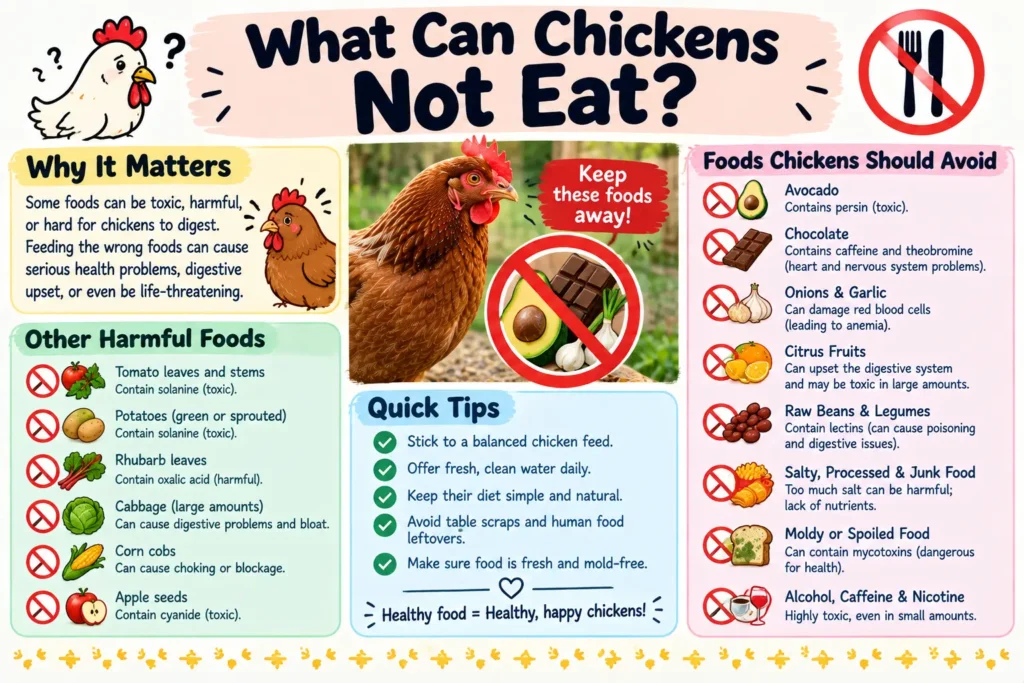
What can chickens not eat covers more ground than most keepers expect. The handful of toxic kitchen foods, avocado, chocolate, raw beans, are relatively well known, but a longer, less-discussed list of common garden and ornamental plants poses just as real a danger to free-ranging or run-access flocks.
This guide brings both categories together: foods chickens should avoid in the kitchen, and the toxic plants many keepers unknowingly grow within reach of their birds.
Quick Answer: Chickens should never eat avocado skin or pit, chocolate, caffeine, raw dried beans, or green potato parts. Beyond food, several common garden and ornamental plants, including lily of the valley, foxglove, rhubarb leaves, and azaleas, are toxic if chickens have access and choose to peck at them. Removing or fencing off known toxic plants matters as much as kitchen food awareness for free-ranging flocks.
Table of Contents
Toxic Foods: The Kitchen Danger List
Definite Toxins
| Food | Toxic Component | Effect |
| Avocado skin/pit | Persin | Cardiac and respiratory distress |
| Chocolate/caffeine | Theobromine, caffeine | Affects heart, nervous system |
| Raw dried beans | Lectins (phytohaemagglutinin) | Digestive distress, potentially fatal |
| Green potato skin/sprouts | Solanine | Digestive and neurological symptoms |
| Moldy/spoiled food | Various mycotoxins | Wide-ranging illness depending on toxin |
Foods Requiring Caution
Large quantities of onion and garlic can affect red blood cells over time, though small amounts used occasionally haven’t shown clear harm in typical backyard use. Excessive salt in processed snack foods poses a real, if less dramatic, health risk through kidney strain over time.
Read More: https://lashegg.com/what-can-chickens-eat/
Did You Know? Cooking neutralizes the toxic lectins in raw dried beans, which is exactly why properly cooked beans are safe while raw or undercooked ones remain genuinely dangerous, an important distinction rather than a blanket “no beans ever” rule.
Toxic Plants: The Overlooked Danger
Common Ornamental and Garden Plants to Avoid
| Plant | Toxicity Concern |
| Lily of the valley | Cardiac glycosides, affects heart function |
| Foxglove | Cardiac glycosides, similar mechanism |
| Rhubarb leaves (not stalks) | Oxalic acid, kidney and digestive effects |
| Azalea/Rhododendron | Grayanotoxins, cardiac and digestive symptoms |
| Oleander | Highly toxic, cardiac effects |
| Daffodil bulbs | Digestive distress if consumed |
| Nightshade family (non-food parts) | Solanine-related toxicity |
Why Free-Ranging Flocks Face More Risk
Chickens with unrestricted yard or garden access may peck at unfamiliar plants out of curiosity, making it worth knowing what’s actually growing within their reach rather than assuming natural instinct alone will keep them safe.
Step-by-Step: Auditing Your Yard for Plant Hazards
- Walk your chickens’ actual range and identify every plant present. Include areas along fence lines and garden borders they can reach.
- Cross-reference against a reliable toxic plant list. University extension resources often maintain regional lists relevant to your specific area.
- Remove or fence off identified toxic plants. Complete removal isn’t always necessary if physical barriers reliably prevent access.
- Reassess seasonally. New growth, fallen leaves, or plants you’ve since added can change the risk picture over time.
Warning: Chickens generally show some natural aversion to many toxic plants due to bitter taste, but this isn’t a reliable safety mechanism on its own. Curious pecking, especially from young or bored birds, can still result in ingestion of a genuinely dangerous plant.
Non-Food, Non-Plant Hazards
Chemical and Environmental Risks
- Pesticide or herbicide-treated grass and plants
- Rodenticide (rat/mouse poison) placed where chickens can access it
- Antifreeze or other chemical spills
- Certain treated wood products used in coop construction
| Hazard | Risk |
| Pesticide/herbicide-treated areas | Direct toxin exposure |
| Rodenticide | Highly toxic if ingested |
| Chemical spills (antifreeze, etc.) | Often appealing taste, seriously toxic |
| Treated wood | Chemical leaching risk over time |
Common Mistakes to Avoid
- Assuming chickens will naturally avoid all toxic plants due to instinct alone
- Using pesticides or rodenticides in areas chickens can access
- Overlooking ornamental landscaping plants when chicken-proofing a yard
- Focusing exclusively on kitchen food risks while ignoring the garden
- Not reassessing yard hazards as landscaping changes over time
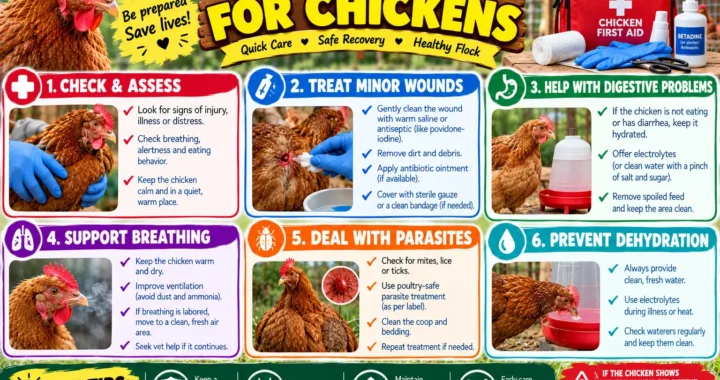
What to Do If a Chicken Eats Something Toxic
Step-by-Step: Immediate Response
- Identify what was likely consumed, if possible. This information helps guide appropriate veterinary response.
- Remove the bird from further access to the substance. Prevent additional exposure immediately.
- Contact a poultry veterinarian promptly. Don’t wait to see if symptoms develop; early contact allows faster guidance.
- Monitor closely for symptoms. Lethargy, difficulty breathing, unusual droppings, or behavioral changes all warrant urgent attention.
- Isolate the affected bird if multiple are involved. This helps with monitoring and prevents flock-wide stress during the situation.
Warning
Never attempt to induce vomiting in a chicken; their anatomy doesn’t support this safely, unlike some mammals. If toxic ingestion is suspected, prompt veterinary contact is the appropriate response rather than home intervention.egg
When to Call a Vet
Contact a poultry veterinarian immediately if you know or suspect a chicken has consumed a toxic food, plant, or chemical substance, even before symptoms appear. Early contact allows for faster guidance and, in some cases, meaningfully better outcomes than waiting for visible signs of illness.
People Also Ask
What can chickens not eat that people commonly don’t realize is dangerous? Many keepers don’t realize common ornamental plants like lily of the valley, foxglove, and azaleas pose real toxicity risks, focusing instead only on well-known kitchen dangers like chocolate and avocado.
Are all parts of a toxic plant equally dangerous? No, toxicity often concentrates in specific parts, like rhubarb leaves versus its safe stalks, so understanding which part is dangerous matters as much as identifying the plant itself.
How quickly do symptoms appear after a chicken eats something toxic? This varies significantly by substance, from rapid onset with some chemical exposures to more gradual symptom development with certain plant toxins, making prompt veterinary contact valuable regardless of timeline.
Can chickens build up tolerance to toxic foods over repeated exposure? No, toxic foods and plants remain genuinely dangerous regardless of prior exposure; there’s no meaningful tolerance built up through repeated small exposures.
Is it enough to just avoid feeding toxic foods, or do I need to worry about my whole yard? Both matter significantly; free-ranging or run-access flocks face real exposure risk from garden and ornamental plants, not just kitchen scraps, making a full yard audit worthwhile.
Final Thoughts
What can chickens not eat extends well beyond the relatively well-known kitchen toxins into a broader category of garden plants and environmental hazards that many keepers overlook. A thorough yard audit alongside kitchen food awareness gives a much more complete picture of foods chickens should avoid and hazards worth actively removing.
Take toxic plant identification as seriously as kitchen food safety, and reach out to a poultry veterinarian immediately, even before symptoms appear, if you know or suspect a toxic exposure has occurred.
5. FAQ
Q: What can chickens not eat from a typical garden? A: Lily of the valley, foxglove, rhubarb leaves, azaleas, and oleander are among the more common toxic garden and ornamental plants chickens should not have access to.
Q: Are toxic foods for chickens the same as toxic foods for other pets? A: There’s overlap, chocolate and avocado are dangerous to several species, but some substances safe for other animals may still pose risks specific to poultry, so checking poultry-specific sources matters.
Q: What foods chickens should avoid are actually fine in small amounts? A: Onion and garlic in large quantities pose a risk, but small, occasional amounts haven’t demonstrated clear harm in typical backyard feeding, making moderation the reasonable approach rather than complete avoidance.
Q: Can chickens die from eating toxic plants? A: Yes, several plants on the toxic list, including foxglove and oleander, can cause serious illness or death depending on the amount consumed and the specific bird.
Q: Should I remove all ornamental plants if I have free-ranging chickens? A: Not necessarily all plants, but identifying and removing or fencing off specifically toxic ones is a reasonable, targeted approach rather than eliminating all landscaping.