
Antibiotics for Lash Egg: What Actually Works and When You Need a Vet

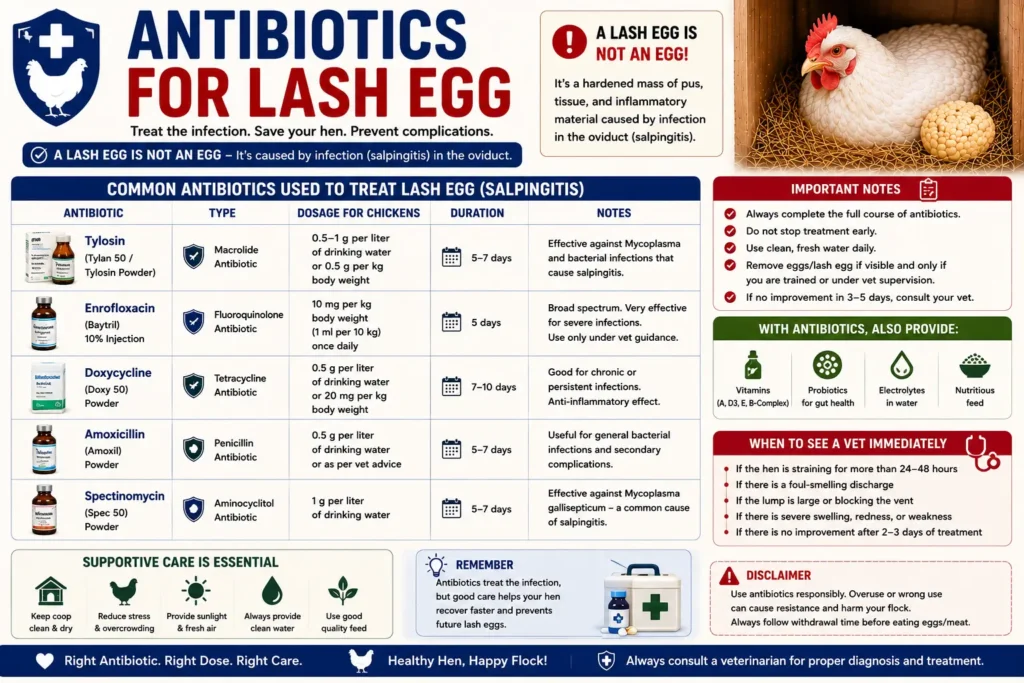
If your hen just laid something that looks like a rubbery, cheese-filled egg-shaped lump, you’re probably searching for antibiotics for lash egg right now. That’s a normal first reaction. A lash egg isn’t really an egg at all — it’s a sign that something is wrong inside your hen’s reproductive tract, and antibiotics are sometimes part of the fix, but not always the whole answer.
This guide walks through what a lash egg actually is, why it happens, and how veterinarians decide whether antibiotics for lash egg will help your specific bird.
Table of Contents
Quick Answer
A lash egg is a symptom of salpingitis, a bacterial infection of the oviduct. Antibiotics for lash egg can work, but only when a vet identifies the bacteria involved and prescribes the right drug at the right dose. Antibiotics don’t reverse existing scar tissue, so early diagnosis matters more than the drug itself.
What Is a Lash Egg, Exactly?
A lash egg is a solid, often foul-smelling mass made of pus, tissue debris, and egg material, all wrapped in a membrane. It’s not laid the way a normal egg is. Instead, it’s pushed out of the oviduct along with whatever fluid or exudate has built up from infection.
Backyard keepers sometimes mistake it for a strange soft-shelled egg. Under the surface, it’s closer to a wound discharge than a reproductive product.
Why Vets Call It a Symptom, Not a Disease
Veterinarians don’t treat “lash egg” as a diagnosis. They treat the underlying condition: salpingitis, an inflammation or infection of the oviduct. This distinction matters because it shapes the entire treatment plan, including whether antibiotics for lash egg are even appropriate.
Read More: https://lashegg.com/veterinary-treatment-for-lash-egg/
What Causes Lash Eggs in Chickens?
Several things can lead a hen down the path toward salpingitis and, eventually, a lash egg.
- Bacterial infection — E. coli is the most commonly identified culprit, but Mycoplasma, Pasteurella, and Salmonella species can also be involved.
- Respiratory infections that spread — infections like infectious bronchitis virus can travel from the respiratory tract to the reproductive tract.
- Egg-laying stress — overproduction of eggs, especially in high-output breeds or hybrid layers, strains the oviduct.
- Poor biosecurity or unsanitary housing — bacteria have an easier path in when coops are damp or overcrowded.
- Age — older hens with reproductive wear and tear are more prone to salpingitis.
- Prior egg binding or reproductive trauma — any past injury to the oviduct increases risk.
Did You Know?
Lash eggs can appear once and never happen again, or they can be the first sign of chronic salpingitis that recurs over months. A single event doesn’t always mean long-term illness, but a vet exam rules out the difference.
Signs and Symptoms That Come With Lash Eggs
A hen producing a lash egg rarely shows just one symptom. Watch for these alongside it:
- Lethargy or reduced activity
- Reduced or stopped egg-laying
- Swollen or fluid-filled abdomen
- Foul-smelling discharge from the vent
- Loss of appetite
- Pale or shrunken comb
- Straining, similar to signs of egg binding
Symptoms and What They Usually Point To
| Symptom | Likely Cause | Urgency |
| One lash egg, hen acting normal | Mild, resolving salpingitis | Monitor closely |
| Repeated lash eggs | Chronic salpingitis | Vet visit needed |
| Swollen abdomen + lethargy | Advanced infection or fluid buildup | Urgent vet care |
| Straining without producing anything | Possible egg binding, not salpingitis | Urgent vet care |
| Foul odor + discharge | Active bacterial infection | Vet visit needed |
Do Antibiotics for Lash Egg Actually Help?
This is the core question most keepers have, and the honest answer is: it depends on timing and diagnosis. Antibiotics for lash egg can reduce active bacterial infection in the oviduct, especially early on. What they cannot do is dissolve scar tissue, reverse impacted material already lodged in the oviduct, or fix structural damage from repeated infections.
That’s why a vet will usually want to examine the hen, sometimes with an X-ray or ultrasound, before deciding antibiotics for lash egg are the right next step.
Expert Tip
Ask your vet about culture and sensitivity testing before starting antibiotics. It identifies the exact bacteria involved and confirms which drug will actually work, instead of guessing.
How Vets Diagnose Salpingitis Before Prescribing Antibiotics
- Physical exam — checking the abdomen for swelling, fluid, or masses.
- History review — recent laying patterns, respiratory symptoms, and flock health.
- Imaging — X-rays or ultrasound to see internal swelling or fluid.
- Culture and sensitivity testing — identifying the specific bacteria and which antibiotics it responds to.
- Bloodwork — in some cases, to check for systemic infection.
Only after this workup does a vet typically decide whether antibiotics for lash egg, surgery, supportive care, or humane euthanasia (in advanced chronic cases) is the right path.
Common Antibiotic Approaches Vets Consider
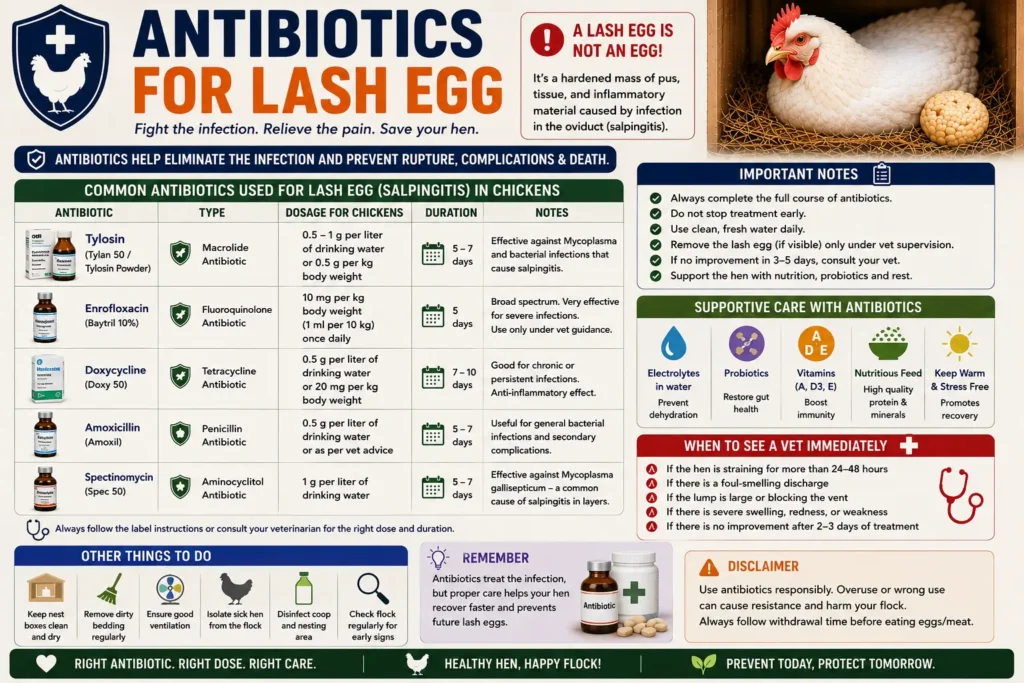
Veterinarians select antibiotics based on the suspected or confirmed bacteria, the hen’s condition, and whether she’s part of a flock that produces eggs for consumption. Categories vets may discuss include:
- Broad-spectrum antibiotics for initial treatment before culture results return
- Targeted antibiotics chosen after sensitivity testing confirms which drug works against the specific bacteria
- Injectable or oral formulations, depending on how sick the hen is and whether she’s eating and drinking normally
Warning
Never give leftover antibiotics, human antibiotics, or another animal’s prescription to a hen. Incorrect dosing can fail to clear the infection, contribute to antibiotic resistance, and harm the bird. Antibiotics for lash egg should always come from a licensed veterinarian who has examined the hen.
Egg Withdrawal Periods Matter
If your hens are still laying and you eat the eggs, antibiotic treatment comes with a withdrawal period — a set number of days after treatment ends before eggs are safe to eat again. Your vet will specify this based on the drug used. Skipping this step means antibiotic residue could end up in eggs you’re eating.
Antibiotics vs. Supportive Care: What Each One Does
| Approach | What It Addresses | Limitations |
| Antibiotics | Active bacterial infection | Doesn’t remove existing blockages or scar tissue |
| Fluid therapy/supportive care | Hydration, general strength | Doesn’t clear infection alone |
| Surgery | Physical removal of impacted material | Invasive, not always feasible in backyard settings |
| Hormonal implants (vet-directed) | Suppressing egg production to let oviduct rest | Doesn’t treat infection directly |
Home Care While Waiting for or Alongside Vet Treatment
While antibiotics for lash egg require a prescription, there are supportive steps you can take at home under guidance:
- Keep the hen isolated in a clean, warm, low-stress space
- Ensure constant access to fresh water
- Offer easily digestible food
- Monitor droppings, appetite, and energy daily
- Avoid handling the vent area unnecessarily, which can introduce more bacteria
Common Mistakes Keepers Make
- Assuming one lash egg means the hen is “cured” once it passes
- Starting antibiotics without a vet’s involvement or correct dosing
- Ignoring egg withdrawal times
- Waiting too long to seek care once lethargy or abdominal swelling appears
- Confusing lash egg with simple soft-shelled eggs and delaying treatment
Lash Egg vs. Egg Binding: Don’t Confuse the Two
People Also Ask this often, since both involve trouble at the vent. Egg binding is a physical blockage — a normal egg stuck in the oviduct or cloaca. A lash egg is infection-related discharge. Egg binding is more of an emergency requiring immediate physical intervention, while a lash egg signals an infection that needs a diagnostic and antibiotic plan.
| Feature | Lash Egg | Egg Binding |
| What it is | Infected discharge/debris | A stuck, normal-shaped egg |
| Underlying cause | Salpingitis (bacterial) | Muscle fatigue, calcium deficiency, oversized egg |
| Treatment | Antibiotics for lash egg, vet workup | Warm baths, lubrication, vet-assisted removal |
| Urgency | Vet visit within days | Same-day emergency care |
Can Salpingitis Be Prevented?
Prevention lowers the odds of ever needing antibiotics for lash egg or salpingitis treatment in the first place.
- Keep coops clean, dry, and well-ventilated
- Practice strong biosecurity between flocks
- Vaccinate against respiratory illnesses where recommended by your vet
- Provide balanced nutrition to support reproductive health
- Avoid breeding or keeping hybrid layers under conditions that push excessive egg output
- Address respiratory symptoms quickly before they spread
When to Call a Vet
Call a vet if your hen produces more than one lash egg, shows abdominal swelling, stops eating, becomes lethargic, or has foul-smelling discharge. Also call immediately if she strains without producing anything, since that can signal egg binding, a same-day emergency.
Recovery Outlook After Treatment
Recovery depends heavily on how early salpingitis was caught. Hens treated early, before scar tissue forms, often return to normal laying. Hens with chronic or repeated salpingitis may have permanent oviduct damage, reduced laying capacity, or a higher risk of future infection, even after a full course of antibiotics.
| Stage Caught | Typical Recovery | Long-Term Laying |
| Early, single episode | Good with prompt antibiotics | Often returns to normal |
| Recurring episodes | Fair, may need repeated treatment | Reduced or irregular |
| Advanced/chronic | Guarded | May not resume laying |
Salpingitis in Flocks: Should You Worry About Other Hens?
Salpingitis itself isn’t usually contagious in the way a respiratory virus is, but if a respiratory infection triggered it, other hens in the flock could be at risk of the same underlying illness. Watch the rest of your flock for coughing, sneezing, or reduced laying, and mention flock history to your vet when discussing antibiotics for salpingitis in the affected hen.