Caring for a Chicken After a Lash Egg: What to Do in the First 48 Hours

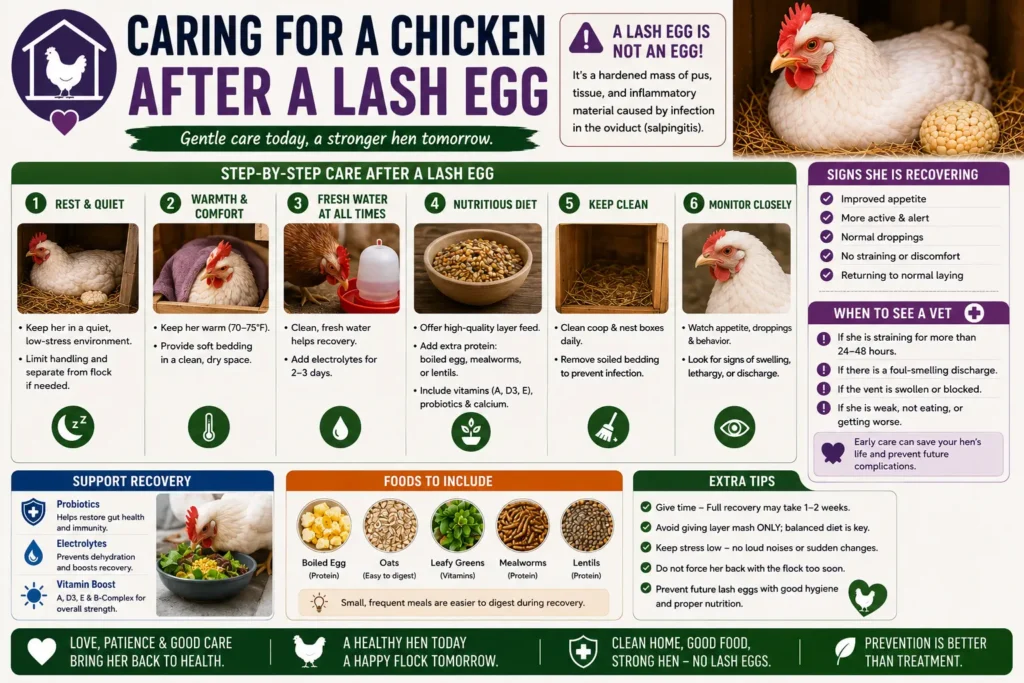
Caring for a chicken after a lash egg starts before you even know the full picture. That strange, rubbery mass she just passed is a sign of salpingitis, an infection or inflammation inside the oviduct, and what you do in the next day or two can shape how well she recovers.
This guide covers exactly what recovery care looks like, what to watch for, and when home support isn’t enough anymore.
Table of Contents
Quick Answer
Caring for a chicken after a lash egg means isolating her, keeping her warm and hydrated, watching for lethargy or swelling, and getting a vet exam if she’s not acting normal within a day. A lash egg itself isn’t an emergency, but the infection behind it can become one.
What Just Happened to Your Hen?
A lash egg isn’t a deformed egg. It’s a mix of pus, tissue, and sometimes yolk material that built up in the oviduct because of salpingitis, a bacterial infection. Your hen passed it the same way she’d pass an egg, but the source is infection, not normal reproduction.
Understanding this changes how you approach recovery. You’re not just waiting for “one weird egg” to pass. You’re supporting a hen recovering from an internal infection.
Read More: https://lashegg.com/antibiotics-for-lash-egg/
Why the First 48 Hours Matter Most
Caring for a chicken after a lash egg in the first two days tells you a lot about her overall condition. A hen who eats, drinks, and moves normally after passing it has a much better outlook than one who becomes withdrawn or stops eating.
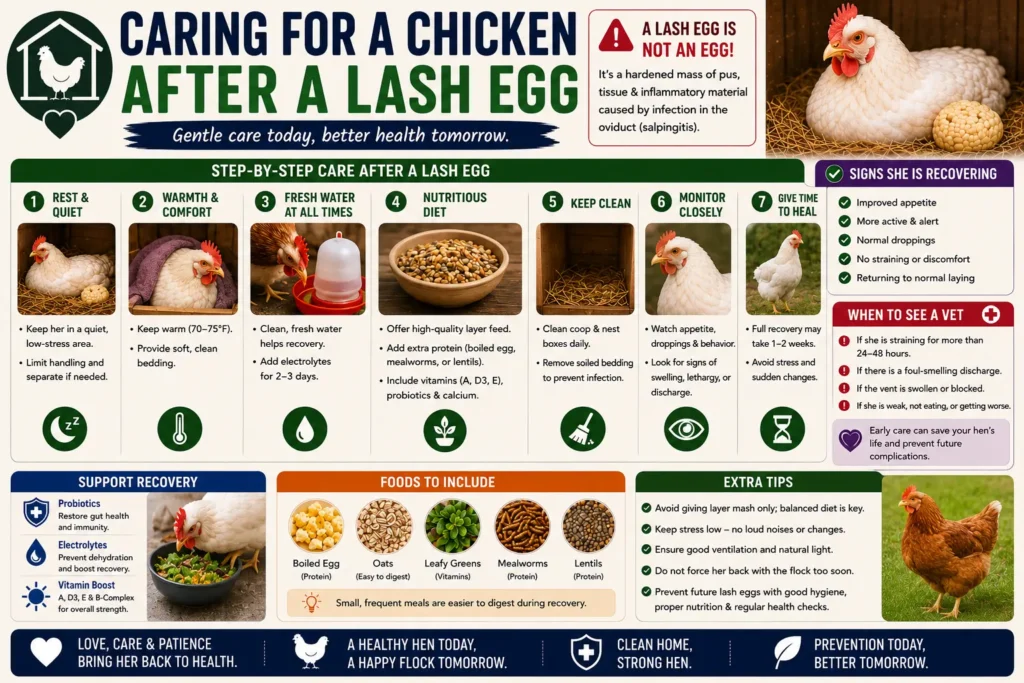
Step-by-Step: Immediate Recovery Care
- Separate her from the flock. A quiet, low-stress space reduces the risk of other hens pecking at her and lets you monitor her closely.
- Check her vent area. Gently look for swelling, discharge, or additional lash egg material, without excessive handling.
- Offer fresh water immediately. Dehydration slows recovery and hides other symptoms.
- Provide easily digestible food. Soft, high-protein options like scrambled egg or a balanced layer feed support strength.
- Keep her warm. A sick hen loses body heat faster; a draft-free, insulated space helps her conserve energy for healing.
- Log her symptoms daily. Appetite, droppings, energy level, and any repeat discharge all matter for a vet visit later.
- Schedule a vet check if anything looks off. Don’t wait for a second lash egg to seek care.
Expert Tip
Keep a simple daily notebook or phone note during recovery. Vets can diagnose salpingitis faster when you can describe exactly how many days she’s been off her feed or how her energy has changed.
Read More: https://lashegg.com/veterinary-treatment-for-lash-egg/
Signs That Recovery Is Going Well
- Normal appetite within 24–48 hours
- Regular droppings, not watery or discolored
- Alert behavior, foraging, dust bathing
- No further discharge or lash egg material
- Comb color returning to normal if it was pale
Signs That Mean Recovery Isn’t on Track
| Warning Sign | What It May Mean | Next Step |
| Continued lethargy after 48 hours | Ongoing infection | Vet visit |
| Swollen or fluid-filled abdomen | Advanced salpingitis or fluid buildup | Urgent vet care |
| Repeated lash eggs | Chronic salpingitis | Vet visit for antibiotics/imaging |
| Loss of appetite beyond 1–2 days | Systemic illness | Vet visit |
| Straining without producing anything | Possible egg binding | Urgent vet care |
| Foul odor from vent | Active bacterial infection | Vet visit |
Nutrition During Recovery
Caring for a chicken after a lash egg means paying closer attention to her diet than usual. Her body is fighting inflammation and rebuilding strength, so food quality matters more than volume.
- Protein-rich options — scrambled eggs, mealworms, or a balanced layer feed help tissue repair.
- Hydration support — electrolyte solutions made for poultry can help if she seems weak.
- Avoid excess treats — sugary scraps or too much scratch grain can crowd out proper nutrition when she needs it most.
- Calcium as normal — don’t overcorrect calcium unless a vet specifically recommends it for egg-related issues.
Did You Know?
Hens recovering from salpingitis often pause laying entirely for one to several weeks. This isn’t a bad sign by itself. It usually means her body is prioritizing healing over egg production.
Should You Isolate Her From the Flock?
Yes, at least temporarily. Isolation during recovery care serves two purposes: it protects her from flock pecking order stress while she’s weak, and it lets you track her food, water, and droppings without interference from other birds.
Common Mistakes Keepers Make During Recovery
- Returning her to the flock too soon, before she’s eating and moving normally
- Assuming one lash egg means she’s fully recovered
- Skipping a vet visit because she “seems fine” after 24 hours
- Overfeeding treats instead of balanced, protein-rich food
- Not tracking symptoms, which makes vet diagnosis harder later
When Does a Lash Egg Require Veterinary Antibiotics?
Recovery care at home supports a hen’s comfort, but it doesn’t treat the underlying bacterial infection. If she shows any of the warning signs above, a vet may recommend antibiotics after an exam, and possibly imaging or culture testing to confirm the bacteria involved.
Antibiotics prescribed for salpingitis come with an egg withdrawal period, meaning eggs shouldn’t be eaten until your vet says it’s safe. This is a standard part of poultry medication protocols, similar to livestock guidance from university extension programs.
Warning
Never start antibiotics on your own for a hen recovering from a lash egg. Wrong dosing can fail to clear the infection and contributes to antibiotic resistance in your flock over time. Recovery care at home and veterinary treatment work together, not as substitutes for each other.
How Long Does Full Recovery Take?
| Recovery Stage | Typical Timeline | What to Expect |
| Immediate (Day 1–2) | 1–2 days | Rest, reduced appetite possible, monitor closely |
| Short-term (Week 1) | 3–7 days | Appetite returns, energy improves if uncomplicated |
| Extended (2–4 weeks) | 2–4 weeks | Laying may pause; vet follow-up if symptoms persist |
| Chronic cases | Ongoing | Repeated vet visits, possible reduced future laying |
Most hens with a single, uncomplicated lash egg bounce back within a week or two of consistent recovery care. Hens with chronic salpingitis may need longer support and repeated vet involvement.
Caring for a Chicken After a Lash Egg vs. After Egg Binding
People often confuse these two conditions because both involve trouble at the vent. Recovery care actually looks different for each.
| Factor | After a Lash Egg | After Egg Binding |
| Underlying issue | Bacterial infection (salpingitis) | Physical blockage of a normal egg |
| Immediate care | Isolation, hydration, monitoring | Warm bath, lubrication, gentle massage |
| Vet involvement | Needed if symptoms persist beyond 48 hours | Often same-day if egg doesn’t pass |
| Recovery focus | Fighting infection, rebuilding strength | Restoring normal muscle function |
Will She Lay Eggs Again After This?
Many hens return to normal laying once the underlying infection clears, especially after a single, early-caught episode. Hens with chronic or repeated salpingitis may see reduced laying or a longer pause, since scar tissue in the oviduct doesn’t fully reverse.
When to Call a Vet
Call a vet if your hen shows lethargy or reduced appetite beyond 48 hours, abdominal swelling, repeated lash eggs, foul-smelling discharge, or straining without producing anything. Same-day care matters most for swelling and straining, since those can signal a more urgent problem.
Preventing Future Lash Eggs
Good recovery care also means reducing the odds of a repeat episode.
- Keep the coop clean, dry, and well-ventilated
- Maintain strong biosecurity between new birds and the existing flock
- Support respiratory health, since some respiratory infections spread to the reproductive tract
- Provide balanced nutrition suited to her age and breed
- Watch high-output hybrid layers more closely, since heavy laying strains the oviduct
- Address any signs of illness quickly instead of waiting
Supporting Flock Health While One Hen Recovers
Caring for a chicken after a lash egg doesn’t stop with the individual bird. Watch the rest of the flock for coughing, sneezing, or drops in egg production, especially if a respiratory illness may have triggered the salpingitis. A vet can advise on flock-wide monitoring if needed.
FAQ
How long should I isolate a hen after a lash egg? Most keepers isolate her for at least a week, or until she’s eating, drinking, and moving normally, whichever takes longer. A vet can advise extending isolation if symptoms persist.
What should I feed a chicken recovering from a lash egg? Protein-rich, easily digestible food like scrambled eggs, mealworms, or a balanced layer feed supports recovery. Avoid excess treats that crowd out proper nutrition.
Is a lash egg painful for chickens? It’s reasonable to assume some discomfort, given the inflammation involved in salpingitis, though hens often don’t show obvious pain signals the way mammals do. Watch behavior changes like reduced activity as an indirect clue.
Will my hen lay a lash egg again? It’s possible, especially if the underlying salpingitis becomes chronic. A single episode with prompt recovery care and, if needed, veterinary treatment often resolves without repeat occurrences.
Do I need to disinfect the coop after a lash egg? Cleaning the coop and any bedding the hen was in reduces bacterial load, which supports both her recovery and flock health, even though salpingitis itself isn’t typically spread hen-to-hen like a virus.
Can I still eat eggs from other hens during her recovery? Yes, as long as those hens aren’t under antibiotic treatment themselves. Only eggs from a hen currently on a prescribed antibiotic withdrawal period need to be held back.
When can a hen return to the flock after recovery? Once she’s eating normally, moving well, and showing no further discharge or lash egg material, typically after about a week, though your vet can confirm if a follow-up exam was involved.