Can Lash Eggs Be Prevented? Setting Realistic Expectations

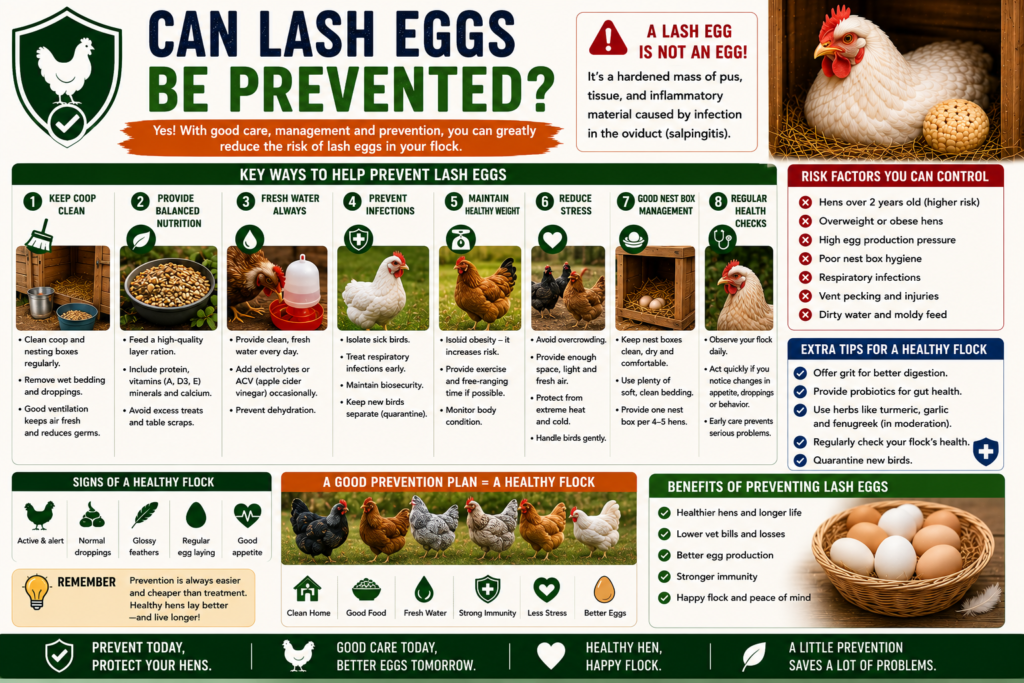
Can lash eggs be prevented? Largely, yes, though not with a 100% guarantee. Lash eggs come from salpingitis, a bacterial infection of the oviduct, and while good management lowers the odds significantly, biology still leaves some risk that management alone can’t erase.
This guide separates what you can actually control from what you can’t, so you know where to focus your effort and where to simply stay alert.
Table of Contents
Quick Answer
Can lash eggs be prevented? Mostly, through clean housing, biosecurity, and balanced nutrition, but individual immune response, genetics, and occasional bad luck mean no method removes all risk. The goal is meaningful risk reduction, not a guarantee.
Why This Question Doesn’t Have a Simple Yes or No
A lot of backyard chicken content treats prevention as a checklist that guarantees results. It doesn’t work that way with salpingitis. Some hens raised in excellent conditions still develop a lash egg once, while others in less-than-ideal setups never do. That variability is exactly why the honest answer sits in the middle.
What “Prevented” Actually Means Here
When people ask can lash eggs be prevented, they usually mean can the risk be lowered enough that it’s unlikely. That’s a fair and achievable goal. Eliminating risk entirely isn’t realistic, since bacterial infections can occur even in well-run flocks.
Read More: https://lashegg.com/how-to-prevent-lash-eggs/
What You Can Control
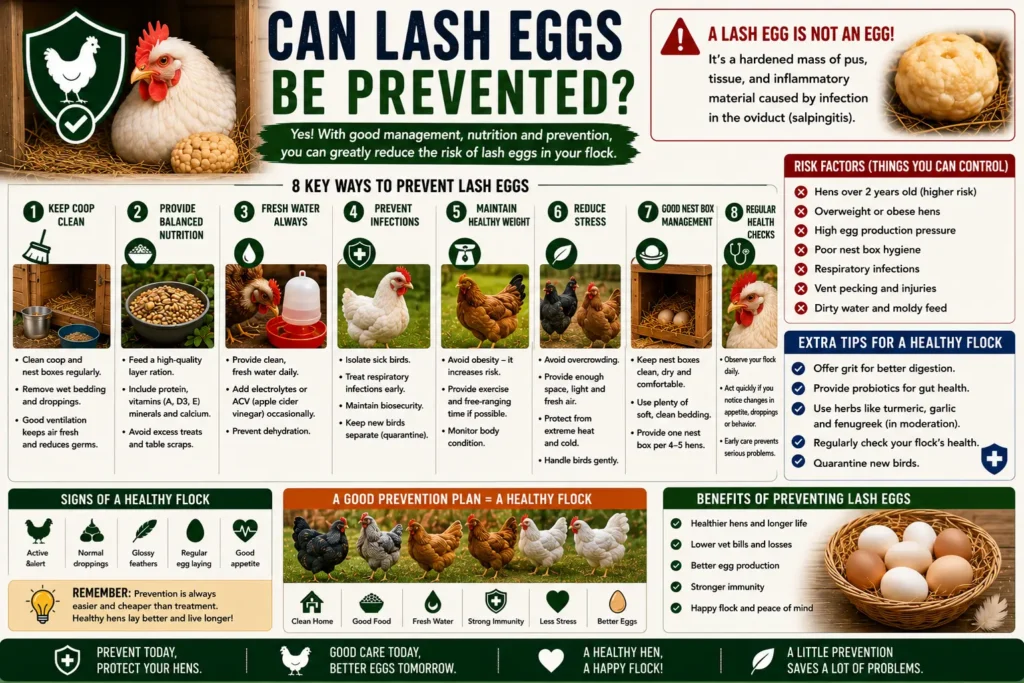
These factors respond directly to good management, and they’re where most of your prevention effort should go.
- Coop cleanliness — damp, dirty bedding raises bacterial exposure.
- Ventilation — poor airflow increases respiratory infection risk, which can spread to the oviduct.
- Biosecurity — quarantining new birds limits introducing new bacteria to your flock.
- Nutrition — balanced feed supports immune function and reproductive health.
- Egg-laying pressure — avoiding artificial light pushed beyond natural laying rates reduces oviduct strain.
- Early symptom response — treating respiratory illness quickly can stop it from spreading to the reproductive tract.
Expert Tip
Focus your prevention budget of time and money on ventilation and biosecurity first. These two factors influence bacterial exposure more directly than almost anything else in a backyard setup.
What You Can’t Fully Control
Being honest about these factors is part of answering can lash eggs be prevented with real accuracy, not just optimism.
- Genetics and individual immune strength — some hens are simply more susceptible than others.
- Age-related reproductive wear — older hens face higher risk regardless of management quality.
- Breed-related laying pressure — high-output hybrid layers face more oviduct strain by design.
- Random bacterial exposure — even excellent biosecurity can’t remove all environmental bacteria.
- Prior illness history — a hen with a past respiratory infection may carry elevated risk going forward.
Did You Know?
Two hens from the same flock, same coop, same diet, can have completely different outcomes. This isn’t a management failure. It reflects real biological variation between individual birds.
Prevention Effectiveness by Category
| Prevention Method | Effectiveness | Notes |
| Clean, dry bedding | High | Directly reduces bacterial buildup |
| Quarantine for new birds | High | Prevents introducing new pathogens |
| Balanced nutrition | Moderate to high | Supports immune function, not a standalone fix |
| Reduced artificial lighting | Moderate | Lowers reproductive strain in high-output hens |
| Vaccination against respiratory illness | Moderate | Helps indirectly by reducing spread to the oviduct |
| Genetics/breed selection | Limited control after purchase | Best addressed before acquiring birds |
Step-by-Step: A Practical Prevention Routine
- Set a bedding-check schedule. Check for dampness every 2–3 days, not just visually.
- Establish quarantine protocols. Two weeks minimum for any new or returning bird.
- Build a consistent feeding plan. Balanced layer feed, not just scratch and treats.
- Monitor lighting exposure. Avoid pushing laying rates artificially high with extended light.
- Watch for early respiratory signs. Sneezing, discharge, or labored breathing warrant quick attention.
- Track individual hens over time. Note any hen with recurring symptoms for closer monitoring.
Avoid Lash Eggs: Common Myths That Don’t Hold Up
- Myth: Only dirty coops produce lash eggs. Clean coops reduce risk but don’t eliminate it entirely.
- Myth: Heritage breeds never get salpingitis. They face lower risk, not zero risk.
- Myth: One lash egg means poor management. Individual biology plays a real role, even in well-managed flocks.
- Myth: Supplements alone can avoid lash eggs. Nutrition helps, but it works alongside hygiene and biosecurity, not instead of them.
Common Mistakes That Undercut Prevention Efforts
- Treating prevention as a one-time setup instead of an ongoing routine
- Skipping quarantine because a new bird “looks fine”
- Assuming a clean-looking coop means bacteria-free conditions
- Ignoring mild respiratory symptoms until they progress
- Expecting a guarantee instead of aiming for meaningful risk reduction
Can Lash Eggs Be Prevented in High-Risk Hens?
Older hens, hybrid layers under heavy production, and birds with a prior reproductive or respiratory issue carry elevated risk no matter how good your setup is. For these hens, prevention shifts toward close monitoring alongside standard hygiene and nutrition practices, since catching early symptoms matters as much as avoiding exposure in the first place.
| Hen Type | Baseline Risk | Prevention Focus |
| Young, heritage breed, first-time layer | Lower | Standard hygiene and biosecurity |
| High-output hybrid layer | Moderate to higher | Limit artificial lighting, monitor closely |
| Older hen, past reproductive issue | Higher | Close monitoring, prompt vet visits for symptoms |
| Hen with prior respiratory infection | Higher | Extra attention to respiratory health year-round |
Warning
Don’t assume a hen is “safe” from lash eggs just because your coop meets every prevention checklist item. Monitoring for symptoms matters even in well-managed flocks, especially for higher-risk birds.
Does Vaccination Help Avoid Lash Eggs?
Indirectly, yes, in some cases. Since respiratory infections like infectious bronchitis can spread to the reproductive tract, vaccinating against relevant respiratory illnesses may reduce one pathway toward salpingitis. This isn’t a guaranteed fix, and a vet can advise on which vaccines fit your flock’s actual risk profile.
What Happens If Prevention Doesn’t Work?
Even with strong prevention habits, a lash egg can still appear. That’s not necessarily a sign your approach failed. The next steps matter more than dwelling on why it happened:
- Isolate the affected hen and monitor closely
- Watch for lethargy, swelling, or repeated episodes
- Contact a vet if symptoms extend beyond mild, short-term changes
- Continue your prevention routine for the rest of the flock
When to Call a Vet
Call a vet if a hen shows lethargy or appetite loss beyond 48 hours, abdominal swelling, repeated lash eggs, or straining without producing anything. Prevention lowers the odds, but symptoms still need professional evaluation when they appear.
Building Prevention Into Long-Term Flock Management
Can lash eggs be prevented indefinitely with a “set it and forget it” approach? Not really. Coop conditions shift with seasons, hens age, and new birds join over time. Revisiting your prevention routine periodically keeps it effective as your flock’s risk profile naturally changes.
- Reassess ventilation before closing up coops for winter
- Adjust nutrition as hens age or laying rates shift
- Repeat quarantine protocols with every new bird, not just the first one
- Watch for patterns, like recurring respiratory symptoms each season
FAQ
Can lash eggs be prevented completely? Not with full certainty. Strong management lowers risk significantly, but genetics, age, and individual immune response mean occasional cases can still occur even in well-run flocks.
What’s the single best way to avoid lash eggs? Combining clean, dry coop conditions with strict quarantine for new birds tends to have the biggest impact, since both directly reduce bacterial exposure.
Do supplements help avoid lash eggs? Balanced nutrition supports immune health, but supplements alone aren’t a substitute for hygiene, biosecurity, and monitoring.
Are some hens simply more likely to get lash eggs no matter what? Yes. Older hens, high-output hybrid layers, and hens with prior respiratory or reproductive issues carry higher baseline risk regardless of management quality.
Does a clean coop guarantee no lash eggs? No. A clean coop lowers risk substantially, but it doesn’t eliminate the possibility of salpingitis developing.
Can vaccination help prevent lash eggs? It may help indirectly by reducing respiratory infections that can spread to the reproductive tract, though it isn’t a direct or guaranteed fix.
If prevention fails once, will it keep failing? Not necessarily. A single lash egg doesn’t mean your prevention approach is broken. Continue standard practices and monitor that hen more closely going forward.