How to Prevent Lash Eggs Before They Start

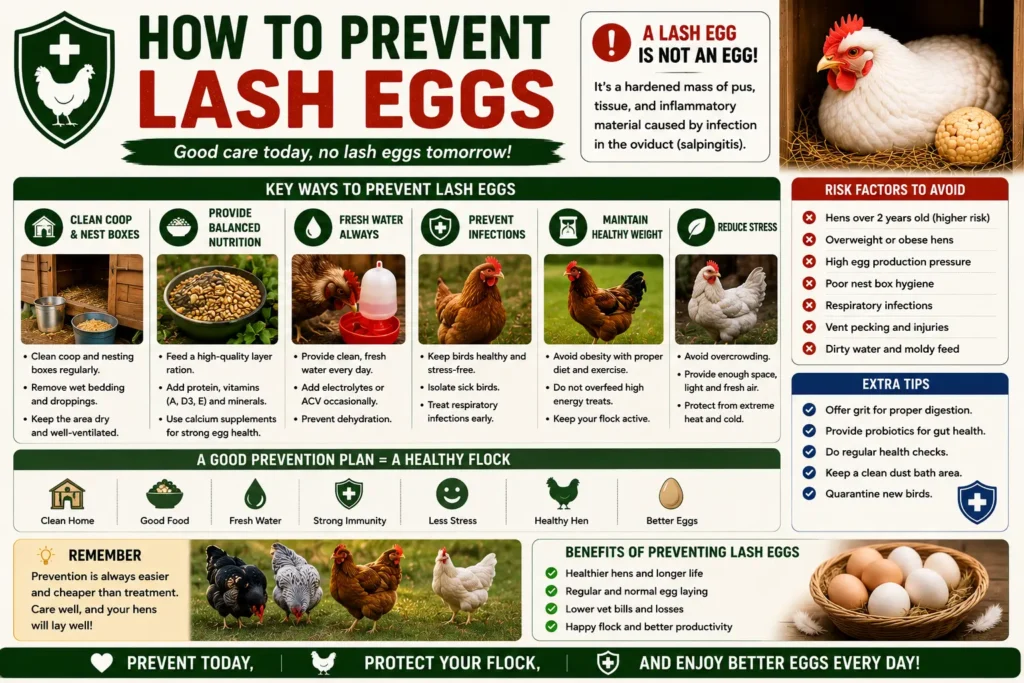
How to prevent lash eggs comes down to one core idea: reduce your flock’s exposure to the bacterial infections that cause salpingitis in the first place. A lash egg itself is just a symptom, so real prevention means managing coop conditions, nutrition, and biosecurity long before any hen ever shows a problem.
This guide breaks down exactly what works, what doesn’t, and why some hens stay lash-egg-free their whole lives while others don’t.
Table of Contents
Quick Answer
How to prevent lash eggs starts with clean, dry housing, strong biosecurity, balanced nutrition, and quick attention to respiratory symptoms. No method guarantees zero risk, but these habits meaningfully lower the odds of salpingitis developing in your flock.
Why Prevention Matters More Than Treatment
Treating a lash egg after it happens means managing an active infection, sometimes with antibiotics, vet visits, and weeks of recovery. Preventing it in the first place avoids that entire process. Since lash eggs come from salpingitis, an infection of the oviduct, prevention efforts focus on lowering bacterial exposure and reproductive stress.
The Real Cause Behind Every Lash Egg
Before prevention tips make sense, it helps to know what you’re actually preventing. Salpingitis usually develops from bacteria like E. coli, Mycoplasma, or Pasteurella species, sometimes following a respiratory infection that spreads to the reproductive tract. How to prevent lash eggs, at its core, means limiting the conditions these bacteria thrive in.
Read More: https://lashegg.com/can-chickens-recover-from-lash-eggs/
Coop Hygiene: Your First Line of Defense
Damp, dirty bedding is one of the most common contributors to bacterial buildup in backyard flocks.
- Change bedding regularly — damp litter holds bacteria far longer than dry litter.
- Improve ventilation — stale, humid air raises respiratory infection risk, which can spread to the oviduct.
- Clean nesting boxes weekly — hens spend significant time here, and buildup increases bacterial exposure.
- Remove droppings frequently — daily or every few days, depending on flock size.
- Avoid overcrowding — tighter spaces mean faster bacterial spread between birds.
Expert Tip
Check bedding dampness with your hand, not just your eyes. Litter can look dry on the surface while staying damp underneath, especially near waterers.
Biosecurity: How to Prevent Lash Eggs From Spreading Flock-Wide
Biosecurity isn’t just for large-scale poultry operations. Backyard keepers benefit from the same basic principles recommended by university extension programs and the USDA.
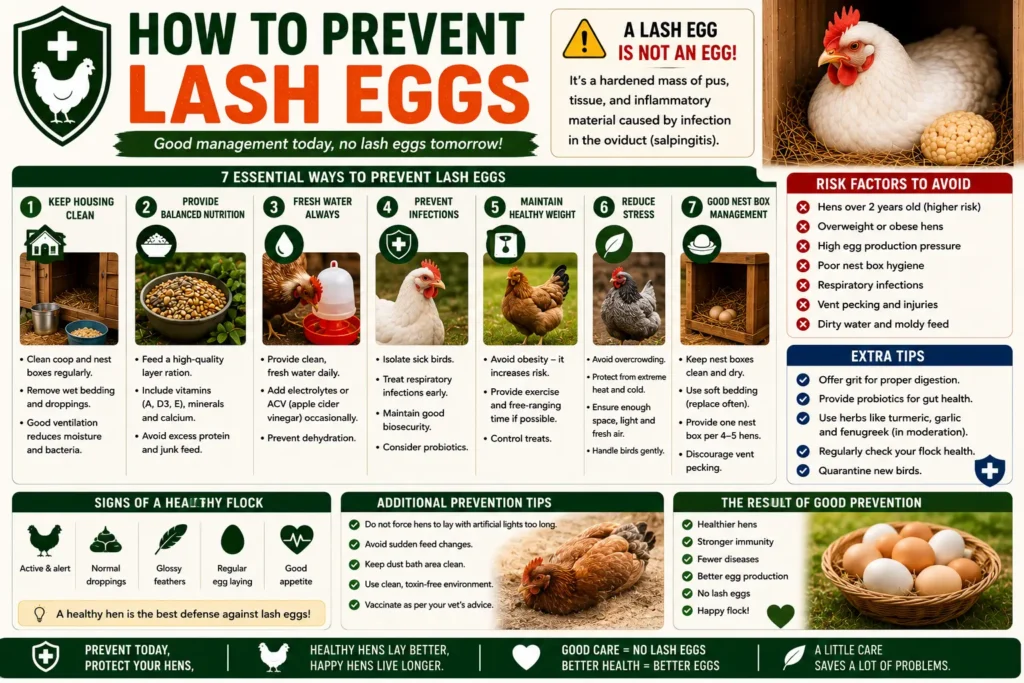
- Quarantine new birds for at least two weeks before introducing them to your flock.
- Disinfect shared equipment, including feeders, waterers, and tools, between uses if multiple flocks are involved.
- Limit visitor contact with your birds, especially those who keep poultry themselves.
- Control pest access, since rodents and wild birds can carry bacteria into the coop.
- Wash hands between handling different birds if you suspect illness in one.
Did You Know?
Respiratory infections like infectious bronchitis can travel from a hen’s lungs to her reproductive tract. That’s part of why keepers focused on how to prevent lash eggs also pay close attention to respiratory health across the whole flock.
Nutrition’s Role in Prevention
A hen’s immune system and reproductive health both depend heavily on diet quality.
| Nutrient | Role in Prevention | Good Sources |
| Protein | Supports immune function and tissue repair | Layer feed, mealworms, eggs |
| Calcium | Supports eggshell and reproductive health | Oyster shell, layer feed |
| Vitamin A | Supports mucous membrane health, including the oviduct lining | Leafy greens, carrots |
| Vitamin D3 | Supports calcium absorption and immune function | Sunlight exposure, fortified feed |
| Clean water | Prevents bacterial growth and supports overall health | Fresh, daily-changed water |
Warning
Don’t rely on supplements alone as a substitute for balanced feed. Over-supplementing certain nutrients, especially calcium, can create other health issues without meaningfully reducing salpingitis risk.
Managing Egg-Laying Stress in High-Output Hens
Hybrid layer breeds selected for heavy egg production face more strain on the oviduct than heritage breeds that lay less frequently. How to prevent lash eggs in these birds often means managing that production pressure directly.
- Avoid supplemental lighting that pushes hens to lay beyond natural rates
- Allow natural rest periods, especially during molting season
- Watch high-output breeds more closely for early signs of reproductive stress
- Consider breed selection carefully if recurring reproductive issues become a pattern in your flock
Comparing Risk Factors: Who’s More Likely to Get a Lash Egg?
| Risk Factor | Higher Risk | Lower Risk |
| Breed | High-output hybrid layers | Heritage or dual-purpose breeds |
| Age | Older hens with reproductive wear | Younger, healthy hens |
| Housing | Damp, crowded, poorly ventilated | Clean, dry, well-ventilated |
| Health history | Prior respiratory infection or egg binding | No prior reproductive issues |
| Biosecurity | Frequent new bird introductions without quarantine | Closed or well-managed flock |
Step-by-Step Prevention Checklist for New Keepers
- Set up a coop with good airflow and dry bedding from day one.
- Establish a regular cleaning schedule for bedding, nesting boxes, and waterers.
- Source birds from reputable breeders with healthy flock histories.
- Quarantine any new or returning birds before mixing them with your flock.
- Feed a balanced, age-appropriate layer diet consistently.
- Watch for early respiratory symptoms and address them quickly.
- Avoid pushing egg production artificially through excess lighting.
- Monitor older or high-output hens more closely as part of routine flock checks.
Common Mistakes That Undermine Prevention Efforts
- Cleaning the coop on a schedule that’s too infrequent for flock size
- Skipping quarantine for new birds because they “look healthy”
- Assuming heritage breeds never get salpingitis, when risk is lower, not zero
- Ignoring mild respiratory symptoms until they become severe
- Overcrowding coops as the flock grows without expanding space
Can Prevention Guarantee a Lash-Egg-Free Flock?
No method offers a complete guarantee, since bacterial infections can occur even in well-managed flocks. How to prevent lash eggs is really about lowering probability, not eliminating risk entirely. Genetics, individual immune response, and occasional bad luck all play a role that management alone can’t fully control.
When to Call a Vet
Even with strong prevention habits in place, call a vet if a hen shows lethargy, abdominal swelling, foul-smelling discharge, or if she produces a lash egg despite your best efforts. Prevention lowers risk, but it doesn’t replace monitoring or professional care when symptoms appear.
Prevention vs. Treatment: Where Each One Fits
| Approach | Goal | Timing |
| Prevention | Lower risk of salpingitis developing | Ongoing, before any symptoms |
| Home recovery care | Support a hen during mild illness | After a lash egg or symptom appears |
| Veterinary treatment | Clear active bacterial infection | After diagnosis confirms salpingitis |
Long-Term Flock Management for Lasting Prevention
Prevention isn’t a one-time setup. Seasonal changes, aging hens, and new flock additions all shift your risk profile over time. Revisiting your biosecurity habits, coop conditions, and nutrition plan every few months keeps prevention efforts effective as your flock changes.
- Reassess ventilation before winter, when coops are closed up more often
- Check nutrition needs as hens age or as laying rates change
- Review quarantine protocols whenever adding new birds
- Track any patterns of illness across seasons to catch recurring risks early
FAQ
How to prevent lash eggs in backyard chickens specifically? Focus on clean, dry bedding, good ventilation, quarantine for new birds, and a balanced diet. Backyard flocks benefit from the same core biosecurity principles used on larger farms, just scaled down.
Can diet alone prevent lash eggs? No. Diet supports immune health and reduces risk, but it works alongside coop hygiene and biosecurity, not as a standalone solution.
Are certain chicken breeds more prone to lash eggs? Yes, high-output hybrid layers under heavy egg production tend to face more reproductive strain than heritage or dual-purpose breeds, though any hen can develop salpingitis.
Does vaccinating against respiratory illness help prevent lash eggs? It can help indirectly, since some respiratory infections spread to the reproductive tract and trigger salpingitis. Ask a vet which vaccines make sense for your flock’s specific risks.
How often should I clean the coop to help prevent lash eggs? Most keepers benefit from cleaning nesting boxes weekly and checking bedding dampness every few days, adjusting frequency based on flock size and climate.
Is it possible to fully prevent lash eggs forever? Not with complete certainty. Prevention lowers the odds significantly, but occasional cases can still occur even in well-managed flocks.
What’s the biggest mistake keepers make with prevention? Skipping quarantine for new birds is one of the most common gaps, since it introduces new bacteria directly into an otherwise well-managed flock.